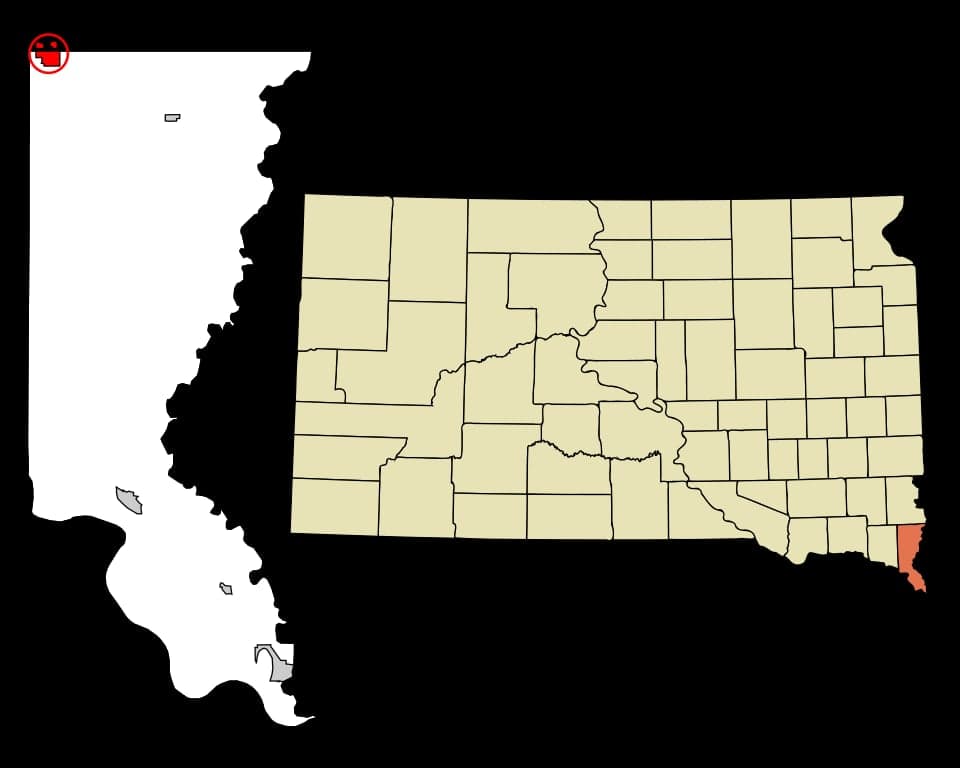
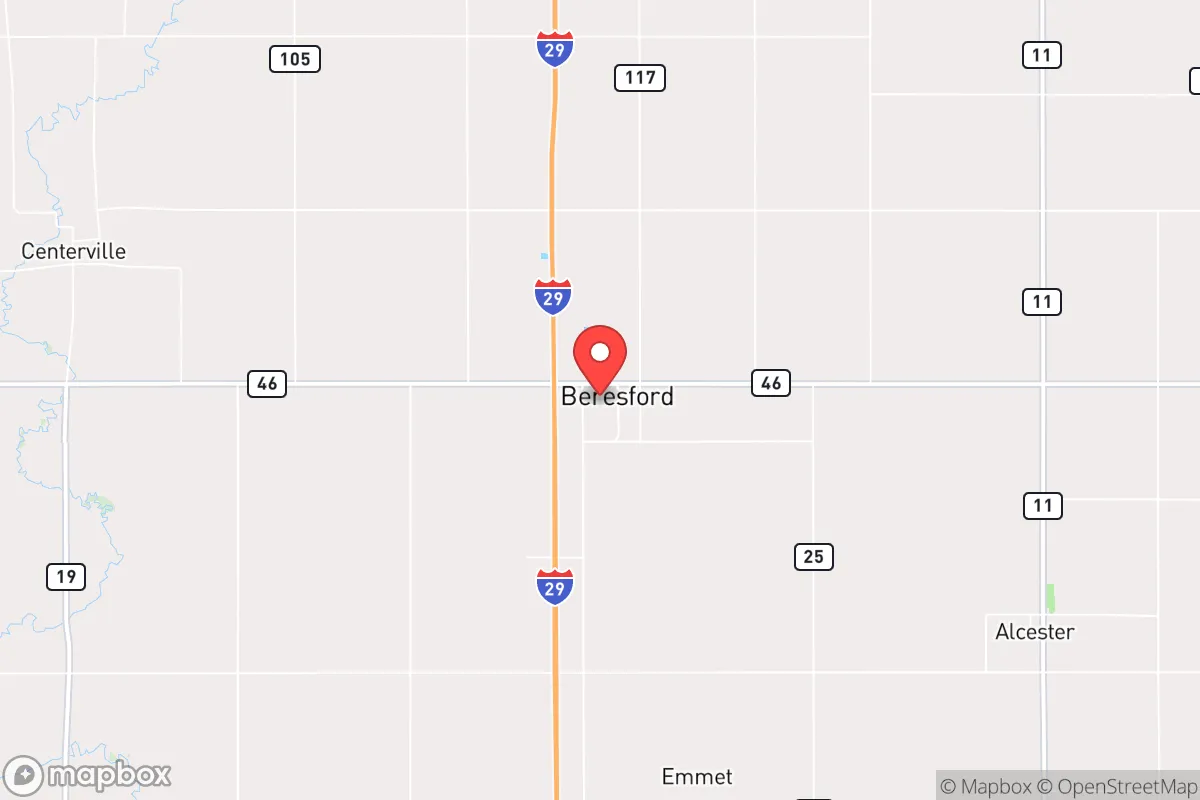
Photo: Wikipedia
Political ClimatePolitical Climate in Beresford, SD
District shown is the primary district for this city’s centroid. Cities may span multiple districts.
Inherited from parent state — no local data available.
Local Political AnalysisPolitical Analysis of Beresford, SD
Beresford, South Dakota, has long been a rock-solid conservative community, and that’s not changing anytime soon. With a Cook PVI of R+15, this town leans heavily Republican, and you can feel it in the local elections, the church potlucks, and the way folks talk about government at the coffee shop. I’ve lived here long enough to remember when the biggest political debate was whether to pave a new stretch of road—now, like everywhere else, there’s a quiet but real concern about outside progressive ideas creeping in from Sioux Falls or even Vermillion. The trajectory here is still firmly red, but you’ve got to keep an eye on the edges, because the culture war is knocking at the door.
How it compares
Drive 20 minutes north to Sioux Falls, and you’ll hit a much more mixed political scene—still conservative overall, but with a noticeable progressive tilt in the city core, especially among younger transplants and the growing tech crowd. Head south to the Nebraska line, and towns like Wakefield and Ponca are even more rural and conservative, but they don’t have Beresford’s small-city infrastructure. Vermillion, home to the University of South Dakota, is a whole different animal—it’s the bluest spot in the region, with a Cook PVI closer to D+5, and you can see the cultural divide in everything from local ordinances to school board meetings. Beresford sits right in that sweet spot: conservative enough to feel safe, but close enough to the liberal pockets that you can’t ignore the pressure. The contrast is stark when you look at how Vermillion handles things like mask mandates or diversity initiatives—Beresford’s city council would never go for that kind of overreach.
What this means for residents
For folks living here, the political climate means a lot of practical freedom. You’re not dealing with heavy-handed zoning rules, excessive business licensing, or the kind of progressive social engineering you see in bigger cities. Property taxes stay reasonable, the school board focuses on academics and local control, and the Second Amendment isn’t a debate—it’s a given. But the concern is real: as Sioux Falls grows and brings in more people from out of state, there’s a trickle-down effect. I’ve seen it in the way some newcomers push for bike lanes, “affordable housing” mandates, or even diversity training in the schools. That’s the kind of government overreach that starts small and snowballs. Long-term, if Beresford doesn’t stay vigilant, you could see the same kind of cultural shift that’s hit places like Brookings or Rapid City—where the old conservative values get watered down by progressive policies that sound good on paper but erode personal freedoms.
One thing that sets Beresford apart is its strong sense of local identity. We don’t have a lot of the divisive politics you see in bigger towns—most folks here just want to be left alone to live their lives, raise their kids, and run their businesses. The city council meetings are still civil, and the biggest fights are usually about water rates or the school budget, not social issues. But I’d be lying if I said I wasn’t watching the horizon. The next five to ten years will tell the story: if Beresford can hold the line on conservative principles—limited government, personal responsibility, and local control—it’ll stay the kind of place where you can breathe easy. If not, well, you’ll start seeing the same red flags that have popped up in other once-conservative towns. For now, it’s still a good place to call home, but keep your eyes open.

State Political ClimatePolitical Climate in South Dakota
State Political AnalysisPolitical Environment in the State
South Dakota is one of the most reliably conservative states in the nation, with a Republican trifecta that has held for decades and a cultural DNA that prizes self-reliance and limited government. The state hasn’t voted for a Democratic presidential candidate since 1964, and in 2024, Donald Trump carried it by over 30 points. The dominant coalition is a blend of rural ranchers, small-town business owners, and a growing number of freedom-minded transplants from blue states, all united by a deep skepticism of federal overreach. Over the last 10-20 years, the state has shifted further right, especially as the eastern counties—once a Democratic stronghold—have realigned, and as the western half has become more culturally assertive. The political climate here isn’t just red; it’s actively resistant to the progressive trends reshaping much of the country.
Urban vs. rural divide
The political map of South Dakota is stark but not surprising. The two largest metros—Sioux Falls in the east and Rapid City in the west—are both conservative, but with different flavors. Sioux Falls, home to about 200,000 people, is the economic engine and has a more moderate, business-friendly Republicanism. It’s where you’ll find the state’s corporate headquarters and a growing number of out-of-state transplants, which has nudged the city slightly less red than the rest of the state—Minnehaha County voted for Trump by about 18 points in 2024, compared to the statewide 30. Rapid City, by contrast, is more culturally conservative, with a strong military and outdoor-recreation influence; Pennington County leans about 25 points red. The real action is in the rural counties. Harding County in the northwest, with fewer than 1,500 people, gave Trump over 90% of the vote. Lake County (Madison) and Brookings County (home to South Dakota State University) are slightly more purple due to the college population, but still solidly Republican. The only reliably blue areas are the Pine Ridge Indian Reservation (Shannon County) and a few other tribal lands, where Democrats routinely win 70-80% of the vote—but those populations are small and geographically isolated. The urban-rural divide here isn’t about cities vs. countryside in the way it is in, say, Illinois or California; it’s more about degrees of conservatism, with the rural areas being the most intense.
Policy environment
South Dakota’s policy environment is a conservative dream, built on low taxes, minimal regulation, and a strong emphasis on local control. There is no state income tax, no corporate income tax, and no personal property tax on vehicles or business equipment. The sales tax is 4.5%, and local options can push it to 6.5% in places like Sioux Falls, but overall, the tax burden is among the lowest in the nation. The regulatory posture is aggressively pro-business—permitting for new construction is fast, and there’s no state-level occupational licensing for many trades. Education policy is a mixed bag: the state has a robust school choice movement, with a new Education Savings Account (ESA) program passed in 2025 that allows parents to use public funds for private or homeschool expenses. However, the state’s public schools are still largely traditional, and there’s been pushback from rural districts worried about losing funding. Healthcare is a flashpoint: South Dakota did not expand Medicaid until 2023, and only after a ballot initiative forced the legislature’s hand. The state has some of the strictest abortion laws in the country—a near-total ban with exceptions only for the life of the mother, passed in 2022 after the Dobbs decision. Election laws are secure: voter ID is required, same-day registration is not allowed, and the state has a clean voter roll system. There’s no mail-in voting unless you have an excuse, and early voting is limited. The overall message is clear: the state government trusts individuals and local communities more than it trusts Washington or even Pierre.
Trajectory & freedom
South Dakota is becoming more free in many respects, but not without some concerning trends. On the positive side, the state has been a national leader in Second Amendment rights. In 2021, Governor Kristi Noem signed a constitutional carry law, allowing any law-abiding adult to carry a concealed firearm without a permit. The state also passed a “Second Amendment Preservation Act” in 2023, which prohibits state and local law enforcement from enforcing any future federal gun bans—a direct challenge to federal overreach. Parental rights have been strengthened: the “Parents’ Bill of Rights” (2022) requires schools to notify parents about curriculum changes and medical services, and it bans classroom instruction on sexual orientation and gender identity in grades K-7. Medical autonomy has seen a mixed record: the state banned nearly all abortions, which many conservatives see as a protection of life, but it also restricted access to certain gender-affirming care for minors (2023), which is consistent with the state’s values. On the downside, property rights have been tested by the Carbon Pipeline controversy. In 2024, the legislature passed a bill allowing eminent domain for private carbon capture pipelines, which outraged many landowners in eastern counties like Minnehaha and Lincoln. This was a rare instance of the state siding with corporate interests over individual property rights, and it’s still a live issue. Taxation has remained low, but there’s been a creeping increase in local sales taxes to fund infrastructure—something to watch. Overall, the trajectory is toward more personal liberty, but the pipeline fight shows that the state isn’t immune to the tension between freedom and corporate power.
Civil unrest & political movements
South Dakota is not a hotbed of civil unrest, but there have been notable flashpoints. The most visible in recent years was the Dakota Access Pipeline protests (2016-2017), which centered on the Standing Rock Reservation in the north-central part of the state. While the protests were largely led by tribal members and outside activists, they created a lasting tension between the state government and tribal nations. Governor Noem’s administration has been particularly confrontational with tribal leaders, including a 2023 dispute over border checkpoints on tribal land that the state deemed illegal. On the right, there’s a growing “constitutional sheriff” movement in counties like Pennington and Lawrence, where sheriffs have publicly stated they will not enforce federal gun laws or certain state mandates. The South Dakota Freedom Caucus, formed in 2023, has pushed for even more aggressive legislation on election integrity, school choice, and immigration. Immigration politics are relatively quiet—the state has a very small foreign-born population (about 4%), and there’s no sanctuary city movement. However, the state did pass a law in 2024 requiring all employers to use E-Verify, a move aimed at preventing illegal immigration. Election integrity controversies have been minimal; the state’s voting system is widely trusted, and there were no significant disputes after the 2020 or 2024 elections. A new resident would notice that political activism here is more about local issues—like the pipeline or school board decisions—than national culture wars, though those do seep in.
Projection
Over the next 5-10 years, South Dakota is likely to become even more conservative, driven by two key factors: in-migration and demographic shifts. The state is seeing a steady influx of people from California, Illinois, and Minnesota, many of whom are fleeing high taxes and progressive policies. These newcomers tend to be conservative-leaning, but they also bring a more suburban, tech-oriented sensibility that could moderate the state’s hardline rural edge. The eastern corridor—especially Sioux Falls, Harrisburg, and Tea—is growing fast, and these areas are likely to become more politically influential. The tribal population is growing too, but it remains a small share of the electorate. The biggest wildcard is the carbon pipeline issue: if the state continues to use eminent domain for private projects, it could fracture the conservative coalition and lead to a populist backlash. On the policy front, expect further expansion of school choice, possibly a flat income tax (though unlikely given the current no-income-tax structure), and continued resistance to federal mandates on climate and healthcare. The state’s political culture will remain deeply individualistic, but the tension between corporate interests and property rights will be the defining battle. For someone moving in now, the state will likely be even more free in 10 years—but with a growing suburban population that may demand more services, which could test the low-tax orthodoxy.
For a new resident, the bottom line is this: South Dakota offers a political environment that respects your autonomy, keeps taxes low, and pushes back against federal overreach. You’ll find a community that values self-reliance and doesn’t tolerate much nonsense from the government. The trade-off is that you’ll need to be comfortable with a slower pace of life, a cold winter, and a political scene that can be insular. If you’re looking for a place where your rights are taken seriously and your voice matters, this is it. Just keep an eye on the pipeline fights and the school board meetings—that’s where the real action is.
* Values derived from national, state, county, city and local statistics and may differ in a specific area. Last updated: 2026-10-10T16:26:37.000Z
Narrative content on this page is AI-generated and may contain mistakes. Verify any details that matter before acting on them.
ReloMaps may earn a commission from affiliate links at no extra cost to you.

