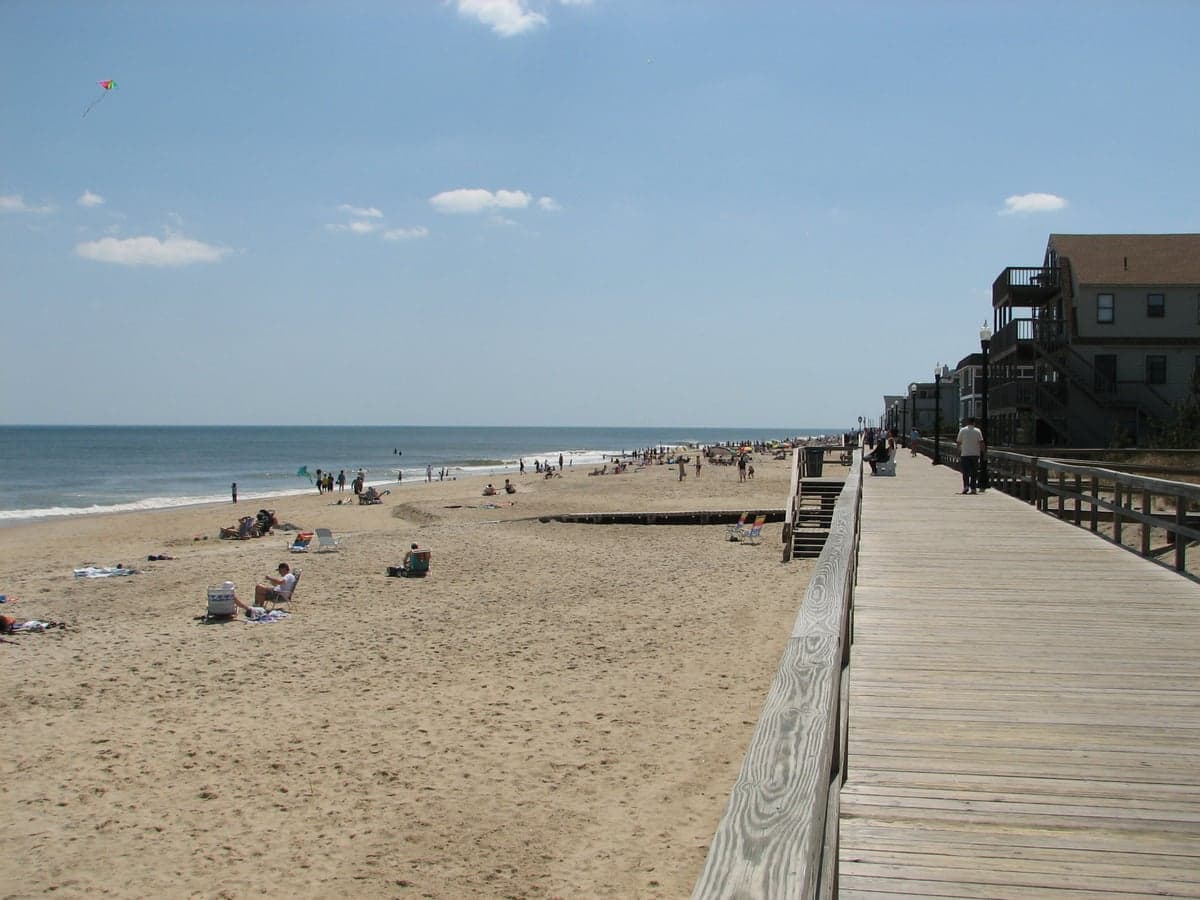
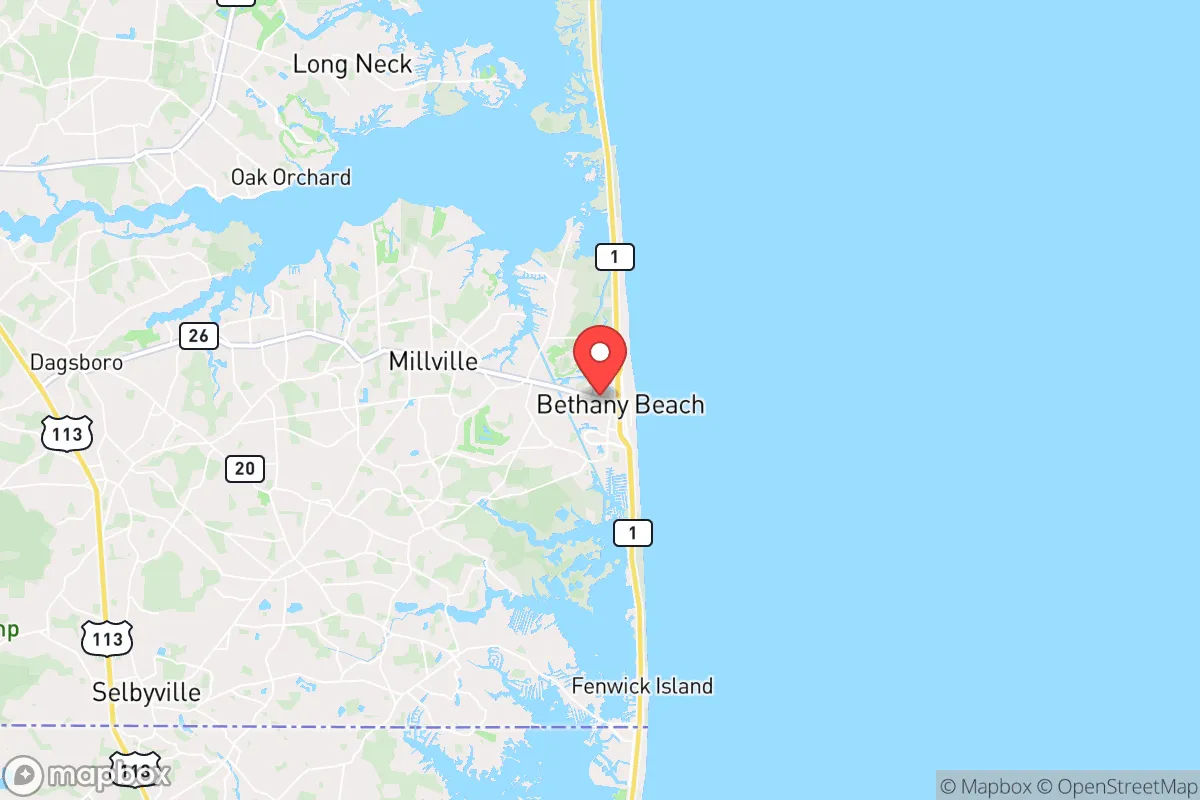
Photo: Wikipedia
Political ClimatePolitical Climate in Bethany Beach, DE
District shown is the primary district for this city’s centroid. Cities may span multiple districts.
Inherited from parent state — no local data available.
Local Political AnalysisPolitical Analysis of Bethany Beach, DE
Bethany Beach, Delaware, has a Cook PVI of D+8, which tells you the area leans pretty solidly Democratic these days, but that wasn't always the case. If you've been coming down here as long as I have, you remember when this was a quiet, conservative beach town where folks minded their own business and the biggest political debate was whether to allow alcohol on the boardwalk. Now, the political climate has shifted noticeably, especially in the last decade, with more year-round residents from up north bringing their progressive voting habits with them. The local elections and policy debates are starting to reflect that shift, and it's something longtime locals are keeping a close eye on.
How it compares
To really understand Bethany Beach's politics, you have to look at the surrounding area. Head just a few miles west to places like Millsboro or Georgetown, and you'll find a much more conservative, rural electorate. Those towns vote reliably Republican, and the contrast is stark. Bethany Beach itself, along with neighboring Rehoboth Beach and Lewes, forms a coastal strip that's become a Democratic stronghold in an otherwise purple-to-red Sussex County. The 2024 election results showed this divide clearly: while Sussex County as a whole voted Republican, the coastal precincts, including Bethany Beach, went heavily for the Democratic candidate. It's a tale of two counties, really—the beach towns versus the farmland and retirement communities inland.
What this means for residents
For those of us who value personal freedoms and limited government, the trend is concerning. You're seeing more local ordinances that feel like overreach—things like stricter short-term rental regulations, noise complaints that get enforced more aggressively, and a general uptick in government involvement in daily life. The town council has become more activist, pushing environmental policies that sound good on paper but often come with new fees or restrictions on property owners. Property taxes have crept up, and there's talk of adding more public transit and bike lanes, which sounds nice until you realize who's paying for it. The shift also means that if you're a conservative-leaning resident, you might feel less comfortable speaking your mind at town hall meetings or even in casual conversation at the local coffee shop.
What this means for residents
For the long-term resident, the biggest change is cultural. Bethany Beach used to be a place where you could fly your flag, keep your yard how you wanted, and not worry about a homeowners' association or town code enforcement breathing down your neck. Now, there's a growing push for "inclusivity" and "sustainability" that often translates into more rules and less personal autonomy. The local school board has also become a battleground, with debates over curriculum and library books that would have been unthinkable a generation ago. If you're looking for a place where the government stays out of your business, Bethany Beach is slowly moving in the opposite direction. The long-term trajectory, unless there's a significant political realignment, points toward more progressive policies and a further erosion of the traditional, laid-back, live-and-let-live atmosphere that made this town special.

State Political ClimatePolitical Climate in Delaware
State Political AnalysisPolitical Environment in the State
Delaware, long known as a corporate haven and the "First State," has a political climate that is increasingly at odds with its traditional, family-oriented, and tax-friendly reputation. While it has a history of moderate, business-friendly governance, the state has shifted noticeably leftward over the past two decades, driven primarily by the suburban and urban corridors of New Castle County. For a conservative-leaning individual or family considering relocation, the state presents a mixed picture: low taxes and a pro-business legal environment on one hand, but a growing progressive policy apparatus on the other. The 2024 presidential election saw Delaware vote for the Democratic candidate by a margin of roughly +14 points, a significant drop from the +20-point margins of the 2008 and 2012 cycles, indicating a slow but real rightward drift in some areas, but the state's overall trajectory remains firmly blue.
Urban vs. rural divide
The political map of Delaware is a classic tale of three counties, with the divide growing sharper each cycle. New Castle County, home to Wilmington and the state's population center, is the engine of Democratic power. It consistently delivers 65-70% of its vote to Democratic candidates, powered by the urban core of Wilmington, the dense suburbs of Newark and Bear, and the growing influence of the University of Delaware. This is where the state's progressive energy is concentrated. In contrast, Kent County (Dover, Milford) is a true swing region, often tipping the balance in statewide races. Dover itself leans Democratic due to state government workers, but the rural areas around Harrington and Felton are reliably conservative. Sussex County, the state's fastest-growing area, is the conservative stronghold. Towns like Georgetown, Seaford, and Laurel vote heavily Republican, driven by a large agricultural base, a growing retiree population from more conservative states, and a strong hunting and outdoor culture. The coastal resort towns of Rehoboth Beach and Lewes are notable exceptions, trending leftward due to an influx of LGBTQ+ and out-of-state retirees, creating a visible cultural tension within the county.
Policy environment
Delaware’s policy environment is a study in contradictions. On the plus side, the state has no sales tax, and property taxes are among the lowest in the nation, a huge draw for families and retirees. The corporate legal system (the Court of Chancery) remains a gold standard for business, attracting headquarters and investment. However, the state’s regulatory posture has become increasingly burdensome. Income taxes are high, with a top marginal rate of 6.6% kicking in at just $60,000 of taxable income, and the state has aggressively expanded its estate tax, which now applies to estates over $12.06 million (federal level) but with a state-level clawback that can surprise families. Education policy is a flashpoint: the state has embraced Common Core and has a powerful teachers' union, but school choice is limited compared to neighboring Pennsylvania or Maryland. Charter schools exist but are heavily regulated, and homeschooling is legal but requires more paperwork than in many red states. Election laws have been loosened significantly, with no-excuse absentee voting and same-day registration now in place, a move that concerns conservatives about ballot security. The state also passed a sweeping gun control package in 2022 (HB 450) that banned the sale of many semi-automatic rifles and limited magazine capacity to 17 rounds, a major red flag for Second Amendment advocates.
Trajectory & freedom
On the trajectory of personal freedom, Delaware is clearly moving in a less free direction, particularly on the issues that matter most to conservatives. The 2022 gun control law was the most aggressive in state history, and there are active discussions about further restrictions, including a "permit to purchase" requirement. Parental rights have been under assault, with the state's Department of Education pushing a controversial "equity" agenda that includes mandatory LGBTQ+ inclusive curricula in K-12 schools, with no opt-out for parents. The state also passed a law (HB 160) that effectively codifies abortion access as a "fundamental right," removing any parental notification requirements for minors seeking the procedure. On the economic freedom front, the state's heavy reliance on corporate franchise fees (about 30% of the state budget) means it can afford to keep personal taxes relatively low, but the overall regulatory burden on small businesses is high. The state has also embraced a "clean energy" mandate, requiring 40% renewable energy by 2035, which is driving up electricity costs. Medical autonomy took a hit during the pandemic, with Delaware having one of the longest-lasting mask mandates in schools and a vaccine passport system for state employees that was only recently rescinded.
Civil unrest & political movements
Delaware is not known for large-scale civil unrest, but there have been notable flashpoints. The murder of George Floyd in 2020 sparked significant protests in Wilmington and Dover, with some property damage and a heavy police response. The state has a vocal and organized progressive activist network, particularly around the Delaware Working Families Party, which has successfully pushed for rent control measures and a $15 minimum wage. On the right, the Delaware Federation for Children and local gun rights groups are active but often outmatched in the legislature. Immigration politics are relatively quiet, as Delaware is not a border state, but it does have a "sanctuary" policy in Wilmington that limits cooperation with ICE, a point of contention for conservatives. Election integrity remains a hot topic, with the 2020 and 2022 cycles seeing widespread use of drop boxes and mail-in ballots, leading to ongoing distrust among conservative voters. The most visible political movement in recent years has been the "Sussex County Rebellion" against overdevelopment and zoning changes pushed by the state, which has seen local officials in towns like Millsboro and Dagsboro fight state mandates on housing density and environmental regulations.
Projection
Looking ahead 5-10 years, the trajectory is clear: Delaware will continue to become more progressive, but at a slower pace than states like New Jersey or Maryland. The key demographic shift is the influx of retirees and remote workers from the Northeast, many of whom are fleeing high taxes but bring their progressive voting habits with them. Sussex County will remain the conservative bulwark, but its growth is bringing more moderate and left-leaning voters, particularly in the coastal areas. New Castle County will only get bluer as Wilmington's suburbs densify. The wild card is Kent County, which could flip to being a reliable Republican county if the rural vote continues to grow and Dover's government-worker base shrinks. For a conservative moving in now, expect to see continued erosion of Second Amendment rights, more state-level mandates on education and healthcare, and a tax structure that, while low on property, will likely see income tax increases to fund expanding social programs. The state's business-friendly legal environment will probably remain intact, as it's the goose that lays the golden egg, but don't expect any rollback of the progressive social agenda.
Bottom line for a new resident: Delaware offers genuine financial advantages—no sales tax, low property taxes, and a world-class legal system for business—but those come with a price tag of increasing government overreach into your personal life, your children's education, and your right to self-defense. If you're a conservative looking for a low-tax haven with a strong business climate, Delaware can work, but you'll need to be politically active to protect your freedoms, especially in Sussex County. The state is not Texas or Florida, but it's also not California. It's a place where you can still find affordable land and a quiet life, but you'll have to fight for it at the ballot box and in the school board meetings.
* Values derived from national, state, county, city and local statistics and may differ in a specific area. Last updated: 2026-04-30T02:27:06.000Z
Narrative content on this page is AI-generated and may contain mistakes. Verify any details that matter before acting on them.
ReloMaps may earn a commission from affiliate links at no extra cost to you.

