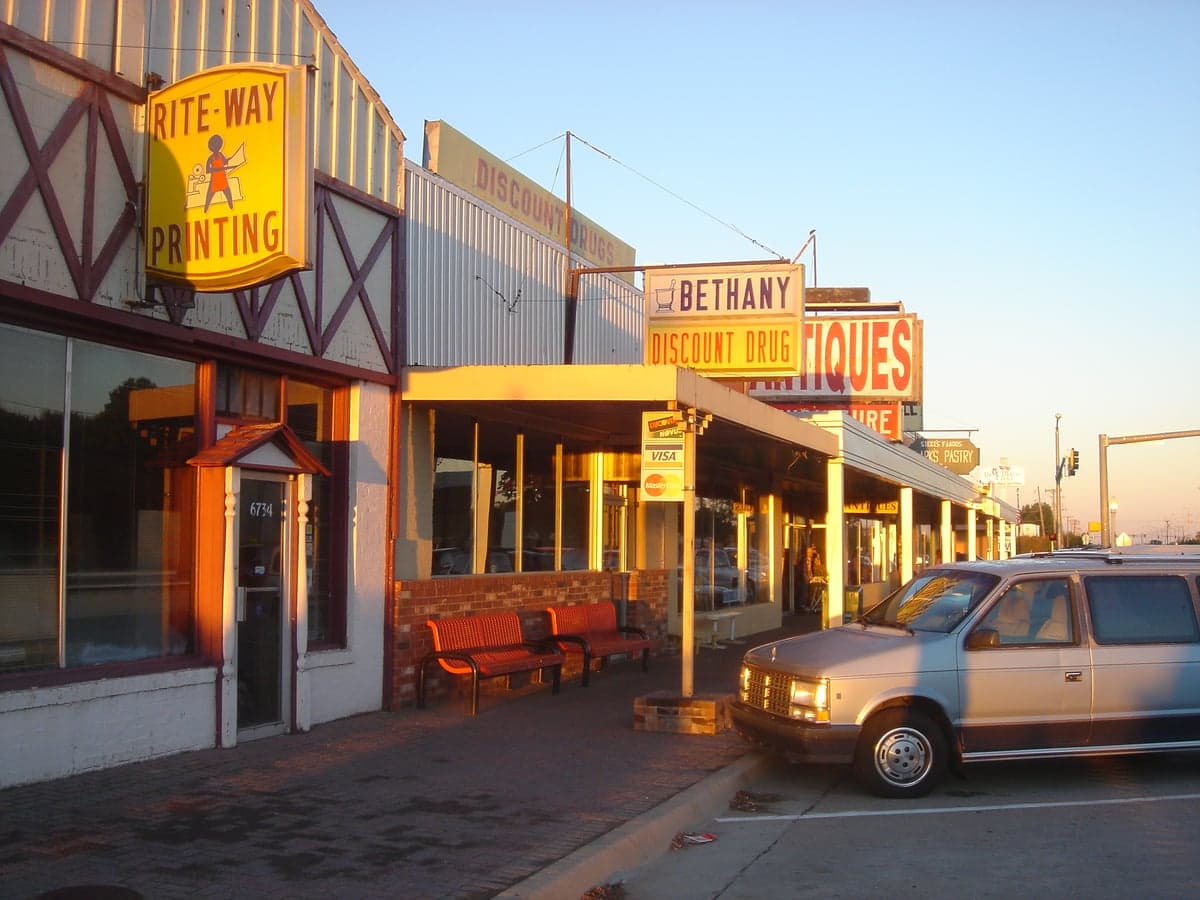
Photo: Wikipedia
Strategic Assessment of Bethany, OK
Multiple tactical vulnerabilities. Population density, target proximity, or disaster risk are likely compounding. A retreat property and exit planning is required.
What does the Strategic Assessment tell us?
Our Strategic Assessment grades tactical survivability of an area. Major population centers, military targets, fallout zones, natural disasters, and border exposure all drive risk — lower exposure means a more defensible position in a crisis.
This is heavily inspired by Joel Skousen's Strategic Relocation book. Highly recommended you checkout the book ($)What does this tell us?
Our Strategic Assessment grades tactical survivability of an area. Major population centers, military targets, fallout zones, natural disasters, and border exposure all drive risk — lower exposure means a more defensible position in a crisis.
This is heavily inspired by Joel Skousen's Strategic Relocation book. Highly recommended you checkout the book ($)Strategic Pillars

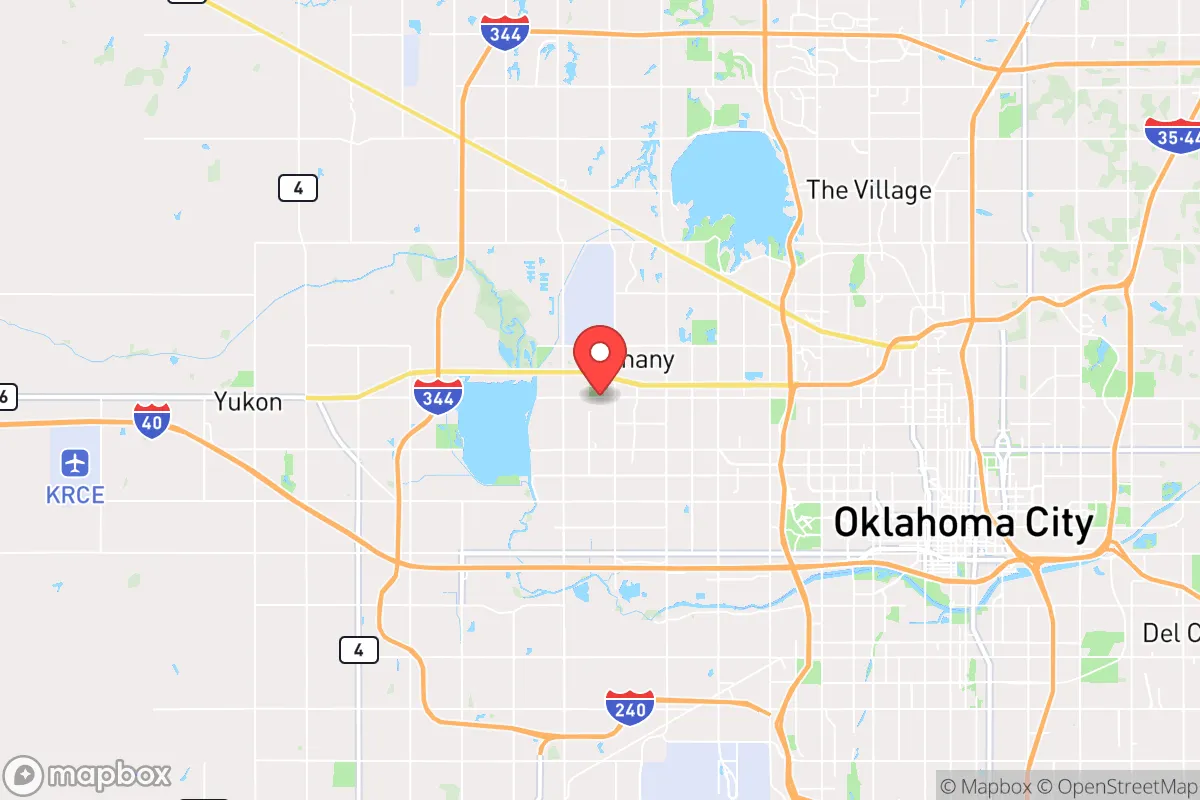
Key Distances
Regional Safe Places
Below is our recommended "safe zones" in Oklahoma and the surrounding area based on our strategic heuristics. For most people, it's unrealistic to live in a “safe zone” full-time due to work, family or other personal reasons. They tend to be more rural. However, many of these areas are perfect for second homes and retreat properties that double as a vacation home or even a short-term rental.
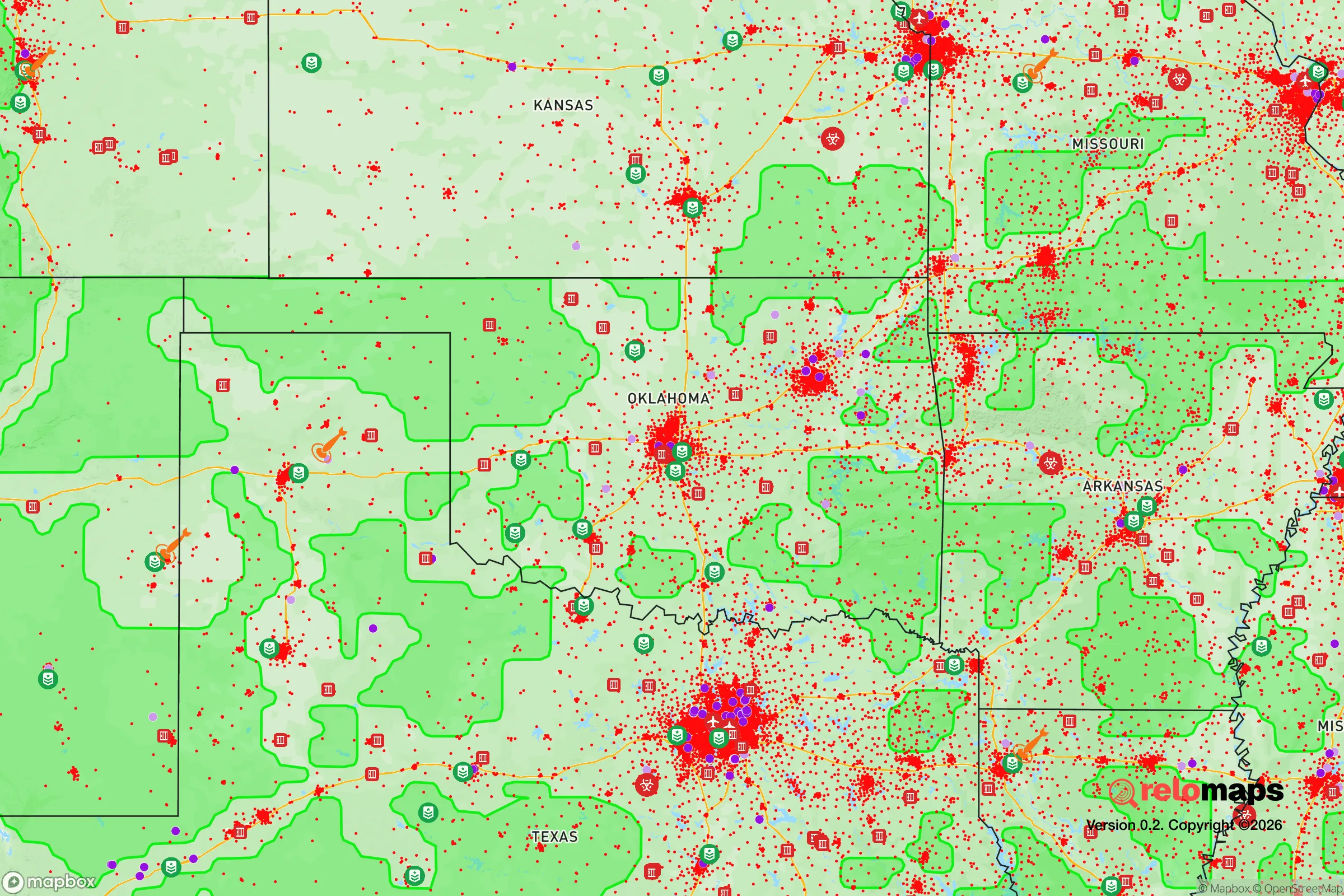
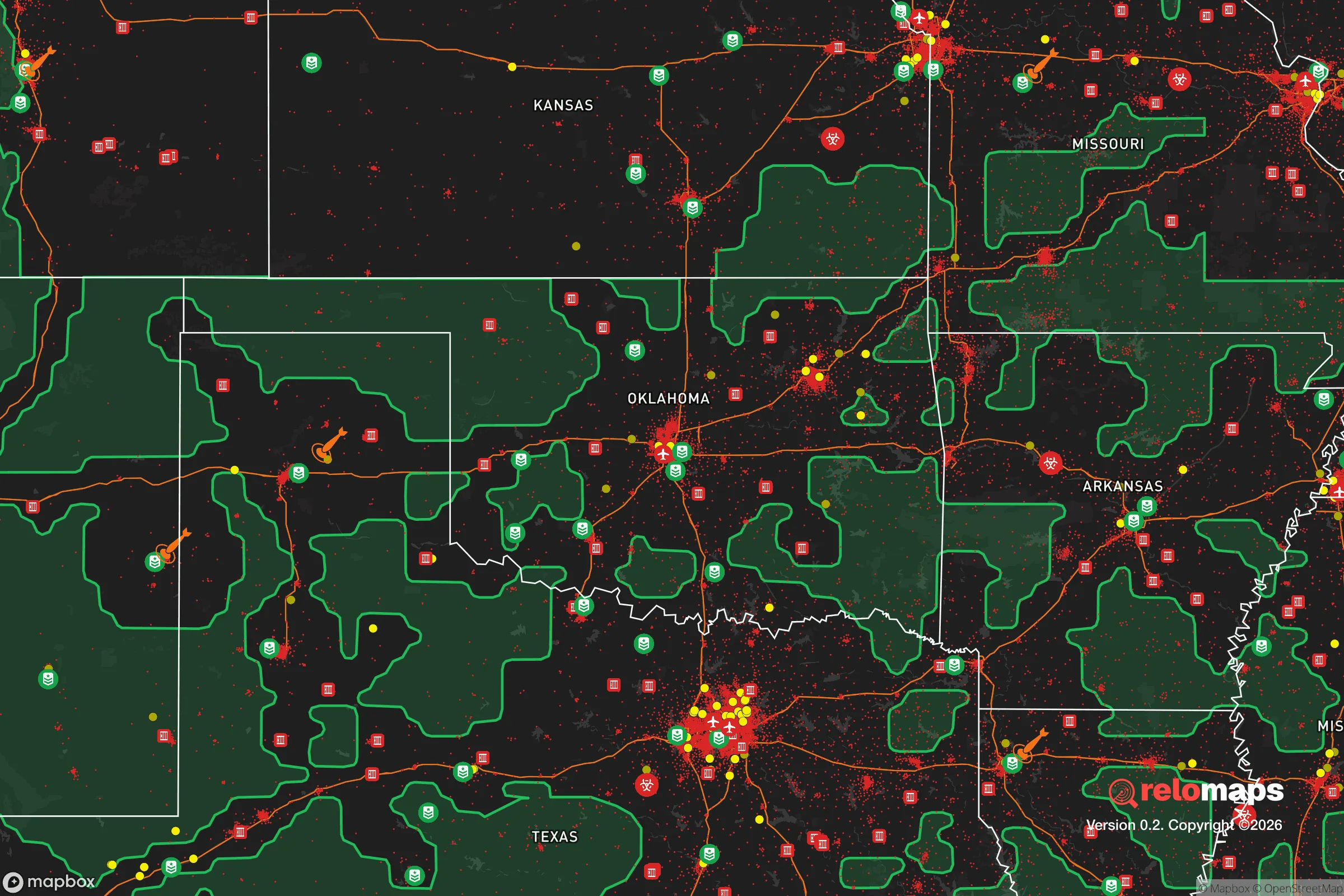


Important Note: For informational purposes only. This does not mean nothing bad ever happens in the green zones. Please use common sense. This is based on public data and modeled with AI. We tried to take a conservative approach but mistakes happen. We update this regularly as new information becomes available.
Solar Generator Recommendations
Backup power matters more here than in safer locations. We've picked three solar generators across budgets and capacity tiers — start with the budget unit if you only need a few essentials, or step up if you want to run a fridge and HVAC for days at a time.

Jackery Portable Power Station Explorer 300
Budget OptionPower on the Go: Weighing only 11 lbs, it's convenient to set up and store with book-sized foldable solar panels

BLUETTI Portable Power Station AC180
Designed for both indoor and outdoor scenarios, AC180 is highly capable as it has a robost capacity and continuous output power.

EF ECOFLOW DELTA Pro Ultra Power Station
Upgraded PickEcoFlow DELTA Pro Ultra is a whole-home energy system designed to grow with your family. Integrated with the Smart Home Panel 2, it scales to meet your evolving energy needs — keeping your home powered, intelligent, and secure through every stage of life.
We earn a commission, at no additional cost to you.
Strategic Assessment Analysis
Bethany, Oklahoma, sits in a precarious but potentially strategic position for those prioritizing resilience and self-reliance. Its location just northwest of Oklahoma City offers the economic and logistical benefits of a major metro area, but for a prepper or survivalist, that proximity is a double-edged sword—it provides access to resources while also placing you within the blast radius of a high-value target. The city's history as a railroad and oil town gives it a working-class backbone, and its position along the historic Route 66 corridor means it's a known transit point, which can be both an advantage and a vulnerability depending on the scenario.
Geographic position and natural advantages for long-term survival
Bethany's geography is defined by the flat, open terrain of central Oklahoma, which offers both pros and cons for a strategic relocation. The lack of significant natural barriers means you have clear lines of sight and relatively easy movement, but it also means you're exposed. The area sits on the Anadarko Basin, a major oil and gas formation, which historically has made energy extraction a key part of the local economy. For a prepper, this means potential access to local fuel sources if you have the means to tap into them, though most residential properties won't have direct access to wells. The Canadian River runs south of the city, providing a surface water source, but it's not a pristine mountain stream—it's a muddy, silt-heavy river that requires serious filtration and treatment. The climate is continental, with hot summers and cold winters, and tornadoes are a real threat; the city lies in the heart of Tornado Alley, so any survival plan must account for severe weather shelters and storm-proofing. The soil is mostly clay and loam, which can support gardening but requires amendment and careful management. For a relocator, the key natural advantage is the region's agricultural potential—Oklahoma's growing season is long enough for staple crops, and the surrounding farmland is productive if you can secure acreage outside the suburban grid.
Risks, exposures, and proximity to fallout-relevant landmarks
The biggest strategic liability for Bethany is its proximity to Oklahoma City, a major population center and economic hub that would be a primary target in any large-scale conflict or terrorist event. Tinker Air Force Base, located about 15 miles southeast, is a critical military installation that would be a high-priority target in a war scenario, and its proximity means fallout patterns could easily drift over Bethany depending on wind direction. The city itself is crisscrossed by major highways—I-44, I-40, and the Kilpatrick Turnpike—which are evacuation routes but also chokepoints that could become gridlocked during a crisis. The nearby Will Rogers World Airport is another potential target for disruption. For the prepper, the risk of civil unrest spilling out from Oklahoma City is real; Bethany's suburban character means it's not immune to the chaos that could follow a disaster, and its relatively dense housing stock (mostly post-war homes on small lots) limits defensibility. The city's water supply comes from the Overholser Reservoir and the Lake Hefner system, both of which are vulnerable to contamination or sabotage. On the positive side, Bethany's small-town feel and lower population density compared to the core of OKC mean you're not in the immediate blast zone, but you're close enough to feel the shockwaves—literally and figuratively.
Practical resilience for a relocator: food, water, energy, and defensibility
For a relocator focused on practical self-sufficiency, Bethany requires a proactive approach. The city's water infrastructure is centralized, so a well is not an option for most residential lots; you'll need to invest in rainwater catchment systems and large storage tanks, as municipal supply could be cut or contaminated. The local climate supports gardening, but the heavy clay soil means raised beds or imported topsoil are necessary for serious food production. Community gardens exist but are limited; you're better off securing a property with enough land for a substantial garden and perhaps a small greenhouse. Energy resilience is mixed: the grid is reliable in normal times but vulnerable to ice storms and tornadoes, so solar panels with battery storage are a wise investment. Natural gas is widely available, which can be used for backup heating and cooking if you have a generator. Defensibility is a challenge in a typical suburban neighborhood; look for properties on cul-de-sacs, with fenced yards, or on the outskirts of town where you have more buffer. The local police force is competent but small, and response times could be slow in a widespread emergency. The community itself is conservative-leaning, with a strong church presence and a culture of neighborly assistance, which can be a double-edged sword—it's good for building a mutual aid network, but it also means you'll be known quickly. For the single individual or family, the key is to establish a low-profile presence, build relationships with like-minded neighbors, and stockpile supplies without drawing attention. The proximity to rural areas like Yukon and Mustang offers escape routes if you need to bug out, but the urban sprawl is creeping outward, so act now before the land is fully developed.
The overall strategic picture for Bethany is one of calculated risk. It's not a remote survivalist paradise—it's a suburban compromise that offers access to resources while keeping you close enough to a major city to be affected by its collapse. For the conservative prepper who wants to maintain a job in the metro area while building a resilient home base, Bethany is a viable option if you're willing to invest in hardening your property and building a local network. The tornado risk is real, the proximity to military targets is concerning, and the water situation requires serious planning. But the community's values align with self-reliance, the land has agricultural potential, and the location gives you options—you can stay and defend or bug out to the surrounding countryside. If you're looking for a place that's not too far from civilization but not too deep in the danger zone, Bethany deserves a spot on your short list, but only if you're prepared to treat it as a base camp, not a fortress.

* Values derived from national, state, county, city and local statistics and may differ in a specific area. Last updated: 2026-04-25T13:50:27.000Z
Narrative content on this page is AI-generated and may contain mistakes. Verify any details that matter before acting on them.
ReloMaps may earn a commission from affiliate links at no extra cost to you.

