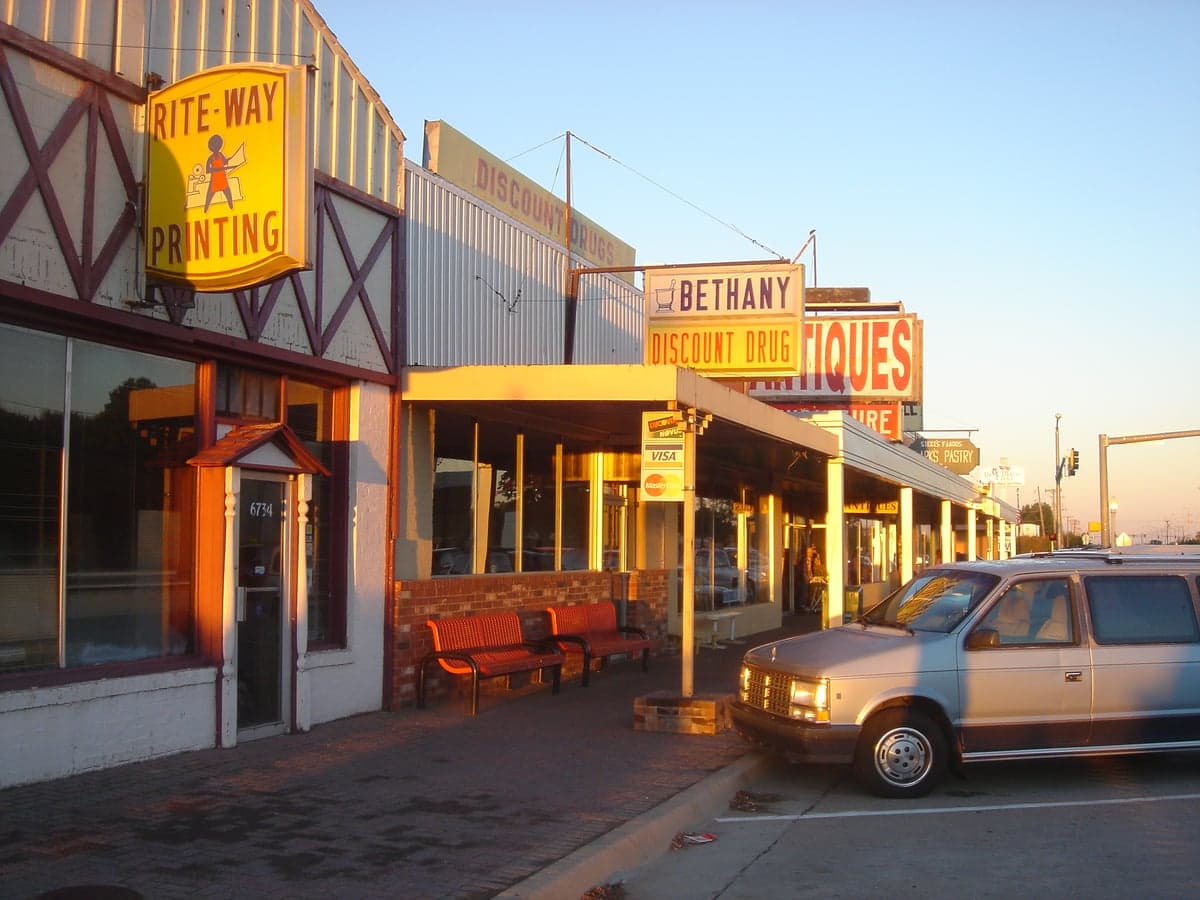
Photo: Wikipedia
Political ClimatePolitical Climate in Bethany, OK
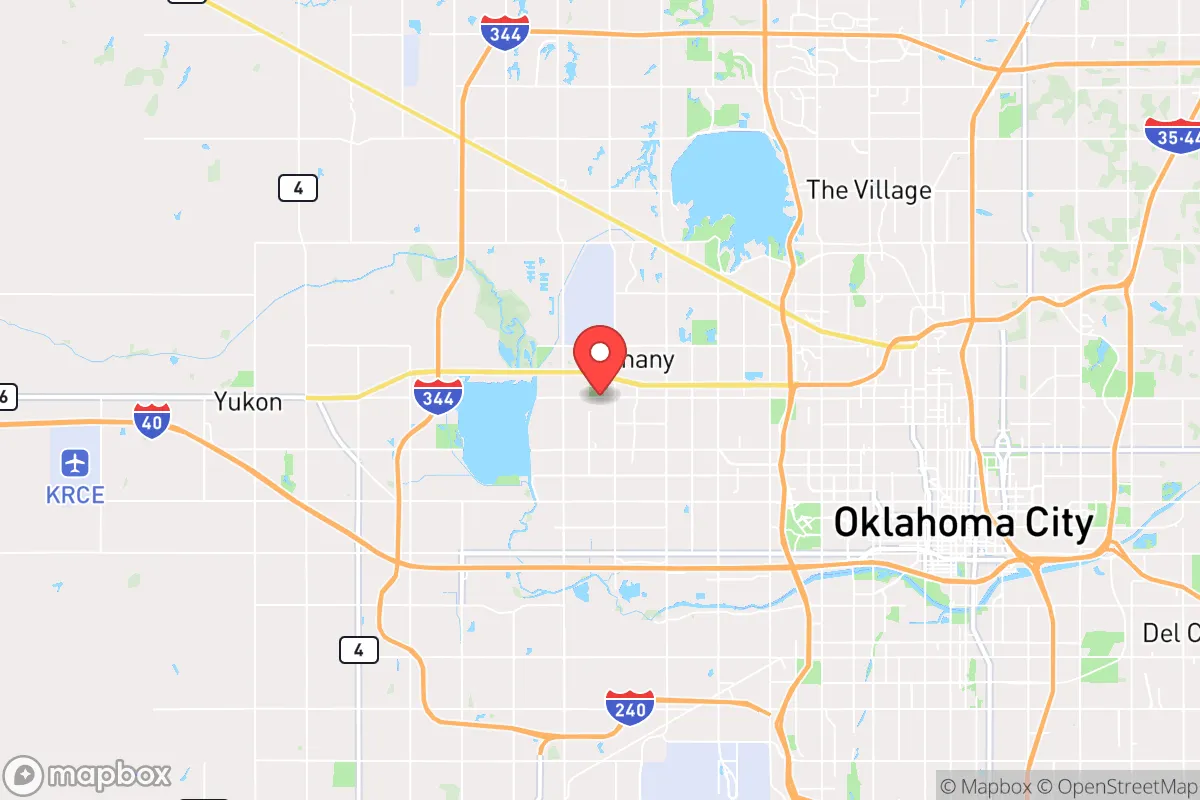
District shown is the primary district for this city’s centroid. Cities may span multiple districts.
Local Political AnalysisPolitical Analysis of Bethany, OK
Bethany, Oklahoma, sits solidly in the red, with a Cook PVI of R+9 that reflects a community where conservative values aren’t just a preference—they’re the baseline. For decades, this has been a place where folks expect government to stay out of their business, whether that’s how they raise their kids, run their small shop, or decide what to teach in their local schools. The political trajectory here hasn’t swung wildly; it’s held steady, but I’ve noticed a quiet unease creeping in over the last five years. You see it in the way neighbors talk at the coffee shop or in the uptick of “Don’t Tread on Me” flags on pickup trucks. The concern isn’t about losing elections—Bethany still votes reliably Republican—but about losing ground to the kind of progressive overreach that’s crept into nearby Oklahoma City, just a ten-minute drive east. That’s the real worry: that the city’s influence might bleed into our small-town way of life.
How it compares
Drive east into Oklahoma City proper, and you’ll hit a different political climate—bluer, more diverse, with a city council that’s flirted with progressive policies like sanctuary city resolutions and expanded public housing mandates. Bethany, by contrast, feels like a holdout. Our city council meetings are still dominated by debates over zoning for new churches and school funding, not social engineering. Surrounding towns like Yukon and Mustang lean similarly conservative, but Bethany has a tighter, more insular feel—partly because it’s smaller, partly because it’s older. The contrast is sharpest when you look at school board elections: Bethany’s board has resisted critical race theory and gender ideology curricula, while Oklahoma City’s has seen heated battles over library books and transgender policies. For a long-time resident, that’s a relief, but it also feels like a warning. The pressure from the state capital is constant, and it takes vigilance to keep our local government focused on personal freedom and fiscal restraint rather than chasing the latest progressive trend.
What this means for residents
For someone living here, the political climate means you can still count on a few things. Your property taxes stay low because the city council isn’t itching to fund new social programs. Your Second Amendment rights aren’t questioned—there’s no talk of red flag laws or waiting periods at the local gun shop. And your kids’ school won’t surprise you with a lesson on pronoun usage without a parent’s sign-off. But it also means you have to stay engaged. I’ve seen how apathy lets bad ideas slip in—like the time a few years back when a city council candidate ran on a platform of “diversity initiatives” that sounded harmless but would’ve opened the door to DEI training for city employees. We caught it, voted it down, but it was a close call. The long-term outlook? Bethany will likely stay conservative, but the fight is shifting from national politics to local ones. The real threat isn’t losing a presidential election; it’s waking up one day to find your city has quietly adopted policies that infringe on your freedoms under the guise of “progress.”
One cultural distinction worth noting: Bethany is home to Southern Nazarene University, which anchors the town in a faith-based, traditional worldview. That’s a big reason why you don’t see the same kind of secular drift here as in other suburbs. The university’s influence keeps the community grounded, but it also creates a tension—some younger residents who move to Oklahoma City for work come back with different ideas. The policy landscape reflects that tug-of-war. For now, Bethany remains a place where you can live your life without the government breathing down your neck, but you’d better keep an eye on the city council agenda. Because once a progressive policy gets a foothold, it’s a lot harder to root out than it was to stop in the first place.

State Political ClimatePolitical Climate in Oklahoma
State Political AnalysisPolitical Environment in the State
Oklahoma has been a reliably red state for decades, but the political climate here isn't as simple as a straight party-line vote. The state leans solidly Republican at the presidential level—Donald Trump won it by over 33 points in 2024—but the real story is a slow, grinding shift beneath the surface. Over the last 10-20 years, the dominant coalition has moved from a pragmatic, oil-and-gas conservative establishment to a more populist, culturally combative wing, while the suburbs around Oklahoma City and Tulsa have started showing cracks that worry longtime residents. If you're looking for a place where government stays out of your business and traditional values hold, Oklahoma still delivers—but you need to know where the fault lines are.
Urban vs. rural divide
The political map of Oklahoma is a textbook case of the urban-rural split, but with a twist. The two big metros—Oklahoma City and Tulsa—are the engines of the state's economy but also the places where progressive influence is most visible. Oklahoma County (Oklahoma City) has been trending purple for years; in 2020, it voted for Trump by only 8 points, down from 14 points in 2016. The city itself is a mix of libertarian-leaning oil executives, a growing Hispanic population, and a small but vocal activist class centered around the Plaza District and Midtown. Tulsa County is still reliably red but with a blue island in the city proper—downtown Tulsa and the Cherry Street area have become hubs for younger, left-leaning professionals. Meanwhile, the rural counties—Texas County in the panhandle, Kay County up north, and Pushmataha County in the southeast—routinely vote 80%+ Republican. The divide isn't just cultural; it's economic. The rural areas depend on agriculture and energy, while the metros are diversifying into aerospace, biotech, and remote work, bringing in outsiders who don't always share the state's traditional values.
Policy environment
Oklahoma's policy environment is aggressively conservative on paper, but the devil is in the details. The state has a flat income tax of 4.75%, which is low but not the lowest in the region—Texas has none. Property taxes are among the lowest in the nation, averaging about 0.9% of home value, which is a major draw for families. The regulatory posture is business-friendly, with right-to-work laws and a tort reform system that caps non-economic damages. On education, the state passed a universal school voucher program in 2024—HB 1935—that lets any family use state funds for private or homeschool expenses, a huge win for parental rights. Healthcare is a mixed bag: Oklahoma expanded Medicaid under a 2020 ballot initiative (State Question 802), which was a rare progressive victory, but the state legislature has since added work requirements and premiums to the program. Election laws are tight—voter ID is required, and the state purges inactive voters regularly. The overall vibe is "leave us alone," but the state government still meddles plenty, especially in local zoning and energy regulation.
Trajectory & freedom
Oklahoma has been on a clear trajectory toward more personal freedom in the last five years, but it's a specific kind of freedom—cultural and economic, not libertarian across the board. The biggest win for gun rights came in 2019 with constitutional carry (SB 1212), which lets anyone over 21 carry a firearm without a permit. That law passed with bipartisan support and has held up against legal challenges. Parental rights got a boost with the Women's Bill of Rights (SB 1100) in 2023, which codified biological sex definitions in law, and the Save Women's Sports Act (SB 2) in 2022, which bans biological males from female athletics. Medical autonomy took a hit, though: the state effectively banned nearly all abortions in 2022 with HB 4327, which triggered a near-total ban with no exceptions for rape or incest. That's a freedom issue depending on your perspective, but for a conservative audience, it's a win. Property rights are strong—Oklahoma has a "right to farm" constitutional amendment (State Question 777) that protects agricultural practices from nuisance lawsuits. The biggest red flag for freedom hawks is the state's growing reliance on corporate incentives—the Oklahoma Department of Commerce hands out millions in tax breaks to lure companies like Canoo and Panasonic, which feels like picking winners and losers.
Civil unrest & political movements
Oklahoma hasn't seen the kind of street-level chaos you get in Portland or Seattle, but there have been flashpoints. The 2020 George Floyd protests in Oklahoma City and Tulsa turned violent in a few spots—windows smashed in the Bricktown entertainment district, and a statue of a Confederate soldier was toppled at the Oklahoma County Courthouse. The response from state leadership was swift: Governor Kevin Stitt called in the National Guard, and the legislature passed HB 1674 in 2021, which increased penalties for rioting and blocking highways. Immigration politics are hot but not explosive—Oklahoma passed HB 4156 in 2024, which requires law enforcement to cooperate with federal immigration authorities and penalizes sanctuary city policies, though no city in the state has formally declared itself a sanctuary. The most visible organized movement on the right is the Oklahoma Second Amendment Association, which holds regular rallies at the state capitol. On the left, the Tulsa Advocates for Reproductive Justice has been active since the abortion ban, but their protests are small and mostly ignored. Election integrity is a live issue: the state's Voter ID law is strict, and the 2022 audit of Muskogee County found no evidence of widespread fraud, but the legislature still passed SB 440 in 2023 to ban private funding of election administration, a response to the Zuckerberg-funded grants in 2020.
Projection
Over the next 5-10 years, Oklahoma is likely to stay red but get more internally divided. The in-migration pattern is key: people moving in from California and Texas are disproportionately conservative-leaning, often drawn by low taxes and gun-friendly laws, but they're settling in the suburbs of Edmond and Broken Arrow, which are already deep red. The rural counties will continue to hemorrhage population, which means the urban-rural divide will sharpen. The biggest wildcard is the Native American tribal nations, particularly the Cherokee Nation and Choctaw Nation, which have been asserting sovereignty in areas like healthcare and criminal jurisdiction. The 2020 McGirt v. Oklahoma Supreme Court ruling affirmed that much of eastern Oklahoma remains tribal land, which has created legal chaos and a backlash from state officials. Expect more fights over tribal jurisdiction, which could shift the political landscape in unexpected ways. The progressive push in Oklahoma City and Tulsa will continue, but it's unlikely to flip either county blue in the next decade—the suburbs are too conservative. For a new resident, the bottom line is this: Oklahoma is still a place where you can raise a family without the government breathing down your neck, but you'll need to pick your county carefully. Stick with Canadian County or Rogers County for the most stable conservative environment, and avoid the core of Oklahoma City or Tulsa if you want to minimize exposure to progressive politics.
For someone moving here now, the practical takeaway is that Oklahoma offers a high degree of personal freedom on guns, taxes, and education, but it's not a libertarian paradise—the state government is still deeply involved in your life, especially on social issues. If you value low taxes, strong gun rights, and a culture that respects traditional values, you'll feel at home. Just keep an eye on the suburbs: they're the battleground for the next decade, and how they vote will determine whether Oklahoma stays the course or starts drifting toward the center.
* Values derived from national, state, county, city and local statistics and may differ in a specific area. Last updated: 2026-04-25T13:50:27.000Z
Narrative content on this page is AI-generated and may contain mistakes. Verify any details that matter before acting on them.
ReloMaps may earn a commission from affiliate links at no extra cost to you.

