 Popular
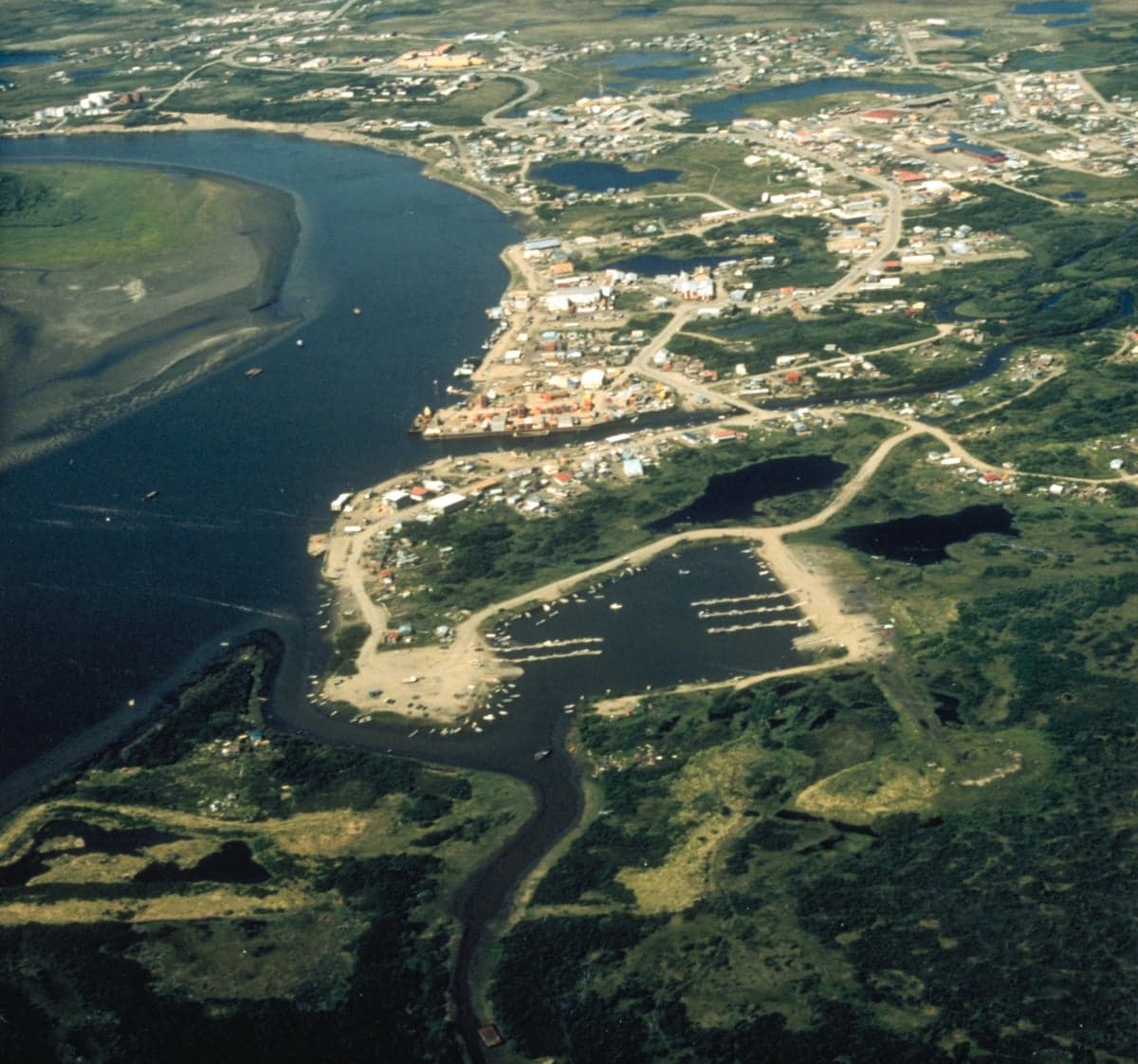
Photo: Wikipedia
Demographics of Bethel, AK
Affluence Level in Bethel, AK
A middle-class area roughly in line with national averages across income, home values, education, and employment.
People of Bethel, AK
The people of Bethel, Alaska, are overwhelmingly Alaska Native, primarily Yup’ik, with a population of 6,313 that is 16.9% White, 2.6% Black, 3.5% Hispanic, 2.9% East/Southeast Asian, and 0.3% Indian (subcontinent). The city is a regional hub for the Yukon-Kuskokwim Delta, characterized by a young, family-oriented population with a distinctive subsistence lifestyle that blends traditional hunting and fishing with modern wage work. Only 20.1% of adults hold a college degree, reflecting the community’s focus on vocational trades and local governance rather than white-collar professions. Bethel is not a typical American town—it is a Yup’ik cultural center where English is a second language for many, and where the population density is concentrated along the Kuskokwim River in a handful of distinct neighborhoods.
How the city was settled and grew
Bethel’s human history begins with the Yup’ik people, who have inhabited the Yukon-Kuskokwim Delta for thousands of years, living in seasonal fish camps and small villages along the river. The modern settlement emerged in the 1880s when Russian Orthodox missionaries and American traders established a post at the site of a traditional Yup’ik gathering place, naming it after the biblical town. The first non-Native wave arrived with the 1906 establishment of a Moravian mission and school, which drew Yup’ik families from surrounding villages to settle permanently. The original core of Bethel, now known as Old Town, grew around the mission and the river landing, where Yup’ik families built frame houses alongside the traders’ cabins. A second wave came during World War II, when the U.S. Army built an airfield and dock, bringing a small influx of White military personnel and construction workers who settled in what is now Airport Heights, a neighborhood of post-war housing near the runway. By 1950, Bethel’s population was still under 1,000, with Yup’ik residents forming the vast majority and living primarily in Old Town and the adjacent Kanakanak area, named for the nearby hospital.
Modern era (post-1965)
The 1971 Alaska Native Claims Settlement Act (ANCSA) transformed Bethel by creating regional Native corporations, which brought administrative jobs and cash to the community. This drew a new wave of Yup’ik migrants from outlying villages seeking employment in tribal governance, healthcare, and education, who settled in the expanding Kuskokwim Heights neighborhood, a subdivision of single-family homes built on the bluffs above the river. The 1980s saw the construction of the Yukon-Kuskokwim Health Corporation hospital, which attracted a small but steady stream of White medical professionals and administrators, many of whom live in the Subdivision area, a newer development of larger homes with modern amenities. The foreign-born population remains tiny at 1.5%, with the East/Southeast Asian community (2.9%) consisting largely of Filipino healthcare workers and their families, concentrated in the hospital-adjacent Hospital Hill district. The Indian subcontinent population (0.3%) is negligible, typically a handful of physicians on short-term contracts. The Hispanic share (3.5%) includes a mix of Mexican and Central American workers in construction and retail, scattered across neighborhoods rather than forming a distinct enclave. Bethel has not suburbanized in the conventional sense—there are no subdivisions of commuters—but the Mink Village area, a cluster of older homes and small businesses, has become a mixed-income zone where Yup’ik families and non-Native workers live side by side.
The future
Bethel’s population is projected to remain stable or grow slowly, driven by high birth rates among the Yup’ik majority and continued in-migration from surrounding villages. The city is not homogenizing—Yup’ik cultural identity is strengthening, with Yup’ik language immersion programs in schools and a growing emphasis on subsistence rights. The White population is likely to plateau or decline slightly as state and federal funding for administrative jobs tightens, while the East/Southeast Asian community may grow modestly if healthcare recruitment continues. The Hispanic and Black populations are too small to drive trends, and the Indian subcontinent community will remain a rounding error. Bethel is tribalizing into distinct cultural spheres: Yup’ik families dominate Old Town and Kuskokwim Heights, while non-Native professionals cluster in the Subdivision and Hospital Hill. The next decade will likely see Bethel become more Yup’ik in character, not less, as younger generations reclaim traditional practices and the city’s role as a regional hub for Native governance expands.
For someone moving in now, Bethel is a place where Yup’ik culture is the dominant force, not a minority subculture. The population is young, family-focused, and deeply tied to the land, with a subsistence economy that coexists with modern infrastructure. Newcomers—especially those in healthcare or education—will find a tight-knit but insular community where building trust takes years, and where the rhythms of life follow the river and the seasons, not the 9-to-5 clock. This is not a melting pot; it is a Yup’ik city with a small non-Native presence, and anyone relocating here should expect to adapt to that reality.

* Values derived from national, state, county, city and local statistics and may differ in a specific area. Last updated: 2026-04-19T19:15:28.000Z
Narrative content on this page is AI-generated and may contain mistakes. Verify any details that matter before acting on them.
ReloMaps may earn a commission from affiliate links at no extra cost to you.

