 Popular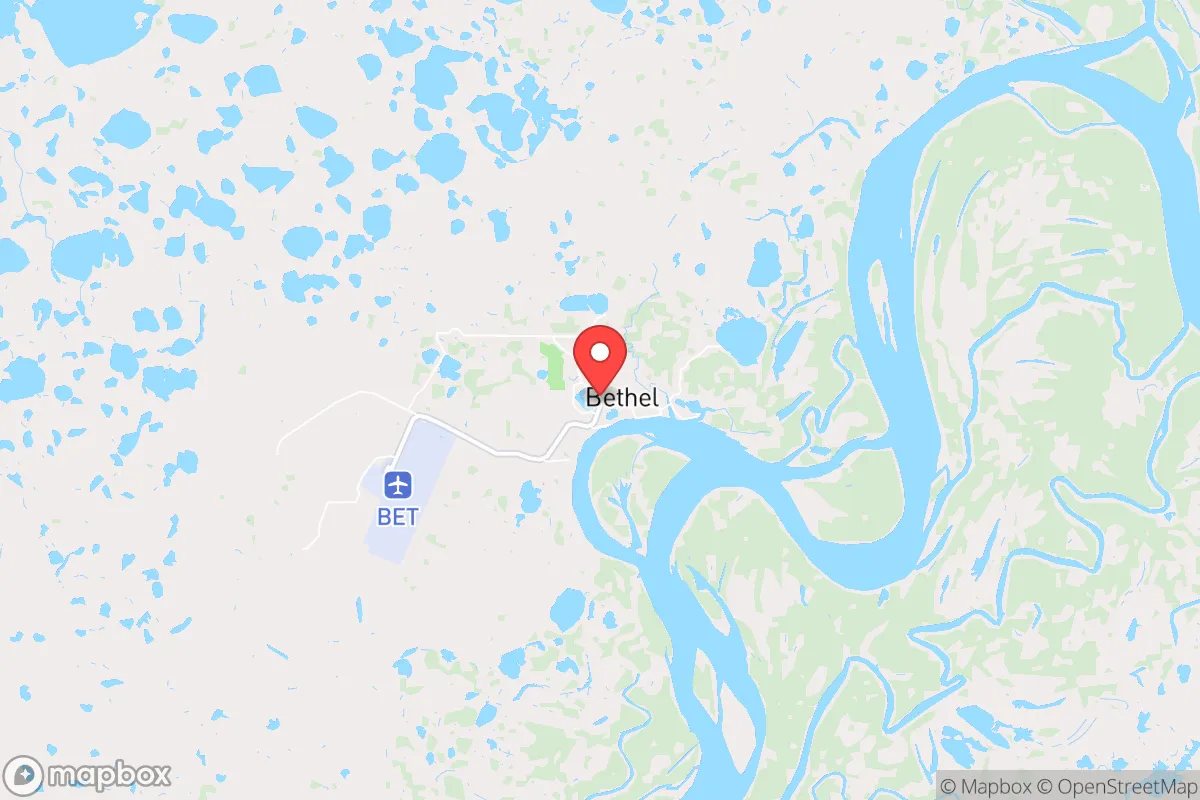
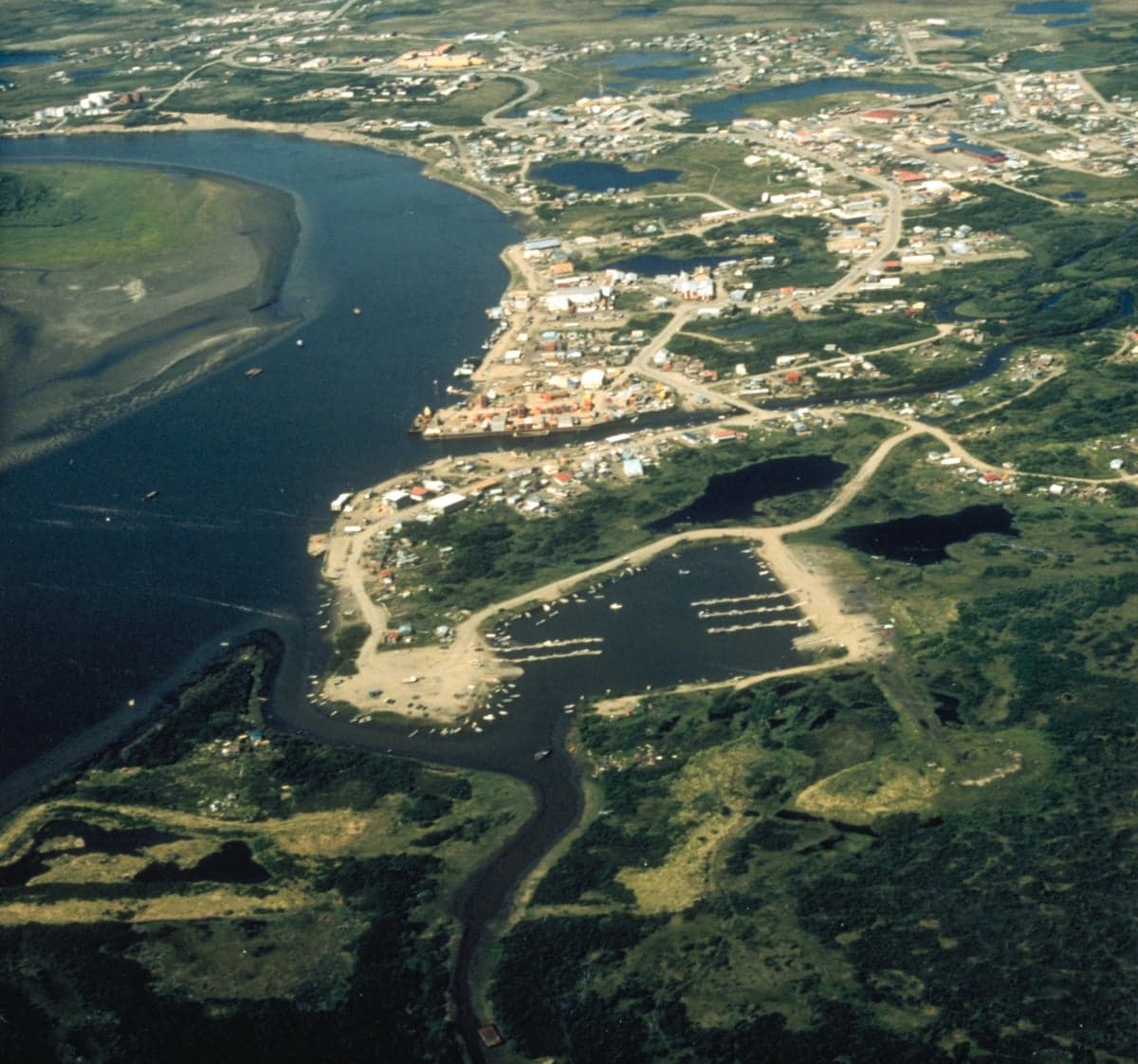
Photo: Wikipedia
Strategic Assessment of Bethel, AK
Workable tactical position. Some exposure to population density or targets, but generally defensible in a crisis.
What does the Strategic Assessment tell us?
Our Strategic Assessment grades tactical survivability of an area. Major population centers, military targets, fallout zones, natural disasters, and border exposure all drive risk — lower exposure means a more defensible position in a crisis.
This is heavily inspired by Joel Skousen's Strategic Relocation book. Highly recommended you checkout the book ($)What does this tell us?
Our Strategic Assessment grades tactical survivability of an area. Major population centers, military targets, fallout zones, natural disasters, and border exposure all drive risk — lower exposure means a more defensible position in a crisis.
This is heavily inspired by Joel Skousen's Strategic Relocation book. Highly recommended you checkout the book ($)Strategic Pillars

Key Distances
Regional Safe Places
Below is our recommended "safe zones" in Alaska and the surrounding area based on our strategic heuristics. For most people, it's unrealistic to live in a “safe zone” full-time due to work, family or other personal reasons. They tend to be more rural. However, many of these areas are perfect for second homes and retreat properties that double as a vacation home or even a short-term rental.
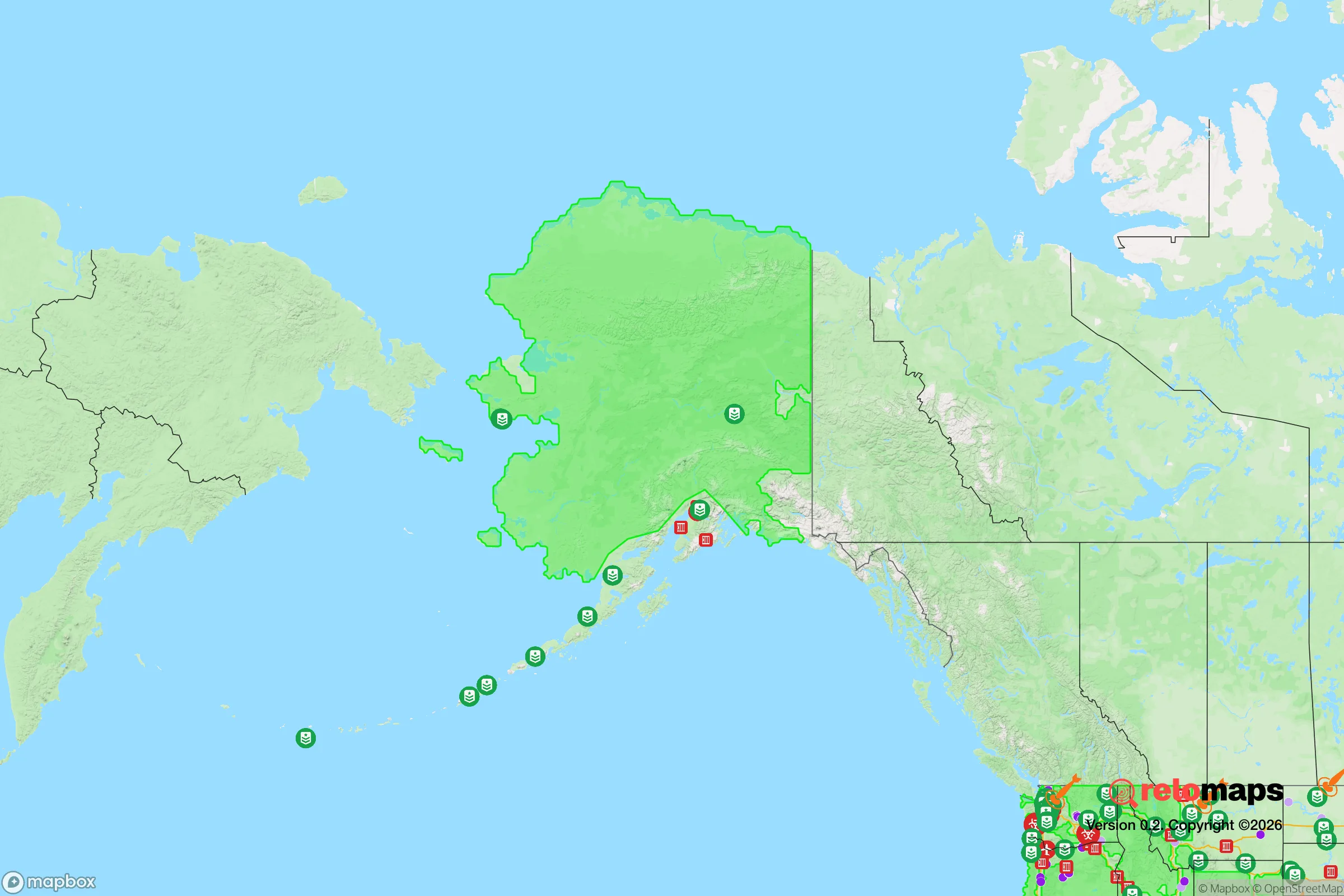
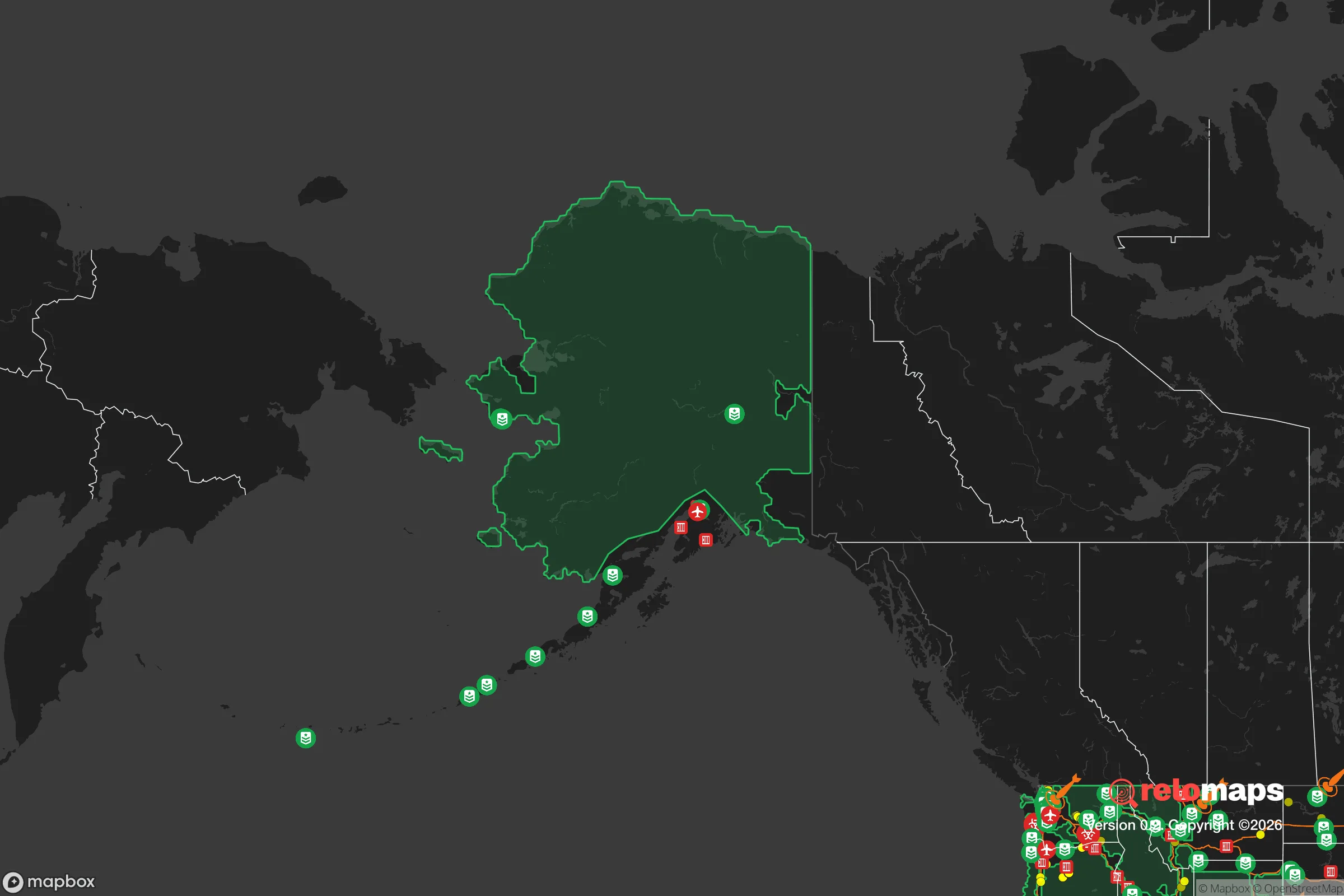


Important Note: For informational purposes only. This does not mean nothing bad ever happens in the green zones. Please use common sense. This is based on public data and modeled with AI. We tried to take a conservative approach but mistakes happen. We update this regularly as new information becomes available.
Solar Generator Recommendations
Backup power matters more here than in safer locations. We've picked three solar generators across budgets and capacity tiers — start with the budget unit if you only need a few essentials, or step up if you want to run a fridge and HVAC for days at a time.

Jackery Portable Power Station Explorer 300
Budget OptionPower on the Go: Weighing only 11 lbs, it's convenient to set up and store with book-sized foldable solar panels

BLUETTI Portable Power Station AC180
Designed for both indoor and outdoor scenarios, AC180 is highly capable as it has a robost capacity and continuous output power.

EF ECOFLOW DELTA Pro Ultra Power Station
Upgraded PickEcoFlow DELTA Pro Ultra is a whole-home energy system designed to grow with your family. Integrated with the Smart Home Panel 2, it scales to meet your evolving energy needs — keeping your home powered, intelligent, and secure through every stage of life.
We earn a commission, at no additional cost to you.
Strategic Assessment Analysis
Bethel, Alaska, offers a strategic relocation option that is defined by its extreme isolation and the resilience that isolation forces upon its residents. For those with a prepper or survivalist mindset, this remote hub on the Kuskokwim River presents a unique trade-off: you are far from the chaos of the Lower 48, but you must be prepared to be entirely self-sufficient for months at a time. The community’s reliance on air and river transport, combined with a subsistence lifestyle, creates a built-in buffer against the cascading failures of supply chains and civic infrastructure that many fear will accompany major national disruptions.
Geographic isolation and natural defensive advantages
Bethel’s location is its single greatest strategic asset. It sits approximately 400 miles west of Anchorage, with no road connecting it to the rest of the state or continent. This effectively makes it an island, accessible only by small aircraft, river barge, or snow machine in winter. For someone concerned with fallout from large-scale events—whether economic collapse, civil unrest, or a major disaster—this distance is a powerful filter. The population of roughly 6,300 people is small enough to avoid the anonymity and volatility of a large city, yet large enough to maintain essential services like a hospital, airport, and basic retail. The surrounding Yukon-Kuskokwim Delta is a vast, sparsely populated wetland, offering few targets for any adversary and making any large-scale movement of people or equipment extremely difficult. The Kuskokwim River itself provides a natural barrier and a reliable transportation corridor for those who know how to use it, but it also isolates the town during breakup and freeze-up, when travel becomes hazardous or impossible.
Risks, exposures, and proximity to fallout-relevant landmarks
While Bethel is far from the major population centers of the Lower 48, it is not without its own vulnerabilities. The most significant risk is its location in a region prone to seismic activity. A major earthquake could disrupt the airport runway, the only reliable lifeline for fuel, medical supplies, and food. The town sits on permafrost, which is increasingly unstable due to warming temperatures, leading to subsidence and damage to critical infrastructure like the water and sewer systems. There are no hardened military installations nearby, but the proximity to the Bering Sea and the potential for a tsunami or a major storm surge is a real concern. More relevant to a prepper’s calculus: Bethel is roughly 200 miles from the former Cold War-era radar sites and military infrastructure along the coast, but these are largely abandoned and pose no direct fallout risk. The real exposure is not from a single blast, but from the fragility of the supply chain. If the Anchorage airport or the Port of Seattle were to be compromised, Bethel would feel the effects within weeks. The town’s reliance on diesel for power generation and heating means that a fuel disruption would be catastrophic without significant personal reserves.
Practical resilience for a relocator: food, water, energy, and defensibility
For a relocator willing to adapt, Bethel offers a rare opportunity to build a genuinely resilient lifestyle. Food security is the most critical factor. The local grocery stores are expensive and stock is limited, but the subsistence harvest is abundant. Salmon runs in the Kuskokwim are among the largest in the world, and residents routinely put up hundreds of pounds of fish each summer. Moose, caribou, and waterfowl are available for those who learn to hunt. Berry picking and small-scale gardening (in raised beds or greenhouses) are viable during the short, intense growing season. Water is a challenge. Most homes rely on piped water from the town’s treatment plant, which is vulnerable to power outages. A relocator should plan for a backup water supply—either a well (which can be difficult due to permafrost) or a system for collecting and treating rainwater or river water. Energy is the weak point. The local power grid runs on diesel, and rates are among the highest in the nation. A serious prepper would need to invest in solar panels (which work surprisingly well in the long summer days) and a battery bank, along with a backup generator and a large fuel cache. Defensibility is high. The isolation itself is the best defense. The community is tight-knit, and outsiders are noticed quickly. The local police force is small, and the state troopers are hours away by plane, so residents are expected to handle most security matters themselves. This is not a place for someone looking to hide; it is a place for someone looking to become part of a community that already practices mutual aid and self-reliance out of necessity.
The overall strategic picture for Bethel is one of high reward paired with high commitment. It is not a bug-out location for a weekend; it is a permanent lifestyle shift. For the conservative-leaning individual or family who values self-sufficiency, distrusts centralized systems, and is willing to learn a new way of life, Bethel offers a genuine sanctuary from the fragility of modern urban existence. The trade-offs are real: extreme weather, limited medical care, high cost of living, and a steep learning curve for subsistence skills. But for those who can make the leap, the payoff is a life that is largely insulated from the supply chain shocks, civil unrest, and mass casualty events that plague the Lower 48. Bethel is not for everyone, but for the serious strategist, it is one of the most defensible and resilient locations in the United States.

* Values derived from national, state, county, city and local statistics and may differ in a specific area. Last updated: 2026-04-19T19:15:28.000Z
Narrative content on this page is AI-generated and may contain mistakes. Verify any details that matter before acting on them.
ReloMaps may earn a commission from affiliate links at no extra cost to you.

