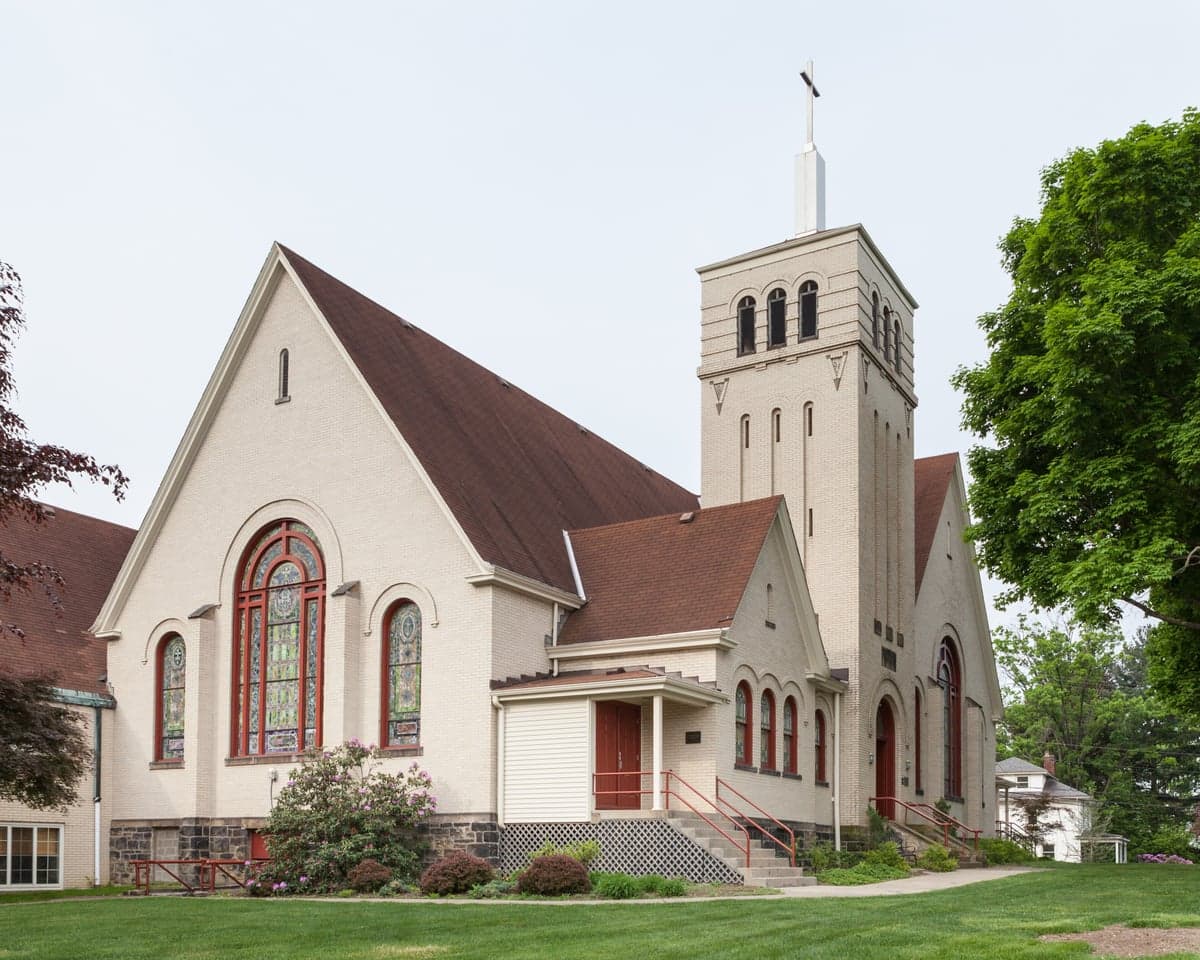
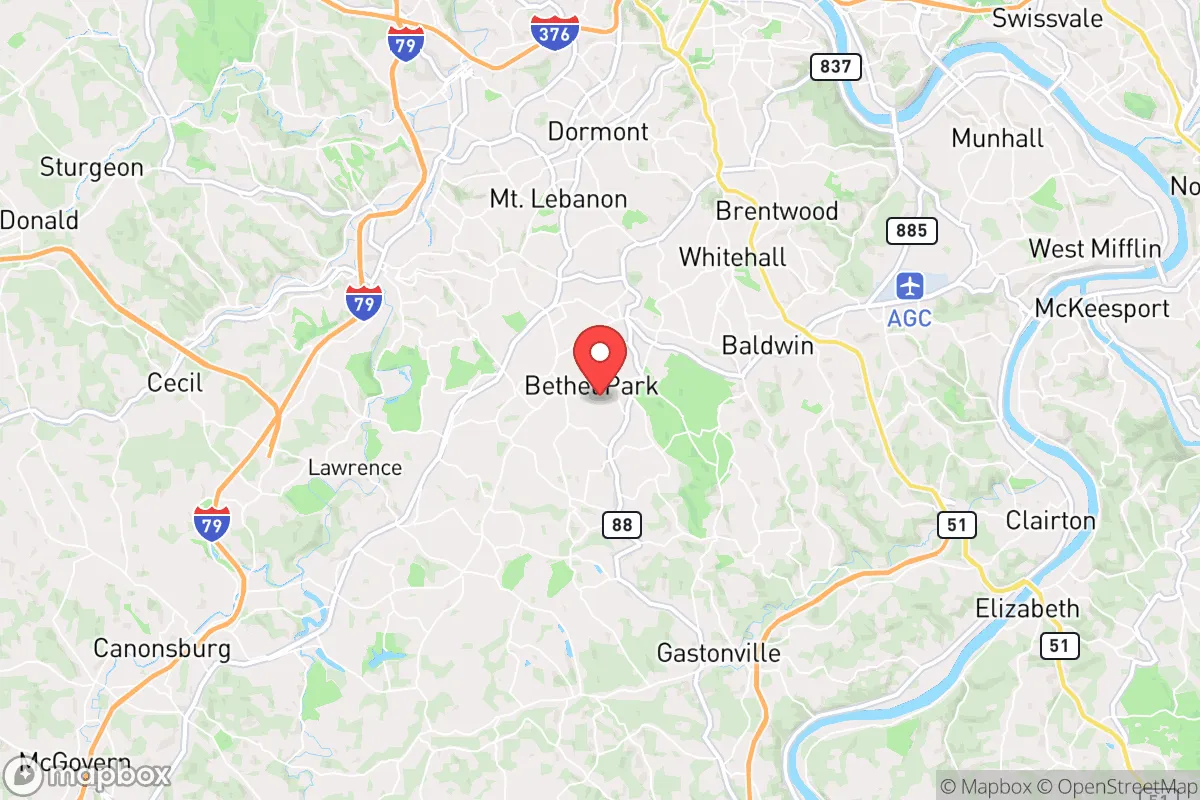
Photo: Wikipedia
Demographics of Bethel Park, PA
Affluence Level in Bethel Park, PA
A middle-class area roughly in line with national averages across income, home values, education, and employment.
People of Bethel Park, PA
Bethel Park, Pennsylvania, is a predominantly white, highly educated suburban community of 33,070 residents where 92.4% of the population identifies as white and over half hold a college degree. The city is characterized by its quiet, family-oriented character, low foreign-born population of just 1.1%, and a strong sense of local identity rooted in its 20th-century suburban expansion. Unlike many Pittsburgh suburbs, Bethel Park has maintained remarkable demographic stability, with minimal racial or ethnic diversity and a population that has hovered near 33,000 for decades. This is a community where generational continuity is the norm, and newcomers are most often domestic migrants from other parts of the Pittsburgh region or Pennsylvania.
How the city was settled and grew
Bethel Park was not a colonial-era settlement but rather a product of the late 19th and early 20th centuries, emerging from the agricultural township of Bethel. The area was originally part of a larger land grant to John and James Campbell in the 1760s, but significant population growth did not begin until the arrival of the Pittsburgh and Lake Erie Railroad in the 1880s. The first concentrated wave of settlers were German and Irish farmers who established homesteads in what is now Morrow Church and Library neighborhoods, named for the local train stations that became commercial hubs. By the 1920s, a small but stable community of about 2,000 residents had formed, centered on the Bethel Church area and the farming crossroads at South Park.
The real population surge came after World War II, when Bethel Park transformed from a rural township into a bedroom suburb for Pittsburgh's growing industrial workforce. Between 1950 and 1970, the population exploded from roughly 5,000 to over 30,000 as developers built thousands of single-family homes on former farmland. The Highland and McMurray neighborhoods were among the first to be developed, attracting second- and third-generation Eastern European families—Poles, Slovaks, and Ukrainians—who had previously lived in Pittsburgh's mill neighborhoods like South Side and Hazelwood. These families were drawn by affordable housing, good schools, and the promise of a suburban lifestyle. The Bethel Gardens and Castle Shannon border areas filled in during the 1960s with a mix of Italian and German Catholic families, many of whom worked at the nearby U.S. Steel plants in Clairton and Duquesne.
Modern era (post-1965)
After the 1965 Hart-Cellar Act reshaped American immigration, Bethel Park saw virtually no impact. The city's foreign-born population remains at just 1.1% in 2026, far below the national average and even below the Pittsburgh metro average of roughly 5%. The small Asian population (1.3%) is primarily East and Southeast Asian—Chinese, Korean, and Vietnamese families—who settled in the Mowry and South Hills Village areas, often drawn by proximity to tech and healthcare jobs in the South Hills. The Indian subcontinent population (0.8%) is a separate, even smaller group, concentrated near the Bethel Park municipal center and along Route 88. The Black population (1.4%) and Hispanic population (1.0%) are similarly tiny and dispersed, with no single neighborhood reaching even 5% non-white composition.
Domestic in-migration has been the dominant demographic force since the 1970s. Bethel Park attracted white-collar families from Pittsburgh's eastern suburbs and from other parts of Allegheny County during the region's industrial decline in the 1980s and 1990s. The South Park and Library neighborhoods absorbed many of these newcomers, who were drawn by the highly rated Bethel Park School District and the relatively affordable housing stock compared to pricier suburbs like Mt. Lebanon or Upper St. Clair. Since 2000, the population has been essentially flat, fluctuating between 32,000 and 33,000, with out-migration of younger adults to Sun Belt cities balanced by in-migration of families from other parts of Pennsylvania.
The future
Bethel Park is likely to remain one of the most demographically stable communities in Allegheny County over the next 10–20 years. The city is not homogenizing further—it is already near the ceiling of white homogeneity for a Pittsburgh suburb—but it is also not tribalizing into distinct ethnic enclaves. The small Asian and Indian populations are slowly growing, primarily through second-generation families staying in the area rather than new immigration, and they are assimilating into the broader community rather than forming concentrated neighborhoods. The foreign-born share may inch up to 2–3% by 2040, but Bethel Park will remain overwhelmingly native-born and white.
The bigger demographic story is aging. Bethel Park's median age has risen to roughly 45, and the school district has seen enrollment decline from a peak of 5,200 in the 1970s to about 4,000 today. Younger families are being priced out by rising home values—the median home price now exceeds $300,000—and are choosing more affordable exurbs like Peters Township or Canonsburg. The city is becoming a destination for empty-nesters and retirees who value the established neighborhoods, low crime, and proximity to Pittsburgh's medical centers.
For a conservative-leaning individual or family considering a move to Bethel Park, the bottom line is this: you are moving into a stable, safe, and culturally homogeneous community where the population is aging slowly and diversity is minimal. The city is not becoming more diverse in any meaningful way, nor is it experiencing the rapid change seen in many American suburbs. What Bethel Park offers is continuity—a place where the people are largely the same as they were a generation ago, and where the next generation will likely look much the same. If your priority is a predictable, low-change environment with excellent schools and a strong sense of local identity, Bethel Park delivers that reliably.

* Values derived from national, state, county, city and local statistics and may differ in a specific area. Last updated: 2026-05-01T16:27:44.000Z
Narrative content on this page is AI-generated and may contain mistakes. Verify any details that matter before acting on them.
ReloMaps may earn a commission from affiliate links at no extra cost to you.

