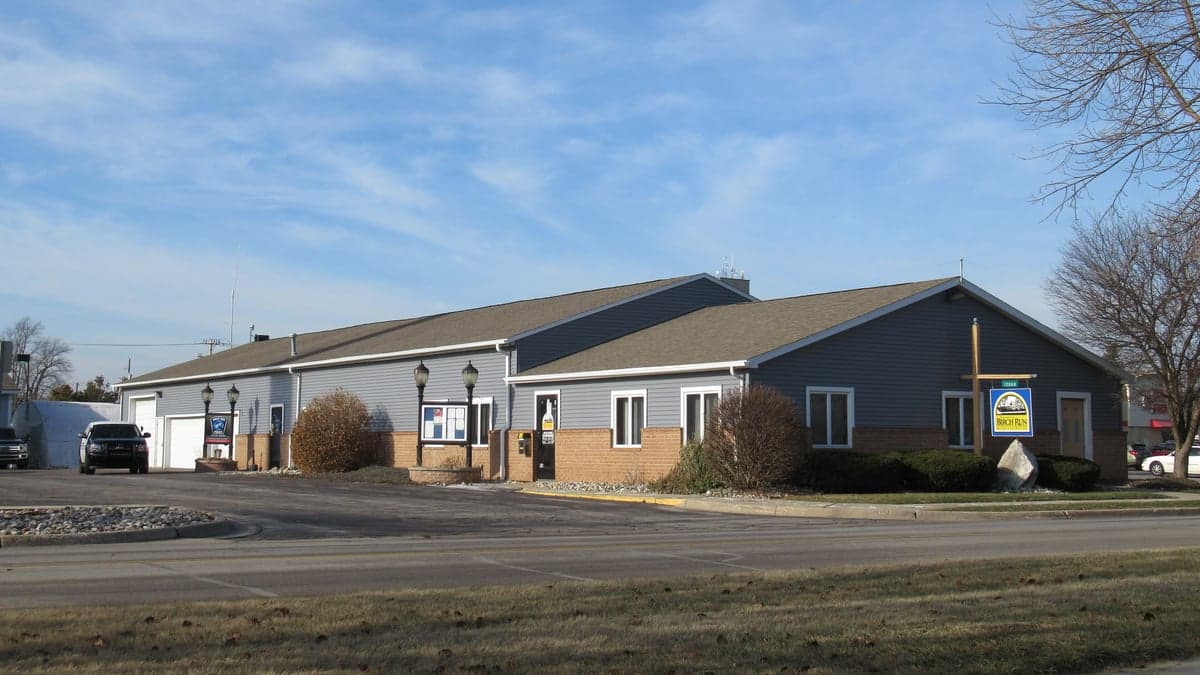
Photo: Wikipedia
Strategic Assessment of Birch Run, MI
Meaningful friction. Expect exposure to either population pressure, blast zones, or natural disaster risk. Consider buying a retreat property.
What does the Strategic Assessment tell us?
Our Strategic Assessment grades tactical survivability of an area. Major population centers, military targets, fallout zones, natural disasters, and border exposure all drive risk — lower exposure means a more defensible position in a crisis.
This is heavily inspired by Joel Skousen's Strategic Relocation book. Highly recommended you checkout the book ($)What does this tell us?
Our Strategic Assessment grades tactical survivability of an area. Major population centers, military targets, fallout zones, natural disasters, and border exposure all drive risk — lower exposure means a more defensible position in a crisis.
This is heavily inspired by Joel Skousen's Strategic Relocation book. Highly recommended you checkout the book ($)Strategic Pillars

Key Distances
Regional Safe Places
Below is our recommended "safe zones" in Michigan and the surrounding area based on our strategic heuristics. For most people, it's unrealistic to live in a “safe zone” full-time due to work, family or other personal reasons. They tend to be more rural. However, many of these areas are perfect for second homes and retreat properties that double as a vacation home or even a short-term rental.


Important Note: For informational purposes only. This does not mean nothing bad ever happens in the green zones. Please use common sense. This is based on public data and modeled with AI. We tried to take a conservative approach but mistakes happen. We update this regularly as new information becomes available.
Solar Generator Recommendations
Backup power matters more here than in safer locations. We've picked three solar generators across budgets and capacity tiers — start with the budget unit if you only need a few essentials, or step up if you want to run a fridge and HVAC for days at a time.

Jackery Portable Power Station Explorer 300
Budget OptionPower on the Go: Weighing only 11 lbs, it's convenient to set up and store with book-sized foldable solar panels

BLUETTI Portable Power Station AC180
Designed for both indoor and outdoor scenarios, AC180 is highly capable as it has a robost capacity and continuous output power.

EF ECOFLOW DELTA Pro Ultra Power Station
Upgraded PickEcoFlow DELTA Pro Ultra is a whole-home energy system designed to grow with your family. Integrated with the Smart Home Panel 2, it scales to meet your evolving energy needs — keeping your home powered, intelligent, and secure through every stage of life.
We earn a commission, at no additional cost to you.
Strategic Assessment Analysis
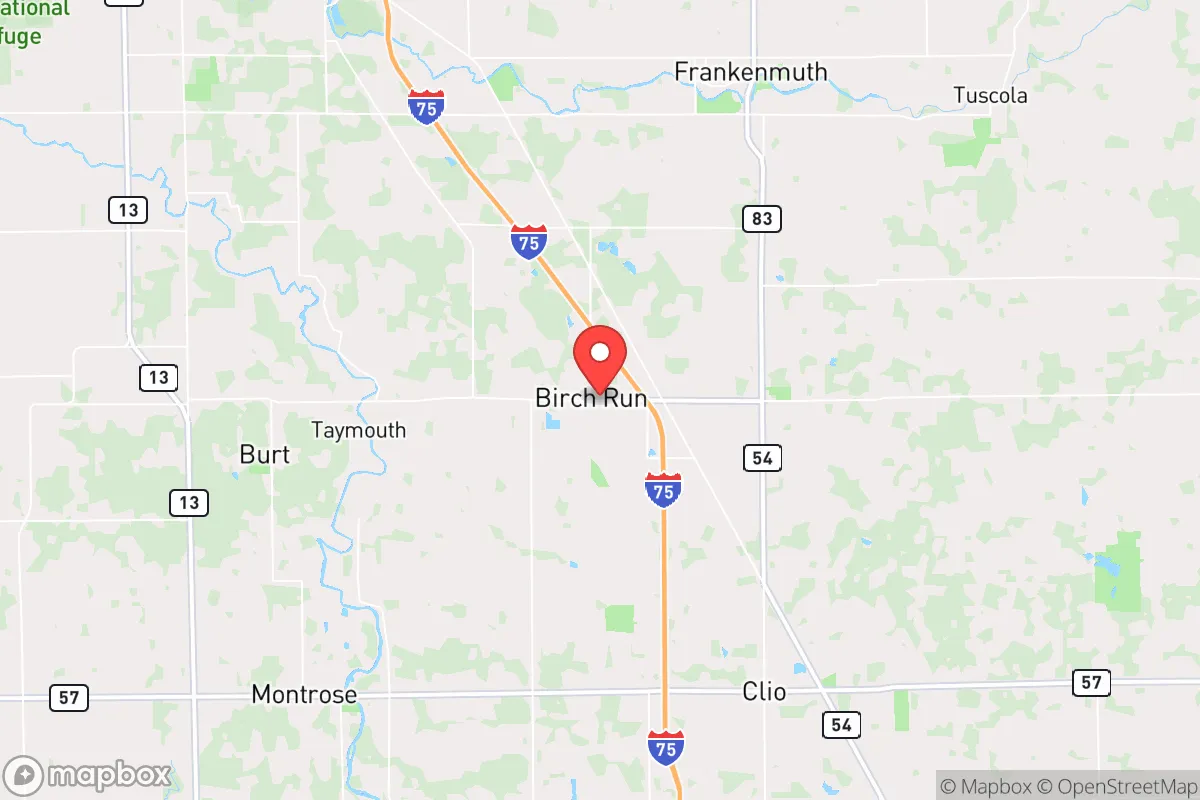
Birch Run, Michigan, offers a strategic balance of rural self-sufficiency and practical access to regional resources, making it a noteworthy option for relocation-minded individuals and families prioritizing resilience. Located in Saginaw County along the I-75 corridor, this village of roughly 1,500 residents sits about 90 miles northwest of Detroit and 10 miles south of Saginaw, providing a buffer from major urban centers while retaining proximity to essential infrastructure. The area’s flat, agricultural landscape and position within the Great Lakes Basin confer distinct advantages for food production and water security, though its location also introduces specific risks that a serious preparedness-minded relocator must weigh.
Geographic position and natural advantages for self-sufficiency
Birch Run’s geographic setting is defined by its placement in the Saginaw Valley, a fertile agricultural region that forms part of Michigan’s “Thumb” area. The village itself is surrounded by active farmland—corn, soybeans, and wheat dominate—which means local food production is not a theoretical possibility but a present reality. The soil is rich, glacial till, and the growing season, while short (roughly 140 frost-free days), is sufficient for staple crops and cold-hardy vegetables. Water access is a strong point: the nearby Saginaw River system, including the Flint River and Cass River, provides surface water sources, and the region sits atop the Saginaw Aquifer, a substantial groundwater reserve. Well water is common in rural areas outside the village limits, and most homes on acreage can drill a private well at moderate depth (typically 50–150 feet). For a relocator, this means a reliable, off-grid water source is achievable without extreme expense.
The area’s flat terrain is a double-edged sword. It simplifies construction, gardening, and movement, but offers little natural defensibility—no hills, forests, or ridges to provide cover or observation points. However, the low population density (Saginaw County averages about 160 people per square mile, with Birch Run Township even lower) reduces competition for resources in a crisis scenario. The village’s position along I-75 is a strategic asset for trade and travel, but also a vulnerability, as it’s a major north-south artery that could see heavy traffic during an evacuation or disruption. For a family seeking a quiet, self-sufficient base, the combination of arable land, accessible water, and distance from major metro areas (Detroit, Flint, and Saginaw are all 30–90 minutes away) creates a solid foundation for resilience.
Risks, exposures, and proximity to fallout-relevant landmarks
No resilience assessment is complete without a clear-eyed look at risks, and Birch Run has several that demand attention. The most immediate natural hazard is flooding. The village sits in the Saginaw River floodplain, and heavy spring rains or rapid snowmelt can cause the Cass River and nearby creeks to overflow. The Federal Emergency Management Agency (FEMA) designates portions of Birch Run Township as Zone A (high-risk flood areas), and properties near the river or low-lying drainage ditches require flood insurance. A relocator should check flood maps carefully before buying land—elevation above the 100-year flood line is critical. Tornadoes are a secondary concern; Michigan averages about 15 tornadoes per year, and Saginaw County has seen several EF-2 and EF-3 events in the past two decades. The flat landscape offers no natural shelter, so a reinforced basement or storm shelter is a wise investment.
Man-made risks are more significant for the strategic-minded reader. Birch Run’s proximity to major industrial and military infrastructure is a double-edged sword. The village is about 25 miles southwest of the Saginaw Bay, which hosts chemical plants and refineries (including the Dow Chemical complex in Midland, 40 miles north). A major industrial accident or release at these facilities could affect air quality or water supplies depending on wind patterns. More critically, Birch Run lies roughly 60 miles north of the Detroit metropolitan area, a high-value target in any conflict scenario involving nuclear or conventional strikes. The area is also within 100 miles of the Selfridge Air National Guard Base (near Mount Clemens) and the Detroit Arsenal (Warren), both potential military targets. While not in a primary blast zone, fallout patterns from a nuclear detonation over Detroit or Flint could reach Birch Run within hours, depending on prevailing westerly winds. The village’s flat terrain offers no shielding from fallout, so a prepared relocator would need a below-ground shelter with adequate filtration and supplies for at least two weeks of shelter-in-place. On balance, Birch Run’s risk profile is moderate—lower than suburban Detroit but higher than remote Upper Peninsula locations—and demands proactive mitigation.
Practical resilience for a relocator: food, water, energy, and defensibility
For a family or individual serious about self-sufficiency, Birch Run offers a workable but not effortless path. Food security is the strongest asset. The surrounding agricultural land means local farmers’ markets, u-pick operations, and direct-from-farm sales are common in season. The Birch Run Farmers Market operates from May through October, offering fresh produce, eggs, and meat from nearby farms. For long-term storage, the area’s cold winters (average January low of 14°F) allow for natural root cellaring and cold storage of harvests. A 1–2 acre plot can easily support a family’s vegetable needs, and raising chickens, goats, or even a small beef herd is feasible—zoning in Birch Run Township permits livestock on parcels of 2 acres or more. Hunting is also an option: the surrounding state game areas (like the Shiawassee River State Game Area, 20 miles south) offer deer, turkey, and small game, though pressure from other hunters is moderate.
Water resilience is good but requires planning. As noted, private wells are common and reliable, but they depend on electricity for pumping. A backup generator (or solar-plus-battery system) is essential for maintaining water access during grid outages, which occur a few times per year due to winter storms or summer thunderstorms. Rainwater collection is legal in Michigan and can supplement household use, though the state’s average annual precipitation of 30 inches makes it a secondary source. Energy independence is achievable but not cheap. The region has decent solar potential (about 4.2 peak sun hours per day), and net metering is available through Consumers Energy, the dominant utility. Wood heating is popular—firewood is abundant from local woodlots—and a wood stove or outdoor boiler can provide heat and cooking fuel independent of the grid. Natural gas is available in the village but not in outlying rural areas, so propane tanks are common for heating and cooking.
Defensibility is Birch Run’s weakest point. The flat, open terrain offers no natural chokepoints or cover, and the village’s layout—a few main roads (I-75, M-54, and M-83) with scattered residential streets—makes it hard to secure a perimeter. However, the low population density means fewer potential threats, and the strong community ties (typical of small Midwestern towns) can be a force multiplier. Neighbors know each other, and informal networks for sharing resources and information are common. For a relocator, the best approach is to buy land with some distance from main roads and to invest in physical security measures: fencing, motion-sensor lighting, and a well-stocked armory (Michigan has permissive gun laws, including no permit required for concealed carry as of 2024). A rural property with a long driveway and clear sightlines can be made reasonably defensible with modest effort.
The overall strategic picture for Birch Run is one of cautious optimism. It offers genuine advantages—fertile soil, abundant water, low population density, and proximity to regional resources—that align with a self-sufficient lifestyle. The risks are real but manageable: flooding requires site selection, tornadoes demand a shelter, and the area’s position relative to potential man-made threats calls for a fallout plan. For a relocator who is willing to invest in a well, a backup power system, and a reinforced shelter, Birch Run provides a solid base for resilience without the isolation of more remote locations. It’s not a fortress, but it’s a place where a prepared family can thrive with reasonable effort and foresight.

* Values derived from national, state, county, city and local statistics and may differ in a specific area. Last updated: 2026-08-17T17:31:13.000Z
Narrative content on this page is AI-generated and may contain mistakes. Verify any details that matter before acting on them.
ReloMaps may earn a commission from affiliate links at no extra cost to you.

