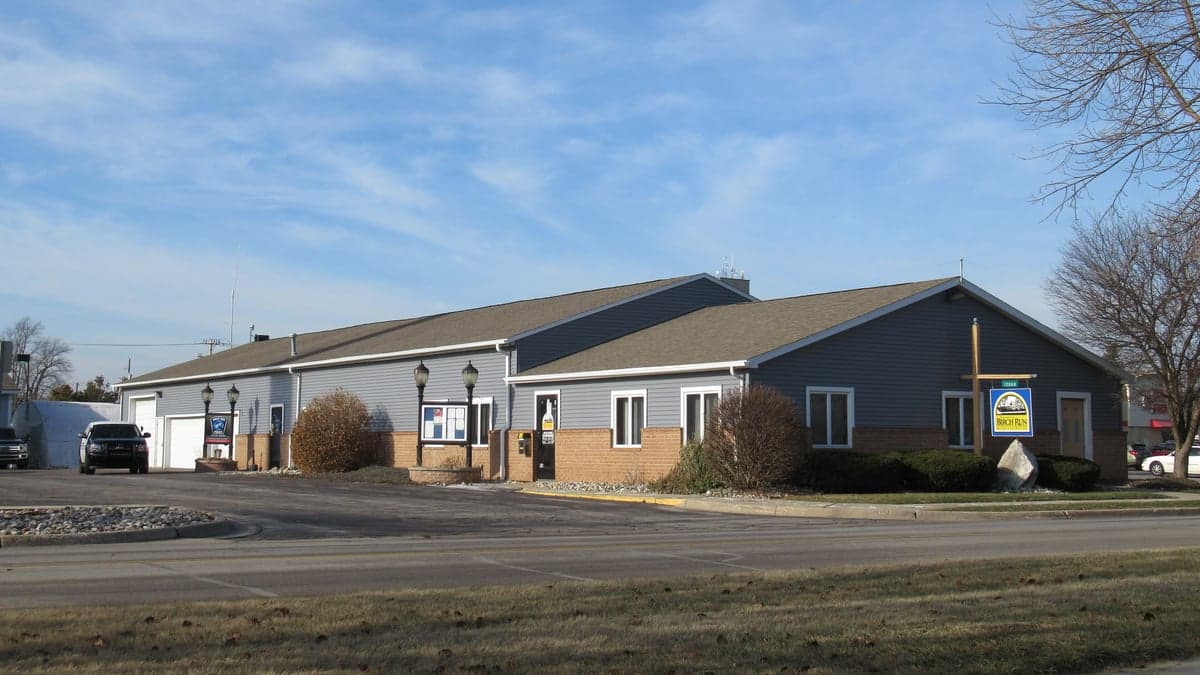
Photo: Wikipedia
Political ClimatePolitical Climate in Birch Run, MI
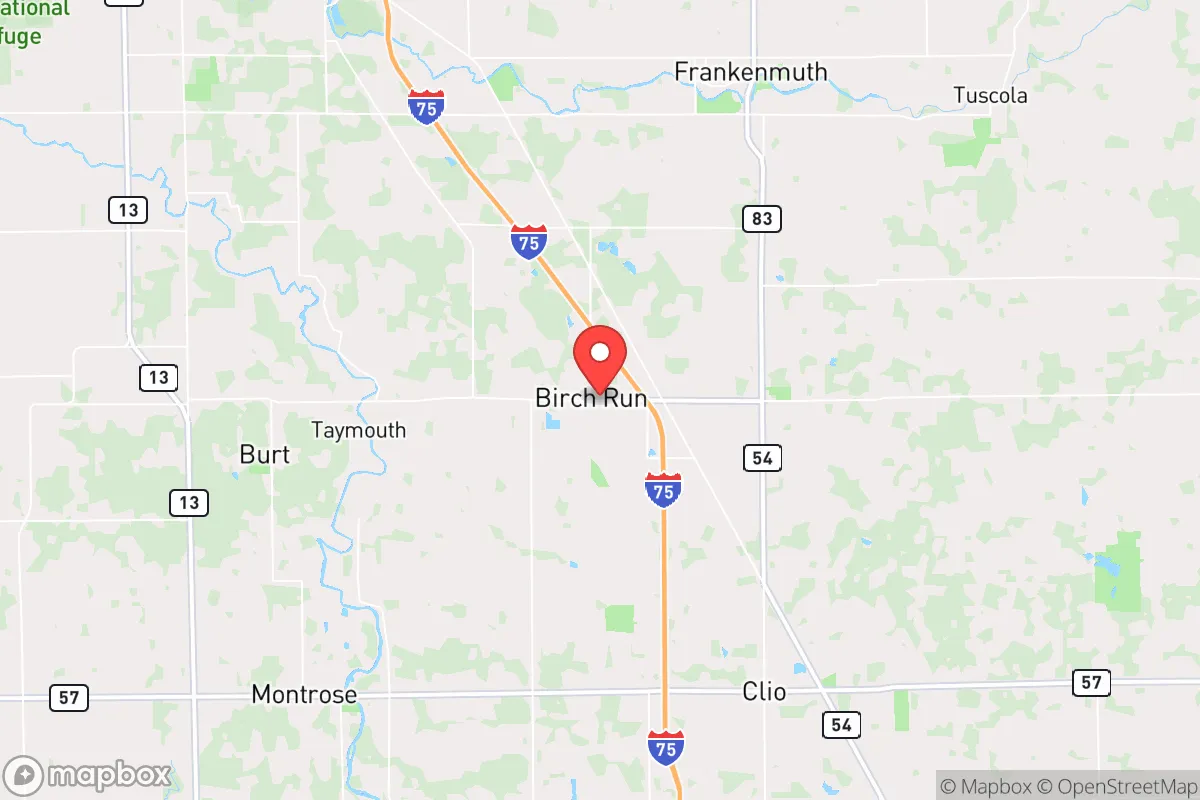
District shown is the primary district for this city’s centroid. Cities may span multiple districts.
Local Political AnalysisPolitical Analysis of Birch Run, MI
Birch Run’s political climate leans slightly to the right, with a Cook Partisan Voting Index (PVI) of R+1, meaning the area votes about one point more Republican than the national average. That’s a subtle but real tilt compared to Michigan as a whole, which sits at EVEN on the PVI scale—a state that’s been a genuine battleground in recent elections. Over the past decade, Birch Run has stayed fairly steady in its lean, though the surrounding Saginaw County has seen some Democratic gains in local races, especially in the city of Saginaw itself, about 15 miles south. The township itself, though, has held its Republican edge, with precinct-level results in 2024 showing a consistent 55-60% GOP vote share in presidential races. It’s not a deep-red stronghold, but it’s reliably conservative in a way that feels baked into the local culture.
How it compares
When you stack Birch Run against Michigan’s statewide PVI of EVEN, the difference is modest but meaningful. The state as a whole has swung between parties in recent cycles—Trump won it in 2016, Biden flipped it back in 2020, and it’s been a toss-up ever since. Birch Run, by contrast, has been a steady Republican performer, even as nearby towns like Frankenmuth (about 10 miles east) lean more moderate, and Bridgeport Township (just south) trends Democratic due to its more diverse, working-class population. The contrast is sharpest with the city of Flint, 20 miles southeast, which is heavily Democratic and has a PVI around D+20. So Birch Run sits in a kind of political buffer zone—not as conservative as rural areas further north, but noticeably more Republican than the urban and suburban corridors to the south. The R+1 rating reflects that it’s a place where national Democratic waves can still make races competitive, but the default setting is center-right.
What this means for residents
For conservative residents, Birch Run’s lean means local policies tend to align with their values—lower taxes, support for Second Amendment rights, and a general skepticism of big government. The township board and school board have been reliably Republican for years, so zoning, budget, and education decisions usually reflect that. For liberal residents, it’s not hostile, but it can feel isolating. You’ll find a few progressive voices in local Facebook groups or at town hall meetings, but they’re often outnumbered. The practical effect is that political conversations at the grocery store or the high school football game tend to stay polite but cautious—people know where the majority stands. There’s no real culture war intensity here; it’s more of a quiet, lived-in conservatism. The trajectory seems stable: Birch Run isn’t trending blue like some suburban areas, but it’s not hardening into deep red either. Expect the R+1 lean to hold through the next few cycles, barring a major demographic shift.
One cultural distinction worth noting: Birch Run’s politics are shaped heavily by its mix of agriculture, small manufacturing, and the outlet mall economy. That means issues like property taxes, road funding, and school funding get more airtime than national hot-button topics. The local Republican club is active but not strident, and the Democratic presence is small but organized enough to field candidates for county commission seats. If you’re moving here, you’ll find a community that votes its pocketbook and its traditions, not its cable news feed. It’s a place where the political climate is real but not overwhelming—a comfortable fit for moderates and center-right folks, and a manageable adjustment for liberals who don’t mind being the minority voice at the occasional potluck.

State Political ClimatePolitical Climate in Michigan
State Political AnalysisPolitical Environment in the State
Michigan is the ultimate swing state, with a Cook PVI of EVEN that perfectly captures its knife-edge balance. Over the past 20 years, it has shifted from a reliably blue Rust Belt stronghold (voting for Democrats in every presidential election from 1992 to 2012) to a true battleground where both parties have a real shot. The 2016 election saw Donald Trump flip the state by just 10,704 votes, followed by Joe Biden’s narrow 154,000-vote win in 2020, and then Trump reclaiming it in 2024 by roughly 80,000 votes. This three-cycle flip-flop reflects a state deeply split between its urban, suburban, and rural populations, with no single coalition able to lock in a lasting majority.
Urban vs. rural divide
The political map of Michigan is a textbook case of the urban-rural chasm. The Democratic base is concentrated in the southeast, anchored by Detroit and its inner-ring suburbs like Southfield and Dearborn, which together deliver massive vote margins. Ann Arbor (Washtenaw County) and Lansing (Ingham County) add another deep-blue layer, driven by the University of Michigan and state government employees. In contrast, the western and northern Lower Peninsula, along with the entire Upper Peninsula, are overwhelmingly Republican. Grand Rapids (Kent County) has been a notable shift: once a GOP stronghold, it has trended toward Democrats in recent cycles due to an influx of younger, college-educated workers in the medical and tech sectors. Meanwhile, Macomb County—a suburban battleground north of Detroit—has become the state’s ultimate bellwether, flipping from Obama to Trump to Biden and back to Trump. Rural counties like Oscoda and Alcona in the northeast routinely vote 70-80% Republican, while the Upper Peninsula’s Marquette County leans left thanks to Northern Michigan University.
Policy environment
Michigan’s policy landscape is a mixed bag that reflects its split government. The state has a flat income tax rate of 4.25% (down from 4.35% in 2023 via automatic rollback), and no tax on Social Security benefits—a plus for retirees. Property taxes are relatively high, averaging about 1.5% of assessed value, but the Proposal A system caps annual increases for primary residences. The regulatory posture is moderate: Michigan is a right-to-work state, but that law was repealed by Democrats in 2023 (effective 2024), meaning union dues can again be required for covered workers. Education policy is contentious: the state funds public schools through a foundation allowance system, but charter schools are widespread and school choice is robust. Healthcare is dominated by the Big Three insurers (Blue Cross, Priority Health, McLaren), and Medicaid expansion under the Healthy Michigan Plan remains popular. Election laws are relatively accessible: no-excuse absentee voting was approved by voters in 2018, and same-day voter registration is available. However, voter ID is required at the polls (with a signed affidavit as an alternative).
Recent policy direction
The last two years have seen a dramatic lurch leftward under Democratic Governor Gretchen Whitmer and a Democratic legislative trifecta (2023-2024). Key legislation includes: repeal of the 1931 abortion ban and codification of abortion rights via Proposal 3 (2022); repeal of the right-to-work law; expansion of the Elliott-Larsen Civil Rights Act to include sexual orientation and gender identity; and a red flag law allowing courts to temporarily seize firearms from individuals deemed a threat. On the gun front, Michigan also passed universal background checks and safe storage requirements in 2023. For conservatives, these moves are a red flag; for liberals, they represent long-sought progress. On the other side, the state has maintained a stand your ground self-defense law (since 2006) and a concealed pistol license system that is shall-issue for residents. Parental rights in education have become a flashpoint: the state board of education has pushed LGBTQ-inclusive curriculum guidelines, while local districts like Rochester Community Schools have seen fierce school board battles over library books and transgender policies. Property rights remain strong, with no statewide rent control and limited eminent domain use. Voting access has expanded, but the 2024 election saw Republican-led challenges to absentee ballot drop boxes in cities like Detroit and Flint.
Civil unrest & political movements
Michigan has been a national hotspot for political activism. The 2020 Whitmer kidnapping plot by anti-government extremists put the state in the headlines, and the Operation Gridlock protests at the state capitol in April 2020—where armed demonstrators opposed COVID-19 lockdowns—became a symbol of the national divide. Since then, the left has organized heavily through groups like Michigan United and Progress Michigan, while the right has coalesced around the Michigan Republican Party (currently fractured between Trump-aligned and establishment factions) and grassroots groups like Moms for Liberty. Immigration politics are relatively quiet compared to border states, but Dearborn and Hamtramck have large Arab-American and Muslim populations that have become politically active, particularly around Palestine solidarity protests in 2024. Election integrity remains a sore point: the 2020 results were certified after a statewide audit, but ongoing lawsuits over ballot drop boxes and voter rolls continue in counties like Macomb and Oakland. A new resident would notice the prevalence of yard signs and bumper stickers—politics is a common topic of conversation, especially in the swing suburbs.
Projection
Over the next 5-10 years, Michigan is likely to remain a toss-up, but demographic trends favor a slight blue tilt. The Grand Rapids metro area is growing fast with younger, college-educated workers, while Detroit’s population decline has slowed. The Upper Peninsula and northern Lower Peninsula are aging and shrinking, which reduces the GOP’s rural base. In-migration from other states is modest but tilts slightly toward retirees from the Midwest and Florida, who tend to be conservative. The wild card is the Arab-American vote in Dearborn and Hamtramck, which swung heavily against Democrats in 2024 over Gaza policy—if that holds, it could flip the state red in close elections. The state’s political infrastructure is hardening: both parties are investing heavily in ground games, and the 2026 gubernatorial race (with Whitmer term-limited) will be a major test. Expect continued fights over election laws, school curriculum, and gun policy, with the legislature likely to flip back and forth between parties. A conservative moving in should expect a state where their vote matters but where policy will swing with each election cycle.
For a new resident, the bottom line is that Michigan offers a genuinely competitive political environment where your vote carries weight. Conservatives will find a state with a strong gun culture, no income tax on Social Security, and a vibrant rural and suburban life, but they’ll also face a Democratic governor until 2026 and a state that has moved left on abortion, LGBTQ rights, and union policy. Liberals will enjoy the recent policy wins and the energy of cities like Ann Arbor and Grand Rapids, but they’ll need to contend with a deeply entrenched conservative base in the rest of the state. The practical takeaway: if you want to live in a place where your political engagement can actually tip the balance, Michigan is one of the few states left where that’s true. Just be prepared for the weather—both meteorological and political—to change fast.
* Values derived from national, state, county, city and local statistics and may differ in a specific area. Last updated: 2026-08-17T17:31:13.000Z
Narrative content on this page is AI-generated and may contain mistakes. Verify any details that matter before acting on them.
ReloMaps may earn a commission from affiliate links at no extra cost to you.

