Photo: Wikipedia
Political ClimatePolitical Climate in Blair, NE
District shown is the primary district for this city’s centroid. Cities may span multiple districts.
Local Political AnalysisPolitical Analysis of Blair, NE
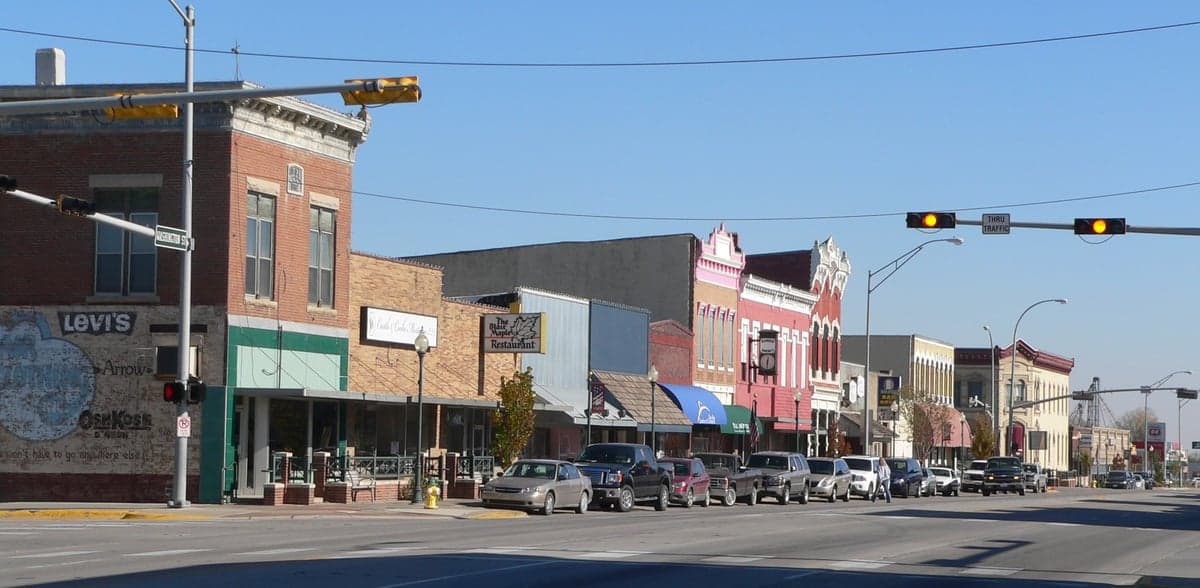
Blair, Nebraska, is about as solidly conservative as it gets in the eastern part of the state, with a Cook PVI of R+27 that puts it deep in the red column. That number isn't just a statistic—it reflects a community where folks have long believed in limited government, personal responsibility, and keeping the federal government out of local decisions. The political lean here hasn't wavered much over the decades, but you can feel a subtle shift in the air, especially as Omaha's influence creeps north along Highway 75. The trajectory is still conservative, but there's a growing unease among long-time residents about whether the next generation will hold the line against the progressive tide washing over bigger cities.
How it compares
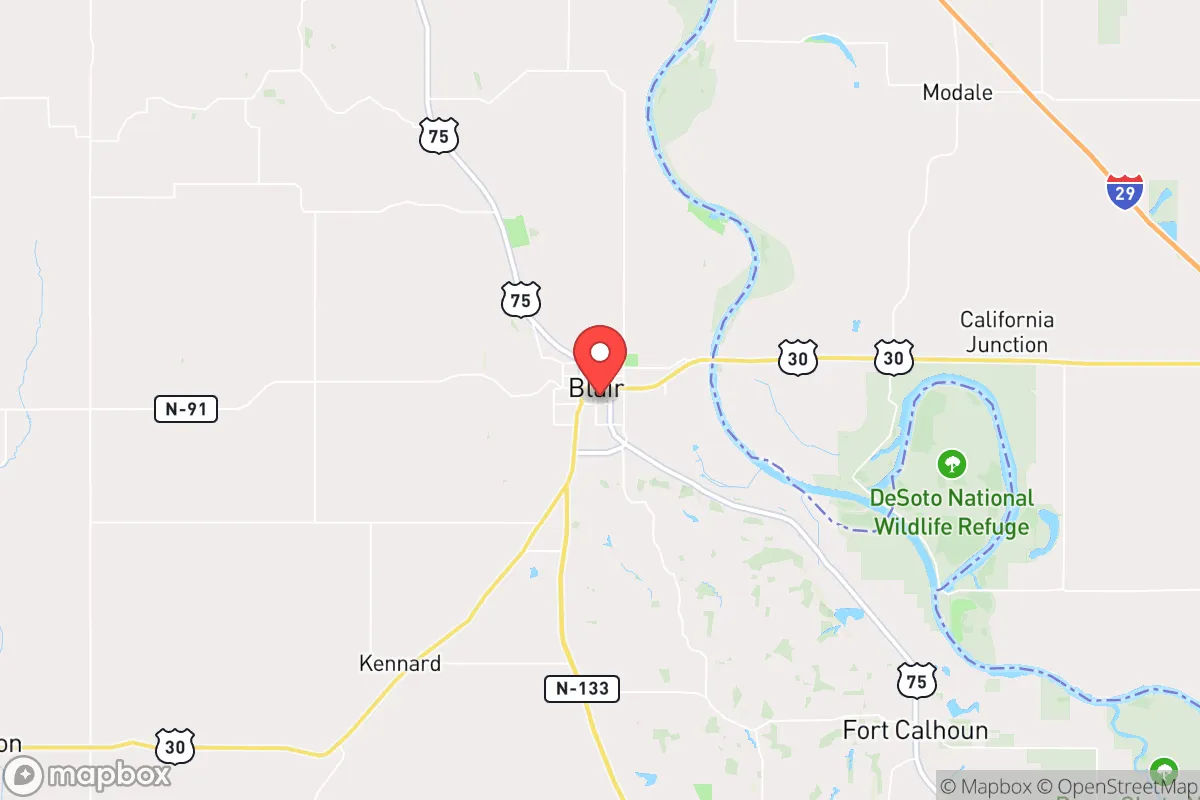
Drive 20 minutes south to Fremont, and you'll find a similar conservative bent, though Fremont's politics have gotten a bit more complicated with its larger immigrant population and the ongoing debates over local ordinances. Head 30 minutes east into Iowa, and Council Bluffs feels like a different world—more purple, with a stronger union presence and a Democratic base that actually shows up. The real contrast, though, is Omaha, just 25 miles southeast. Omaha's Douglas County went for Biden in 2020, and its city council has been pushing progressive policies on housing and policing that would never fly in Blair. That's the worry here: as Omaha expands and more people commute in for work, some of those big-city ideas start seeping into local conversations. So far, Blair's city council and school board have held firm, but you hear folks at the coffee shop wondering how long that'll last.
What this means for residents
For the people who live here, the R+27 lean means your tax dollars aren't being funneled into pet projects that don't make sense for a town of 8,000. The county commission keeps property taxes relatively low, and there's no appetite for the kind of zoning overreach or environmental mandates that choke small businesses in more liberal areas. You can still run a home-based business without jumping through a dozen hoops, and the school board hasn't caved to the kind of curriculum battles that dominate headlines elsewhere. The biggest concern among locals is that state-level pressure from Lincoln—which is more moderate but still has its own progressive pockets—might try to impose mandates on things like gun rights or local land use. So far, Blair's state representatives have been reliable votes against that kind of overreach, but the 2026 elections have everyone watching closely.
On the cultural side, Blair still feels like a place where the Fourth of July parade matters more than any political rally. There's a strong sense of neighborly independence—people help each other out without expecting the government to step in. That said, the recent push for a county-wide recycling mandate raised eyebrows, with many seeing it as an unnecessary layer of bureaucracy that would raise costs for families already stretched thin. The measure was defeated, but it showed that even in a R+27 district, you can't take your freedoms for granted. The long-term outlook depends on whether Blair can keep its small-town character without letting outside political trends dictate how people live their lives. If the next decade brings more state-level interference or a wave of newcomers who don't share the local values, that conservative stronghold could start showing cracks. For now, though, it's still a place where you can mind your own business and expect the same from your government.

State Political ClimatePolitical Climate in Nebraska
State Political AnalysisPolitical Environment in the State
Nebraska has long been a reliably conservative state, with a political DNA that leans Republican by roughly 15-20 points in most statewide elections, but don’t let the “red state” label fool you—there’s a real split personality here. The state’s dominant coalition is a mix of rural agricultural conservatives and suburban moderates, but over the last 10-20 years, the GOP has tightened its grip on the legislature and governor’s office, while the Omaha metro area has become a stubborn blue island. If you’re looking for a place where conservative values still hold the line, Nebraska is a solid bet, but you need to know where the cracks are forming.
Urban vs. rural divide
The political map of Nebraska is a textbook case of the urban-rural chasm. The eastern third of the state, anchored by Omaha (Douglas County) and Lincoln (Lancaster County), is where the Democratic vote lives. Omaha’s 2nd Congressional District has flipped blue in three of the last four presidential elections, thanks to a growing professional class and a significant minority population. Lincoln, home to the University of Nebraska, leans left but is more moderate than Omaha. Meanwhile, the rest of the state—places like Grand Island, Kearney, North Platte, and Scottsbluff—votes overwhelmingly Republican. The rural counties in the Sandhills and along the Platte River routinely deliver 75-80% of their vote to GOP candidates. The divide isn’t just cultural; it’s economic. Omaha’s tech and insurance sectors pull in a different demographic than the ag-heavy towns out west. A notable exception is Fremont, a manufacturing hub that’s stayed reliably red despite its proximity to Omaha, and Columbus, which remains a conservative stronghold thanks to its strong Catholic and farming roots.
Policy environment
Nebraska’s policy environment is broadly friendly to conservative priorities, but with some wrinkles. The state has no income tax on Social Security benefits and a flat state income tax rate that’s been gradually cut—down to 5.58% as of 2026, with a path to 3.99% by 2027. Property taxes are a perennial pain point, especially in rural areas where ag land valuations have soared, but the legislature has passed modest relief measures. On education, Nebraska is a school choice battleground: the state enacted a tax-credit scholarship program in 2023, but it’s been tied up in court challenges from teachers’ unions. The state’s “blue dot” electoral system—where two of the five electoral votes are awarded by congressional district—means Omaha’s 2nd District can swing a national election, a quirk that frustrates many conservatives. Election laws are solid: voter ID is required (passed in 2021), and early voting is available but not overly expansive. Healthcare policy is mixed—Medicaid expansion was approved by ballot measure in 2018, overriding legislative resistance, but the state hasn’t gone further into government-run schemes. Abortion law is restrictive: a 12-week ban was signed in 2023, with exceptions for rape, incest, and life of the mother. For a conservative, the policy environment is mostly good, but the property tax issue and the school choice fight show that the legislature isn’t always unified.
Trajectory & freedom
Nebraska is trending in a mixed direction on personal freedom. On the plus side, the state passed constitutional carry (permitless concealed carry) in 2023, a major win for gun rights. The same year, the legislature passed a “Parents’ Bill of Rights” that requires schools to notify parents about curriculum changes and gives them access to instructional materials—a direct response to the woke indoctrination fears that have swept the country. On the negative side, the state’s medical marijuana initiative has been repeatedly blocked by the legislature, despite strong public support, which feels like government overreach to many. Property rights are generally strong, with no statewide rent control and limited zoning restrictions outside of Omaha and Lincoln. However, the state’s “Nebraska Clean Water Act” has been used to impose new regulations on farmers and ranchers, which some see as creeping federal-style overreach. The biggest freedom concern is taxation: while income tax rates are dropping, property taxes remain high, and the state’s sales tax base is narrow, meaning the burden falls unevenly. Overall, Nebraska is becoming more free on cultural issues (guns, parental rights) but less free on economic ones (property taxes, regulatory creep).
Civil unrest & political movements
Nebraska is not a hotbed of civil unrest, but there have been flashpoints. The 2020 George Floyd protests in Omaha turned violent, with looting and fires in the downtown area, leading to a heavy police response and a lasting distrust of the city’s progressive leadership. The “Defund the Police” movement gained no traction statewide, but Omaha’s city council did cut the police budget by 5% in 2021, which was later restored. On the right, the “Nebraska Freedom Coalition” has been active, pushing for school board takeovers and anti-mask mandates during COVID. Immigration politics are a live wire: Schuyler and Lexington, both meatpacking towns, have seen large Hispanic populations grow, leading to tensions over language access and public services. There’s no sanctuary city policy anywhere in the state, and the legislature passed a law in 2023 requiring local law enforcement to cooperate with ICE. Election integrity controversies have been minimal—Nebraska’s paper ballot system is widely trusted—but the 2020 election saw a brief push for a forensic audit in a few rural counties, which fizzled. A new resident would notice that political activism is mostly low-key, with the exception of the occasional school board meeting that goes viral.
Projection
Over the next 5-10 years, Nebraska is likely to stay red, but the margins will tighten. The Omaha metro is growing faster than the rest of the state, driven by tech and insurance jobs, and that growth is pulling in younger, more diverse voters who lean left. The rural counties are aging and losing population, which means the GOP’s base is shrinking. However, the state’s in-migration patterns are interesting: people are moving to Papillion and Gretna (suburbs of Omaha) from blue states like California and Illinois, and many of them are conservative-leaning families looking for lower taxes and better schools. That could offset the urban drift. The legislature will likely continue to pass conservative bills on guns, education, and abortion, but the property tax issue will force a reckoning—either the state cuts spending or raises sales taxes, both of which are politically painful. The biggest wildcard is the 2nd Congressional District: if Omaha keeps trending blue, it could become a permanent swing district, which would give Nebraska a national profile it doesn’t currently have. For a new resident, expect the state to remain a conservative haven for the next decade, but with a growing blue pocket in the east that will keep things interesting.
For a conservative moving to Nebraska, the bottom line is this: you’ll find a state that largely respects your values on guns, family, and local control, but you’ll need to pick your county carefully. Stick to the rural areas or the conservative suburbs like Papillion, Gretna, or Elkhorn if you want to avoid the progressive drift of Omaha and Lincoln. Property taxes will be your biggest headache, but the income tax cuts and school choice options make it a net positive. Just keep an eye on the legislature—the fight over property tax reform and school funding will define whether Nebraska stays truly free or starts to buckle under its own success.
* Values derived from national, state, county, city and local statistics and may differ in a specific area. Last updated: 2026-04-19T10:41:32.000Z
Narrative content on this page is AI-generated and may contain mistakes. Verify any details that matter before acting on them.
ReloMaps may earn a commission from affiliate links at no extra cost to you.

