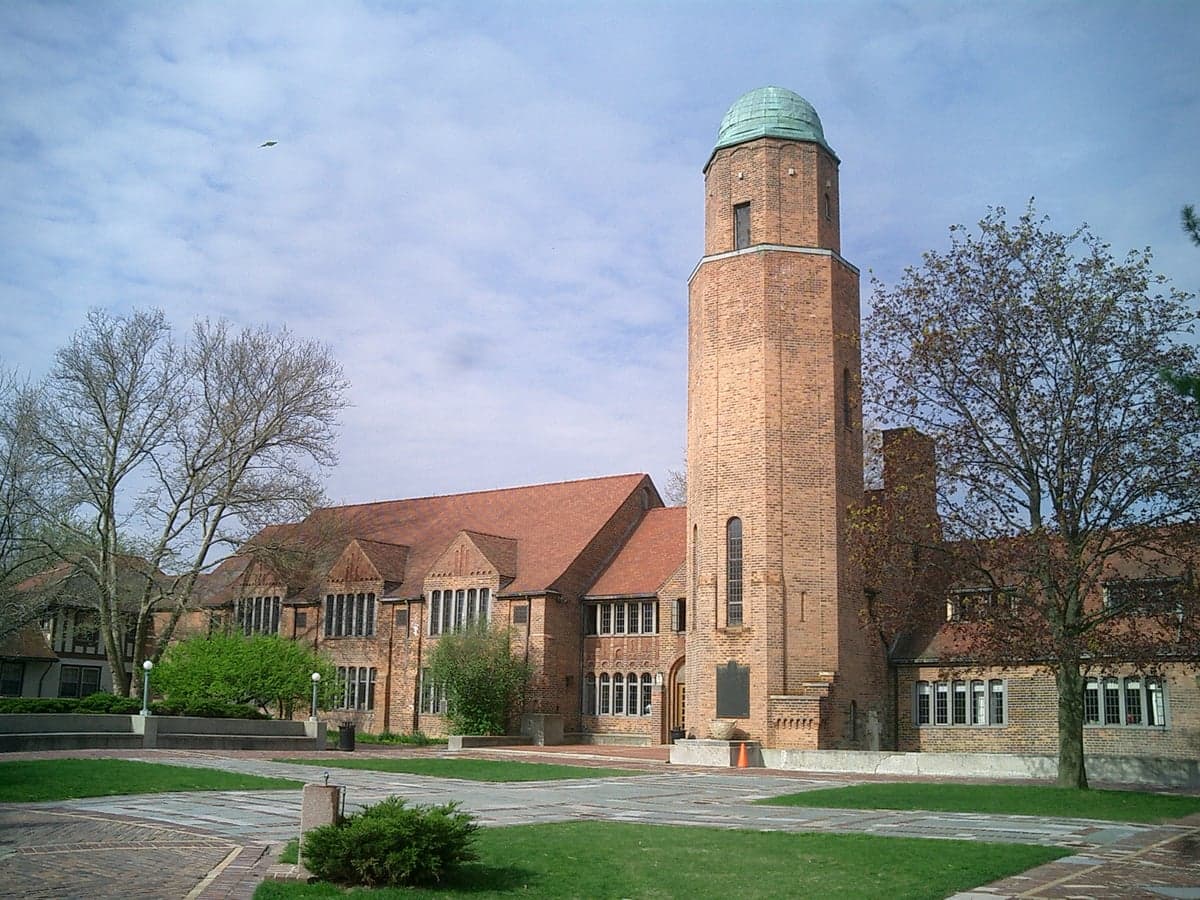
Photo: Wikipedia
Strategic Assessment of Bloomfield Hills, MI
Multiple tactical vulnerabilities. Population density, target proximity, or disaster risk are likely compounding. A retreat property and exit planning is required.
What does the Strategic Assessment tell us?
Our Strategic Assessment grades tactical survivability of an area. Major population centers, military targets, fallout zones, natural disasters, and border exposure all drive risk — lower exposure means a more defensible position in a crisis.
This is heavily inspired by Joel Skousen's Strategic Relocation book. Highly recommended you checkout the book ($)What does this tell us?
Our Strategic Assessment grades tactical survivability of an area. Major population centers, military targets, fallout zones, natural disasters, and border exposure all drive risk — lower exposure means a more defensible position in a crisis.
This is heavily inspired by Joel Skousen's Strategic Relocation book. Highly recommended you checkout the book ($)Strategic Pillars

Key Distances
Regional Safe Places
Below is our recommended "safe zones" in Michigan and the surrounding area based on our strategic heuristics. For most people, it's unrealistic to live in a “safe zone” full-time due to work, family or other personal reasons. They tend to be more rural. However, many of these areas are perfect for second homes and retreat properties that double as a vacation home or even a short-term rental.


Important Note: For informational purposes only. This does not mean nothing bad ever happens in the green zones. Please use common sense. This is based on public data and modeled with AI. We tried to take a conservative approach but mistakes happen. We update this regularly as new information becomes available.
Solar Generator Recommendations
Backup power matters more here than in safer locations. We've picked three solar generators across budgets and capacity tiers — start with the budget unit if you only need a few essentials, or step up if you want to run a fridge and HVAC for days at a time.

Jackery Portable Power Station Explorer 300
Budget OptionPower on the Go: Weighing only 11 lbs, it's convenient to set up and store with book-sized foldable solar panels

BLUETTI Portable Power Station AC180
Designed for both indoor and outdoor scenarios, AC180 is highly capable as it has a robost capacity and continuous output power.

EF ECOFLOW DELTA Pro Ultra Power Station
Upgraded PickEcoFlow DELTA Pro Ultra is a whole-home energy system designed to grow with your family. Integrated with the Smart Home Panel 2, it scales to meet your evolving energy needs — keeping your home powered, intelligent, and secure through every stage of life.
We earn a commission, at no additional cost to you.
Strategic Assessment Analysis
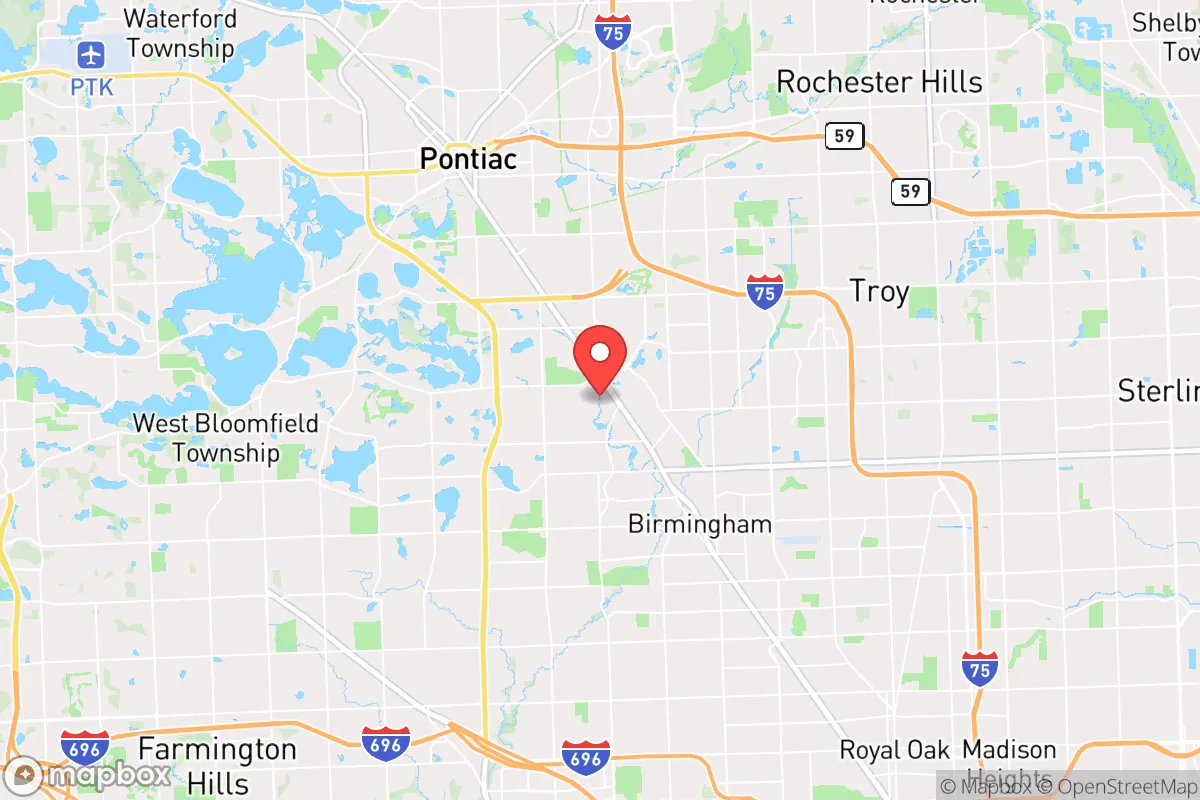
Bloomfield Hills, Michigan, presents a complex strategic picture for the conservative prepper: it offers genuine natural-resilience advantages—abundant fresh water, defensible terrain, and a low-crime bubble—but sits uncomfortably close to Detroit, a major urban center with high risks of civil unrest, infrastructure failure, and fallout-related hazards. The area’s location within Oakland County, roughly 20 miles northwest of downtown Detroit, places it in a corridor that has historically been insulated from the worst of the city’s dysfunction, yet the proximity means that any large-scale event in the metro area—whether a grid-down scenario, a mass-casualty incident, or a coordinated attack—will ripple outward quickly. For the single individual or family looking to balance seclusion with access to resources, Bloomfield Hills offers a mixed bag: strong local governance and water security, but a vulnerability to the collapse of the regional supply chain and the potential for refugee flows from the south and east.
Geographic position and natural advantages for long-term survival
Bloomfield Hills sits atop the Huron River watershed, with direct access to several small lakes—including Quarton Lake and the larger Cass Lake just west—and the Clinton River system to the north. This water abundance is a critical asset in any long-term scenario where municipal supply fails. The area’s elevation, averaging around 900 feet, provides decent drainage and reduces flood risk compared to low-lying parts of Metro Detroit. The terrain is rolling, with wooded hills and natural chokepoints formed by the river valleys, which could be leveraged for perimeter defense or discreet movement. The local soil is a mix of loam and clay, suitable for small-scale agriculture if you’re willing to put in the work, though the growing season is short—roughly 150 frost-free days. The region’s position in the Great Lakes basin also means that prevailing westerly winds would carry fallout from any nuclear event in the eastern U.S. away from Bloomfield Hills, though a detonation in Detroit or Toledo would be a different story entirely. For the prepper, the natural advantages here are real but require active management: you’re not in a remote wilderness, but you’re in one of the better-watered, less-dense pockets within striking distance of a major city.
Risks, exposures, and proximity to fallout-relevant landmarks
The elephant in the room is Detroit, 20 miles southeast. In a scenario involving civil unrest, mass casualty events, or a coordinated attack, Bloomfield Hills is close enough to experience the secondary effects—refugee movement, supply chain disruption, and potential spillover violence—but far enough that you’d have some warning. The city’s population of roughly 630,000 (metro area 4.3 million) means that any large-scale event could trigger a mass exodus along I-75 and M-59, both of which run within a few miles of Bloomfield Hills. The area is also within 50 miles of the Fermi 2 nuclear plant in Newport, Michigan, and the Enrico Fermi plant in Ohio, both of which are potential targets or failure points. A plume from either would likely track east or northeast, but wind shifts could put Bloomfield Hills in a fallout zone. Closer to home, the area’s reliance on the regional power grid—fed by DTE Energy’s aging infrastructure—means that a cyberattack or EMP could knock out power for weeks, as seen in the 2003 blackout that left much of Southeast Michigan in the dark for days. The local police and fire departments are well-funded (Bloomfield Hills has its own force, not county-dependent), but in a widespread event, they’d be overwhelmed by the sheer scale of the metro area. For the survivalist, the key risk is not direct attack but the cascading effects of a Detroit-area collapse—looting, arson, and desperate people moving north.
Practical resilience for a relocator: food, water, energy, and defensibility
Water is the strongest suit here. The lakes and rivers provide a reliable source, but you’ll need your own filtration—municipal treatment will fail in a grid-down scenario. A Berkey or similar gravity filter, plus a backup well if you’re on private property, is non-negotiable. Food security is weaker: the area is suburban, not agricultural, and the nearest significant farmland is in Lapeer County (30 miles north) or the Thumb region (60 miles east). You’ll want to stockpile at least three months of supplies, ideally more, and consider a community garden arrangement with neighbors—Bloomfield Hills has a strong homeowners’ association culture that could be leveraged for mutual aid, but it’s not a given. Energy resilience is mixed. The grid is unreliable, but the area’s tree cover and moderate sun exposure (about 170 sunny days per year) make solar a viable supplement, especially with battery storage. Natural gas is widely available, but pipelines are vulnerable to sabotage. A backup generator with a buried propane tank is a solid investment. Defensibility is the trickiest factor. Bloomfield Hills is a wealthy enclave with low crime (violent crime rate is roughly 1/10th of Detroit’s), but it’s not a fortress. The road network—primarily Woodward Avenue, Telegraph Road, and I-75—provides multiple approach vectors for any threat. The best defensive strategy is to build a tight-knit community of like-minded neighbors, establish watch protocols, and have a bug-out location farther north (e.g., the Huron National Forest or the Upper Peninsula) for worst-case scenarios. For the single individual, a well-stocked suburban home with a defensible perimeter and a pre-planned escape route is the realistic baseline.
The overall strategic picture for Bloomfield Hills is one of calculated risk. It offers genuine advantages—water, low crime, decent governance, and a buffer from Detroit’s worst—but it’s not a standalone survival haven. The area’s wealth and infrastructure make it a target for looting in a collapse, and its proximity to a major urban center means you’re never truly isolated. For the conservative prepper who values community and resources over raw wilderness, Bloomfield Hills can work, but only with a serious investment in self-sufficiency: stockpiles, water filtration, backup power, and a network of trusted allies. If you’re willing to put in the work and accept that you’re living in the shadow of a potential disaster zone, it’s a defensible choice. If you’re looking for true off-grid security, look farther north. But for a strategic relocation that balances access to jobs and amenities with a realistic survival posture, Bloomfield Hills is worth a hard look—just don’t mistake it for a bunker.

* Values derived from national, state, county, city and local statistics and may differ in a specific area. Last updated: 2026-04-27T14:30:55.000Z
Narrative content on this page is AI-generated and may contain mistakes. Verify any details that matter before acting on them.
ReloMaps may earn a commission from affiliate links at no extra cost to you.

