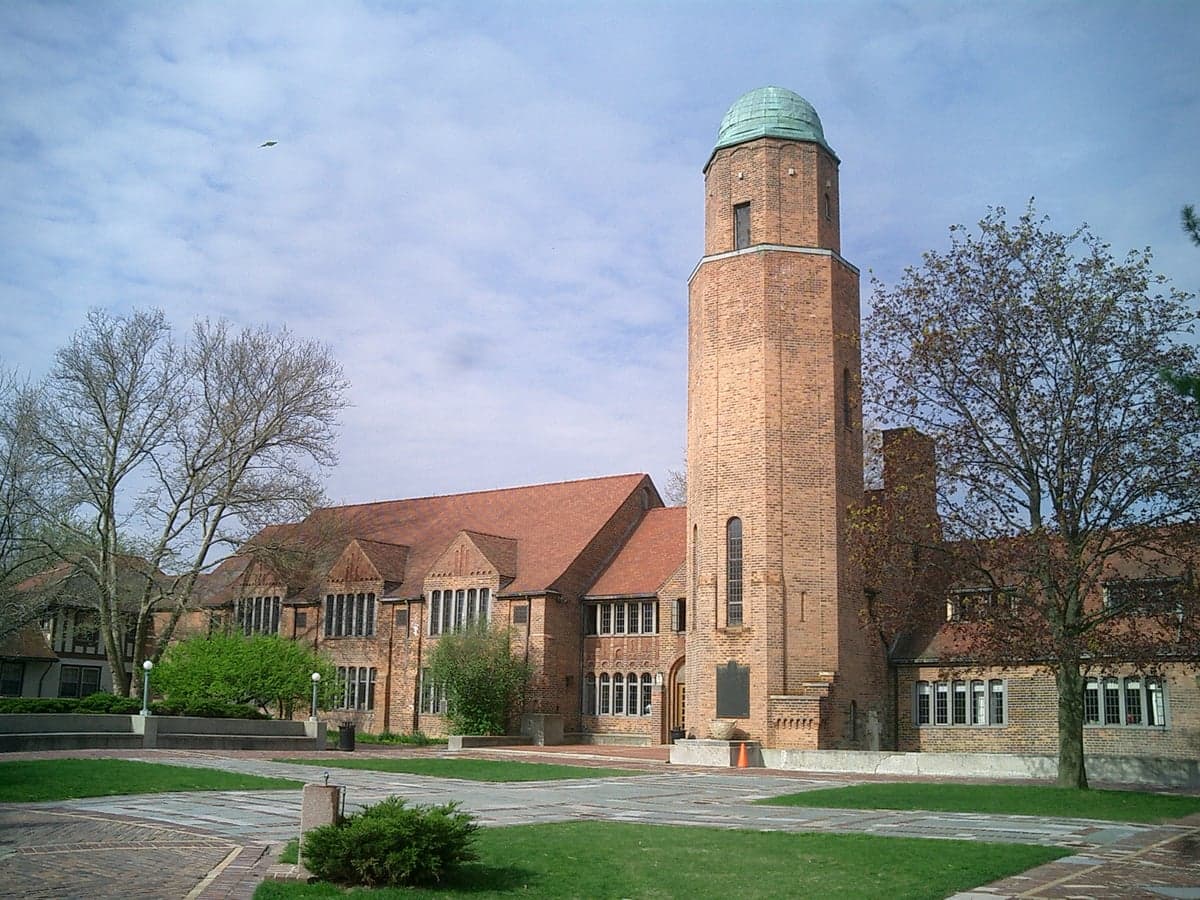
Photo: Wikipedia
Political ClimatePolitical Climate in Bloomfield Hills, MI
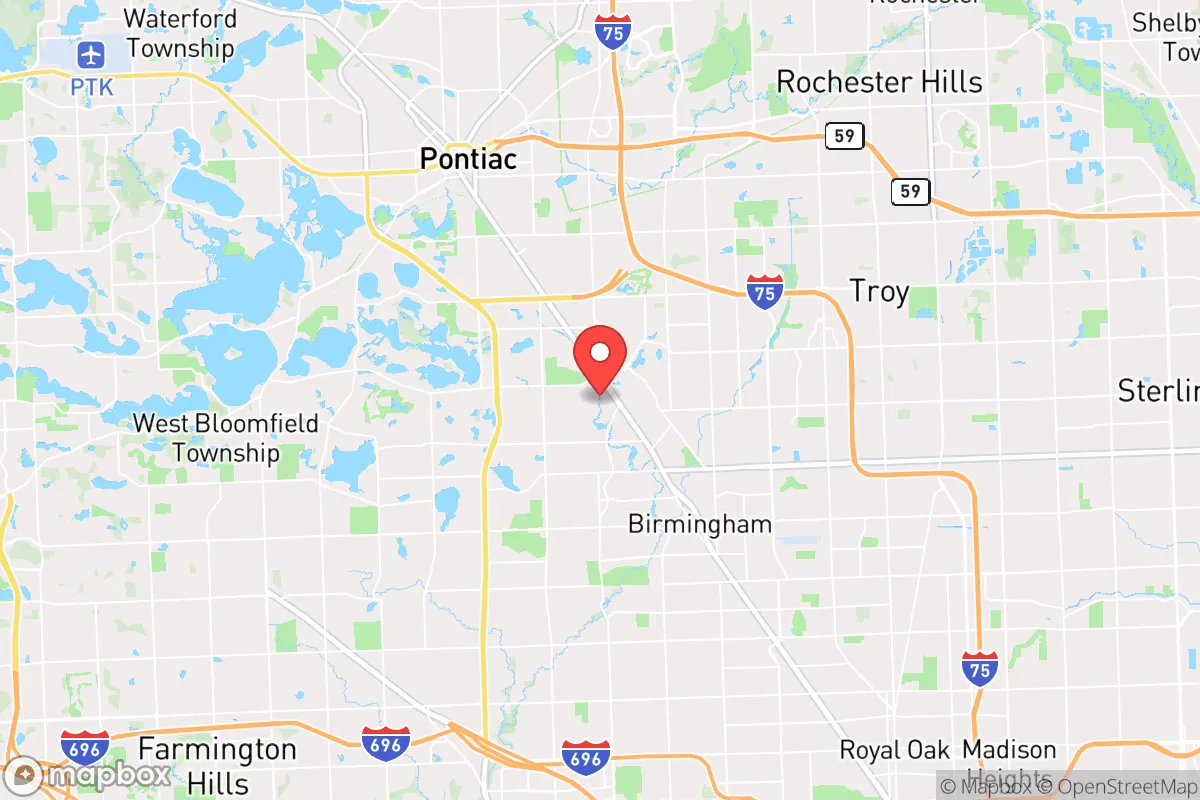
District shown is the primary district for this city’s centroid. Cities may span multiple districts.
Local Political AnalysisPolitical Analysis of Bloomfield Hills, MI
Bloomfield Hills, Michigan, has a Cook PVI of D+9, meaning it leans significantly more Democratic than the nation as a whole. This wasn’t always the case. I remember when this area was a solid Republican stronghold, a place where fiscal conservatism and personal responsibility were the default values. Over the last decade or so, the political winds have shifted hard. The local elections and voting patterns now consistently favor progressive candidates, and that shift has brought with it a whole new set of priorities that feel, frankly, like government overreach into our personal lives and our wallets.
How it compares
To understand just how much things have changed, you have to look at the towns right next door. Drive ten minutes north to Rochester or Rochester Hills, and you’ll find a much more balanced political scene, with a strong conservative presence that still fights for lower taxes and local control. Head west to Walled Lake or Wixom, and you’re in reliably red territory where people still believe the government should stay out of your business. But here in Bloomfield Hills, we’re surrounded by the progressive energy of Birmingham and Royal Oak. It creates a bubble where the local conversation is dominated by things like expanding public transit, new zoning laws that limit what you can do with your own property, and a general acceptance of higher taxes to fund social programs. It’s a stark contrast to the communities just a few miles away that still value individual liberty over collective mandates.
What this means for residents
For a long-time resident, the practical impact is frustrating. You see it in the local school board meetings, where the focus has shifted from academic excellence and parental rights to DEI initiatives and social-emotional learning curricula that often bypass parents. You feel it in your property taxes, which are among the highest in the state, funding a growing local government that seems to have an answer for every aspect of your life. The push for “sustainability” has led to restrictions on home renovations and landscaping that feel like a direct intrusion on your right to use your own land as you see fit. The local police department is still excellent, but the political pressure to “defund” or “reform” is a constant, low-level threat. It’s a slow, steady erosion of the freedom that made this area great, replaced by a one-size-fits-all progressive agenda that assumes the government knows better than you do.
Looking ahead, I don’t see this trend reversing anytime soon. The D+9 rating is baked in by the demographics—a highly educated, affluent population that, in recent years, has prioritized social issues over economic freedom. The long-term concern is that we’ll continue down this path, with more regulations, higher taxes, and a local culture that increasingly punishes dissent. If you value being left alone to live your life, raise your family, and run your business without a bureaucrat’s permission, Bloomfield Hills is becoming a tougher place to call home. The schools are still top-notch, and the neighborhoods are beautiful, but the political climate is a growing weight that makes you wonder how much longer the old spirit of independence can survive here.

State Political ClimatePolitical Climate in Michigan
State Political AnalysisPolitical Environment in the State
Michigan has shifted from a reliably blue state to a genuine battleground over the past two decades, but the trajectory is concerning for conservatives. The state went for Trump in 2016 by less than 11,000 votes, flipped to Biden in 2020 by about 154,000, and then swung back hard for Trump in 2024 by roughly 80,000 votes. That volatility masks a deeper trend: the Detroit metro area and college towns like Ann Arbor and East Lansing are becoming more progressive, while the rest of the state—particularly the western side, the Thumb, and the Upper Peninsula—is getting redder. The net effect is a state that feels like it’s being pulled in two directions at once, with the legislature and governor’s office often at war over the direction of policy.
Urban vs. rural divide
The political map of Michigan is a tale of two states. Wayne County (Detroit) and Washtenaw County (Ann Arbor) are the Democratic engine, producing massive margins that Republicans must overcome elsewhere. In 2024, Wayne County alone gave Harris a 300,000-vote cushion, while Washtenaw added another 80,000. Meanwhile, the fast-growing Grand Rapids metro (Kent County) has flipped from red to purple to light blue over the last decade, driven by an influx of younger professionals and a moderate Republican establishment that has lost touch with the base. The real conservative strongholds are the exurbs and rural areas: Ottawa County (Holland/Grand Haven) voted +18 for Trump, Livingston County (Brighton/Howell) went +25, and the Upper Peninsula counties like Gogebic and Dickinson swung hard red. The Thumb region—Sanilac, Huron, Tuscola—is reliably +30 or more for Republicans. The divide isn’t just geographic; it’s cultural. A resident of Midland or Traverse City will have a fundamentally different experience of Michigan politics than someone in Detroit or Kalamazoo.
Policy environment
Michigan’s policy environment is a mixed bag that leans increasingly progressive at the state level. The income tax is a flat 4.25%, which is moderate, but the state has no right-to-work law—the 2012 law was repealed by the Democratic legislature in 2023. Property taxes are high, with an average effective rate of 1.5%, and the Michigan Business Tax was replaced by a Corporate Income Tax of 6% in 2012, which remains in place. Education policy is a flashpoint: the state has a universal school choice program (the Schools of Choice law), but the Detroit Public Schools Community District remains a disaster, and the governor has pushed for expanded early childhood education and increased funding for traditional public schools. Healthcare is dominated by the expansion of Medicaid under the Healthy Michigan Plan, which covers about 1.2 million residents. Election laws are a concern: Michigan has no voter ID requirement for absentee ballots (only for in-person voting), and the 2022 passage of Proposal 2 enshrined nine days of early voting, automatic voter registration, and drop boxes into the state constitution. Gun laws have tightened significantly: in 2023, the legislature passed universal background checks, safe storage requirements, and a red flag law (extreme risk protection orders), all signed by Governor Whitmer.
Trajectory & freedom
Michigan is becoming less free for conservatives, particularly in the last two years. The 2023 repeal of right-to-work was a major blow to worker freedom, forcing private-sector employees to pay union dues as a condition of employment. The red flag law and universal background checks have made Michigan one of the stricter states for gun owners in the Midwest. On parental rights, the picture is mixed: the state has a robust open enrollment system, but the governor vetoed a bill in 2023 that would have required schools to notify parents if a child requests a name or pronoun change. Medical freedom took a hit with the 2023 repeal of the 1931 abortion ban, which was replaced by a constitutional amendment (Proposal 3) that enshrined abortion access up to viability and removed most restrictions. Property rights are under pressure from the state’s aggressive renewable energy siting law (Public Act 233 of 2023), which allows the Michigan Public Service Commission to override local zoning for wind and solar projects. The tax burden is not getting lighter: the state’s gas tax is 28.6 cents per gallon, and there’s talk of a mileage-based user fee. The overall trajectory is one of expanding government control over personal choices, from healthcare to energy to education.
Civil unrest & political movements
Michigan has been a hotbed of political activism on both sides. The 2020 lockdown protests at the state capitol in Lansing drew national attention, with armed demonstrators opposing Governor Whitmer’s executive orders. The “Wolverine Watchmen” militia group was involved in a foiled plot to kidnap the governor in 2020, which remains a polarizing event—some see it as a legitimate threat, others as a federal setup. On the left, the “Michigan Liberation” and “Detroit Action” groups have been active in pushing for criminal justice reform and defunding police, though those efforts have stalled. Immigration politics are relatively quiet compared to border states, but Detroit and Ann Arbor are sanctuary cities, limiting cooperation with ICE. Election integrity remains a live issue: the 2020 election in Michigan saw widespread use of absentee ballots, and the 2024 cycle brought renewed scrutiny of the state’s voter rolls, which the conservative group “Michigan Fair Elections” claims are inflated by as much as 300,000 inactive or duplicate registrations. The “Upper Peninsula secession” movement is mostly a joke, but it reflects real frustration among rural residents who feel ignored by Lansing. A new resident will notice the political divide most acutely in the “blue islands” of Grand Rapids and Traverse City, where progressive activism is visible in city council meetings and school board elections.
Projection
Over the next 5-10 years, Michigan is likely to continue its slow drift leftward at the state level, driven by demographic shifts. The Detroit suburbs are diversifying and becoming more Democratic, while the Grand Rapids area is attracting young professionals from blue states who bring their politics with them. The Upper Peninsula and rural areas will remain red, but their population is declining, reducing their electoral weight. The state’s in-migration is heavily concentrated in the progressive-leaning counties—Washtenaw, Kent, and Oakland—while the conservative strongholds are losing residents. The 2024 election showed that Trump can still win Michigan, but the margin is razor-thin, and the structural trends favor Democrats in the long run. Expect more gun control, more renewable energy mandates, and continued expansion of government healthcare. The one wild card is the state’s school choice system, which could become a battleground as the legislature considers funding formulas that favor traditional public schools over charters and private options. A conservative moving to Michigan now should expect to live in a state where the governor and legislature are often at odds, but where the overall policy direction is toward more regulation and higher taxes.
Bottom line for a new resident: If you’re a conservative looking for a state that respects your freedoms, Michigan is a mixed bag. The rural areas and exurbs offer a high quality of life with like-minded neighbors, but you’ll be fighting an uphill battle at the state level. The tax burden is moderate but rising, gun rights are eroding, and the education system is a patchwork of good and bad. If you’re moving here, pick your county carefully—Livingston, Ottawa, or the Thumb will feel much different than Washtenaw or Wayne. And be prepared for a political environment that’s increasingly polarized, with no sign of cooling off.
* Values derived from national, state, county, city and local statistics and may differ in a specific area. Last updated: 2026-04-27T14:30:55.000Z
Narrative content on this page is AI-generated and may contain mistakes. Verify any details that matter before acting on them.
ReloMaps may earn a commission from affiliate links at no extra cost to you.

