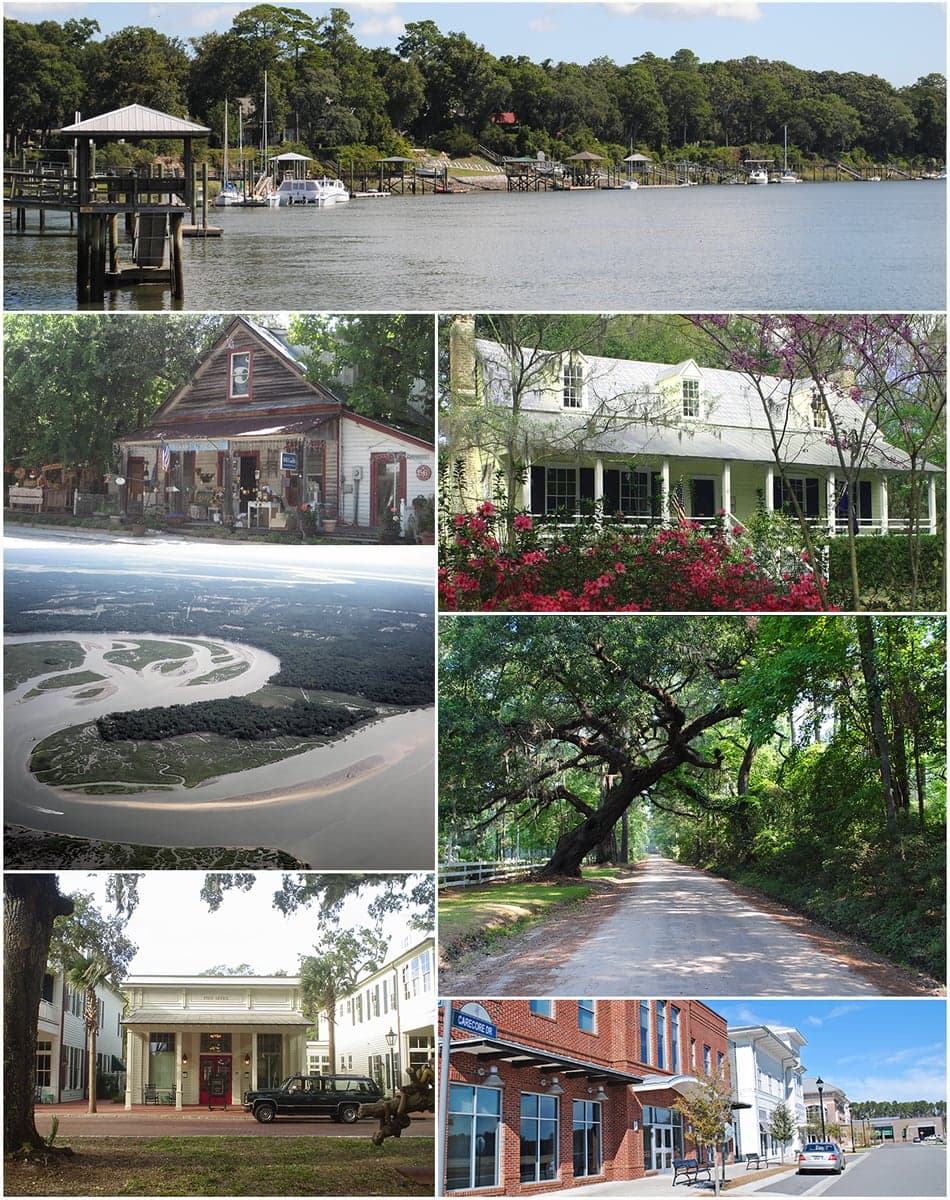
Photo: Wikipedia
Personal Sovereignty in Bluffton, SC
Viable for self-reliance. Generally workable, though some barriers may limit total independence.
What does Personal Sovereignty tell us?
Personal Sovereignty measures your capacity for self-reliance and independence with minimal government friction. Higher scores mean fewer barriers between you and the way you want to live... but it assumes you have the space you need and good neighbors.
What does this tell us?
Personal Sovereignty measures your capacity for self-reliance and independence with minimal government friction. Higher scores mean fewer barriers between you and the way you want to live... but it assumes you have the space you need and good neighbors.
State Policy
Energy independence: Importer (25% of energy produced in-state)
Personal Liberty
Homesteading

Personal Liberty Analysis
Bluffton, South Carolina offers a notably strong environment for personal sovereignty compared to much of the coastal Southeast, largely because it sits within a state that has deliberately structured its laws to minimize government intrusion into daily life. For single individuals and parents who prioritize autonomy—whether that means controlling their own healthcare decisions, raising children without excessive state oversight, or preparing for economic or societal disruptions—Bluffton provides a legal and cultural foundation that respects individual agency. The town’s rapid growth has brought some pressure on this freedom, particularly through increased zoning and HOA restrictions, but the underlying state-level framework remains one of the most favorable in the region for those who value self-determination.
Tax burden and regulatory posture: how South Carolina limits government reach
South Carolina’s tax structure is a major draw for those seeking to keep more of their own resources. The state has a flat income tax rate of 6.2% (as of 2025, with scheduled reductions to 5.99% by 2026), and no state-level tax on Social Security benefits. Property taxes in Beaufort County, where Bluffton sits, are relatively low—the effective rate hovers around 0.55% of assessed value, well below the national average. For a $400,000 home, that translates to roughly $2,200 annually. There is no state inheritance or estate tax, meaning wealth transfers to heirs are not subject to additional government claims. On the regulatory side, South Carolina is a right-to-work state, which limits union influence and gives individuals more flexibility in employment. The state also maintains a relatively light business licensing burden—no general business license is required at the state level, though Bluffton does impose a local business license fee. For preppers and survivalists, the absence of a state-level income tax on retirement income and the lack of an estate tax mean that building and preserving wealth for self-reliance is more straightforward than in high-tax states like New York or California. However, note that Beaufort County has adopted stricter stormwater and environmental regulations than some rural counties, which can affect property modifications like building a detached workshop or installing a rainwater catchment system.
Self-defense and gun law specifics: what Bluffton residents can legally do
South Carolina is a strong Second Amendment state, and Bluffton residents benefit from some of the most permissive gun laws in the Southeast. The state enacted constitutional carry in 2024, meaning any law-abiding adult 18 or older can carry a concealed firearm without a permit. There is no state-level requirement to register firearms, no waiting period for purchases, and no magazine capacity restrictions. For those who want a permit for reciprocity with other states, the South Carolina Concealed Weapons Permit (CWP) is still available and requires an 8-hour training course. Stand-your-ground laws are fully in effect—there is no duty to retreat before using deadly force if you are lawfully present and reasonably believe force is necessary to prevent death, great bodily harm, or a violent felony. Castle doctrine protections extend to your home, vehicle, and place of business. For parents, this means you can legally defend your family on your property without fear of prosecution, provided the threat is credible. The only notable restriction is that firearms are prohibited in certain locations like schools (with exceptions for concealed carry by permit holders in vehicles), government buildings, and establishments that derive more than 50% of revenue from alcohol sales. Bluffton itself has no local ordinances that further restrict gun rights, so the state-level framework applies directly. For those concerned about government overreach, the constitutional carry law represents a significant check on state power—no permission slip required to exercise a fundamental right.
Self-reliance and homesteading viability: lot sizes, zoning, and off-grid feasibility
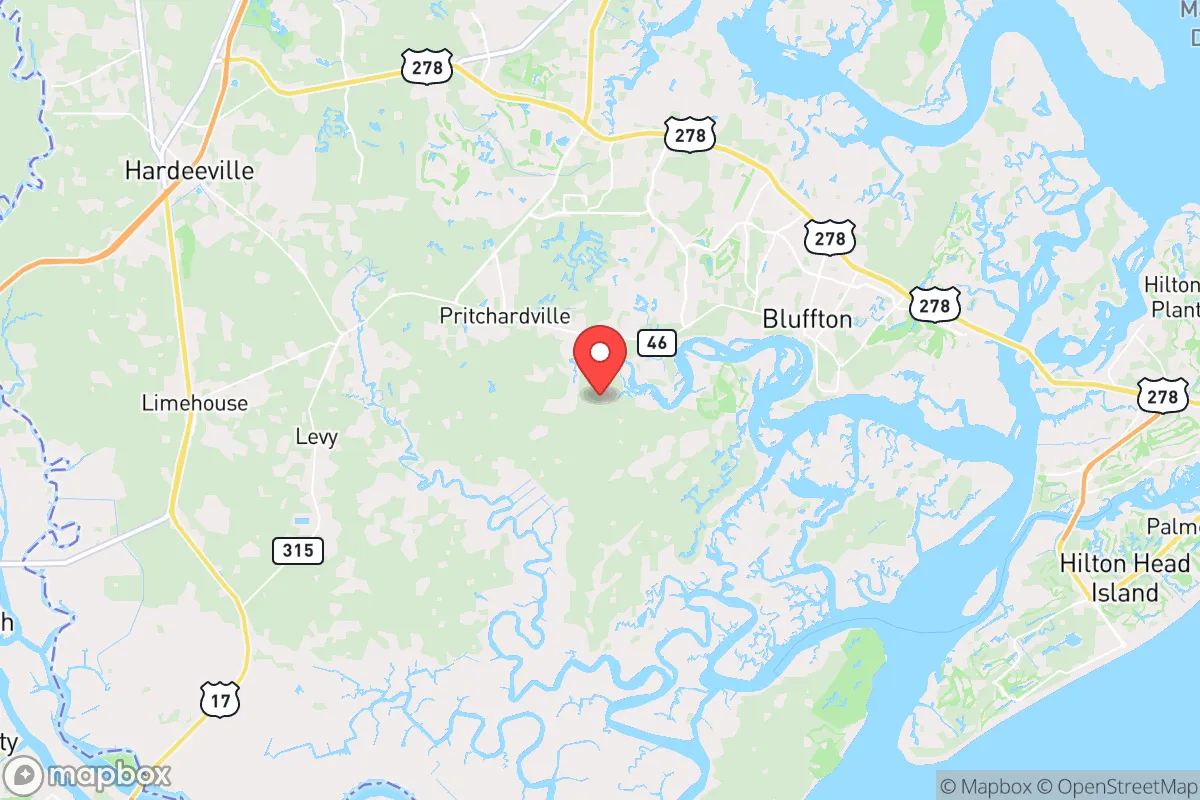
Bluffton’s ability to support a self-reliant lifestyle varies significantly by neighborhood, and this is where the town’s rapid suburbanization creates friction. In the older, unincorporated areas of Bluffton—particularly along Highway 46 toward Hardeeville and in the Buckwalter area—you can find lots of 1 to 5 acres that are zoned for agricultural use. These parcels allow for backyard chickens, small livestock (goats, sheep), and vegetable gardens without special permits. However, within the town limits and in most planned communities like Sun City or Hampton Hall, HOAs impose strict covenants that ban livestock, limit garden size, and restrict structures like sheds or greenhouses. Off-grid living is legally challenging within Bluffton proper: the town requires connection to municipal water and sewer where available, and solar panels are permitted but must comply with HOA aesthetic guidelines. Rainwater collection is legal in South Carolina—no state permit is required—but Beaufort County’s stormwater regulations may require a permit for systems over 5,000 gallons. For those serious about homesteading, the better bet is to look at properties just outside Bluffton’s urban growth boundary, in unincorporated Beaufort County or neighboring Jasper County, where zoning is more permissive and lot sizes can exceed 10 acres. The soil in the Lowcountry is sandy and acidic, so raised beds and soil amendment are necessary for serious food production. Overall, Bluffton offers a mixed picture: the legal framework at the state level supports self-reliance, but local zoning and HOA rules can be significant obstacles for those wanting to live truly off-grid or with substantial agricultural independence.
Personal liberties: parental rights, medical autonomy, speech, and property
South Carolina has taken a strong stance on parental rights in recent years. The state’s Parental Bill of Rights, enacted in 2023, affirms that parents have the fundamental right to direct the upbringing, education, and healthcare of their minor children. This includes the right to opt out of any school curriculum or activity, to access all educational and medical records, and to consent before any medical treatment is provided to a minor. In practice, this means Bluffton parents can review and reject sex education materials, request alternative assignments, and prevent their children from participating in surveys or programs they find objectionable. On medical autonomy, South Carolina does not have a state-level vaccine mandate for adults, and while some employers may require COVID-19 vaccines, the state passed a law in 2022 prohibiting government entities from requiring proof of vaccination for services. For those concerned about medical freedom, the state also has a robust conscience clause that allows healthcare providers to refuse participation in procedures they find morally objectionable. Free speech protections are strong—South Carolina has no hate speech laws that criminalize political or religious expression, and the state’s constitution explicitly protects the right to assemble and petition the government. Property rights are reinforced by the state’s private property rights protection act, which requires government entities to compensate landowners for any regulatory taking that reduces property value by more than 20%. This is a meaningful check on zoning overreach. The main area where personal liberty is constrained in Bluffton is through HOA covenants—these private contracts can restrict everything from paint colors to political signs, and they are legally enforceable. For those who value maximum autonomy, buying in an unincorporated area without an HOA is strongly recommended.
Overall, Bluffton ranks as a strong-to-moderate location for personal sovereignty when compared to other growing towns in the Southeast. The state-level legal framework—constitutional carry, parental rights, low taxes, and property protections—provides a solid foundation that is superior to what you would find in most of the Northeast, West Coast, or even parts of Florida. The main trade-off is that Bluffton’s rapid growth has brought suburbanization and HOA governance, which can erode the very autonomy the state protects. For single individuals and parents who are willing to navigate HOA restrictions or buy outside the town limits, Bluffton offers a legal environment that respects individual choice and limits government overreach. It is not a libertarian utopia—no place in the modern United States truly is—but it is a pragmatic choice for those who want to live in a growing, economically vibrant area without surrendering their fundamental rights to the state.

* Values derived from national, state, county, city and local statistics and may differ in a specific area. Last updated: 2026-04-29T19:52:58.000Z
Narrative content on this page is AI-generated and may contain mistakes. Verify any details that matter before acting on them.
ReloMaps may earn a commission from affiliate links at no extra cost to you.

