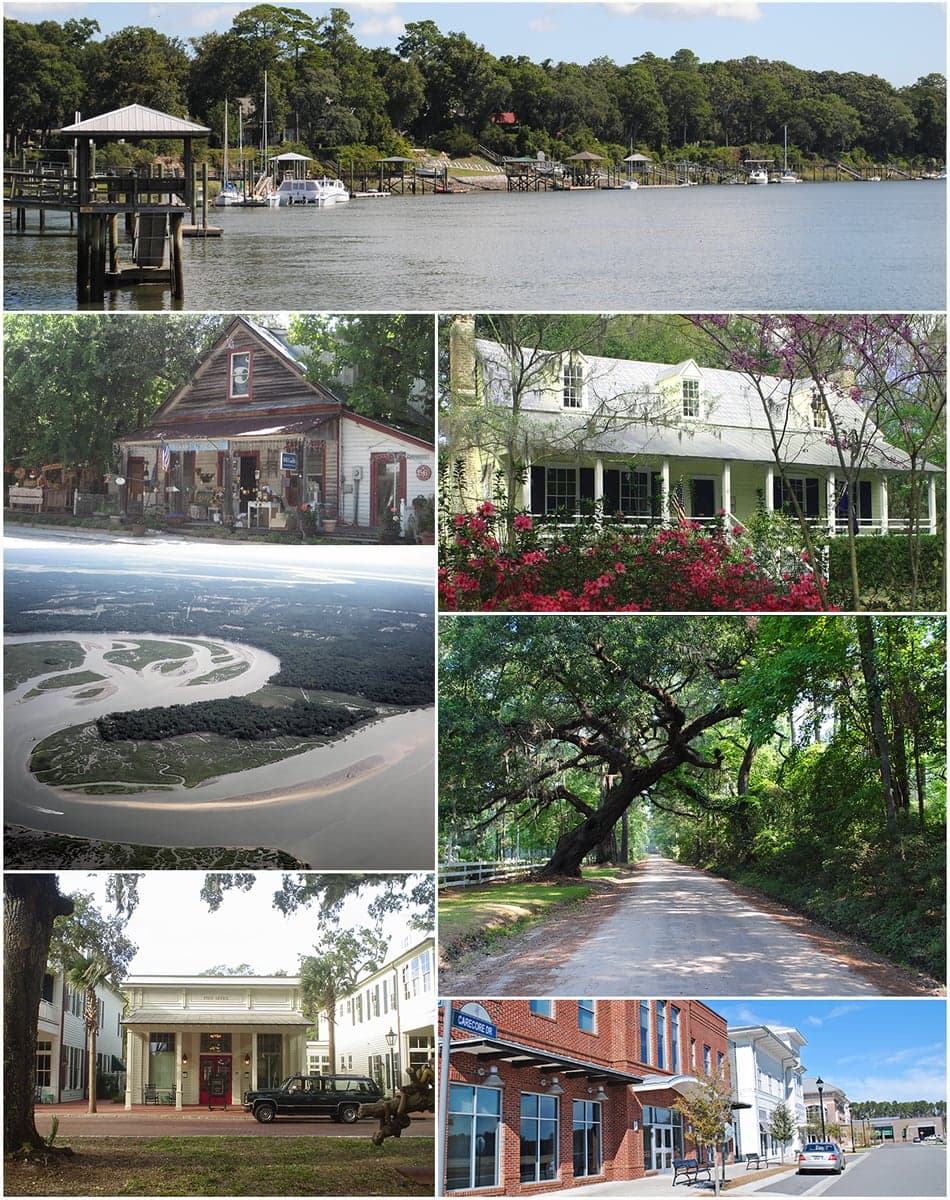
Photo: Wikipedia
Strategic Assessment of Bluffton, SC
Meaningful friction. Expect exposure to either population pressure, blast zones, or natural disaster risk. Consider buying a retreat property.
What does the Strategic Assessment tell us?
Our Strategic Assessment grades tactical survivability of an area. Major population centers, military targets, fallout zones, natural disasters, and border exposure all drive risk — lower exposure means a more defensible position in a crisis.
This is heavily inspired by Joel Skousen's Strategic Relocation book. Highly recommended you checkout the book ($)What does this tell us?
Our Strategic Assessment grades tactical survivability of an area. Major population centers, military targets, fallout zones, natural disasters, and border exposure all drive risk — lower exposure means a more defensible position in a crisis.
This is heavily inspired by Joel Skousen's Strategic Relocation book. Highly recommended you checkout the book ($)Strategic Pillars

Key Distances
Regional Safe Places
Below is our recommended "safe zones" in South Carolina and the surrounding area based on our strategic heuristics. For most people, it's unrealistic to live in a “safe zone” full-time due to work, family or other personal reasons. They tend to be more rural. However, many of these areas are perfect for second homes and retreat properties that double as a vacation home or even a short-term rental.
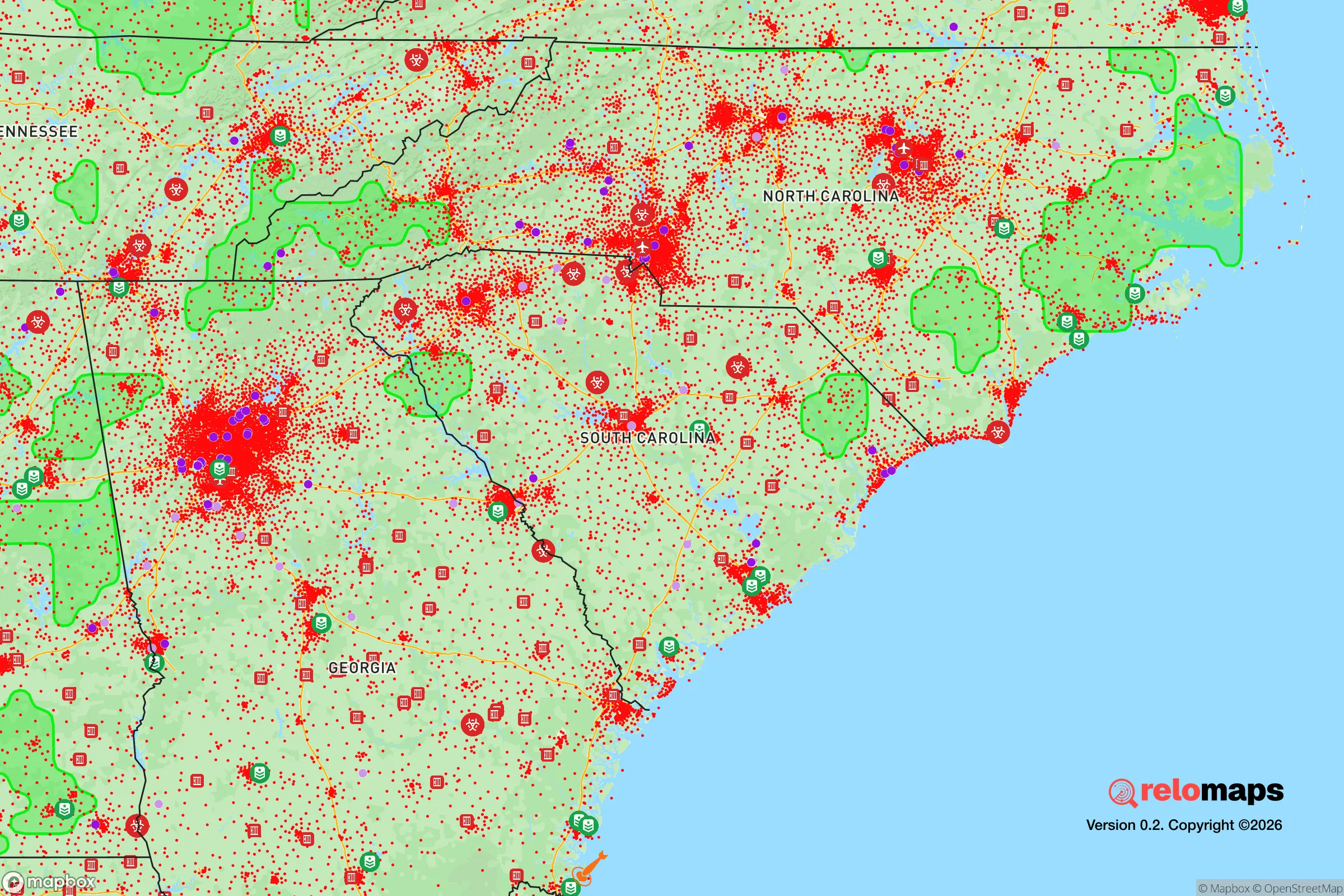
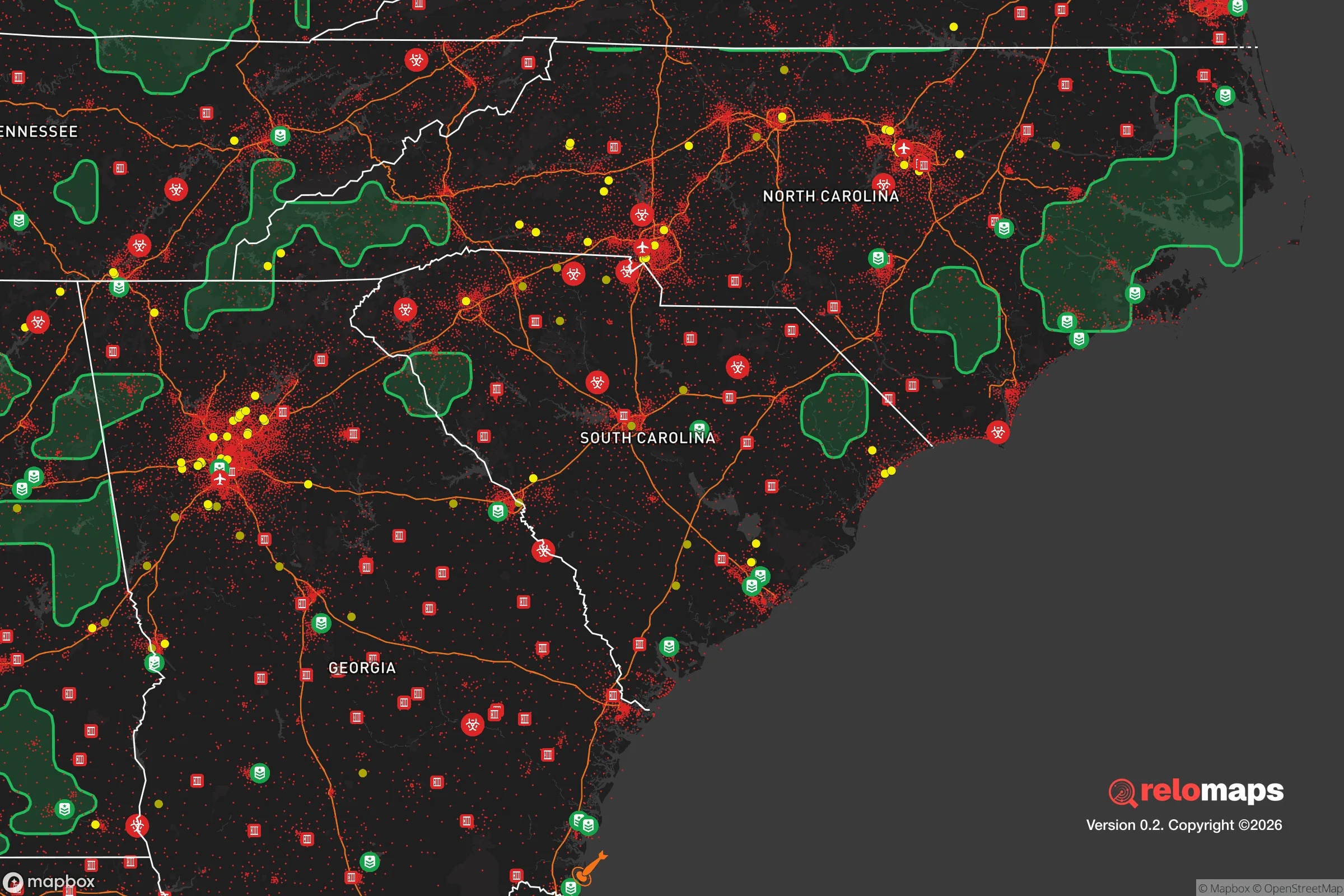


Important Note: For informational purposes only. This does not mean nothing bad ever happens in the green zones. Please use common sense. This is based on public data and modeled with AI. We tried to take a conservative approach but mistakes happen. We update this regularly as new information becomes available.
Solar Generator Recommendations
Backup power matters more here than in safer locations. We've picked three solar generators across budgets and capacity tiers — start with the budget unit if you only need a few essentials, or step up if you want to run a fridge and HVAC for days at a time.

Jackery Portable Power Station Explorer 300
Budget OptionPower on the Go: Weighing only 11 lbs, it's convenient to set up and store with book-sized foldable solar panels

BLUETTI Portable Power Station AC180
Designed for both indoor and outdoor scenarios, AC180 is highly capable as it has a robost capacity and continuous output power.

EF ECOFLOW DELTA Pro Ultra Power Station
Upgraded PickEcoFlow DELTA Pro Ultra is a whole-home energy system designed to grow with your family. Integrated with the Smart Home Panel 2, it scales to meet your evolving energy needs — keeping your home powered, intelligent, and secure through every stage of life.
We earn a commission, at no additional cost to you.
Strategic Assessment Analysis
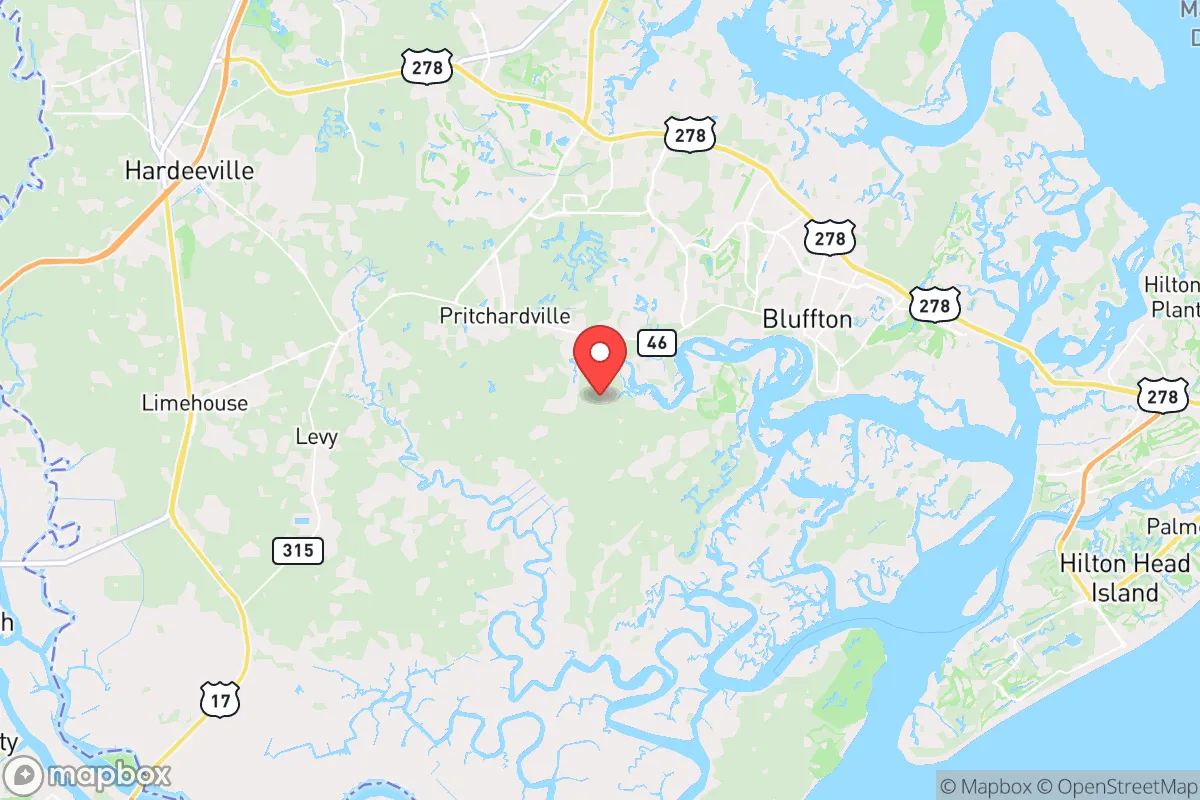
Bluffton, South Carolina, occupies a strategic position that offers a mix of genuine resilience advantages and notable exposure risks for those planning around civic unrest, mass casualty events, or large-scale disasters. Situated between the Savannah River and the Broad River, roughly 20 miles inland from the Atlantic coast, the town sits on a relatively high bluff (hence the name) that provides natural drainage and a degree of separation from the immediate coastal surge zone. Its location along the I-95 corridor—a major north-south evacuation and supply route—offers both a lifeline and a liability, depending on the scenario. For a relocator with a prepper mindset, Bluffton’s real value lies in its moderate climate, access to freshwater systems, and a community that still retains a low-key, self-reliant character, but the proximity to Savannah, Hilton Head, and the sprawling military-industrial complex around the Savannah River Site demands a clear-eyed assessment of what could go wrong.
Geographic position and natural advantages for long-term stability
Bluffton’s geography is its strongest card. The town sits on the May River and is within easy reach of the Savannah River and the Broad River, providing multiple freshwater sources for filtration and off-grid water needs. The surrounding Lowcountry terrain is flat but heavily wooded with pine and live oak, offering decent cover and natural resources for foraging, hunting, and timber. The climate is humid subtropical, with mild winters and long growing seasons—meaning a determined homesteader can produce food year-round, a critical factor if supply chains falter. The area’s elevation, typically 10 to 30 feet above sea level, is high enough to avoid most storm surge from a Category 1 or 2 hurricane, though a major Cat 4 or 5 would still push water into low-lying pockets. Bluffton’s position roughly 30 miles from the coast also puts it outside the immediate blast zone of a nuclear event at the Savannah River Site (SRS), a major Department of Energy nuclear facility about 40 miles upriver. The prevailing winds in the region are from the southwest, which would carry fallout away from Bluffton in most scenarios, though a shift could change that calculus. For a relocator, the ability to tap into the May River and local aquifers, combined with a climate that supports subsistence agriculture, makes Bluffton a viable long-term hold if you can secure a property with well water and solar capability.
Risks, exposures, and proximity to fallout-relevant landmarks
The flip side of Bluffton’s location is its proximity to several high-value targets and population centers that could become flashpoints during unrest or conflict. The Savannah River Site, a nuclear weapons tritium production and waste storage facility, is roughly 40 miles northwest—close enough that a major accident or sabotage could contaminate the Savannah River watershed, which feeds into Bluffton’s groundwater and the May River. The Savannah/Hilton Head International Airport and the Port of Savannah, one of the busiest container ports on the East Coast, are both within 25 miles, making them prime targets for cyberattacks, physical disruption, or military strikes in a conflict scenario. The I-95 corridor, while useful for evacuation, also funnels millions of people through the region annually; a gridlock event or a coordinated attack on the highway could trap residents in a choke point. Bluffton itself has grown rapidly—population jumped from around 12,000 in 2010 to over 30,000 by 2025—bringing suburban sprawl, increased traffic, and a reliance on centralized infrastructure. The town’s proximity to Hilton Head Island, a wealthy tourist destination, could attract looting or civil unrest if economic collapse hits the coastal resort economy. For a prepper, the key risk is that Bluffton sits in a zone where a single event—a hurricane, a nuclear incident at SRS, or a port disruption—could cascade into a regional crisis, and the area’s growing population density means you’re competing with more people for the same limited resources.
Practical resilience for a relocator: food, water, energy, and defensibility
On the ground, Bluffton offers a mixed bag for practical self-sufficiency. Water is the strongest asset: the May River, the Savannah River, and numerous creeks and ponds provide ample surface water, and the local aquifer is generally reliable for well drilling, though permits and depth vary by subdivision. Rainwater collection is straightforward given the 50 inches of annual rainfall. Food production is viable but requires work—the sandy, acidic soil typical of the Lowcountry needs amendment for vegetable gardens, but raised beds and composting can yield decent harvests of greens, tomatoes, peppers, and sweet potatoes. Hunting and fishing are legal with licenses; deer, wild hog, and redfish are common, but pressure from the growing population means game is less abundant than in more remote areas. Energy resilience is a weak point: the local grid is served by Dominion Energy and Palmetto Electric, and outages during hurricanes or storms are common, sometimes lasting days. Solar panels with battery storage are a smart investment, but HOA restrictions in many Bluffton subdivisions can limit installation—check covenants before buying. Defensibility is moderate at best. The town’s layout is a mix of older, tree-lined neighborhoods with some natural chokepoints (bridges over the May River and the Okatie River) and newer, sprawling subdivisions with multiple entry points. A rural property on the outskirts, near the Jasper County line, would offer better security than a lot in the Sun City retirement community or a gated golf-course development. For a relocator, the ideal setup is a parcel of 5-10 acres with well water, septic, and solar, located off the main roads and away from the I-95 exit ramps—something that’s still possible but getting harder to find as development pushes west toward Hardeeville.
The overall strategic picture for Bluffton is one of cautious viability for a prepper or survivalist, but only if you go in with eyes open. The area’s natural advantages—freshwater access, a long growing season, and a position outside the immediate coastal surge zone—are real and valuable. But the growing population density, proximity to high-value targets like the Savannah River Site and the Port of Savannah, and the reliance on a fragile grid and supply chain mean that Bluffton is not a bug-out location for a total collapse scenario. It’s a place where a prepared individual or family could ride out moderate disruptions—a hurricane, a short-term supply chain break, localized civil unrest—by leveraging local resources and a low-key community that still values neighborly self-reliance. For those willing to invest in off-grid infrastructure and choose a property with defensible space, Bluffton offers a decent balance of access and isolation. But if you’re looking for a remote, low-risk redoubt far from any potential fallout or population pressure, you’d be better off heading further inland, toward the Upstate or the mountains. Bluffton is a strategic compromise—not a fortress, but not a death trap either, and that’s exactly the kind of honest assessment a relocator needs to make the call.

* Values derived from national, state, county, city and local statistics and may differ in a specific area. Last updated: 2026-04-29T19:52:58.000Z
Narrative content on this page is AI-generated and may contain mistakes. Verify any details that matter before acting on them.
ReloMaps may earn a commission from affiliate links at no extra cost to you.

