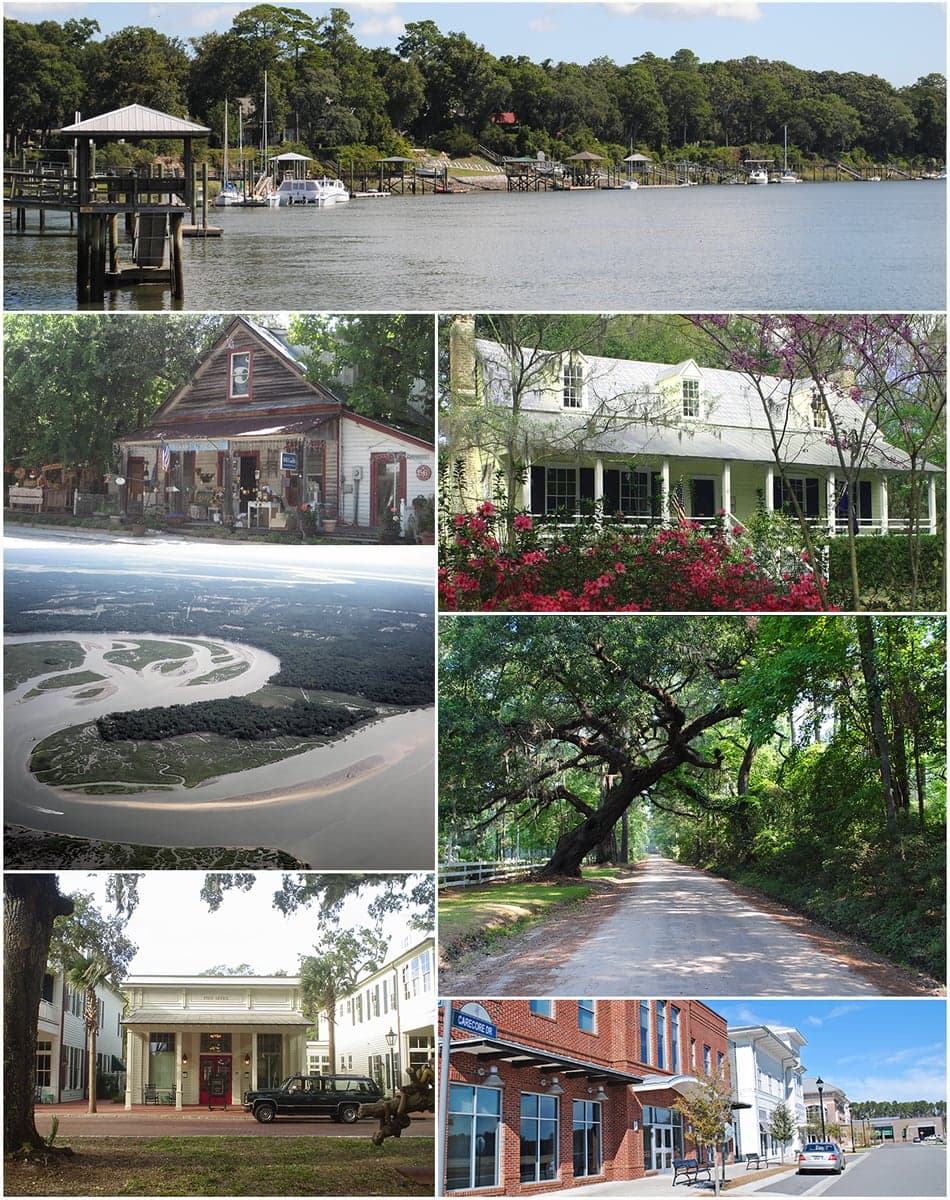
Photo: Wikipedia
Political ClimatePolitical Climate in Bluffton, SC
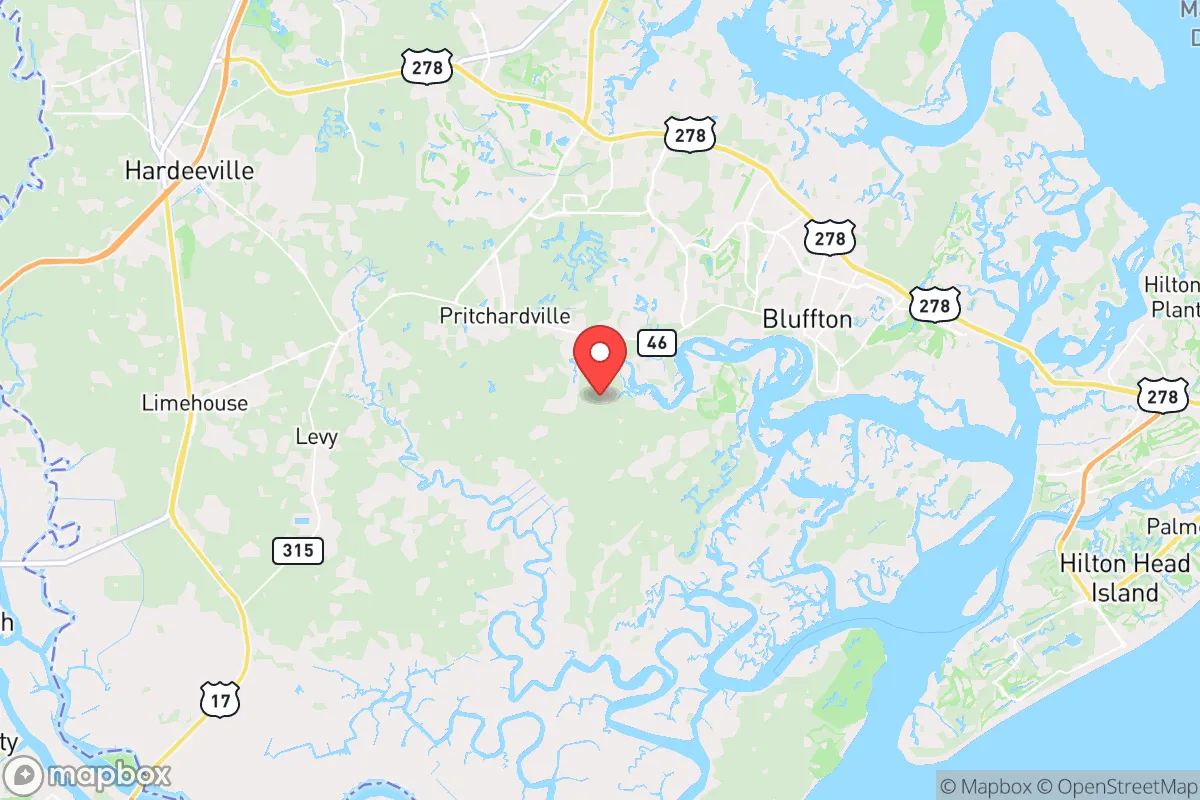
District shown is the primary district for this city’s centroid. Cities may span multiple districts.
Local Political AnalysisPolitical Analysis of Bluffton, SC
Bluffton’s political climate has long been a solid conservative stronghold, and the Cook PVI rating of R+6 backs that up pretty well—it’s reliably Republican, but not in a way that feels like a rubber stamp. I’ve lived here long enough to remember when it was a sleepy little Lowcountry town where everyone knew each other, and the politics were as simple as folks wanting to be left alone to live their lives. These days, with all the growth from Hilton Head and Savannah spilling over, you can feel the pressure shifting. The area still leans right, but there’s a creeping unease about how much government—local and state—is starting to poke its nose into things that used to be common sense, like property rights and how you run your own business.
How it compares
Compared to nearby places, Bluffton stands out as a bit of a conservative island in a sea of change. Head east over the bridge to Hilton Head, and you’ll find a more moderate, retiree-heavy crowd that’s a little softer on taxes and a lot more tolerant of beachfront regulations. Go south into Savannah, Georgia, and you’re in a deep-blue urban center where progressive policies on everything from zoning to public spending are the norm. Even up the road in Beaufort, the county seat, you get a mix of military families and old-money liberals that makes it a toss-up. Bluffton, though, still holds the line—most folks here voted for Trump in 2020 and 2024, and the local school board and town council are dominated by Republicans who talk a good game about limited government. But I’ve seen the warning signs: a few new developments are pushing for “sustainability” mandates that sound like they’ll end up as red tape on your own backyard shed. It’s not full-blown progressive yet, but you can feel the tide trying to come in.
What this means for residents
For the average Bluffton resident, this political climate means you’ve still got a lot of freedom to do your own thing—for now. Property taxes are reasonable compared to Hilton Head, and there’s no city income tax, which is a big deal if you’re self-employed or running a small trade business. But the growth is bringing pressure for more “community planning” and “affordable housing” initiatives that sound good on paper but often mean more permits, more fees, and more people telling you what color you can paint your fence. The local sheriff’s office is still pretty hands-off on personal matters, but I’ve noticed the town council getting chummy with developers who want to rezone everything for high-density apartments. If you value your right to keep a workshop in your garage or park a boat in your driveway, you’ll want to keep an eye on those meetings—because the progressive playbook is all about regulating the little stuff until it becomes a big headache.
One thing that sets Bluffton apart culturally is its stubborn attachment to Lowcountry traditions—like the May River oyster roast and the Old Town historic district—that feel almost like a quiet rebellion against the sterile, planned communities popping up everywhere. There’s a real sense here that people don’t want to be told how to live, whether it’s about fireworks on the Fourth or how many chickens you can keep in your yard. The local paper, the Bluffton Sun, still runs letters to the editor that sound like they were written in 1995, complaining about overreach and taxes. That’s the Bluffton I know. But I’d be lying if I said I wasn’t worried about the next five years—if the transplants keep coming from blue states, they’ll bring their voting habits with them, and that R+6 could slip to R+2 or worse. For now, it’s still a place where you can breathe easy, but you’d better stay involved if you want to keep it that way.

State Political ClimatePolitical Climate in South Carolina
State Political AnalysisPolitical Environment in the State
South Carolina has long been a reliably red state, with a solid Republican lean that has only deepened over the past two decades. The GOP holds supermajorities in both chambers of the state legislature, and the state has voted for the Republican presidential candidate in every election since 1980, with margins typically in the high single to low double digits — Trump won by 11 points in 2020 and by 18 points in 2024. The dominant coalition is a mix of traditional conservatives, evangelical Christians, and a growing number of transplants from the Northeast and Midwest seeking lower taxes and a slower pace of life. However, the state is not monolithic: the coastal Lowcountry and the city of Columbia have become increasingly competitive, while the Upstate and the Pee Dee region remain deeply conservative. Over the last 10-20 years, the state has shifted rightward on cultural issues while maintaining a business-friendly posture, though recent in-migration has introduced some tension around growth and development.
Urban vs. rural divide
The political map of South Carolina is sharply divided between its fast-growing urban corridors and its vast rural interior. The Upstate, anchored by Greenville and Spartanburg, is the state's conservative engine — these counties routinely deliver 65-70% of the vote for Republican candidates, driven by a strong evangelical presence, a booming manufacturing base, and a culture that prizes self-reliance. Charleston, by contrast, has become a political battleground. The city proper and its close-in suburbs like Mount Pleasant have trended leftward as young professionals and out-of-state transplants pour in, making Charleston County competitive — Biden won it by 6 points in 2020, though Trump flipped it back by 2 points in 2024. Columbia, home to the state capital and the University of South Carolina, leans Democratic in its urban core but is surrounded by deep-red suburbs like Lexington and Irmo. The rural counties of the Pee Dee and the Lowcountry — places like Florence, Beaufort, and Orangeburg — remain reliably Republican outside of majority-Black precincts. The key takeaway: if you want a reliably conservative environment, the Upstate and the exurbs of Columbia are your best bets; if you prefer a more mixed or progressive vibe, Charleston and downtown Columbia are where the action is.
Policy environment
South Carolina's policy environment is among the most business-friendly in the nation, with a flat income tax rate of 6.4% (down from 7% in 2020 and scheduled to drop further to 5.99% by 2026), no state property tax on vehicles, and a homestead exemption that shields a portion of home value from school taxes. The regulatory posture is light — the state is a "right-to-work" state, and permitting for new construction is generally streamlined, especially in greenfield areas like Fort Mill and Indian Land near the Charlotte border. Education policy has been a flashpoint: the state has a robust school choice program through the Education Scholarship Trust Fund, which provides up to $7,000 per year for private school tuition, and a charter school law that has spawned dozens of new options. However, the state's public schools remain among the lowest-ranked nationally, and debates over curriculum transparency and parental rights have intensified. Healthcare is a mixed bag: the state did not expand Medicaid under the Affordable Care Act, keeping the system lean but leaving a coverage gap for low-income adults. Election laws are moderately restrictive — voter ID is required, and early voting was expanded to two weeks in 2022, but same-day registration is not allowed. Overall, the policy environment leans heavily toward individual freedom and limited government, though the state's heavy reliance on property taxes for local services can be a surprise for newcomers.
Trajectory & freedom
On the whole, South Carolina has been moving in a direction that expands personal liberty, particularly on gun rights, parental rights, and tax relief. The state passed constitutional carry in 2024, allowing law-abiding citizens to carry a concealed firearm without a permit — a major win for Second Amendment advocates. In 2023, the legislature passed the "Parents' Bill of Rights," which requires schools to notify parents of any changes to a student's health or well-being and prohibits instruction on sexual orientation or gender identity in K-5 classrooms. On the economic front, the state has been steadily cutting income taxes and eliminating the corporate license fee, making it easier to start and run a business. However, there are concerning trends: the state's growing reliance on federal dollars for infrastructure and education has created a creeping dependency, and the influx of out-of-state money has driven up housing costs in places like Greenville and Mount Pleasant, pricing out long-time residents. Medical freedom took a hit during the pandemic, with the state imposing mask mandates and business closures, but those restrictions have since been repealed, and the legislature has passed a law prohibiting vaccine mandates for state employees and contractors. The trajectory is generally positive for conservatives, but the rapid growth is testing the state's ability to maintain its low-tax, low-regulation ethos.
Civil unrest & political movements
South Carolina has seen its share of political flashpoints, though they tend to be less dramatic than in larger states. The most visible recent unrest came in 2020, when protests over the murder of George Floyd turned violent in Charleston and Columbia, with property damage and clashes with police. The state's Confederate monument debate has been largely settled since the 2015 removal of the Confederate flag from the Statehouse grounds, but local controversies still flare — in 2023, a proposal to remove a statue of John C. Calhoun from a park in Charleston was defeated after intense public pushback. Immigration politics are relatively muted compared to border states, but there is a growing grassroots movement pushing for stronger enforcement, particularly in the Upstate where the Hispanic population has grown rapidly. The state has no sanctuary cities, and local law enforcement cooperates with ICE. Election integrity has been a hot topic since 2020, with the state enacting stricter voter ID laws and purging inactive voter rolls, though no major fraud has been uncovered. On the left, activist groups like the South Carolina Progressive Network and Indivisible chapters in Columbia and Charleston are active but have limited influence in the legislature. A new resident would notice that political conversations are generally civil in public, but the underlying tensions around growth, race, and education are real and occasionally surface at school board meetings and city council hearings.
Projection
Looking ahead 5-10 years, South Carolina is likely to remain a reliably red state, but the margins could narrow in certain areas. The biggest wildcard is in-migration: the state is adding about 100,000 new residents per year, many from blue states like New York, California, and Illinois. These newcomers tend to be more moderate on social issues and more supportive of government spending on infrastructure and schools. If they cluster in the suburbs of Greenville, Charleston, and Columbia, they could gradually shift those areas toward the center, much like what has happened in North Carolina's Research Triangle. However, the rural counties are not shrinking as fast as in other states, and the Republican base remains deeply entrenched. The most likely scenario is that South Carolina becomes a "lean red" state rather than a "safe red" one, with the GOP holding the legislature but facing closer races in the governor's mansion and congressional seats. For a conservative moving in now, the advice is to get involved early — join a local Republican club, attend school board meetings, and be prepared to defend the state's low-tax, high-freedom model against the inevitable push for more government spending as the population grows.
For a new resident, the bottom line is that South Carolina offers a strong conservative foundation with a growing economy and a culture that values independence. The state is not perfect — property taxes can be a surprise, public schools are uneven, and the rapid growth is straining infrastructure — but the political climate is overwhelmingly favorable to those who prioritize limited government, personal responsibility, and traditional values. If you're looking for a place where your vote counts and your voice matters, the Upstate and the exurbs of Columbia are your best bets. Just be prepared for the humidity and the traffic — and maybe bring a few friends to the next school board meeting.
* Values derived from national, state, county, city and local statistics and may differ in a specific area. Last updated: 2026-04-29T19:52:58.000Z
Narrative content on this page is AI-generated and may contain mistakes. Verify any details that matter before acting on them.
ReloMaps may earn a commission from affiliate links at no extra cost to you.

