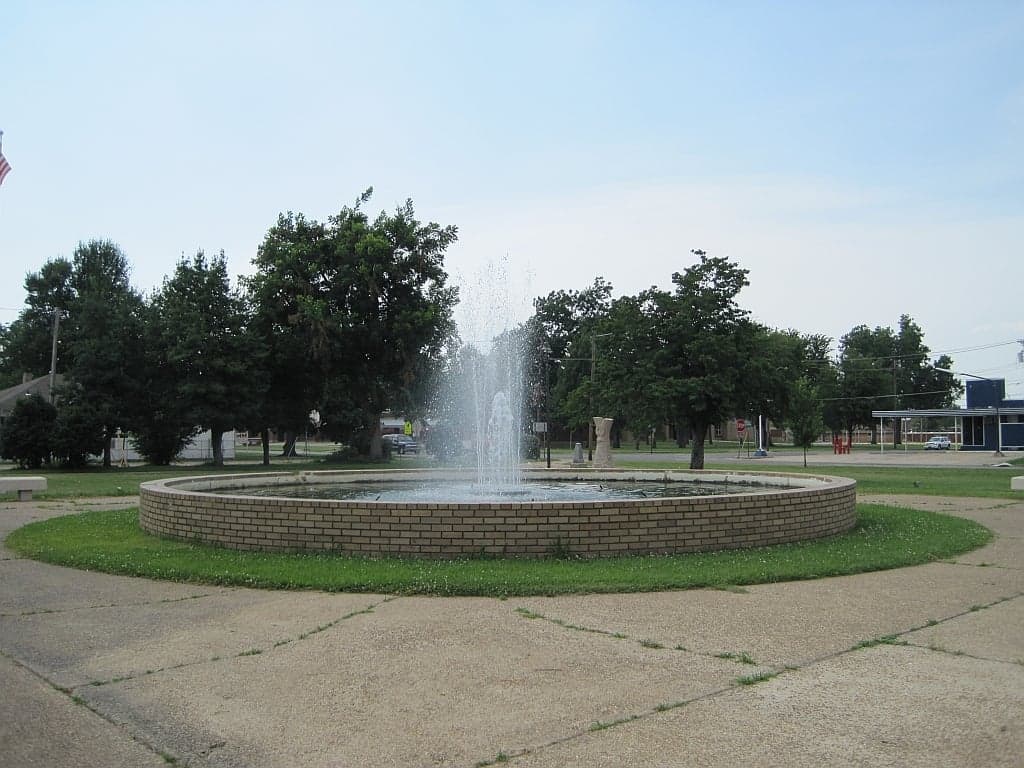
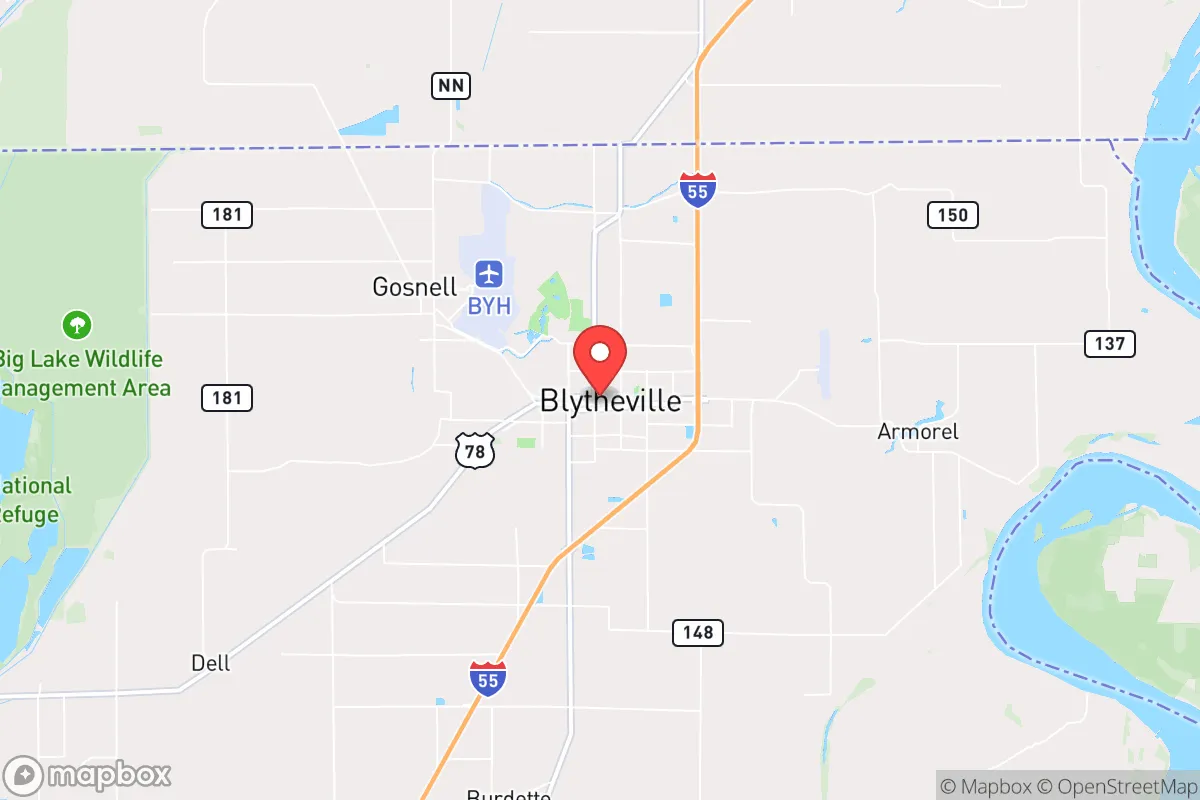
Photo: Wikipedia
Quality of Life in Blytheville, AR
Above-average quality of iife. The area offers a reasonable cost of living, decent mobility, and a mix of neighborhood amenities.
What does Quality of Life tell us?
Quality of Life blends cost of living, nearby amenities, socioeconomic signals, and neighborhood character. City-level scores represent the whole municipality; individual neighborhoods can differ.
What does this tell us?
Quality of Life blends cost of living, nearby amenities, socioeconomic signals, and neighborhood character. City-level scores represent the whole municipality; individual neighborhoods can differ.
Cost of Living
45% below national average
The Real Cost of Living in Blytheville, AR for 2026
| Tier | Individual | Family (4) |
|---|---|---|
| Survival | $13k | $24k |
| Comfortable | $22k | $33k |
| Luxury | $90k+ | $140k+ |
| Elite (Top 5%) | $115k+ | $178k+ |
153%
The Area Signal
A metric tracking the socioeconomic signals of the area.


Hobbies
Explore the areaGroceries
10 within 10 miles
Gas
20 within 10 miles
Hospital
3 within 20 miles
Airport
MCI — Kansas City International
Post Office
USPS — Blytheville, AR
Critical Amenities
Quality-of-Life Analysis
Blytheville, Arkansas, presents a distinctly lower-cost quality of life compared to national averages, with a cost of living index of 55 (where 100 equals the U.S. average). The area is characterized by a modest, working-class population, with a median household income that aligns with the region's affordable housing market. Residents are predominantly employed in manufacturing, logistics, and agriculture, reflecting the local economy's roots in the Mississippi Delta. The city's demographic profile skews older and more family-oriented, with a significant portion of the population having deep generational ties to the area.
Cost of living and housing affordability compared to nearby cities
Blytheville's housing market is exceptionally affordable, even by Arkansas standards. The median home value sits at $101,200, which is roughly half the national median and significantly lower than in nearby Jonesboro (median around $220,000) or Memphis, Tennessee (median around $200,000). Median rent is $789, making it one of the most budget-friendly rental markets in the region. The overall cost of living index of 55 means everyday expenses—groceries, utilities, and transportation—are roughly 45% below the U.S. average. The average commute time is just 13.5 minutes, a fraction of the national average of 26 minutes, which translates to substantial savings on fuel and vehicle wear. For comparison, a similar home in Memphis would cost roughly double, while a comparable rental in Jonesboro would run about 20% higher. This affordability allows residents to allocate more income toward savings or discretionary spending, though it also reflects a local economy with fewer high-wage job opportunities.
What daily life is like for families and retirees
Daily life in Blytheville revolves around a slower, more community-oriented pace. The Blytheville School District serves the area, though many families with higher educational aspirations consider private options or commute to schools in nearby Osceola or Manila. The city's amenities include the Blytheville Public Library, the Mississippi County Museum, and several parks such as Rosedale Park and Blytheville City Park, which host youth sports leagues and community events. For shopping and dining, residents typically drive to the Blytheville Shopping Center or travel 30 minutes north to Memphis for major retail and entertainment. The local healthcare landscape is anchored by Great River Medical Center, a critical access hospital, though specialized care often requires a trip to Jonesboro or Memphis. The rhythm of life is defined by seasonal agricultural cycles, with many residents employed at the Nucor Steel plant or in logistics at the Blytheville Municipal Airport industrial park. Retirees are drawn to the low cost of living and quiet neighborhoods, while families appreciate the short commutes and safe, walkable streets in established subdivisions.
Blytheville is best suited for individuals and families who prioritize affordability and a low-stress lifestyle over urban amenities and career diversity. It works well for retirees on fixed incomes, remote workers who can leverage the low housing costs, and those employed in local manufacturing or agriculture. The city is less ideal for young professionals seeking vibrant nightlife, high-end retail, or rapid career advancement outside of the industrial sector. For anyone willing to trade big-city options for financial breathing room and a tight-knit community, Blytheville offers a viable, budget-friendly alternative to pricier regional hubs like Memphis or Jonesboro.

Crime in Blytheville, AR
Significantly higher crime rates than 85% of comparable U.S. locations.
Violent CrimeViolent Crime Analysis
Property CrimeProperty Crime Analysis
Crime Analysis
Blytheville, Arkansas, faces a serious public safety challenge, with crime rates that significantly exceed both state and national averages. The city's violent crime rate stands at 1,163.1 incidents per 100,000 residents, while property crime occurs at a rate of 3,538.7 per 100,000. These figures place Blytheville among the higher-risk communities in the Mississippi River Delta region, and prospective residents should weigh safety data heavily when considering a move.
Crime in context
To understand the severity of Blytheville's crime problem, it helps to compare these numbers to broader benchmarks. The national average for violent crime is roughly 380 per 100,000, meaning Blytheville's rate is approximately three times higher. Property crime nationally averages around 2,000 per 100,000, making Blytheville's rate about 75% above the national norm. Arkansas as a whole has elevated crime rates compared to the U.S. average, but Blytheville still stands out as a high-crime outlier within the state. The city's location near the Tennessee border and its status as a regional hub for commerce and transportation may contribute to transient criminal activity, but the core issue is a local justice system that, like many in larger metro-adjacent areas, has adopted progressive policies. These policies, including lenient sentencing and reduced prosecution of non-violent offenses, have been linked to higher recidivism and a greater number of offenders returning to the streets, directly undermining public safety.
What residents experience
For those living in Blytheville, the high crime rates translate into tangible daily concerns. Violent crime—including aggravated assault, robbery, and homicide—is not confined to any single area, though certain neighborhoods report higher incident densities. Property crimes such as burglary, larceny-theft, and motor vehicle theft are pervasive, affecting homeowners and renters alike. Residents frequently report issues with vandalism and break-ins, and the presence of open-air drug markets in some parts of the city exacerbates both violent and property crime. The local police department works with limited resources, and community trust in law enforcement has been strained by the perception that the judicial system prioritizes offender rehabilitation over victim protection. This dynamic, common in areas with progressive district attorneys, means that even when arrests are made, swift and certain consequences are not guaranteed, leaving many residents feeling that the system is stacked against them.
Neighborhood-level variation does exist, but it is limited. Areas closer to the city's core, particularly around the historic downtown and along major corridors like Highway 61, tend to see the highest concentrations of crime. Outlying residential subdivisions and newer developments on the city's edges generally report lower incident rates, though no neighborhood is immune. Prospective residents are advised to consult local crime mapping tools and speak with current residents about specific blocks or apartment complexes. Given the overall safety picture, those considering a move to Blytheville should factor in the cost of enhanced home security, comprehensive renter's or homeowner's insurance, and a heightened awareness of surroundings as part of daily life.
* Values derived from national, state, county, city and local statistics and may differ in a specific area. Last updated: 2026-04-20T11:00:16.000Z
Narrative content on this page is AI-generated and may contain mistakes. Verify any details that matter before acting on them.
ReloMaps may earn a commission from affiliate links at no extra cost to you.

