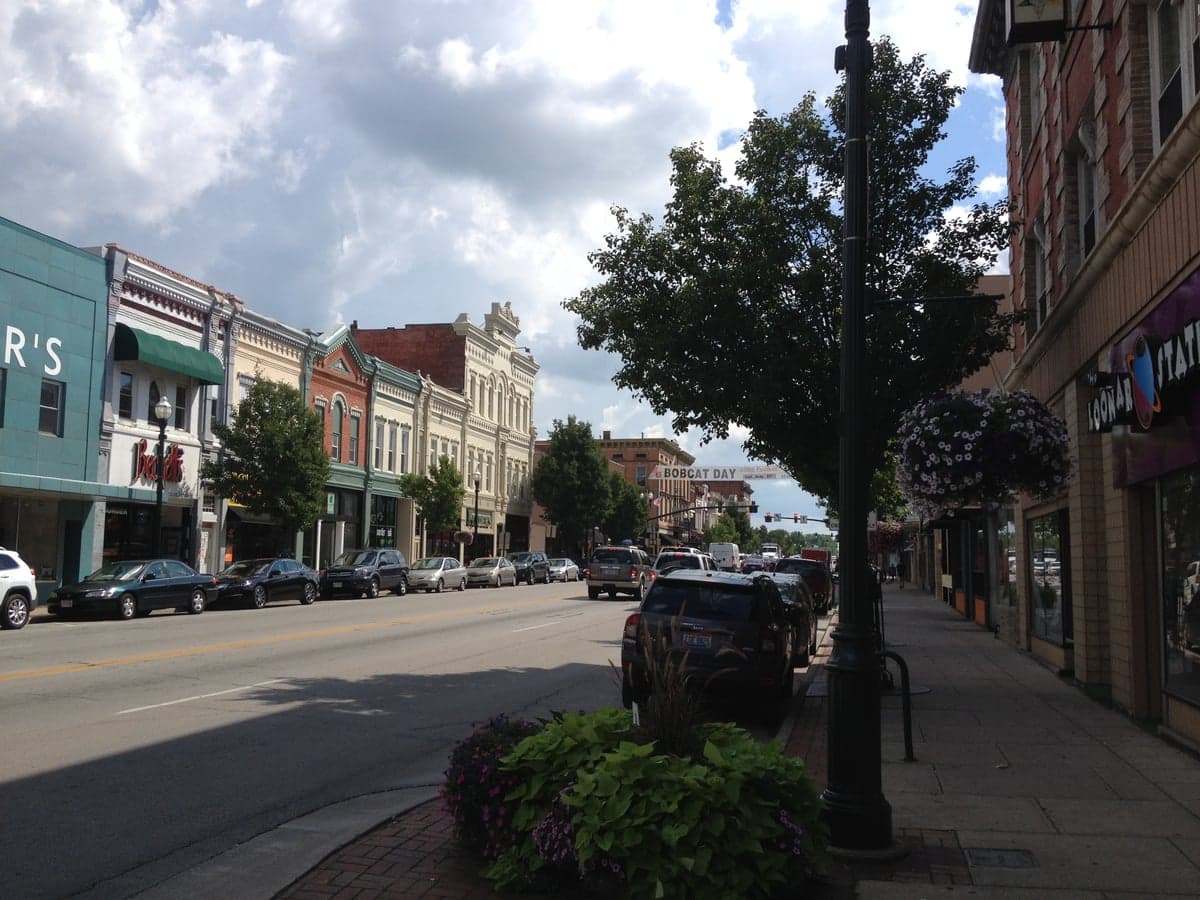
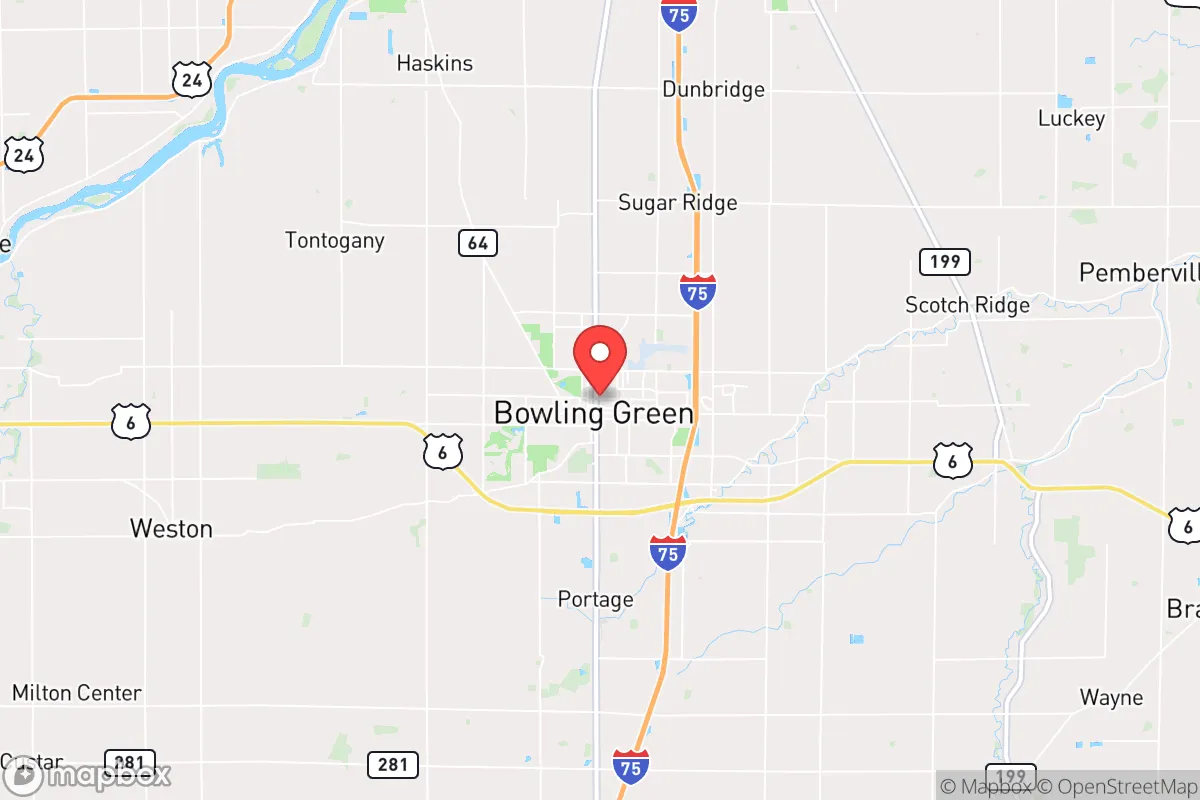
Photo: Wikipedia
Demographics of Bowling Green, OH
Affluence Level in Bowling Green, OH
A middle-class area roughly in line with national averages across income, home values, education, and employment.
People of Bowling Green, OH
Bowling Green, Ohio is home to 30,051 residents, a population shaped by its role as a university town and regional service center. The city is predominantly white (82.7%) with a college-educated share of 47.0%, reflecting the influence of Bowling Green State University. Its character is defined by a stable, family-oriented core, a significant student population, and modest but growing Hispanic (6.6%) and Black (4.9%) communities, creating a blend of academic energy and small-town Midwestern values.
How the city was settled and grew
Founded in 1833 as the seat of Wood County, Bowling Green’s early growth was driven by agriculture and the arrival of the railroad in the 1850s. The original settlers were primarily Yankee migrants from New England and German immigrants drawn to the fertile Black Swamp region. The discovery of oil and natural gas in the 1880s brought a second wave of workers, including Irish and Polish laborers, who settled in the East Side neighborhood near the rail yards and oil fields. The founding of Bowling Green State Normal School (now BGSU) in 1910 transformed the town, attracting faculty and students and spurring development of the University District with its historic homes and fraternity houses. By the mid-20th century, the city’s population had grown to around 13,000, with a largely white, native-born character and a strong German-American presence in neighborhoods like Downtown and the West Side.
Modern era (post-1965)
After the 1965 Immigration and Nationality Act, Bowling Green saw only modest foreign-born growth, reaching just 1.8% of the population today. The city’s post-1965 demographic shifts came primarily from domestic in-migration: rural Ohioans seeking university-related employment and suburban families drawn to the area’s schools and safety. The West Side subdivisions, such as those near Simpson Garden Park, absorbed much of this family-oriented growth, while the University District increasingly became a student rental zone. The Hispanic population, now 6.6%, began growing in the 1990s, with families settling in the South Side and East Side near manufacturing and service jobs. The Black population (4.9%) is concentrated in the East Side and parts of the South Side, reflecting historic housing patterns. East/Southeast Asian residents (0.9%) and Indian subcontinent residents (0.4%) are small, largely affiliated with BGSU as students or faculty, and are dispersed across the University District and Downtown rental areas.
The future
Bowling Green’s population is projected to remain stable or grow slowly, with the university anchoring a steady influx of young adults. The Hispanic share is likely to continue rising gradually, driven by family formation and labor demand in logistics and healthcare, but the city is not expected to form distinct ethnic enclaves. The Black and Asian populations are expected to remain small and dispersed, with no signs of tribalization into separate neighborhoods. The foreign-born share will likely stay below 3%, as the city lacks the industrial base or refugee resettlement programs that drive larger immigrant inflows. The dominant trend is homogenization around a white, college-educated, family-oriented core, with the student population providing a transient counterbalance. The West Side will continue to attract families, while the University District and East Side will see ongoing turnover from student renters and younger workers.
For someone moving to Bowling Green now, the city offers a stable, safe, and educated community with a conservative-leaning culture and a strong sense of place. The population is becoming slightly more diverse, but remains overwhelmingly white and native-born, with demographic change happening slowly and without sharp neighborhood divisions. It is a place where university life and small-town rhythms coexist, and where new residents can expect a welcoming but largely homogeneous social environment.

* Values derived from national, state, county, city and local statistics and may differ in a specific area. Last updated: 2026-05-14T18:54:49.000Z
Narrative content on this page is AI-generated and may contain mistakes. Verify any details that matter before acting on them.
ReloMaps may earn a commission from affiliate links at no extra cost to you.

