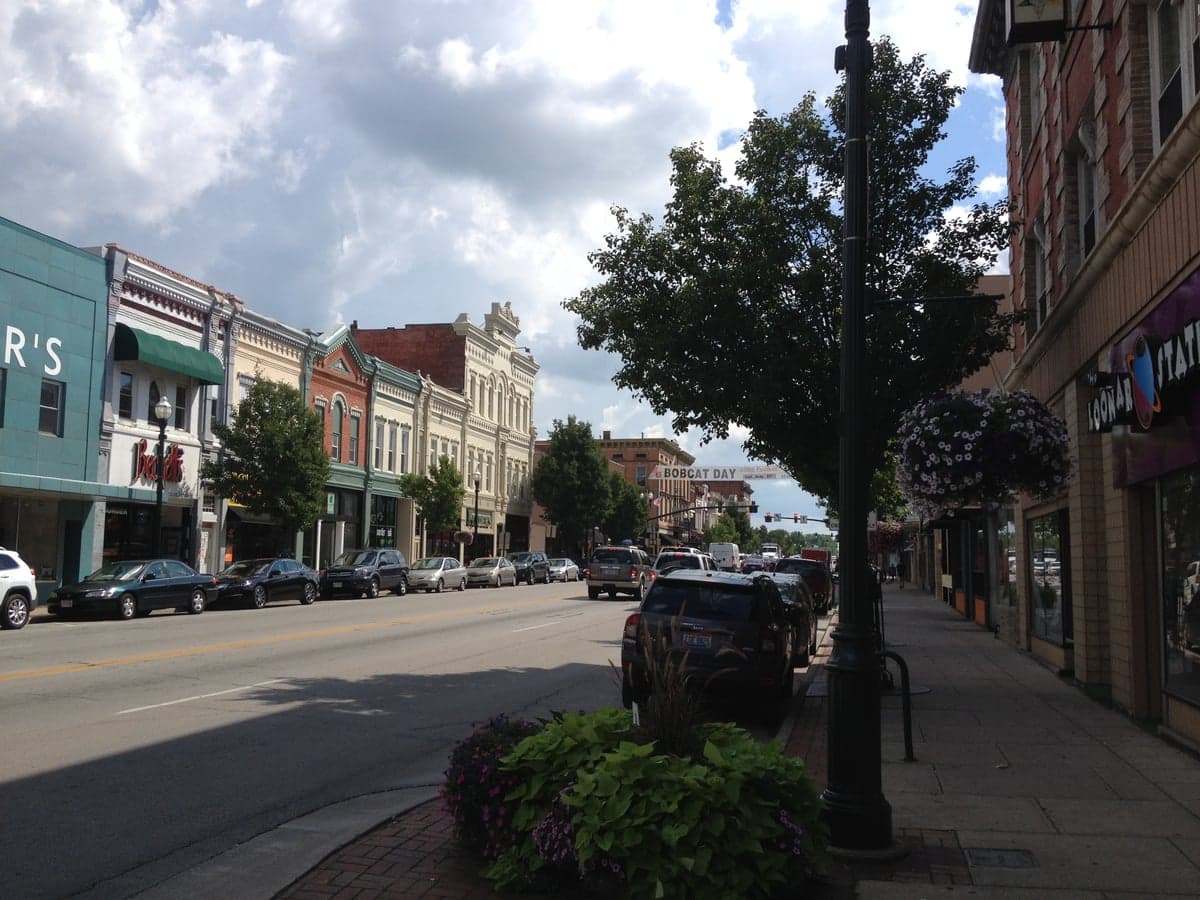
Photo: Wikipedia
Strategic Assessment of Bowling Green, OH
Meaningful friction. Expect exposure to either population pressure, blast zones, or natural disaster risk. Consider buying a retreat property.
What does the Strategic Assessment tell us?
Our Strategic Assessment grades tactical survivability of an area. Major population centers, military targets, fallout zones, natural disasters, and border exposure all drive risk — lower exposure means a more defensible position in a crisis.
This is heavily inspired by Joel Skousen's Strategic Relocation book. Highly recommended you checkout the book ($)What does this tell us?
Our Strategic Assessment grades tactical survivability of an area. Major population centers, military targets, fallout zones, natural disasters, and border exposure all drive risk — lower exposure means a more defensible position in a crisis.
This is heavily inspired by Joel Skousen's Strategic Relocation book. Highly recommended you checkout the book ($)Strategic Pillars

Key Distances
Regional Safe Places
Below is our recommended "safe zones" in Ohio and the surrounding area based on our strategic heuristics. For most people, it's unrealistic to live in a “safe zone” full-time due to work, family or other personal reasons. They tend to be more rural. However, many of these areas are perfect for second homes and retreat properties that double as a vacation home or even a short-term rental.

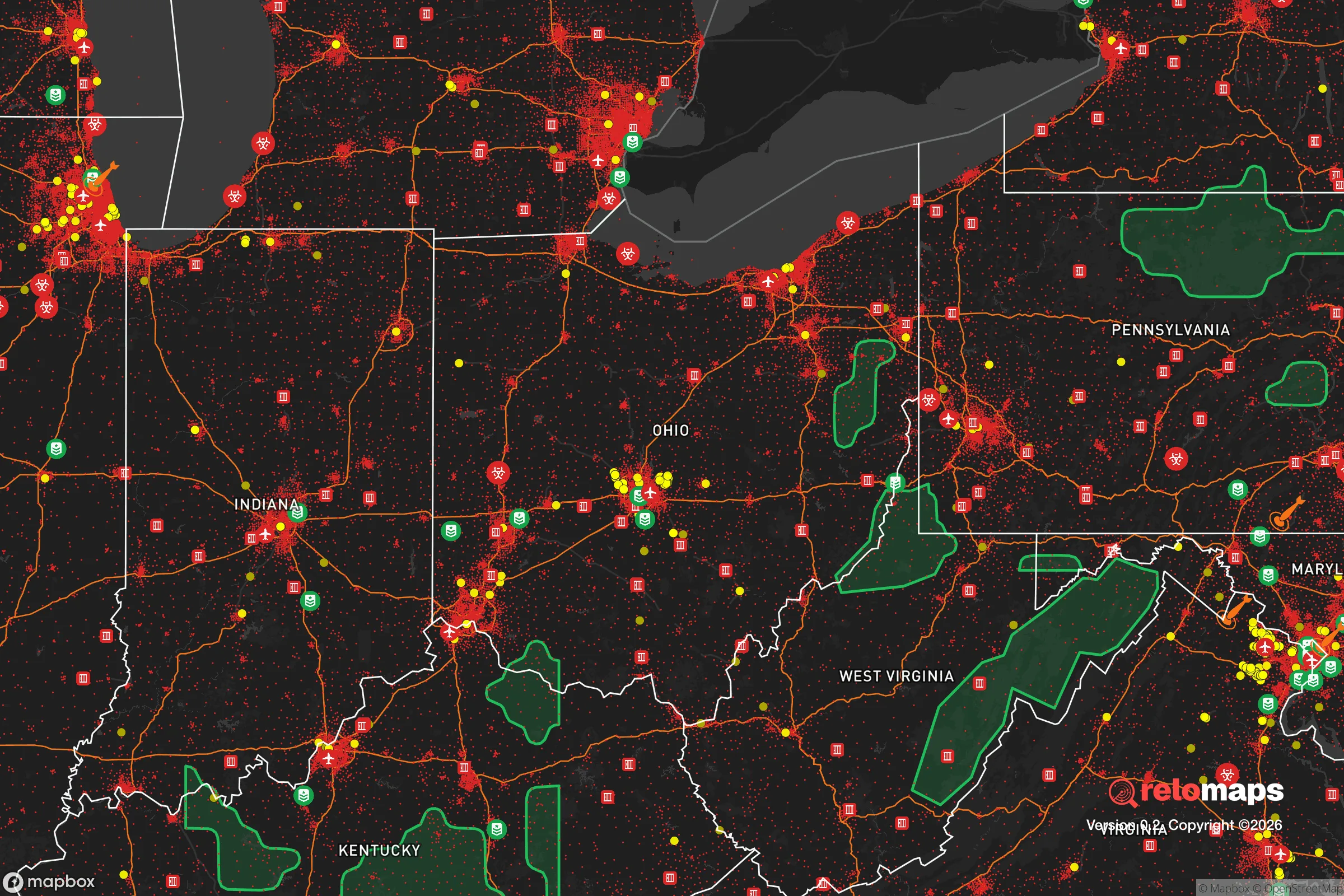


Important Note: For informational purposes only. This does not mean nothing bad ever happens in the green zones. Please use common sense. This is based on public data and modeled with AI. We tried to take a conservative approach but mistakes happen. We update this regularly as new information becomes available.
Solar Generator Recommendations
Backup power matters more here than in safer locations. We've picked three solar generators across budgets and capacity tiers — start with the budget unit if you only need a few essentials, or step up if you want to run a fridge and HVAC for days at a time.

Jackery Portable Power Station Explorer 300
Budget OptionPower on the Go: Weighing only 11 lbs, it's convenient to set up and store with book-sized foldable solar panels

BLUETTI Portable Power Station AC180
Designed for both indoor and outdoor scenarios, AC180 is highly capable as it has a robost capacity and continuous output power.

EF ECOFLOW DELTA Pro Ultra Power Station
Upgraded PickEcoFlow DELTA Pro Ultra is a whole-home energy system designed to grow with your family. Integrated with the Smart Home Panel 2, it scales to meet your evolving energy needs — keeping your home powered, intelligent, and secure through every stage of life.
We earn a commission, at no additional cost to you.
Strategic Assessment Analysis
Bowling Green, Ohio, sits at a crossroads of agricultural stability and industrial-era risk, offering a mixed strategic picture for the relocator who values self-sufficiency and community cohesion. Its resilience stems from fertile soils, abundant fresh water, and a low-key small-town character, but those advantages are tempered by proximity to major highways, a nuclear power plant, and large urban centers that could become sources of unrest or fallout. For a conservative-minded prepper looking at the long game, this northwest Ohio town deserves a hard-eyed look—neither a sanctuary nor a death trap, but a place where preparation and awareness will determine outcomes.
Geographic position and natural advantages for long-term survival
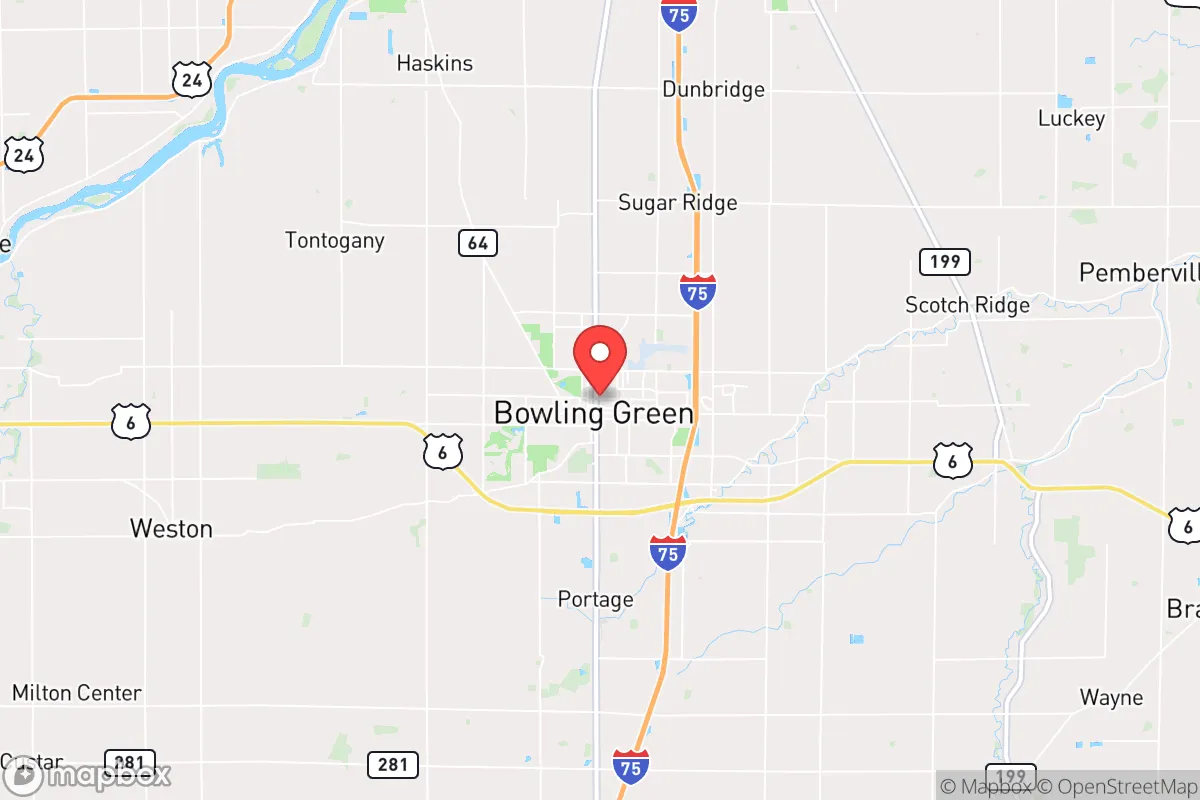
Bowling Green sits in the heart of the Maumee River watershed, roughly 25 miles south of Toledo and 80 miles west of Cleveland. The surrounding landscape is flat, glacially deposited farmland—ideal for row crops like corn, soybeans, and wheat, and for raising livestock. This agricultural base means local food production is not just possible but dominant; you can source grains, vegetables, and meat within a short radius without relying on distant supply chains. The Maumee River itself provides a reliable surface water source, and the underlying glacial till aquifer offers decent groundwater yields for wells, though depth and quality vary by location. The region’s climate is temperate, with cold winters and humid summers, but it avoids the extremes of tornado alley or hurricane zones. Tornadoes do occur—northwest Ohio sits in the enhanced risk zone—but they are typically short-lived and less catastrophic than in the Plains. The flat terrain is a double-edged sword: it makes farming efficient but offers little natural cover or defensible high ground. For a relocator, the key natural advantage here is water and soil, not terrain.
Risks, exposures, and proximity to fallout-relevant landmarks
The most glaring risk for Bowling Green is its location within the fallout plume zone of the Davis-Besse Nuclear Power Station, located just 30 miles to the east near Oak Harbor. In the event of a major accident or sabotage, prevailing westerly winds would carry radioactive material directly over the city. That alone should give any serious prepper pause. Additionally, the city lies astride Interstate 75, a major north-south corridor connecting Detroit and Toledo to the rest of the Midwest. In a crisis, I-75 becomes a chokepoint for evacuation and a target for disruption—both from civil unrest and from potential infrastructure attacks. Toledo’s urban core, with its history of economic decline and periodic civil disturbances, is close enough that spillover violence or refugee flows could reach Bowling Green within hours. The same applies to Detroit, 80 miles north, and Cleveland, 80 miles east. Both are large population centers with significant social friction points. Bowling Green is also home to Bowling Green State University, a campus of roughly 20,000 students. While a university can be a resource for skills and medical personnel, it also concentrates a transient, often politically active population that could become a flashpoint during unrest. The city’s rail lines and natural gas pipelines (part of the Utica Shale infrastructure) add further target value. In short, the area is not remote; it is embedded in a network of vulnerabilities.
Practical resilience for relocators: food, water, energy, and defensibility
On the practical side, Bowling Green offers genuine strengths for a prepared household. Local food production is the standout: the Wood County region is among Ohio’s top agricultural counties, with abundant grain elevators, livestock auctions, and farm stands. A relocator with land can grow a substantial portion of their own calories, and barter networks among farmers are strong. Water is accessible via the Maumee River and shallow wells, but treatment is necessary—surface water requires filtration and boiling, and well water should be tested for agricultural runoff (nitrates, pesticides). The city’s municipal water comes from Lake Erie via Toledo’s system, which is vulnerable to both contamination (e.g., algal blooms) and infrastructure failure. A private well with a hand pump is a wise investment. Energy reliability is moderate: Ohio’s grid is a mix of coal, natural gas, and renewables, but it has experienced weather-related outages (ice storms, derecho events). Natural gas is widely available in the region, and propane is common for rural homes. Solar potential is decent but not exceptional—about 4.5 peak sun hours per day. Defensibility is the weak link. The flat, open terrain offers little natural cover, and the town’s layout—a compact grid around the courthouse—makes perimeter security difficult. However, the community is tight-knit, with a strong sense of local identity and a history of mutual aid (e.g., during the 2020 protests, the city remained calm). For a relocator, the best approach is to buy acreage outside the city limits, ideally with a creek or pond, and establish a homestead that can operate independently of the grid. The presence of BGSU also means access to a hospital (Wood County Hospital) and a pool of skilled professionals—engineers, nurses, veterinarians—who may be valuable allies in a prolonged crisis.
Overall, Bowling Green is a calculated risk. It offers the agricultural and water resources that make long-term survival feasible, but its proximity to multiple high-value targets—a nuclear plant, major highways, and large cities—means that a relocator must have a robust plan for both sheltering in place and rapid evacuation. It is not a remote redoubt, but it could serve as a base for those willing to invest in hardening, community building, and situational awareness. For the conservative prepper who values self-reliance over isolation, this northwest Ohio town deserves a spot on the short list—provided you go in with eyes wide open to the risks that come with living near the arteries of a fragile system.

* Values derived from national, state, county, city and local statistics and may differ in a specific area. Last updated: 2026-05-14T18:54:49.000Z
Narrative content on this page is AI-generated and may contain mistakes. Verify any details that matter before acting on them.
ReloMaps may earn a commission from affiliate links at no extra cost to you.

