Photo: Wikipedia
Quality of Life in Bowling Green, OH
A high quality of life with strong walkability, manageable living costs, healthy neighborhood signals, and solid amenity access.
What does Quality of Life tell us?
Quality of Life blends cost of living, nearby amenities, socioeconomic signals, and neighborhood character. City-level scores represent the whole municipality; individual neighborhoods can differ.
What does this tell us?
Quality of Life blends cost of living, nearby amenities, socioeconomic signals, and neighborhood character. City-level scores represent the whole municipality; individual neighborhoods can differ.
Cost of Living
24% below national average
The Real Cost of Living in Bowling Green, OH for 2026
| Tier | Individual | Family (4) |
|---|---|---|
| Survival | $14k | $26k |
| Comfortable | $42k | $62k |
| Luxury | $84k+ | $131k+ |
| Elite (Top 5%) | $121k+ | $187k+ |
75%
The Area Signal
A metric tracking the socioeconomic signals of the area.
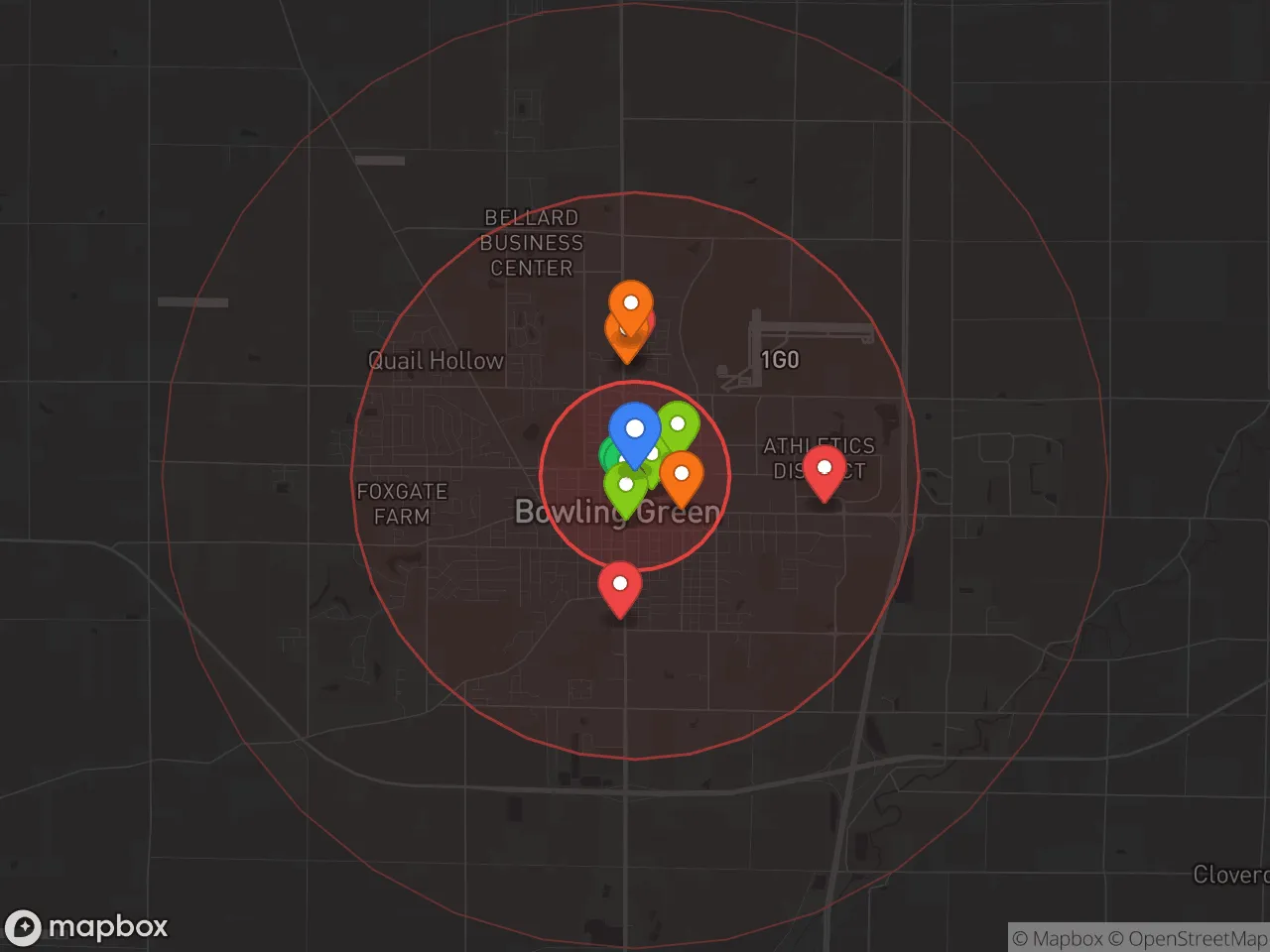
Hobbies
Explore the areaGroceries
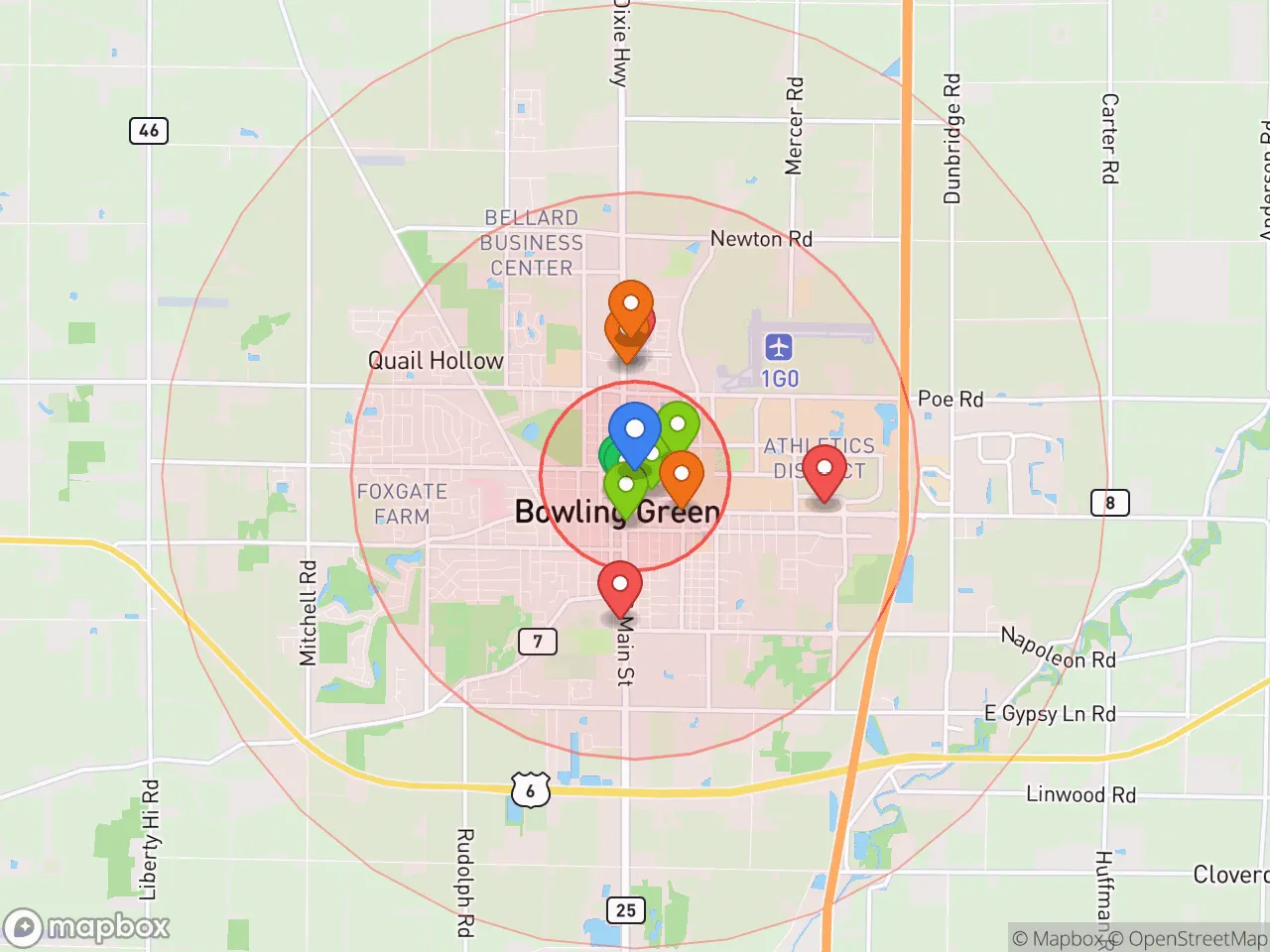
4 within 10 miles
Gas
17 within 10 miles
Hospital
7 within 20 miles
Airport
DTW — Detroit Metropolitan Wayne County
Post Office
USPS — Bowling Green, OH
Critical Amenities
Quality-of-Life Analysis
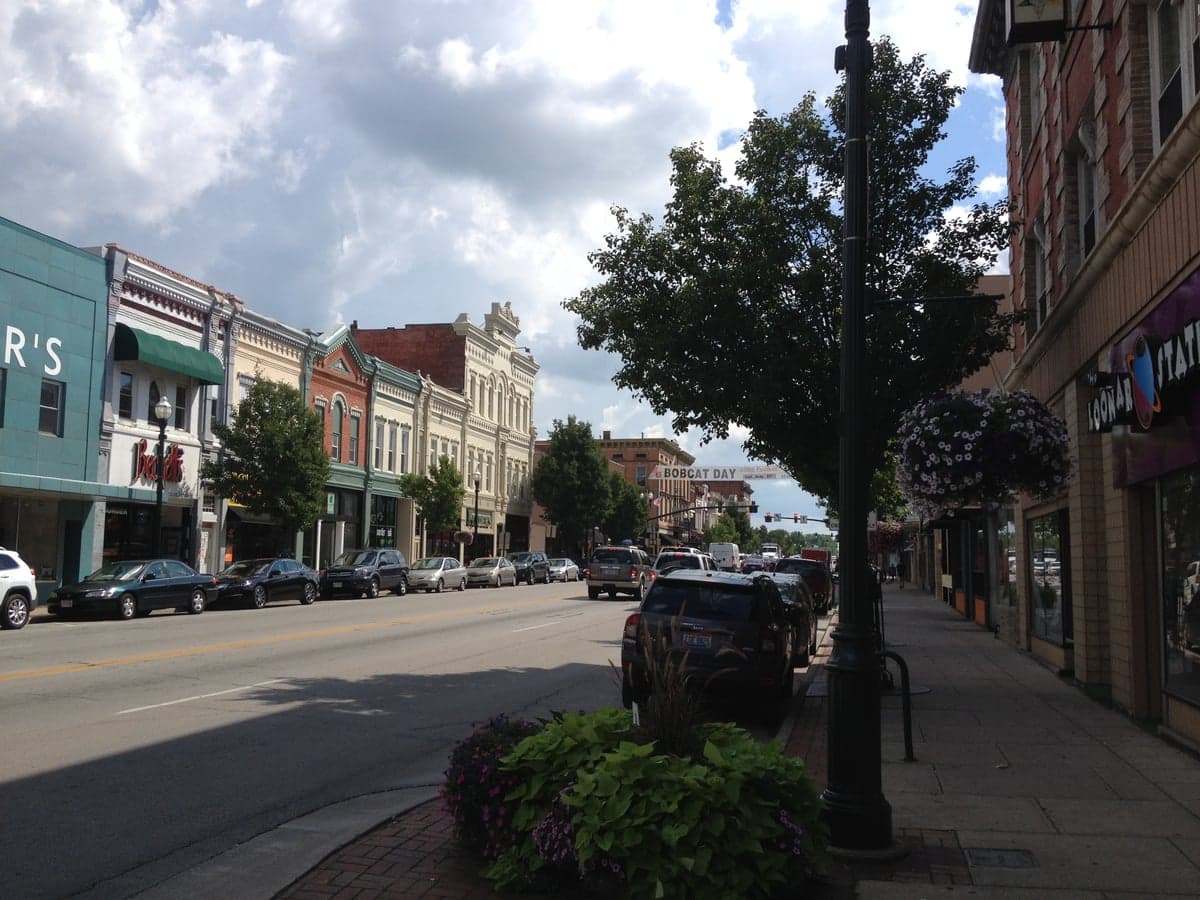
Bowling Green, Ohio, offers a quality of life defined by small-town comfort and the cultural energy of a university community, all at a cost well below national averages. The city’s population of roughly 31,000 is a blend of Bowling Green State University students, faculty, and long-term residents who value walkable neighborhoods, a historic downtown, and a slower pace than nearby Toledo. While not a high-affluence enclave, the area’s stable middle-class character and low cost of living make it attractive to families, educators, and remote workers seeking an affordable, amenity-rich base in Northwest Ohio.
How Bowling Green’s cost of living and housing compare to Toledo and Perrysburg
Bowling Green’s overall cost of living index sits at 76 (100 = U.S. average), making it significantly cheaper than both the national norm and many Ohio suburbs. The median home value of $217,300 is well below the state median of roughly $240,000, and the median rent of $874 undercuts comparable college towns like Oxford (Miami University) or Athens (Ohio University). For context, nearby Perrysburg’s median home value exceeds $350,000, while Toledo’s is around $120,000 but with higher crime and fewer local amenities. The average commute of 18.3 minutes is notably short, reflecting the city’s compact layout and the fact that many residents work at BGSU, Wood County government, or local healthcare providers. This combination of low housing costs and a quick drive to work gives Bowling Green a strong affordability advantage over larger Midwestern metros.
Schools, downtown amenities, and the daily rhythm of a college town
Bowling Green City Schools serve the community with a graduation rate above 90% and a reputation for strong music and STEM programs. The university itself adds a layer of public amenities—free concerts at the Kobacker Hall, Division I athletics, and the Wolfe Center for the Arts—that would be rare in a town this size. Daily life revolves around the historic downtown along Main Street, where independent coffee shops, the Black Swamp Pub, and the weekly farmers market (May–October) draw a mix of students and locals. The city’s 18 parks, including the 120-acre Simpson Garden Park, provide ample green space, while the Wood County District Public Library offers robust programming for all ages. The rhythm is noticeably quieter than Toledo’s, with most retail and dining concentrated in a few walkable blocks, making it easy to run errands on foot or by bike.
Bowling Green is best suited for families who want good schools without high housing costs, university employees who value a short commute, and remote workers who appreciate a low-stress environment with reliable high-speed internet. Retirees on fixed incomes also find the affordability appealing, though those seeking a vibrant nightlife or big-city medical specialties may need to drive 25 minutes to Toledo. For anyone who prioritizes walkability, community events, and a cost structure that leaves room in the budget, Bowling Green delivers a solid, unpretentious quality of life.

Crime in Bowling Green, OH
Lower crime rates than 96% of comparable U.S. locations.
Violent CrimeViolent Crime Analysis
Property CrimeProperty Crime Analysis
Crime Analysis
Bowling Green, Ohio, reports a violent crime rate of 19.7 incidents per 100,000 residents and a property crime rate of 516.3 per 100,000, placing it well below national averages for both categories. The city benefits from its status as a college town (Bowling Green State University) and a relatively low population density, though its proximity to Toledo—a larger metro area with higher crime rates—introduces some spillover risk. Residents generally describe the community as safe, but awareness of regional justice policies and neighborhood-level differences is important for anyone considering a move.
Crime in context
Bowling Green’s violent crime rate is roughly one-sixth the national average (about 380 per 100K) and far below Ohio’s state average of approximately 300 per 100K. Property crime, while higher than violent crime, still sits about 30% below the U.S. median. The city’s location within Wood County places it near Toledo, where progressive prosecutorial policies have drawn criticism for contributing to repeat-offender cycles. Although Bowling Green itself maintains a conservative-leaning local judiciary, the broader regional justice environment can affect crime patterns—particularly property theft and drug-related offenses that cross municipal lines. Readers should weigh this metro-area influence when evaluating long-term safety trends.
What residents experience
Most crime in Bowling Green is non-violent: theft from vehicles, bicycle theft, and occasional burglaries near campus or downtown. BGSU’s campus police and the city’s own department collaborate on patrols, and the university’s student population creates a transient dynamic that can spike property crime during academic breaks. Violent incidents are rare and typically involve disputes among known individuals rather than random attacks. Residents report feeling comfortable walking downtown and in established residential neighborhoods like the “Old West” historic district, though late-night activity near bars and student housing warrants standard urban caution. The city’s relatively low crime rates, combined with a responsive police force, make it a safe choice for families and retirees—provided they remain mindful of the regional context.
Neighborhood-level variation is modest but noticeable. Areas closer to the university and along major corridors (e.g., East Wooster Street) see higher property crime volumes, while quieter subdivisions west of I-75 and south of the downtown core report fewer incidents. The city’s east side, adjacent to a commercial strip, has slightly elevated theft rates. For the most current block-level data, prospective residents should consult the Bowling Green Police Department’s annual crime report or local Nextdoor forums, which often highlight specific concerns like package theft and vehicle break-ins. Overall, Bowling Green offers a safety profile that is strong relative to both state and national benchmarks, with the caveat that regional metro-area dynamics—including prosecutorial philosophy in nearby Toledo—warrant ongoing attention.
* Values derived from national, state, county, city and local statistics and may differ in a specific area. Last updated: 2026-05-14T18:54:49.000Z
Narrative content on this page is AI-generated and may contain mistakes. Verify any details that matter before acting on them.
ReloMaps may earn a commission from affiliate links at no extra cost to you.

