Quality of Life in Braintree Town, MA
A high quality of life with strong walkability, manageable living costs, healthy neighborhood signals, and solid amenity access.
What does Quality of Life tell us?
Quality of Life blends cost of living, nearby amenities, socioeconomic signals, and neighborhood character. City-level scores represent the whole municipality; individual neighborhoods can differ.
What does this tell us?
Quality of Life blends cost of living, nearby amenities, socioeconomic signals, and neighborhood character. City-level scores represent the whole municipality; individual neighborhoods can differ.
Cost of Living
88% above national average
The Real Cost of Living in Braintree Town, MA for 2026
| Tier | Individual | Family (4) |
|---|---|---|
| Survival | $31k | $58k |
| Comfortable | $121k | $178k |
| Luxury | $186k+ | $288k+ |
| Elite (Top 5%) | $218k+ | $338k+ |
70%
The Area Signal
A metric tracking the socioeconomic signals of the area.
Hobbies
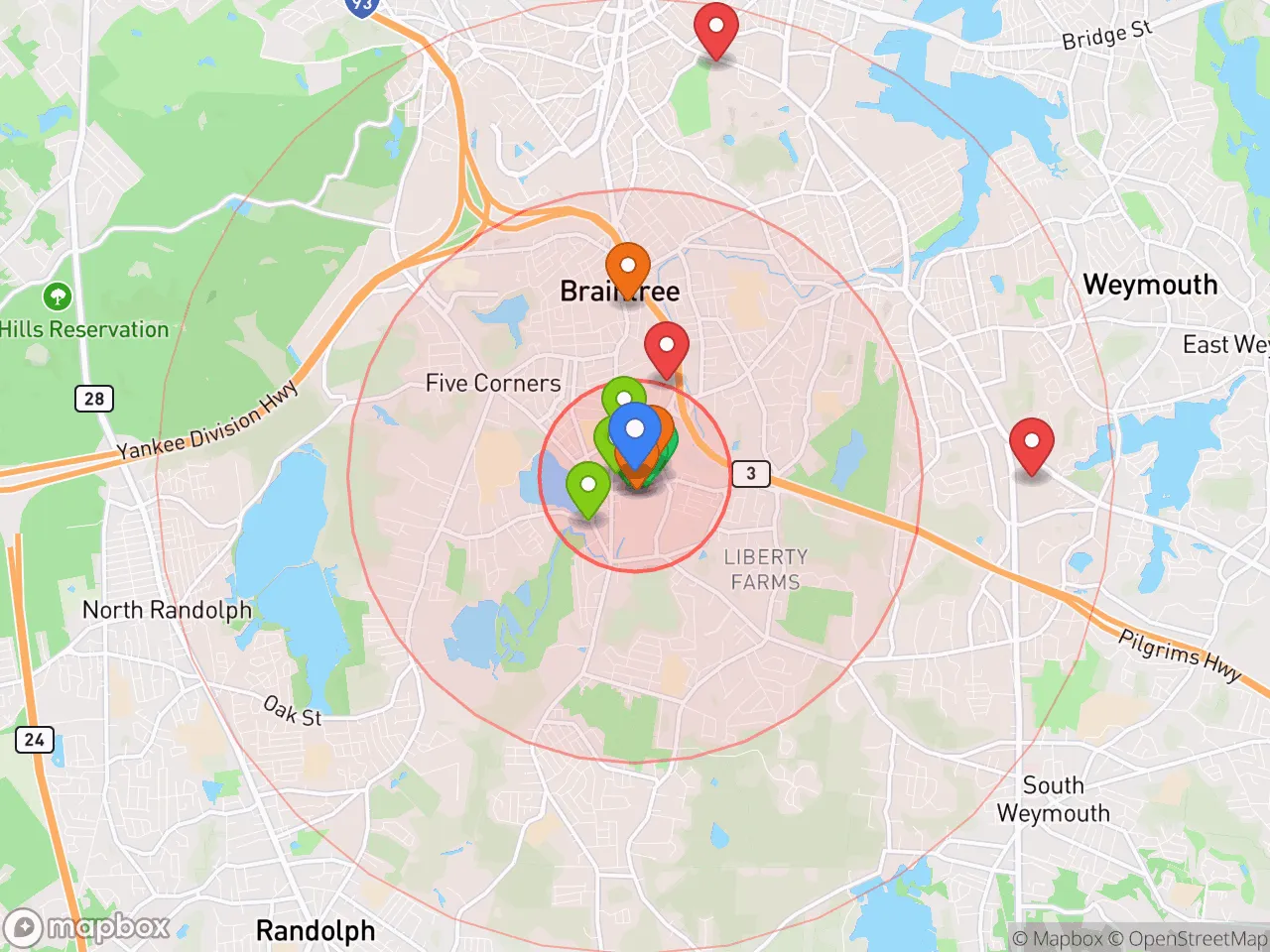
Explore the areaGroceries
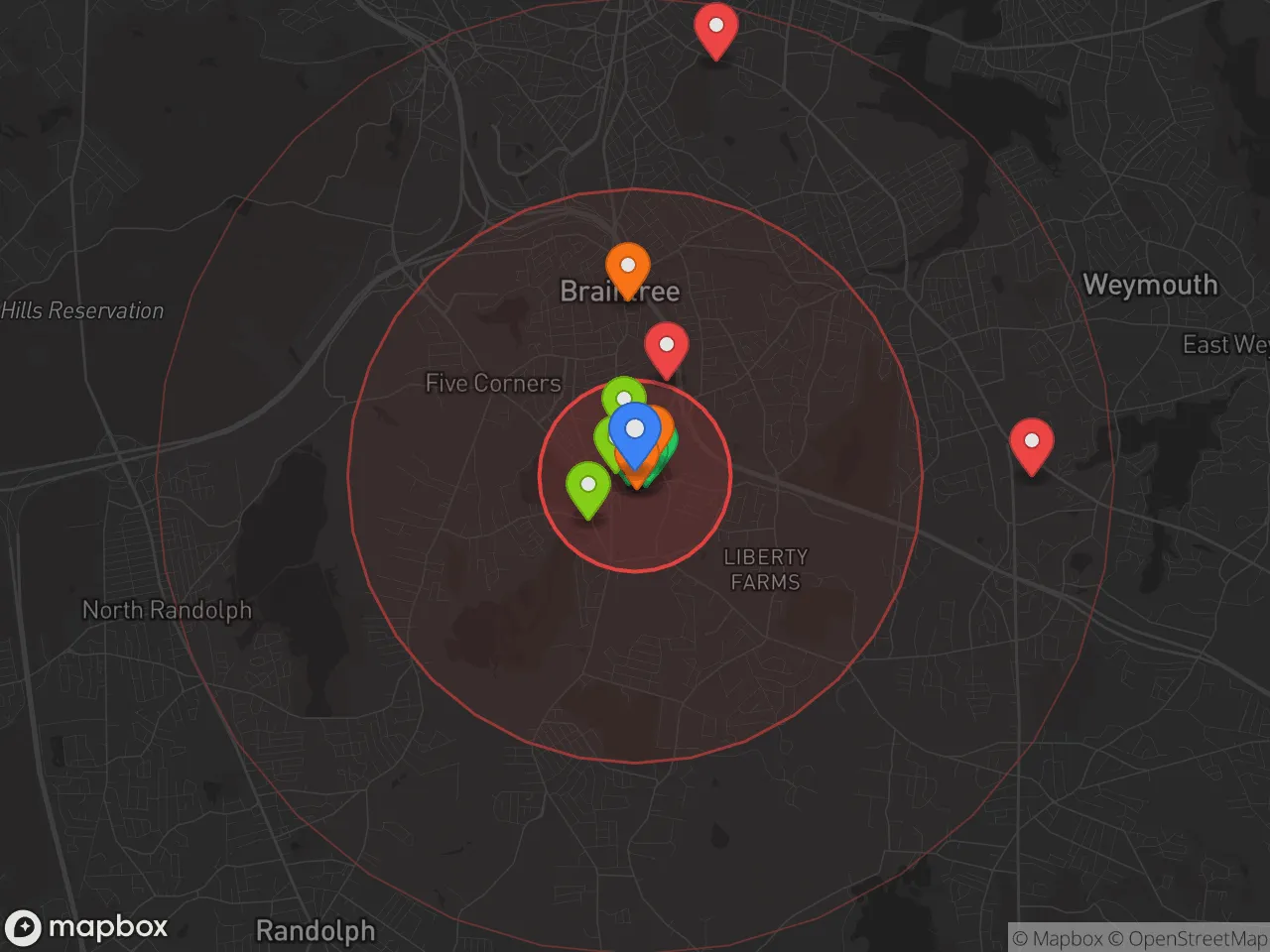
7 within 10 miles
Gas
20 within 10 miles
Hospital
20 within 20 miles
Airport
PDX — Portland International Jetport
Post Office
USPS — Braintree Town, MA
Critical Amenities
Quality-of-Life Analysis
Braintree Town, Massachusetts, is an affluent, family-oriented suburb located roughly 10 miles south of downtown Boston, with a cost of living index of 188 (nearly double the U.S. average of 100). The town’s 37,000 residents are predominantly professionals and dual-income families drawn by top-rated public schools, a safe environment, and direct MBTA Red Line access to the city. While Braintree is not a wealthy enclave like neighboring Wellesley or Weston, its median household income of roughly $95,000 reflects a solidly upper-middle-class demographic that values convenience and community stability over urban edge.
Cost of living, housing prices, and affordability compared to Boston and South Shore suburbs
Braintree’s cost of living index of 188 is driven primarily by housing: the median home value sits at $623,200, and the median rent is $1,925 per month. This places Braintree squarely in the middle of the South Shore pack — significantly cheaper than Boston proper (where median home values exceed $750,000) and pricier than towns like Brockton or Randolph, but notably less expensive than coastal suburbs like Hingham or Scituate. For buyers, a $623,200 median means a typical single-family home requires a household income of roughly $130,000 to afford comfortably (assuming a 20% down payment and current interest rates). Renters face a tight market: the $1,925 median rent is about 30% of the area’s median household income, which is manageable but leaves little room for savings. Property taxes in Braintree average around $7,200 annually, in line with Norfolk County norms. The town’s affordability advantage over Boston is clear — you get more square footage and a yard for the same monthly payment — but it still demands a six-figure household income to live without financial strain.
Schools, commute times, and what daily life is like for families
Daily life in Braintree revolves around its strong public school system (rated A- by Niche), with Braintree High School offering 18 AP courses and a 94% graduation rate. The average one-way commute is 32.7 minutes, which is typical for a Boston bedroom community — residents rely heavily on the MBTA Red Line’s Braintree station (the line’s southern terminus) for a 25-minute ride to South Station, or on Route 128/I-93 for car commuters. The town’s layout is suburban but walkable in pockets: the South Shore Plaza mall anchors retail life, while the Braintree Highlands and East Braintree neighborhoods offer tree-lined streets, local parks like Watson Park, and a handful of independent restaurants. Weekend routines often involve trips to the Blue Hills Reservation (5 miles west) for hiking, or to the coastal towns of Quincy and Weymouth for harbor access. The town lacks a vibrant nightlife scene — most evening activity centers on family-oriented events at the Braintree Town Hall or the Thayer Public Library. For families, the rhythm is predictable: school drop-offs, commutes, weekend sports leagues, and occasional trips into Boston for culture or dining.
Braintree is best suited for professionals and families who prioritize strong schools, a short commute to Boston, and a safe, stable suburban environment over urban energy or lower housing costs. Empty-nesters and retirees may find the property taxes and lack of walkable downtown amenities a drawback, while young singles or couples without children might prefer the livelier scenes in Quincy or Somerville. For those seeking a reliable, well-run community with direct transit access to a major city, Braintree delivers a high quality of life — provided the budget can absorb its premium price tag.

Crime in Braintree Town, MA
Generally safer than 71% of comparable U.S. locations.
Violent CrimeViolent Crime Analysis
Property CrimeProperty Crime Analysis
Crime Analysis
Braintree Town, Massachusetts, presents a mixed safety profile for prospective residents. While its violent crime rate of 235.8 per 100,000 residents is notably lower than the national average, its property crime rate of 813.5 per 100,000 sits above the state median, reflecting pressures common to communities within the Greater Boston metro area. The town’s proximity to Boston, combined with a progressive judicial climate in Norfolk County and Massachusetts at large, creates a safety environment that demands careful consideration, particularly for families and property owners.
Crime in context
Braintree’s violent crime rate is roughly 36% below the national average, a figure that aligns with many suburban communities in the Northeast. However, the property crime rate is approximately 15% higher than the Massachusetts state average, driven largely by larceny and vehicle break-ins. This pattern is typical of towns situated along major transit corridors like Route 128 and I-93, which provide easy access for transient property offenders. A critical factor for residents to weigh is the broader legal environment: Norfolk County’s district attorney and many Massachusetts judges have adopted progressive prosecution policies, including reduced cash bail, diversion programs for repeat property offenders, and sentencing guidelines that prioritize rehabilitation over incarceration. While these policies aim to reduce recidivism, critics argue they result in more offenders cycling back onto the streets, directly increasing the risk of property crime and diminishing the deterrent effect for violent offenses.
What residents experience
Daily life in Braintree is generally safe, with most violent incidents occurring in isolated circumstances rather than random attacks. The town’s police department maintains a visible presence, and neighborhood watch programs are active in areas like East Braintree and South Braintree. However, residents frequently report package thefts, car break-ins, and occasional porch piracy as persistent nuisances. The progressive judicial approach in Massachusetts means that even when suspects are arrested for these property crimes, they often face minimal jail time or are released on personal recognizance, creating a cycle of re-offending that frustrates victims. For families, the practical impact is a need for heightened vigilance: security cameras, locking vehicles, and avoiding leaving valuables in sight have become standard precautions.
Neighborhood-level variation is modest but notable. The Highlands and Hollingsworth areas, with their denser housing and proximity to the Braintree MBTA station, see slightly higher property crime rates. In contrast, the more suburban neighborhoods near Blue Hills Reservation and the Granite Links golf course report fewer incidents. Overall, Braintree offers a baseline of safety that is acceptable for most residents, but the combination of metro-area crime pressures and a lenient justice system means that property crime remains a tangible concern that requires proactive personal security measures.
* Values derived from national, state, county, city and local statistics and may differ in a specific area. Last updated: 2026-05-01T07:00:10.000Z
Narrative content on this page is AI-generated and may contain mistakes. Verify any details that matter before acting on them.
ReloMaps may earn a commission from affiliate links at no extra cost to you.

