Photo: Wikipedia
Find The Best Places To Live
in Boston
PRO TIP! You can paste a Zillow or Redfin link to get info on that property.
What It's Like Living in Boston, MA
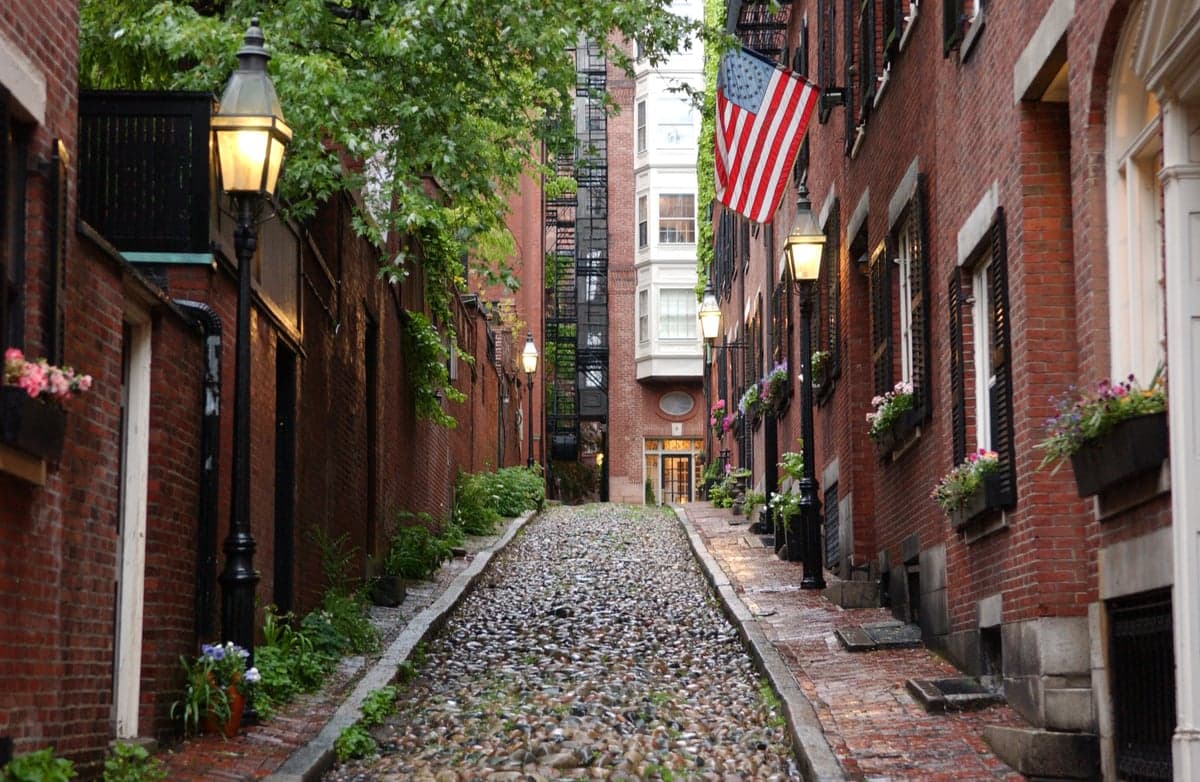
Boston is a city that wears its history on its sleeve but lives firmly in the present — a place where a 300-year-old cobblestone street might lead you past a biotech lab and into a dive bar where the regulars are still arguing about the 2004 Red Sox. It’s dense, expensive, and fiercely proud, and it attracts a specific kind of person: someone who values education, doesn’t mind cold weather, and can handle a little attitude. If you’re considering a move here, you’re not just picking a city — you’re signing up for a lifestyle that revolves around seasons, sports, and a very particular sense of place.
The Daily Rhythm: Walkable Blocks and Long Commutes
Most Bostonians live in neighborhoods — Southie, Jamaica Plain, Cambridge (technically its own city, but functionally part of the metro), or the North End — and their daily life is shaped by how far they are from a T stop. The average commute is about 30 minutes, but that number hides a lot of variation. If you live in the Back Bay and work in the Seaport, you might walk 20 minutes. If you live in Roslindale and work in Waltham, you’re looking at a 45-minute drive or a bus-to-train-to-bus slog. The MBTA is old, prone to delays, and a frequent source of frustration, but it’s also the only realistic way to avoid parking that can cost $300 a month or more. Grocery shopping is a neighborhood affair — locals hit Roche Bros., Market Basket (a cult favorite for its low prices), or the Haymarket pushcart vendors on weekends. Dining out leans heavily on Italian in the North End, seafood along the waterfront, and a growing number of high-end spots in the Seaport, but the real Boston experience is a corner pub like The Littlest Bar or The Squealing Pig, where the beer list is long and the conversation is loud.
Sports as a Civic Religion
If you live in Boston, you will absorb sports culture whether you want to or not. The Red Sox are the closest thing the city has to a shared religion, and Fenway Park — the oldest ballpark in MLB — is a pilgrimage site even for casual fans. The Patriots are the dominant football team, with a dynasty-era legacy that still defines local pride, though the Celtics and Bruins also have rabid followings. College sports are huge too: Boston College football, Harvard hockey, and BU hockey all draw real crowds. What’s distinctive is the intensity. A bad Red Sox loss can sour a Monday morning across the entire city. A Super Bowl win (the Pats have six since 2001) triggers a parade that shuts down downtown. For parents, this means youth sports are taken seriously — Little League, high school hockey, and club soccer are major social organizers, and the competition starts early.
What to Do When You’re Not Working
Weekends in Boston are about balancing indoor and outdoor life. The Emerald Necklace park system — a chain of green spaces designed by Frederick Law Olmsted — runs from the Boston Common through the Public Garden, the Fens, and out to Franklin Park, offering running paths, ponds, and the Arnold Arboretum. The Charles River Esplanade is packed with joggers, rowers, and sailboats in summer, and cross-country skiers in winter. For entertainment, the Boston Calling Music Festival draws big names to the Harvard Athletic Complex each spring, and the St. Patrick’s Day Parade in South Boston is a massive, boozy, family-friendly affair that feels like a citywide block party. The Museum of Fine Arts and the Isabella Stewart Gardner Museum are world-class, but locals also love the quirky Mapparium at the Mary Baker Eddy Library. Nightlife is neighborhood-based: the Seaport has sleek cocktail bars, Allston has dive bars and live music venues like Paradise Rock Club, and the North End has tiny wine bars and pastry shops that stay open late. The one thing to know: everything closes early by big-city standards. Last call is 2 a.m., and many restaurants stop serving food by 10 p.m.
The Honest Trade-Offs: What Works and What Grates
Longtime residents love Boston for its walkability, its history, and the sense that you’re living in a place that matters. The college-educated population is 54.1%, which means you’re surrounded by smart, ambitious people — but it also means the city can feel transient, with a new wave of students every September and a steady outflow of graduates who can’t afford to stay. The median home value is $710,400, and the cost of living index of 209 (more than double the national average) means that even a median household income of $94,755 doesn’t go as far as it would in, say, Atlanta or Phoenix. Rent for a one-bedroom in a decent neighborhood is easily $2,500 a month. The violent crime rate of 573.4 per 100,000 is higher than the national average, though it’s concentrated in specific areas (Roxbury, Dorchester, Mattapan) and most residents in safer neighborhoods like Beacon Hill or Charlestown rarely feel unsafe. The weather is a genuine grind: winters are cold, gray, and long (November through March), with nor’easters that dump two feet of snow and shut down the city for a day. Summers are humid and short, but glorious when they arrive. The biggest frustration for most people is the traffic and the T — the city’s layout was designed for horses, not cars, and the infrastructure hasn’t kept up with the population. If you drive, you will sit in traffic. If you take the train, you will be delayed. It’s part of the deal.
Boston is not a place for people who want space, quiet, or an easy pace. It’s for people who want to be part of something old, dense, and alive — who don’t mind paying a premium for a small apartment in a neighborhood with a 200-year-old church and a bar where the bartender knows your name. The median age is 33.2, which means you’re in good company if you’re a young professional or a new parent. Schools are a major focus: the Boston Public Schools system is a mixed bag, with strong exam schools like Boston Latin and Boston Latin Academy that require competitive entry, and neighborhood schools that vary widely. Many families move to the suburbs (Newton, Lexington, Brookline) specifically for the schools, but stay in the city for the jobs and culture. If you’re single, the dating scene is active but can feel insular — people tend to stick to their neighborhoods and friend groups. If you’re a parent, you’ll find a community that’s deeply invested in education, sports, and outdoor activities, but also one that’s expensive and competitive. Boston rewards people who can handle its quirks: the aggressive drivers, the passive-aggressive T signs, the way everyone talks about the weather. If you can handle that, you’ll find a city that’s small enough to feel like home and big enough to keep surprising you.

Similar mid-size cities to Boston
* Values derived from national, state, county, city and local statistics and may differ in a specific area. Last updated: 2026-04-15T23:33:52.000Z
Narrative content on this page is AI-generated and may contain mistakes. Verify any details that matter before acting on them.
ReloMaps may earn a commission from affiliate links at no extra cost to you.

