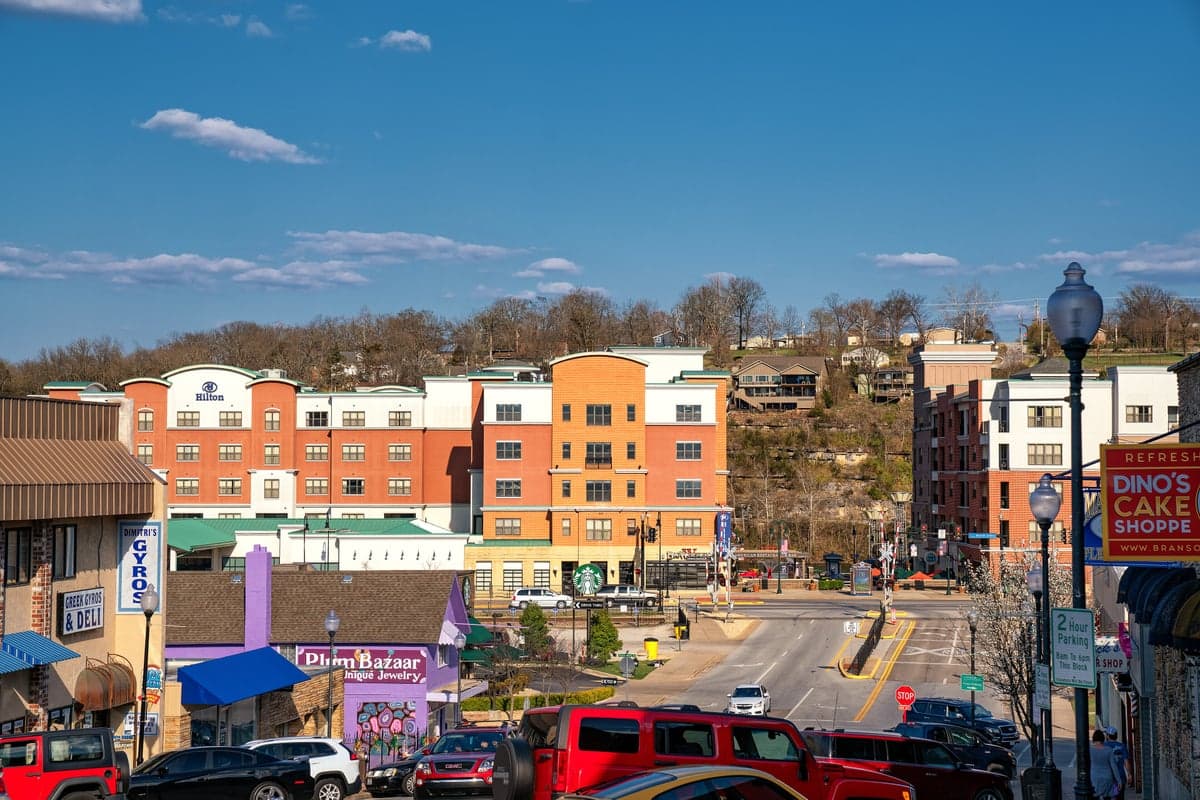
Photo: Wikipedia
Quality of Life in Branson, MO
A high quality of life with strong walkability, manageable living costs, healthy neighborhood signals, and solid amenity access.
What does Quality of Life tell us?
Quality of Life blends cost of living, nearby amenities, socioeconomic signals, and neighborhood character. City-level scores represent the whole municipality; individual neighborhoods can differ.
What does this tell us?
Quality of Life blends cost of living, nearby amenities, socioeconomic signals, and neighborhood character. City-level scores represent the whole municipality; individual neighborhoods can differ.
Cost of Living
15% below national average
The Real Cost of Living in Branson, MO for 2026
| Tier | Individual | Family (4) |
|---|---|---|
| Survival | $16k | $30k |
| Comfortable | $46k | $68k |
| Luxury | $99k+ | $154k+ |
| Elite (Top 5%) | $138k+ | $214k+ |
81%
The Area Signal
A metric tracking the socioeconomic signals of the area.
Hobbies
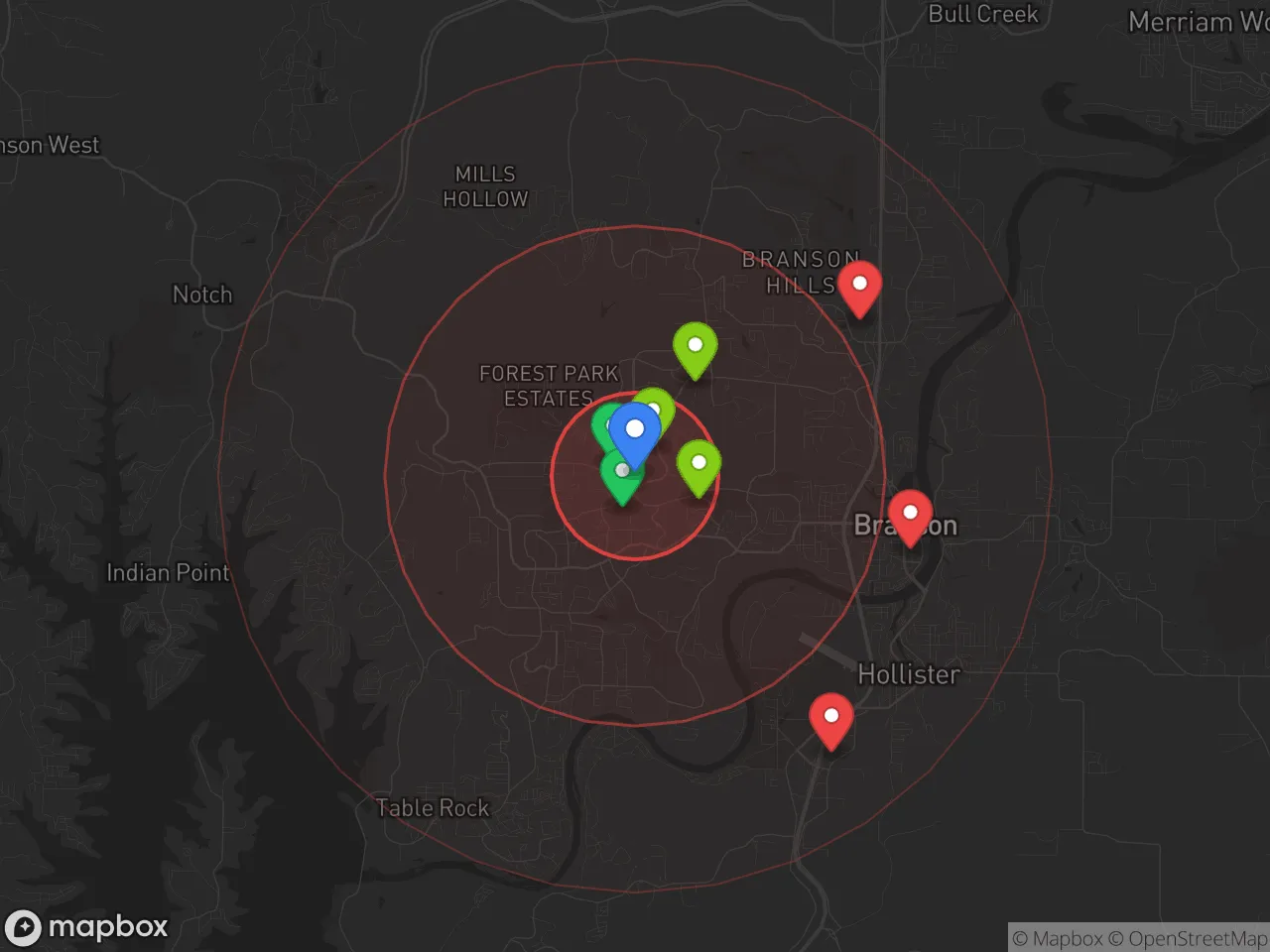
Explore the areaGroceries
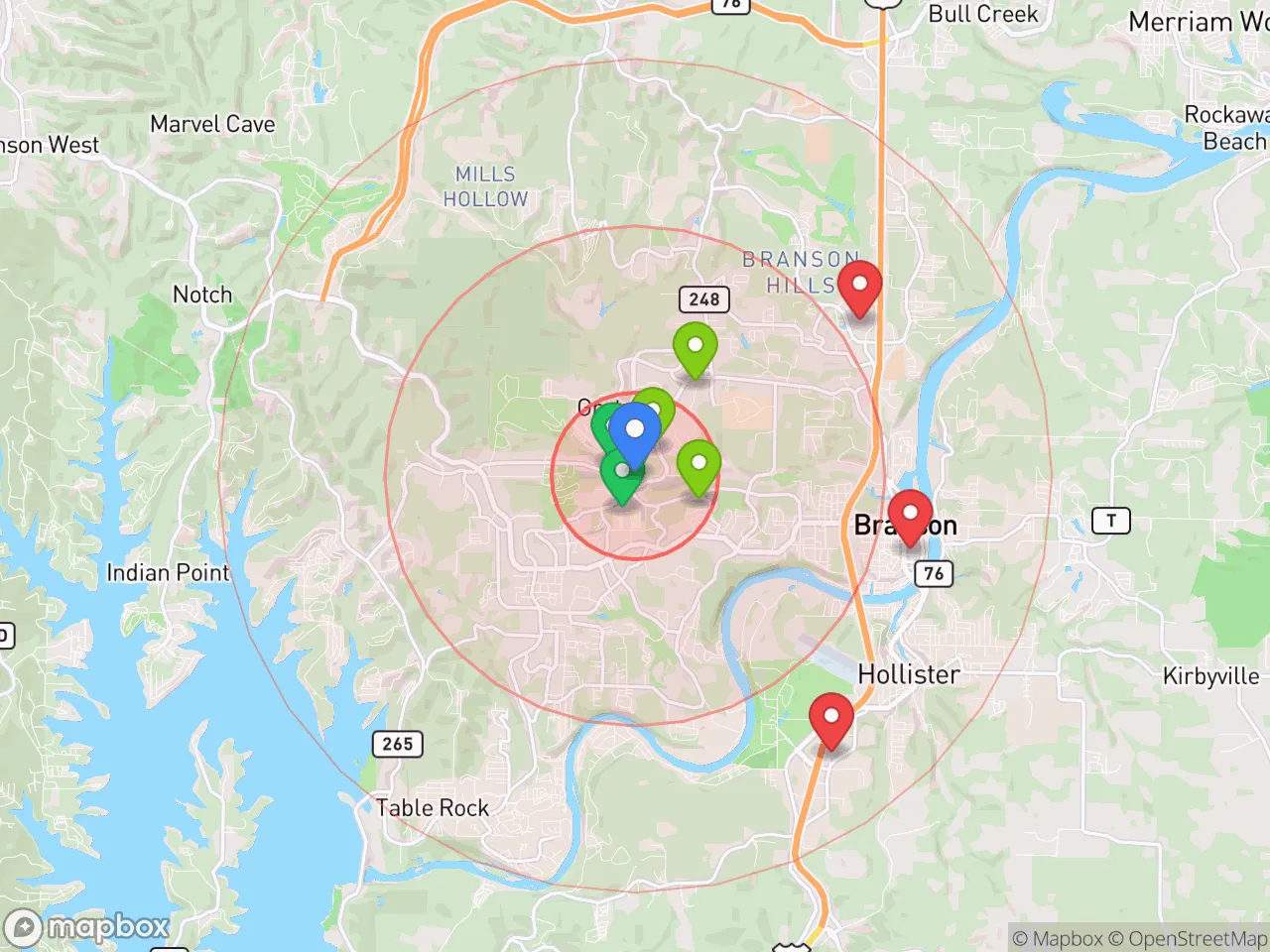
3 within 10 miles
Gas
20 within 10 miles
Hospital
1 within 20 miles
Airport
MCI — Kansas City International
Post Office
USPS — 320 South Commercial Street, Branson
Critical Amenities
Quality-of-Life Analysis
Branson, Missouri, offers a quality of life defined by a notably low cost of living and a strong tourism-driven economy, attracting a mix of retirees, hospitality workers, and remote professionals seeking a slower pace. With a cost-of-living index of 85—15 percent below the national average—the area provides significant financial breathing room compared to national norms. The population skews older and more transient than the state average, with many residents drawn by the Ozark scenery and the city’s reputation as a live entertainment hub, while a sizable seasonal workforce supports the 10 million annual visitors.
Cost of living, housing affordability, and how Branson compares to nearby areas
Branson’s housing market is a standout advantage for newcomers. The median home value sits at $237,900, roughly $100,000 below the national median, while the median rent of $999 is well under the U.S. average of $1,200. This affordability is even more striking when compared to larger Missouri cities: Springfield, about 45 minutes north, has a median home value near $220,000 but a higher cost-of-living index of 88, while Kansas City’s index is 93. The average commute in Branson is just 17.7 minutes, far below the national average of 26 minutes, meaning residents spend less time in traffic and more time on leisure or work. However, property taxes in Taney County are moderate—around 0.7% of assessed value—while sales taxes are higher due to tourism, with a combined rate of 9.1% in Branson proper. For renters, the market is tight: vacancy rates hover around 5%, and seasonal demand can push rents up 10-15% during peak summer months.
What daily life is like for families, retirees, and remote workers
Daily life in Branson revolves around its unique blend of natural recreation and manufactured entertainment. The Branson School District serves roughly 4,500 students with a student-teacher ratio of 16:1, and its high school graduation rate of 91% slightly exceeds the state average. For families, Table Rock Lake and the Mark Twain National Forest provide year-round hiking, fishing, and boating within a 20-minute drive. Retirees benefit from a low crime rate—Branson’s violent crime rate is 2.8 per 1,000 residents, below the national average of 4.0—and a robust healthcare network, including CoxHealth Branson and Mercy Hospital Springfield just up the road. Remote workers will find reliable fiber-optic internet from providers like OzarksGo, with speeds up to 1 Gbps, though coworking spaces are limited to a few coffee shops and the Branson/Lakes Area Chamber of Commerce’s business center. The city’s entertainment strip, Highway 76, can create weekend traffic congestion, but most residential neighborhoods remain quiet and walkable. Groceries cost about 5% less than the national average, and utilities are 8% lower, further stretching household budgets.
Branson is best suited for those who prioritize affordability and outdoor access over urban density and career diversity. Retirees on fixed incomes will find the low housing costs and mild climate appealing, while families with young children can leverage the short commutes and safe neighborhoods. Remote workers and entrepreneurs in hospitality or service industries will thrive, but professionals in specialized fields like tech or finance may need to commute to Springfield or work remotely. The city’s heavy reliance on tourism means seasonal employment fluctuations and a slower pace in winter, but for those who value a tight-knit community with low financial stress, Branson delivers a quality of life that is hard to match in the Midwest.

Crime in Branson, MO
Crime rates similar to the national median for U.S. locations.
Violent CrimeViolent Crime Analysis
Property CrimeProperty Crime Analysis
Crime Analysis
Branson, Missouri, presents a mixed safety profile for potential residents. While the city is a major tourist destination, its violent crime rate of 417.8 incidents per 100,000 residents is significantly higher than both the national average and the Missouri state average, placing it among the more dangerous communities in the state for this category. Property crime is also a pronounced concern, with a rate of 3,675.3 per 100,000, substantially exceeding national benchmarks and reflecting the pressures of a high-volume tourism economy.
Crime in context
To understand Branson's safety landscape, it is essential to compare its statistics to broader averages. The national violent crime rate is approximately 380 per 100,000, while Missouri's state average is around 540 per 100,000. Branson's violent crime rate falls between these two figures, but its property crime rate is roughly double the national average of about 1,950 per 100,000. This disparity is largely driven by thefts and larcenies targeting the transient visitor population. It is also important to note that Branson is not a large metropolitan area with a liberal prosecutorial environment; it is a conservative-leaning city in a conservative county (Taney). However, the sheer volume of visitors creates opportunities for crime that are less common in similarly sized non-tourist towns.
What residents experience
For those living in Branson year-round, the experience of crime is often tied to the tourism cycle. Property crimes like vehicle break-ins, theft from hotels, and package theft are more frequent during peak seasons (summer and the Christmas holiday shows). Residents in neighborhoods near the main entertainment corridor (Highway 76) report higher instances of petty crime and suspicious activity. Violent crime, while statistically elevated, is often concentrated in specific areas and frequently involves individuals known to one another rather than random attacks on tourists or residents. The Branson Police Department maintains a visible presence, particularly in the commercial districts, which helps mitigate some risks but does not eliminate the underlying statistical reality.
Neighborhood-level variation is notable. Areas farther from the "Strip," such as the subdivisions around Table Rock Lake or in the hills north of downtown, generally experience lower crime rates than the city center. The Branson School District and the nearby communities of Hollister and Forsyth offer more suburban safety profiles. Prospective residents should examine specific neighborhood crime maps and consider that the city's high property crime rate is a persistent factor, even in quieter residential pockets, due to the overall regional demand for stolen goods and the transient nature of the population.
* Values derived from national, state, county, city and local statistics and may differ in a specific area. Last updated: 2026-10-21T02:43:55.000Z
Narrative content on this page is AI-generated and may contain mistakes. Verify any details that matter before acting on them.
ReloMaps may earn a commission from affiliate links at no extra cost to you.

