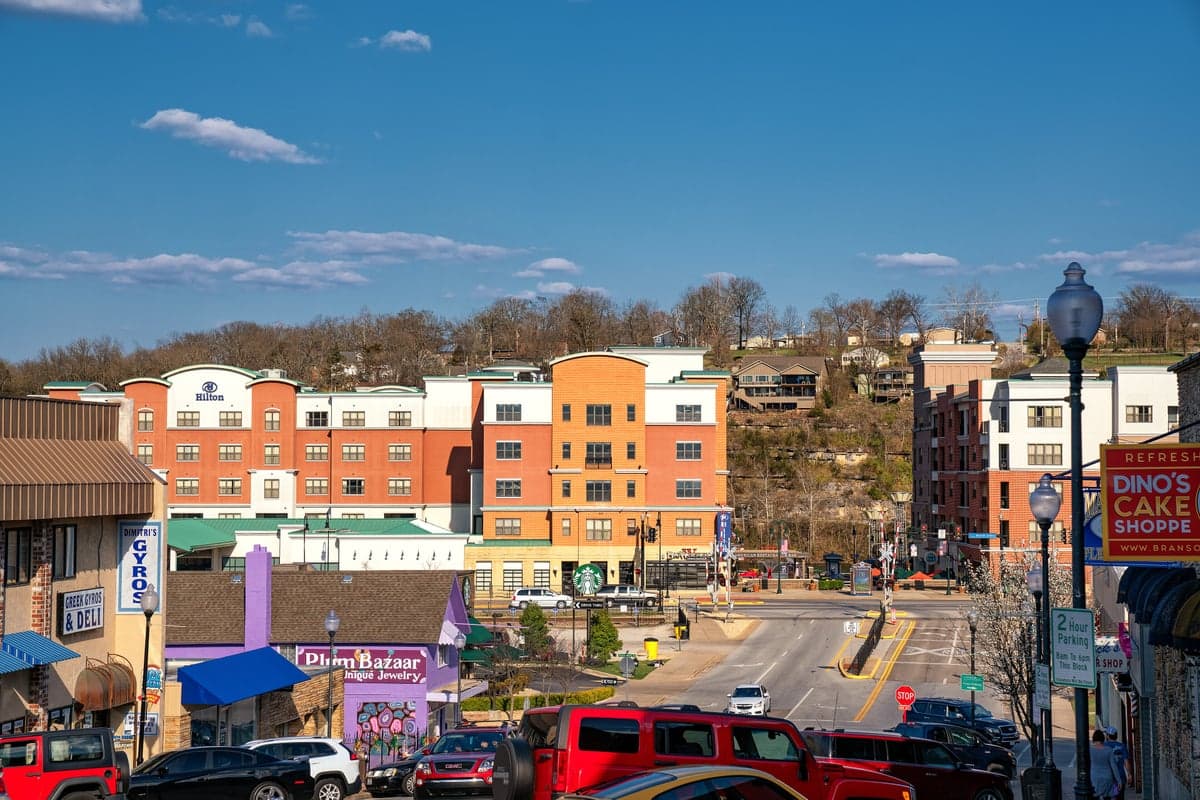
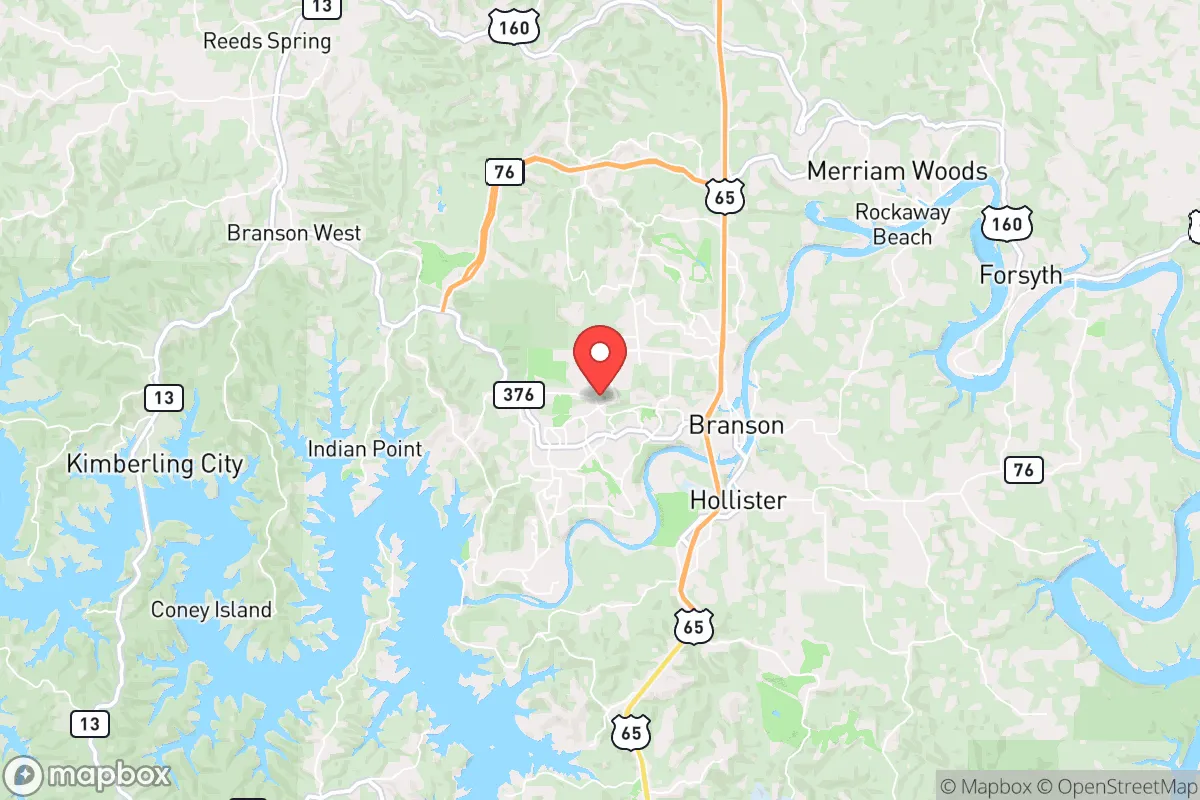
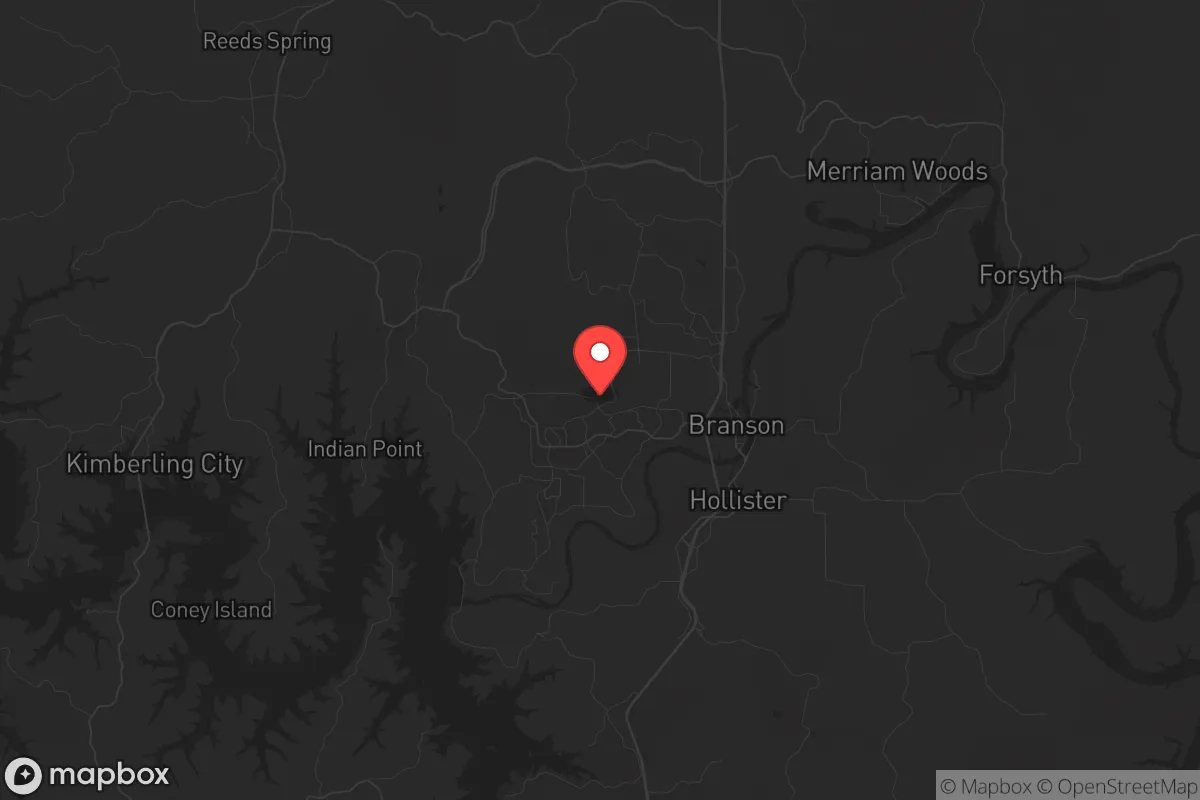
Photo: Wikipedia
Strategic Assessment of Branson, MO
Workable tactical position. Some exposure to population density or targets, but generally defensible in a crisis.
What does the Strategic Assessment tell us?
Our Strategic Assessment grades tactical survivability of an area. Major population centers, military targets, fallout zones, natural disasters, and border exposure all drive risk — lower exposure means a more defensible position in a crisis.
This is heavily inspired by Joel Skousen's Strategic Relocation book. Highly recommended you checkout the book ($)What does this tell us?
Our Strategic Assessment grades tactical survivability of an area. Major population centers, military targets, fallout zones, natural disasters, and border exposure all drive risk — lower exposure means a more defensible position in a crisis.
This is heavily inspired by Joel Skousen's Strategic Relocation book. Highly recommended you checkout the book ($)Strategic Pillars
Key Distances
Regional Safe Places
Below is our recommended "safe zones" in Missouri and the surrounding area based on our strategic heuristics. For most people, it's unrealistic to live in a “safe zone” full-time due to work, family or other personal reasons. They tend to be more rural. However, many of these areas are perfect for second homes and retreat properties that double as a vacation home or even a short-term rental.


Important Note: For informational purposes only. This does not mean nothing bad ever happens in the green zones. Please use common sense. This is based on public data and modeled with AI. We tried to take a conservative approach but mistakes happen. We update this regularly as new information becomes available.
Solar Generator Recommendations
Backup power matters more here than in safer locations. We've picked three solar generators across budgets and capacity tiers — start with the budget unit if you only need a few essentials, or step up if you want to run a fridge and HVAC for days at a time.
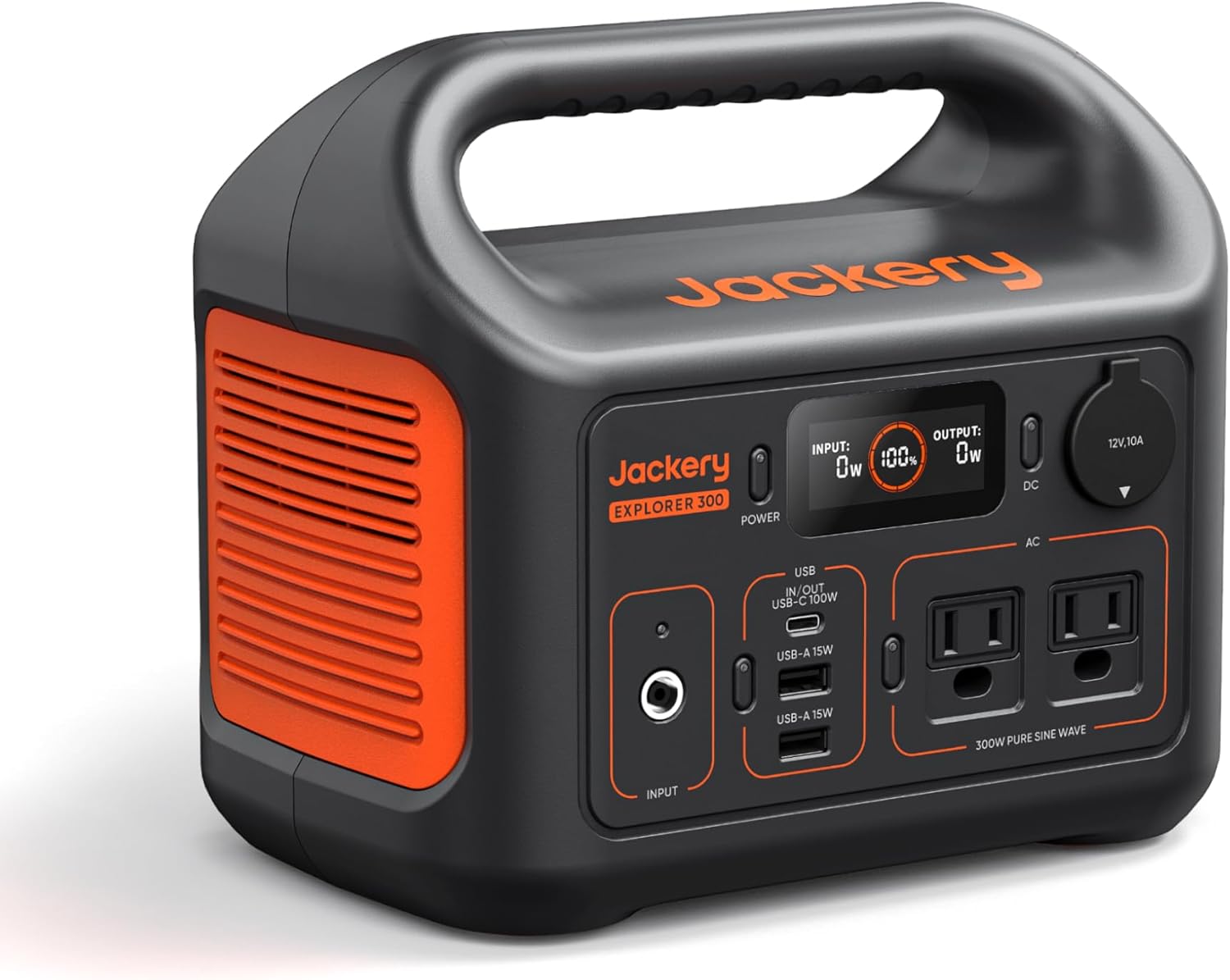
Jackery Portable Power Station Explorer 300
Budget OptionPower on the Go: Weighing only 11 lbs, it's convenient to set up and store with book-sized foldable solar panels

BLUETTI Portable Power Station AC180
Designed for both indoor and outdoor scenarios, AC180 is highly capable as it has a robost capacity and continuous output power.

EF ECOFLOW DELTA Pro Ultra Power Station
Upgraded PickEcoFlow DELTA Pro Ultra is a whole-home energy system designed to grow with your family. Integrated with the Smart Home Panel 2, it scales to meet your evolving energy needs — keeping your home powered, intelligent, and secure through every stage of life.
We earn a commission, at no additional cost to you.
Strategic Assessment Analysis
Branson, Missouri, presents a mixed strategic picture for the relocation-minded reader focused on resilience and self-sufficiency. While its location in the Ozark Mountains offers genuine geographic advantages in terms of terrain and water resources, its status as a major tourist destination and its proximity to several high-value man-made targets introduce significant vulnerabilities that a serious preparedness-minded individual must weigh. The area’s resilience is less about inherent isolation and more about how a relocator can leverage the region’s natural assets while mitigating the risks that come with being a well-known, accessible hub.
Geographic position and natural advantages for long-term resilience
Branson’s primary strategic strength is its position within the Ozark Plateau, a region of rugged, forested hills, deep valleys, and abundant freshwater springs. The topography itself provides a degree of natural defensibility; the winding roads and steep terrain create chokepoints and make large-scale, rapid movement through the area difficult, which is a tangible advantage in any grid-down or crisis scenario. The region sits atop the Ozark Aquifer, one of the largest and most reliable freshwater sources in the central United States. This means that, unlike much of the Plains or the Southwest, Branson is not facing a long-term water scarcity crisis. The numerous rivers—the White River, Lake Taneycomo, and Table Rock Lake—provide both a surface water supply and a significant food source via fishing. The climate is temperate, with a growing season long enough for substantial home food production, though the rocky, thin soil of the hills requires raised beds or significant soil amendment. The area is far from major seismic zones (the New Madrid fault is a concern, but Branson is on the western edge of the expected impact zone) and is not in a primary hurricane or wildfire corridor. For a relocator, the natural endowment of water and defensible terrain is a genuine asset, placing it ahead of many flatter, drier regions in the Midwest.
Risks, exposures, and proximity to fallout-relevant landmarks
The most significant risk for Branson is its proximity to multiple high-value, man-made targets that would be relevant in a major conflict or terrorist scenario. The area is roughly 150 miles south of the Whiteman Air Force Base, home to the B-2 Spirit stealth bomber—a primary strategic asset. It is also within 200 miles of the Fort Leonard Wood Army base, a major training and mobilization center. In a nuclear exchange, these are high-priority targets, and Branson lies within the fallout plume zone for both, depending on wind patterns. Furthermore, the city itself is a major tourist destination, drawing over 8 million visitors annually. This creates a dual vulnerability: in a crisis, Branson could become a destination for refugees from larger cities like Springfield (40 miles north) or even St. Louis and Kansas City, overwhelming local resources. The tourism-dependent economy means that a significant portion of the local workforce is in service industries, not in primary production or skilled trades. A prolonged disruption would see the local economy collapse rapidly, as the 2020 pandemic demonstrated when tourism dried up almost overnight. The area is also subject to severe weather, including tornadoes (the 2012 tornado that struck the city center is a reminder) and ice storms that can knock out power for days. The combination of a high-profile tourist economy, proximity to military targets, and a service-based workforce makes Branson a higher-risk location than its remote appearance might suggest.
Practical resilience for a relocator: food, water, energy, and defensibility
For the individual or family looking to build a self-sufficient homestead, Branson offers a mixed bag. Water is the area’s strongest card; with a well and a hand pump, a property can have a reliable, off-grid water source that is rare in many parts of the country. The local climate supports a wide variety of crops, from tomatoes and peppers to apples and berries, though the growing season is shorter than in the Deep South. The forests provide ample firewood for heating and cooking, and the local deer and turkey populations are healthy for hunting. However, energy resilience is a weak point. The local grid is aging and prone to outages from storms, and while solar is viable (the area gets about 200 sunny days per year), the tree cover in the hills can limit panel efficiency. Natural gas is available in town but not in rural areas, so propane is the common backup. Defensibility is a double-edged sword. The terrain makes it hard for outsiders to move in, but it also makes it hard for you to move out. The winding roads can be impassable in a major ice storm or if a bridge is taken out. The local population is a mix of longtime Ozarkers, retirees, and transient service workers. The retiree and tourist demographics mean that the area has a lower-than-average percentage of working-age adults with practical skills like welding, mechanics, or farming. For a relocator, the key is to find a property off the main tourist corridors—ideally on a dead-end gravel road in a holler—to maximize defensibility and minimize the risk of being overrun by refugees from the strip. The local sheriff’s office and emergency services are competent but stretched thin during tourist season, so self-reliance is not optional; it is a requirement.
The overall strategic picture for Branson is one of high potential paired with high exposure. The natural resources—water, timber, defensible terrain—are genuine assets that few other relocation destinations can match. The climate is livable, the growing season is workable, and the region is not facing the same long-term water or heat crises as the Southwest. However, the proximity to military targets and the massive tourist influx create a risk profile that demands serious mitigation. A relocator who buys a well-sited property with a good well, solar panels, and a wood stove, and who integrates into the local community of like-minded individuals, can build a very resilient setup. But someone who moves into a subdivision near the strip, expecting the area’s remote feel to provide automatic safety, will be dangerously exposed. Branson is not a bug-out location; it is a location that requires you to be the bug-out plan. If you are willing to do the work and accept the trade-offs, the Ozarks can be a solid long-term bet. If you are looking for a turnkey safe haven, look elsewhere.

* Values derived from national, state, county, city and local statistics and may differ in a specific area. Last updated: 2026-10-21T02:43:55.000Z
Narrative content on this page is AI-generated and may contain mistakes. Verify any details that matter before acting on them.
ReloMaps may earn a commission from affiliate links at no extra cost to you.

