Photo: Wikipedia
Demographics of Brevard, NC
Affluence Level in Brevard, NC
A middle-class area roughly in line with national averages across income, home values, education, and employment.
People of Brevard, NC
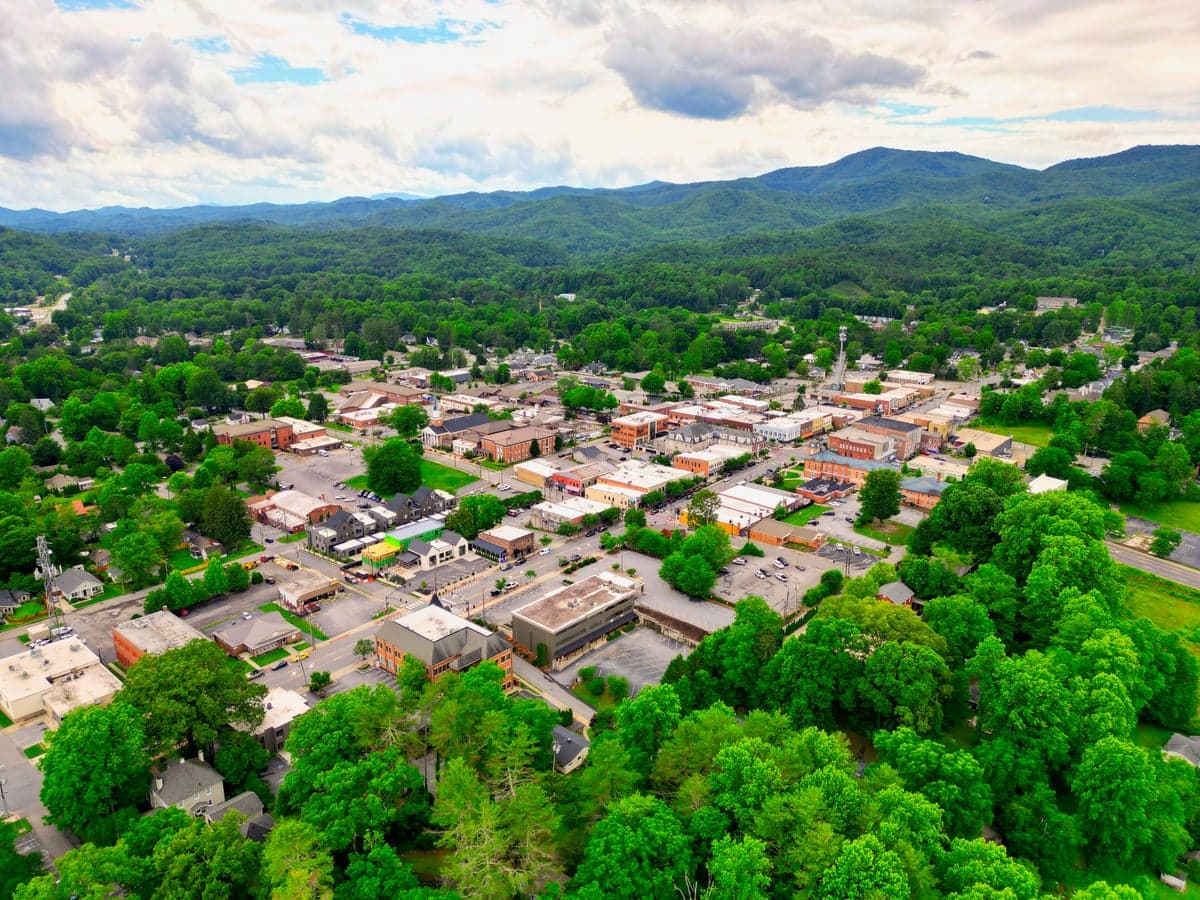
The people of Brevard, North Carolina, today number 7,795, forming a community that is predominantly White (80.8%) with a notable Black population of 10.2% and a small but growing Hispanic community of 4.0%. The city is characterized by a high educational attainment rate—37.5% of adults hold a college degree—and a very low foreign-born share of just 1.6%, reflecting a population shaped more by domestic migration than international immigration. Brevard’s identity is a blend of its historic manufacturing roots, its role as a retirement and second-home destination for those drawn to the Blue Ridge Mountains, and its anchor institution, Brevard College, which infuses the town with a steady stream of students and faculty.
How the city was settled and grew
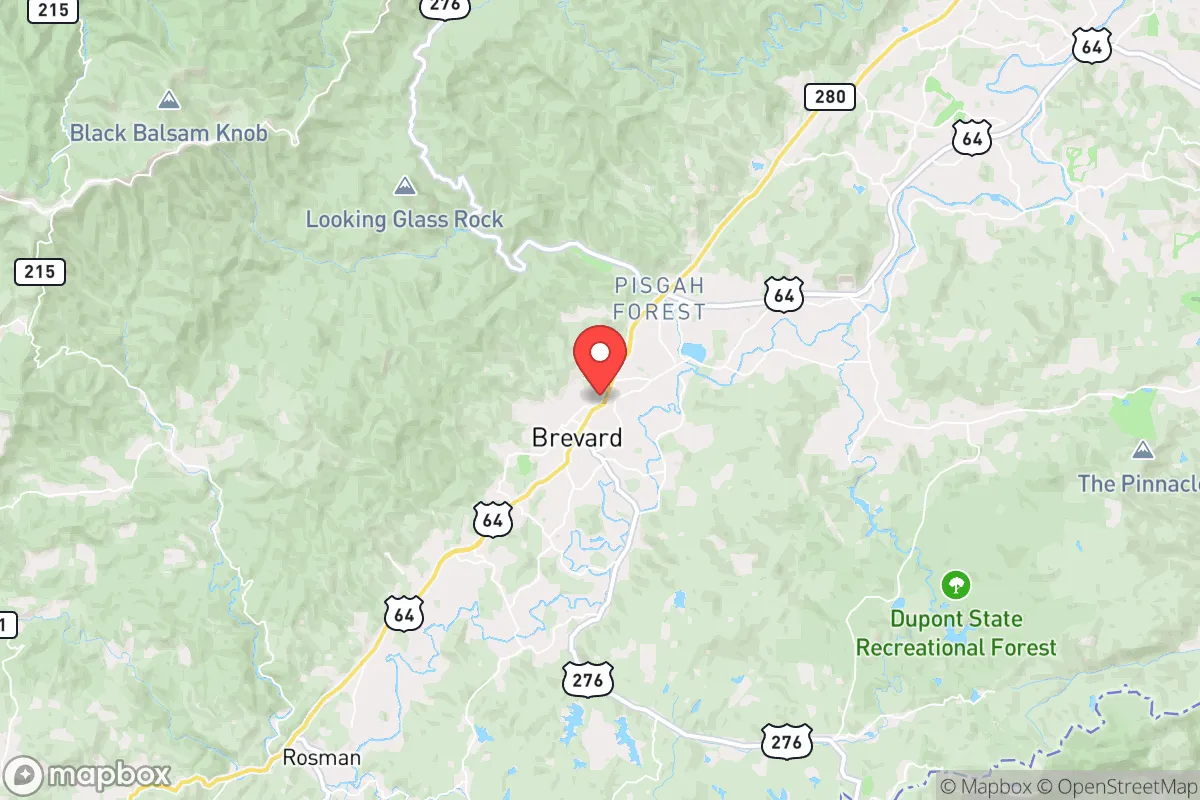
Brevard was founded in the 1830s as the county seat of Transylvania County, named after early settler John Brevard. The original population was composed of Scots-Irish and English farmers who moved into the mountain valleys from the Piedmont and coastal plains, drawn by land grants and the promise of fertile bottomland. The arrival of the railroad in the 1890s transformed the town, bringing timber and tanning industries that attracted a wave of working-class families, including a significant number of Black laborers who settled in the Pisgah Forest area and the neighborhood around East Main Street. These workers built the mills and tanneries that powered the local economy for decades. By the early 20th century, Brevard had also become a summer retreat for wealthy Lowcountry planters escaping heat and malaria, who built homes in the Connestee Falls area and along the Little River, establishing a pattern of seasonal residency that persists today.
Modern era (post-1965)
After the 1965 Immigration and Nationality Act, Brevard saw little direct impact from new international immigration—the foreign-born share remains under 2%. Instead, the modern era has been defined by domestic in-migration. Beginning in the 1970s and accelerating through the 2000s, retirees and remote workers from Florida, the Northeast, and the Midwest began moving to Brevard, drawn by the temperate climate, outdoor recreation, and lower cost of living. These newcomers concentrated in newer subdivisions like Sherwood Forest and King Creek, as well as in the gated communities around Connestee Falls. Meanwhile, the Black population, which had historically been centered in the East Main Street corridor and the Pisgah Forest mill village, has seen its share decline from roughly 15% in 1990 to 10.2% today, as younger generations moved to larger cities for employment. The Hispanic population, though small at 4.0%, has grown steadily since 2000, primarily through families working in construction, landscaping, and the service industry, and is most visible in the West Main Street area and in rental housing near the college.
The future
Brevard’s population is projected to grow modestly over the next decade, driven by continued domestic migration of retirees and remote workers rather than natural increase or international immigration. The city is becoming slightly more diverse: the Hispanic share is expected to rise toward 6-7% by 2035, while the Black share is likely to stabilize or decline slightly. The Asian population, currently negligible at 0.2%, is unlikely to grow significantly given the absence of large employers or university research sectors that typically attract East and Southeast Asian communities. New residential development is concentrated in the King Creek and Sherwood Forest areas, as well as in infill lots closer to downtown, where a wave of boutique hotels and condos is catering to affluent second-home buyers. The cultural identity of Brevard is evolving from a quiet mill-and-retirement town into a more active outdoor-recreation hub, anchored by the Brevard Music Center and proximity to Pisgah National Forest, but the demographic profile remains overwhelmingly native-born and White.
For someone moving in now, Brevard offers a stable, educated, and civically engaged community with a strong sense of place, but one that is also notably homogeneous and aging. The city is becoming more expensive and more oriented toward tourism and recreation, which benefits homeowners and retirees but presents challenges for younger families and service workers. The population trajectory points toward continued slow growth, modest diversification, and a deepening of the town’s identity as a mountain destination rather than an industrial or agricultural center.

* Values derived from national, state, county, city and local statistics and may differ in a specific area. Last updated: 2026-08-03T15:45:12.000Z
Narrative content on this page is AI-generated and may contain mistakes. Verify any details that matter before acting on them.
ReloMaps may earn a commission from affiliate links at no extra cost to you.

