Photo: Wikipedia
Personal Sovereignty in Brewer, ME
Viable for self-reliance. Generally workable, though some barriers may limit total independence.
What does Personal Sovereignty tell us?
Personal Sovereignty measures your capacity for self-reliance and independence with minimal government friction. Higher scores mean fewer barriers between you and the way you want to live... but it assumes you have the space you need and good neighbors.
What does this tell us?
Personal Sovereignty measures your capacity for self-reliance and independence with minimal government friction. Higher scores mean fewer barriers between you and the way you want to live... but it assumes you have the space you need and good neighbors.
State Policy
Energy independence: Importer (30% of energy produced in-state)
Personal Liberty
Homesteading

Personal Liberty Analysis
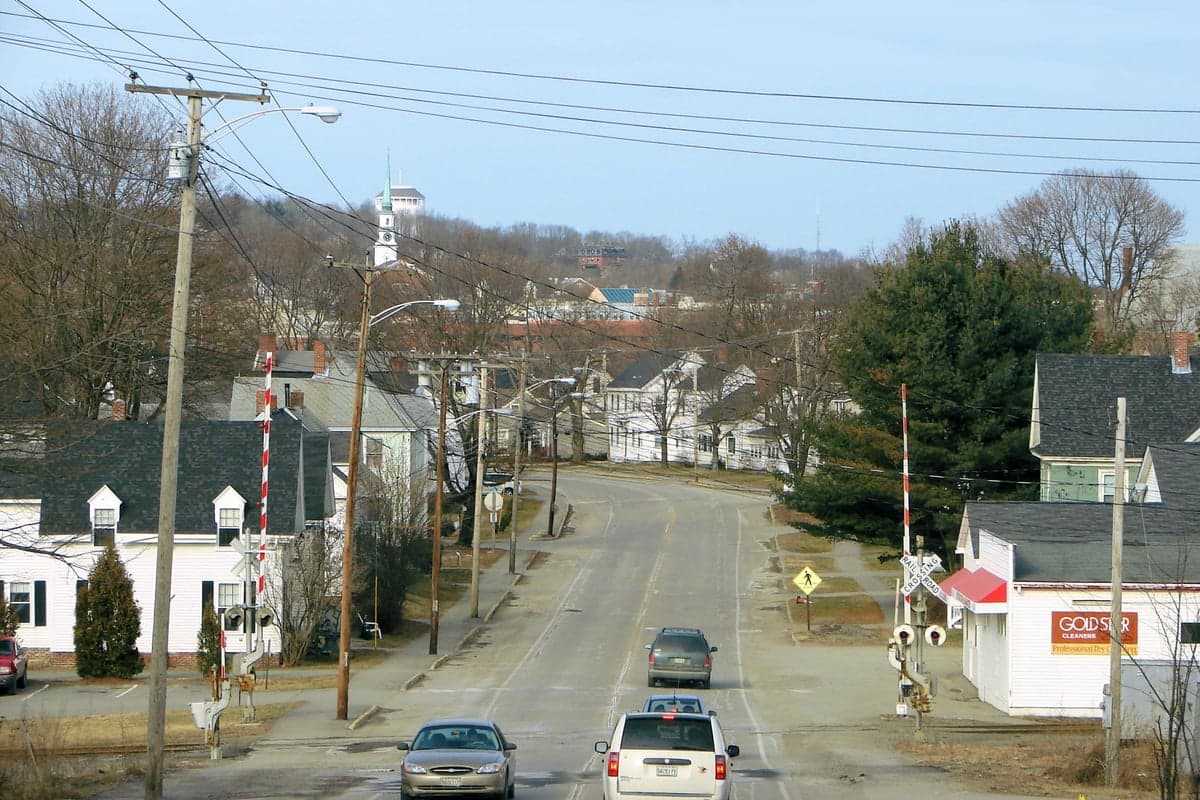
Brewer, Maine offers a notably high degree of personal sovereignty relative to much of the Northeast, functioning as a practical outpost for those seeking to minimize government entanglement in daily life. While Maine as a whole leans left on certain social issues, Brewer’s working-class character and Penobscot County’s more independent political culture create a local environment where self-reliance is not just tolerated but expected. For the strategic relocator—whether a single individual or a family—this translates into fewer bureaucratic hurdles for property use, a lighter regulatory touch on small-scale enterprise, and a community that largely minds its own business. The key trade-off is that Maine’s state-level tax and regulatory structures still impose some friction, but Brewer’s location and local governance buffer much of that pressure.
Tax burden and regulatory posture: how much the state takes and controls
Maine’s tax burden is a mixed bag for the sovereignty-minded. The state has a progressive income tax with rates up to 7.15%, which hits higher earners harder, and a state sales tax of 5.5% that applies to most goods but not groceries or prescription drugs. Property taxes in Brewer are moderate for the region—around $2,200 annually on a median home—but they fund a school system that gives parents some choice through open enrollment within the district. The regulatory posture in Brewer is notably lighter than in southern Maine or Portland. The city has no overly restrictive zoning for home-based businesses, and the planning board is known for practical, not ideological, decision-making. For a prepper or survivalist, the key takeaway is that while Maine is not a zero-tax state like New Hampshire, the actual enforcement of regulations in Brewer is less aggressive than in more populated areas. You can run a small repair shop from your garage or keep a modest inventory of supplies without drawing unwanted attention, as long as you avoid flagrant violations.
Self-defense and gun law specifics: what you can own and where you can carry
Maine is one of the most firearm-friendly states in the Northeast, and Brewer residents benefit fully from that. The state has no permit required to carry a concealed firearm for anyone 21 or older who can legally possess a gun—this is constitutional carry, enacted in 2015 and strengthened in 2021. There is no state-level registry, no waiting period for purchases, and no ban on standard-capacity magazines or common rifle configurations like AR-15s. Open carry is legal without a permit. The only significant restriction is that you must be 21 to carry concealed, and you cannot carry in federal buildings, courthouses, or schools (though Maine allows firearms in vehicles on school property). For the survivalist, this means you can maintain a fully stocked armory without state interference, and you can carry daily without bureaucratic hassle. Brewer itself has no local ordinances that further restrict firearms, and Penobscot County’s sheriff’s office is generally supportive of Second Amendment rights. The practical effect is that self-defense planning is entirely in your hands, with minimal government overreach.
Self-reliance and homesteading viability: lot sizes, zoning, and off-grid feasibility
Brewer’s zoning and land-use policies are a strong point for those pursuing self-reliance. The city has a mix of residential zones, but many lots in the outlying areas are half-acre to one acre or larger, and the zoning code explicitly allows for keeping chickens, bees, and small livestock (goats, sheep) on properties of sufficient size. There is no city-wide ban on rainwater collection, and while Brewer is connected to municipal water and sewer, you are not required to hook up if you have a well and septic system that meet state codes. Off-grid living is feasible but requires navigating Maine’s plumbing and electrical codes—solar panels are legal and common, but you must use a licensed electrician for grid-tied systems. The city’s attitude toward homesteading is practical: as long as your setup doesn’t create a nuisance for neighbors, you’re largely left alone. For the prepper, this means you can establish a garden, keep a few animals, and store supplies without the kind of HOA or municipal harassment common in suburban New England. The growing season is short (about 140 days), but cold-hardy crops and root cellaring are well-established practices here.
Personal liberties: parental rights, medical autonomy, speech, and property
On parental rights, Maine has a mixed record. The state mandates vaccination for school attendance (with medical and philosophical exemptions available, though the latter are under political pressure), and the Department of Health and Human Services has a reputation for being proactive in child welfare cases. However, Brewer’s local school board has resisted some of the more progressive curriculum mandates seen in Portland, and parents have a meaningful voice at school committee meetings. Medical autonomy is stronger than in many states: Maine allows adults to refuse any medical treatment, and there is no state-level vaccine passport system. The state legalized recreational marijuana in 2016, and Brewer has a licensed dispensary, which speaks to a live-and-let-live attitude. Free speech is protected under the Maine Constitution, and there are no local hate speech ordinances that chill political expression. Property rights are robust—Maine has strong protections against eminent domain abuse, and Brewer’s zoning is not used to target political or religious groups. The biggest threat to personal liberty here is the state’s tax structure and the potential for future mandates, but Brewer’s local culture acts as a buffer. For the strategic relocator, this means you can speak your mind, raise your children according to your values, and control your medical decisions without immediate government interference.
Overall, Brewer, ME represents a strong sovereignty play for those willing to accept Maine’s state-level tax burden and cold winters. Compared to the rest of New England, it offers a far higher degree of personal autonomy—constitutional carry, lenient zoning for homesteading, and a local culture that values self-reliance over state control. The trade-off is that you are still in a blue state with a progressive governor and a legislature that occasionally passes overreaching bills, but Brewer’s distance from Augusta and its working-class ethos mean those laws are often enforced lightly or not at all. For the survivalist or prepper looking to establish a base where you can live on your own terms without constant government scrutiny, Brewer is one of the better options in the region, provided you secure your property rights and maintain a low profile on any activities that might attract state attention.

* Values derived from national, state, county, city and local statistics and may differ in a specific area. Last updated: 2026-05-01T10:44:49.000Z
Narrative content on this page is AI-generated and may contain mistakes. Verify any details that matter before acting on them.
ReloMaps may earn a commission from affiliate links at no extra cost to you.

