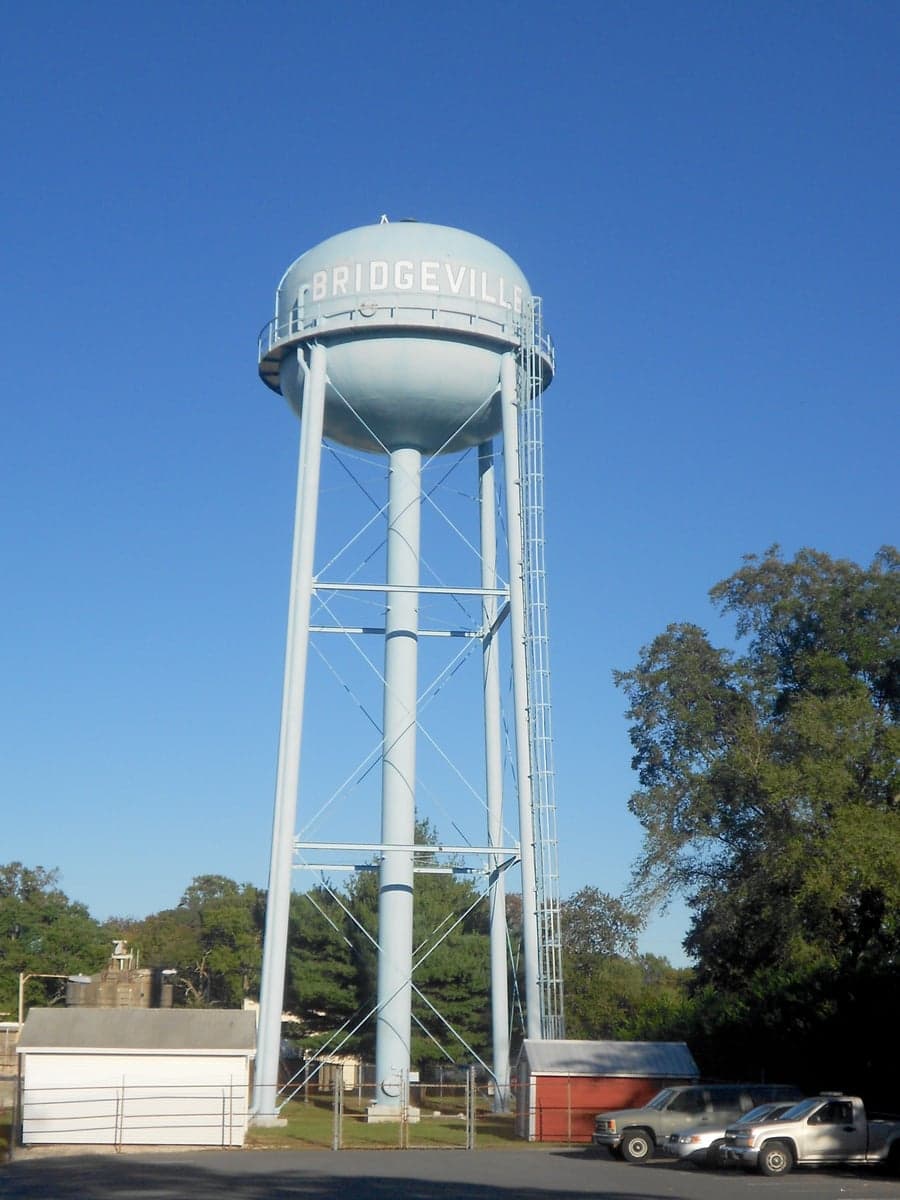
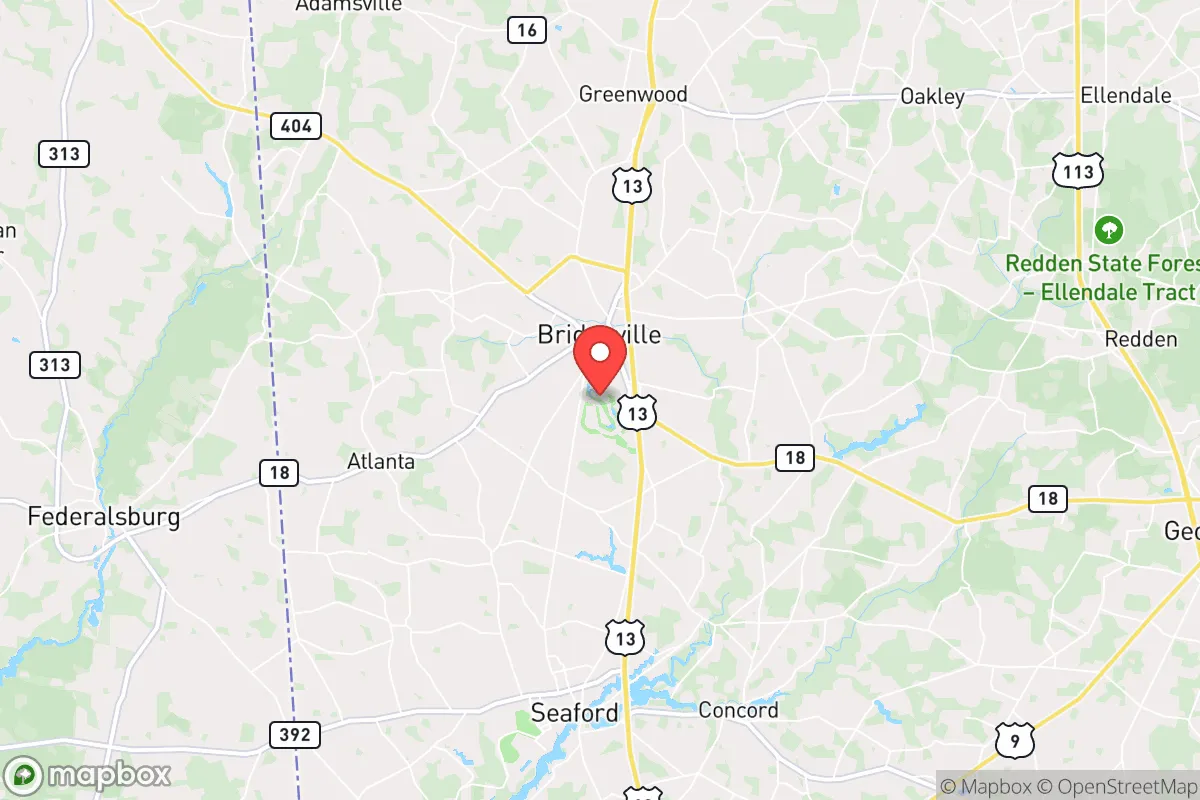
Photo: Wikipedia
Personal Sovereignty in Bridgeville, DE
Viable for self-reliance. Generally workable, though some barriers may limit total independence.
What does Personal Sovereignty tell us?
Personal Sovereignty measures your capacity for self-reliance and independence with minimal government friction. Higher scores mean fewer barriers between you and the way you want to live... but it assumes you have the space you need and good neighbors.
What does this tell us?
Personal Sovereignty measures your capacity for self-reliance and independence with minimal government friction. Higher scores mean fewer barriers between you and the way you want to live... but it assumes you have the space you need and good neighbors.
State Policy
Energy independence: Importer (2% of energy produced in-state)
Personal Liberty
Homesteading

Personal Liberty Analysis
Bridgeville, Delaware offers a surprisingly strong foundation for personal sovereignty, particularly when compared to the heavily regulated corridors of the Northeast or the West Coast. This small Sussex County town sits in a state with a mixed record on liberty—Delaware’s corporate-friendly laws coexist with some of the nation’s most restrictive gun regulations—but the local reality in Bridgeville is far more permissive than the state’s blue-tinted headlines suggest. For the survivalist or prepper seeking a low-key base within striking distance of the Atlantic coast and major mid-Atlantic markets, Bridgeville provides a workable balance of low taxes, minimal zoning enforcement, and a culture that still values self-reliance over government dependency.
Tax burden and regulatory posture: what keeps more money in your pocket
Delaware’s tax structure is a genuine asset for anyone prioritizing financial autonomy. The state has no sales tax, which means every dollar you earn or spend stays out of the state’s hands at the point of sale—a rare advantage in the modern tax landscape. Property taxes in Sussex County are among the lowest in the region, with effective rates often hovering around 0.5% to 0.6% of assessed value. For a $300,000 home, that translates to roughly $1,500 to $1,800 annually, compared to $6,000 or more in neighboring Maryland or Pennsylvania. Income tax is progressive but tops out at 6.6% for high earners, and retirees benefit from no state tax on Social Security and a generous deduction on other retirement income. The regulatory posture in Bridgeville itself is light. The town has a basic code enforcement office, but it’s not the kind of place where you’ll get a citation for an unkempt lawn or a shed that’s six inches too close to the property line. Zoning is handled at the county level for most unincorporated areas, and the prevailing attitude is live-and-let-live—provided you’re not running an industrial operation in a residential backyard. For the prepper, this means fewer bureaucratic hurdles when setting up a workshop, storing supplies, or building auxiliary structures.
Self-defense and gun law specifics: navigating Delaware’s restrictions
This is where Bridgeville’s sovereignty picture gets complicated. Delaware is not a gun-friendly state by national standards. The state has a permit-to-purchase requirement for handguns, a ban on “assault weapons” (defined broadly to include many common semi-automatic rifles), and a 10-round magazine capacity limit. There is no constitutional carry; you need a concealed carry permit, which requires a background check, fingerprinting, and a training course. The state also has a red flag law that allows law enforcement to seize firearms based on a court order without a criminal conviction. For the survivalist, these are significant infringements. However, the practical enforcement in rural Sussex County is far more relaxed than in New Castle County (Wilmington). Local sheriffs in Bridgeville’s area are generally pro-Second Amendment and issue permits without undue delay. The reality is that most gun owners in the region comply with the letter of the law while maintaining private collections that would raise eyebrows in Annapolis or Trenton. If you’re moving from a free state like Texas or Arizona, you’ll need to adjust your expectations and possibly your inventory. But if you’re coming from New York, New Jersey, or California, Delaware’s restrictions will feel like a moderate step toward sanity—not freedom, but a workable compromise. The key is to understand the law, comply with registration and permitting, and keep a low profile.
Self-reliance and homesteading viability: lot sizes, zoning, and off-grid feasibility
Bridgeville’s rural character is its strongest selling point for the self-reliant individual. The town itself is small (population around 2,500), but the surrounding area is agricultural, with many properties available on 1 to 5 acres at prices that would be laughable in the Northeast corridor. Zoning in unincorporated Sussex County is permissive for agricultural and residential uses. You can keep chickens, goats, and even a few head of cattle on standard residential lots without special permits. The county’s comprehensive plan does not aggressively restrict accessory structures, meaning you can build a pole barn, a greenhouse, or a root cellar without months of red tape. Off-grid feasibility is moderate. Delaware has no state-level ban on rainwater collection, and many rural homes already rely on private wells and septic systems. Solar panels are common and not subject to the kind of HOA restrictions you’d find in planned communities. The main limitation is that Delaware’s building code requires connection to the electrical grid for new construction—true off-grid living is technically not permitted for a primary residence, though enforcement is lax on existing properties. For the prepper, the strategy is to buy an existing rural home, add solar and battery backup, and quietly maintain a well-stocked property without drawing attention. The local culture is one of self-sufficiency; neighbors are more likely to help you dig a well than to report you for an unpermitted shed.
Personal liberties: parental rights, medical autonomy, speech, and property
On the broader spectrum of personal liberties, Bridgeville benefits from Delaware’s relatively hands-off approach to family and property matters—at least compared to states with more aggressive social engineering. Parental rights are strong in Delaware; the state does not have a universal vaccine mandate for schoolchildren (though individual school districts can impose requirements), and there is no state-level ban on homeschooling or unschooling. The homeschool notification process is straightforward, with no curriculum approval or standardized testing requirements. Medical autonomy is a mixed bag. Delaware has legalized recreational marijuana, which is a net positive for personal freedom, but the state also has a prescription drug monitoring program and relatively strict vaccine mandates for healthcare workers. For the average person, the practical impact is minimal—you can choose your own doctor, decline non-emergency treatments, and use alternative medicine without state interference. Free speech is protected under the First Amendment, and Delaware has no hate speech laws that criminalize political expression. Property rights are solid; eminent domain is rarely abused, and there are no statewide rent control laws or forced inclusionary zoning mandates. The biggest threat to property sovereignty in Bridgeville is the potential for future county-level zoning changes as development pressure increases from the coast. For now, though, you can buy land, build on it, and use it largely as you see fit.
Overall, Bridgeville represents a solid B-tier choice for personal sovereignty in the mid-Atlantic region. It’s not a libertarian paradise—the gun laws alone disqualify it from that status—but it offers a rare combination of low taxes, light regulation, and a rural culture that respects self-reliance. For the survivalist or prepper who needs to stay within a few hours of Philadelphia, Baltimore, or Washington D.C. for work or family reasons, Bridgeville is a pragmatic compromise. You won’t have the freedom of a Texas county or a Montana valley, but you’ll have far more breathing room than 90% of the population centers on the Eastern Seaboard. The key is to buy land now, before the coastal sprawl reaches this far inland, and to build your infrastructure quietly and legally. In a country where government overreach is the norm, Bridgeville offers a pocket of relative autonomy—if you know how to use it.

* Values derived from national, state, county, city and local statistics and may differ in a specific area. Last updated: 2026-04-30T04:02:47.000Z
Narrative content on this page is AI-generated and may contain mistakes. Verify any details that matter before acting on them.
ReloMaps may earn a commission from affiliate links at no extra cost to you.

