 Popular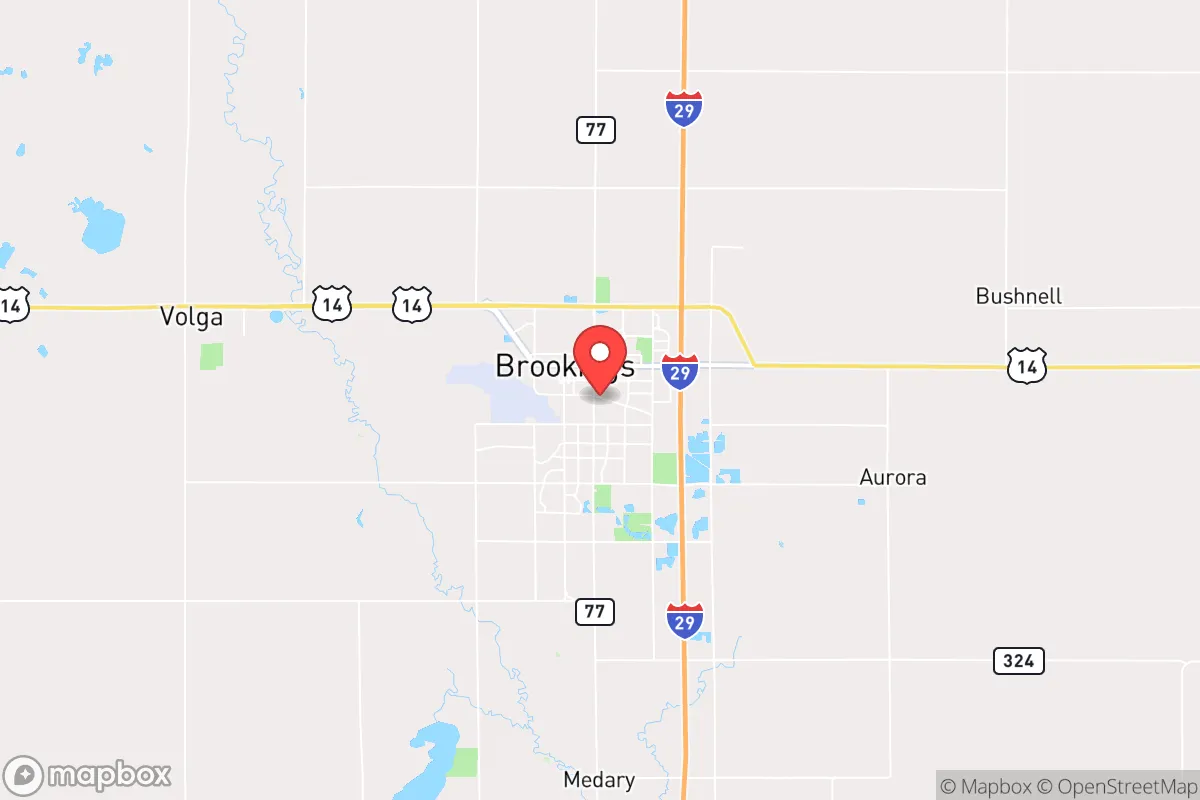
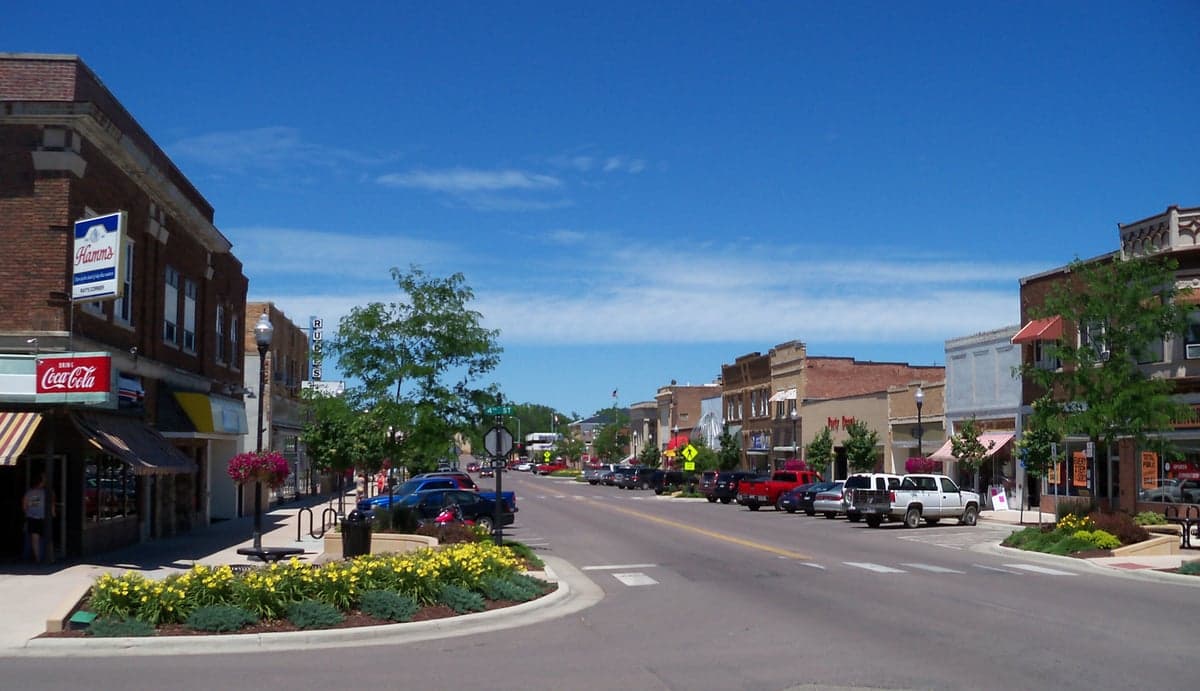
Photo: Wikipedia
Political ClimatePolitical Climate in Brookings, SD
District shown is the primary district for this city’s centroid. Cities may span multiple districts.
Inherited from parent state — no local data available.
Local Political AnalysisPolitical Analysis of Brookings, SD
Brookings has long been a solidly conservative town, and that hasn’t changed much despite some national trends. The Cook PVI of R+15 tells you the real story: this is a place where traditional values and limited government still hold strong, even as the university brings in a more transient, younger crowd. You’ll find most folks here vote straight-ticket Republican, and the local elections tend to reflect that same common-sense, keep-government-out-of-your-business mindset. The trajectory is stable, but there’s a quiet worry that the growing influence of South Dakota State University could slowly shift the needle if we’re not careful.
How it compares
Drive thirty minutes north to Watertown, and you’ll find a similar conservative vibe, maybe even a bit more rural and traditional. But head south to Sioux Falls, and you’re in a different world—it’s growing fast, and with that growth comes more progressive policies and a bigger government footprint. Brookings sits in a sweet spot: we’ve got the economic energy of a college town without the radical politics you see in places like Vermillion or Madison. The surrounding towns like Volga and Aurora are even more reliably red, and they keep an eye on Brookings to make sure we don’t drift too far left. The contrast is real: here, you can still buy a rifle without a waiting period, and your property taxes aren’t funding pet projects that don’t benefit the community.
What this means for residents
For the average family or small business owner, the political climate here means less government overreach in your daily life. You won’t see mask mandates or business shutdowns like in coastal states—local leaders generally respect that you know what’s best for your own household. The city council has pushed back on zoning changes that would let outside developers dictate how neighborhoods look, and there’s a healthy skepticism of any new tax or fee that doesn’t have a clear, local benefit. That said, the university’s administration has tried to push DEI initiatives and other progressive programs, but they’ve met real resistance from the community. If you value personal freedom over collective conformity, Brookings still feels like a place where you can live your life without someone in an office telling you how to do it.
Culturally, Brookings holds onto a few distinctions that set it apart. The Brookings County Commission has been vocal about protecting Second Amendment rights, and the local school board has kept curriculum focused on basics, not social experiments. You’ll still see the Pheasant Festival and Brookings Summer Arts Festival draw crowds that reflect the area’s values—hardworking, neighborly, and wary of outsiders trying to change things. The long-term outlook is cautiously optimistic: as long as the town’s native population stays engaged and the university’s influence doesn’t overwhelm local elections, Brookings will remain a pocket of sanity in a state that’s still mostly conservative. But if you’re looking for a place where your rights aren’t up for debate, keep an eye on those city council races—that’s where the real fight is.

State Political ClimatePolitical Climate in South Dakota
State Political AnalysisPolitical Environment in the State
South Dakota is a deeply conservative state, with a Republican trifecta in Pierre and a voting record that has not gone for a Democratic presidential candidate since 1964. The state’s political DNA is libertarian-leaning, rooted in a strong distrust of federal overreach, but the dominant coalition is a mix of rural traditionalists, evangelical Christians, and a growing number of freedom-minded transplants. Over the last 10-20 years, the state has shifted further right, driven by an influx of remote workers and retirees fleeing high-tax states like California and Illinois, while the Democratic Party has all but collapsed outside of a few small pockets. The 2024 election saw Donald Trump win the state by over 30 points, with every county except for a handful of tribal areas and the college town of Brookings going red.
Urban vs. rural divide
The political map is stark. The state’s largest metro, Sioux Falls, is a Republican stronghold but with a more moderate, business-friendly flavor—think Chamber of Commerce conservatism. Minnehaha County, home to Sioux Falls, voted +18 for Trump in 2024, but the city itself has a visible libertarian streak and a growing number of young professionals who lean right on economics but are socially tolerant. Rapid City and Pennington County are reliably red, with a strong military and ranching influence. The real firepower comes from the rural counties: Harding County in the northwest voted +78 for Trump, and Gregory County in the south-central region was similarly lopsided. The only blue dots are on the nine Indian reservations—Pine Ridge (Oglala Lakota County) went +60 for Biden in 2020—and the college town of Brookings, home to South Dakota State University, which is a rare swing area. Vermillion (USD) and Madison (Dakota State) lean right but have small liberal pockets. The divide isn’t just urban vs. rural—it’s also east vs. west, with the eastern I-29 corridor (Sioux Falls, Brookings, Watertown) being more moderate and the western half (Rapid City, the Black Hills, the ranching counties) being rock-ribbed conservative.
Policy environment
South Dakota’s policy environment is a conservative dream, but with some notable wrinkles. There is no state income tax, and the sales tax is 4.5% (with local add-ons up to 2%). Property taxes are moderate, and the state has a constitutional amendment requiring a two-thirds legislative supermajority to raise taxes—a powerful check on government growth. The regulatory posture is light-touch: no state-level OSHA, no certificate-of-need laws for healthcare, and a right-to-work law that keeps unions weak. Education policy is a mixed bag. The state has a robust school choice movement—the 2023 “Education Savings Account” program (HB 1020) lets parents use state funds for private or homeschool expenses, though it’s capped at $3,000 per child. However, the state also mandates “social-emotional learning” standards that some conservatives view as woke creep. Healthcare is a bright spot: the state did not expand Medicaid until 2023 (after a ballot measure forced it), and the legislature has resisted vaccine mandates and mask requirements. Election laws are solid: voter ID is required, no-excuse absentee voting is allowed, but mail-in ballots are not sent automatically. The state has a Republican secretary of state who has purged voter rolls aggressively. The biggest red flag for conservatives is the state’s alcohol and cannabis policy—South Dakota is one of the few states where recreational marijuana remains fully illegal, despite a 2020 ballot measure passing (the courts overturned it). The legislature has refused to legalize, citing federal law and public health concerns, which frustrates libertarians but pleases social conservatives.
Trajectory & freedom
South Dakota is becoming more free in several key areas, but the trajectory is not uniform. On gun rights, the state is a national leader: permitless carry (constitutional carry) was signed into law in 2019, and the 2021 “Second Amendment Preservation Act” (HB 1057) prohibits state enforcement of any future federal gun bans. On parental rights, the 2022 “Parents’ Bill of Rights” (SB 128) requires schools to notify parents of any curriculum involving sexuality or gender identity and allows parents to opt their kids out. This law has been a model for other red states. On medical autonomy, the 2023 “COVID-19 Vaccine Choice Act” (HB 1017) bans employers from mandating vaccines as a condition of employment—a direct response to federal overreach. However, the state has also expanded government power in ways that concern liberty-minded residents. The 2023 “Transgender Sports Ban” (HB 1080) and the 2024 “Gender-Affirming Care Ban” (SB 43) for minors are popular with social conservatives but represent a clear expansion of state authority over medical decisions. Property rights are strong—the state has no statewide zoning, and the 2022 “Landowner Bill of Rights” (HB 1055) limits eminent domain for carbon pipelines. The biggest freedom concern is the state’s sales tax on groceries—a regressive tax that the legislature has refused to repeal, despite a 2024 ballot initiative that would have forced it (it failed). Overall, the state is trending toward more personal liberty on guns, education, and medical choice, but with a growing willingness to use state power to enforce cultural norms.
Civil unrest & political movements
South Dakota is not a hotbed of civil unrest, but there are flashpoints. The most visible is the Keystone XL pipeline and the broader fight over carbon pipelines. In 2021, the state saw protests in Pierre and Rapid City over the Summit Carbon Solutions pipeline, with landowners and environmentalists (an unusual coalition) clashing with the state government. The legislature responded with the “Landowner Bill of Rights,” but the issue remains live—pipeline companies have used eminent domain to seize easements, and several lawsuits are pending. On the left, the Indigenous rights movement is active, particularly on the Pine Ridge and Rosebud reservations, where activists have protested the state’s refusal to recognize tribal sovereignty on issues like hunting rights and law enforcement. In 2020, the Wounded Knee Memorial Ride drew national attention. On the right, the South Dakota Freedom Caucus has grown in influence, pushing for school choice, gun rights, and anti-vaccine legislation. The 2022 election saw several establishment Republicans defeated by Freedom Caucus challengers. Immigration politics are muted—the state has a tiny foreign-born population (about 4%), but the 2023 “Sanctuary City Ban” (HB 1025) prohibits any local government from adopting sanctuary policies, and the state has a law requiring all employers to use E-Verify. Election integrity is a live issue: the 2020 election saw no major controversies, but the 2024 legislature passed a law (SB 41) requiring hand-counting of ballots in all counties with fewer than 5,000 residents—a move that critics say is unnecessary but supporters argue ensures trust. The most visible political movement is the “Free South Dakota” coalition, a libertarian-conservative alliance that has successfully pushed for tax cuts, gun rights, and school choice. A new resident would notice that political activism is low-key but intense—people care deeply about property rights and local control, and they’re not shy about attending county commission meetings.
Projection
Over the next 5-10 years, South Dakota will likely become more conservative, more libertarian, and more culturally homogeneous. The in-migration of remote workers and retirees from blue states (especially California, Colorado, and Illinois) is accelerating—Sioux Falls grew by 15% between 2020 and 2025, and Rapid City by 10%. These newcomers tend to be fiscally conservative and socially moderate, which could push the state slightly toward a more “live and let live” posture on issues like marijuana and alcohol. However, the native population is aging and deeply conservative, so the overall political balance will remain firmly red. The biggest wild card is the tribal vote. The nine reservations are growing in population, and if turnout increases, they could flip a few legislative seats in western South Dakota—but they’re still a small fraction of the statewide vote. The Freedom Caucus will continue to push for school choice expansion, further tax cuts, and a state-level “right to try” law for experimental medical treatments. The carbon pipeline fight will likely end with the pipeline being built, but with stronger eminent domain protections. The biggest threat to freedom is the state’s growing reliance on federal funding—about 40% of the state budget comes from Washington, which could create leverage for federal mandates. A new resident moving in now should expect a state that is stable, predictable, and increasingly assertive in protecting its sovereignty, but also one where the culture wars are heating up, especially around education and medical autonomy.
For a conservative-leaning individual or family, South Dakota offers a rare combination of low taxes, strong gun rights, and a government that is generally on your side. The trade-offs are real: winters are brutal, the social scene is thin outside of Sioux Falls and Rapid City, and the state’s willingness to use government power to enforce cultural norms (on cannabis, gender issues, and alcohol) may frustrate pure libertarians. But if you value personal responsibility, local control, and a government that stays out of your wallet and your home, South Dakota is one of the best bets in the country. Just don’t expect to buy a beer on Sunday morning in Mitchell or Yankton—the old blue laws still hold in some towns.
* Values derived from national, state, county, city and local statistics and may differ in a specific area. Last updated: 2026-04-29T18:36:03.000Z
Narrative content on this page is AI-generated and may contain mistakes. Verify any details that matter before acting on them.
ReloMaps may earn a commission from affiliate links at no extra cost to you.

