 Popular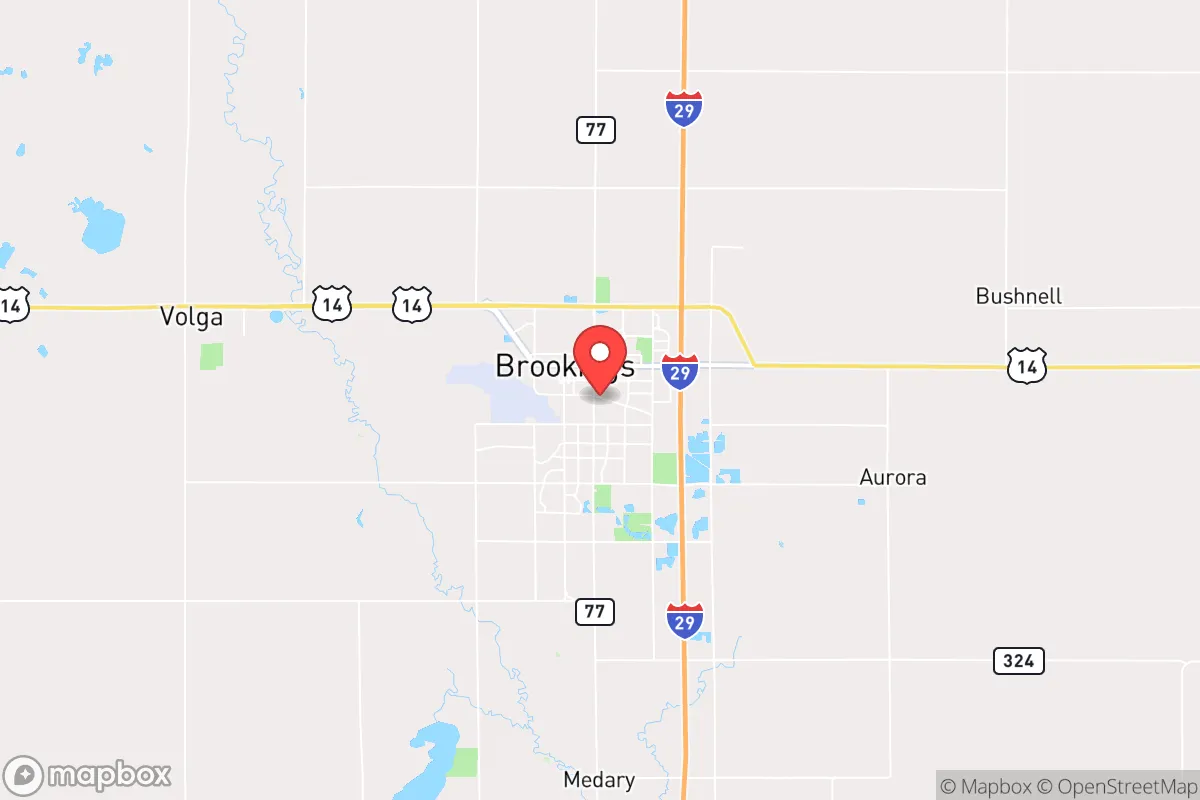
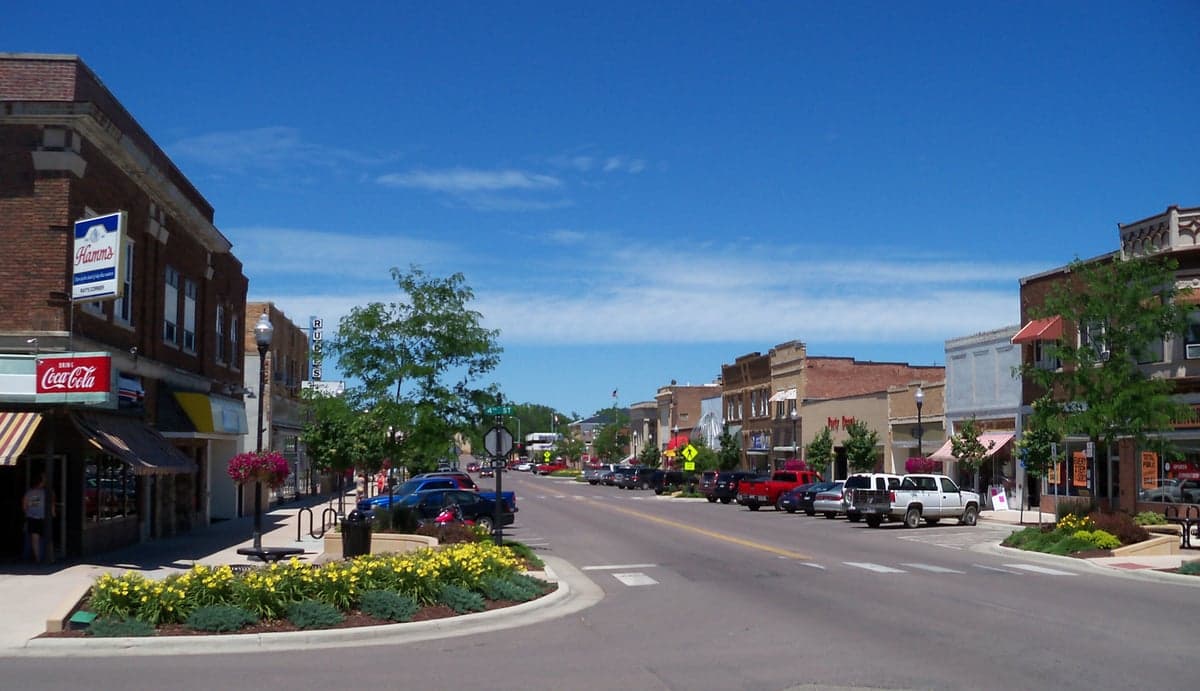
Photo: Wikipedia
Strategic Assessment of Brookings, SD
Workable tactical position. Some exposure to population density or targets, but generally defensible in a crisis.
What does the Strategic Assessment tell us?
Our Strategic Assessment grades tactical survivability of an area. Major population centers, military targets, fallout zones, natural disasters, and border exposure all drive risk — lower exposure means a more defensible position in a crisis.
This is heavily inspired by Joel Skousen's Strategic Relocation book. Highly recommended you checkout the book ($)What does this tell us?
Our Strategic Assessment grades tactical survivability of an area. Major population centers, military targets, fallout zones, natural disasters, and border exposure all drive risk — lower exposure means a more defensible position in a crisis.
This is heavily inspired by Joel Skousen's Strategic Relocation book. Highly recommended you checkout the book ($)Strategic Pillars

Key Distances
Regional Safe Places
Below is our recommended "safe zones" in South Dakota and the surrounding area based on our strategic heuristics. For most people, it's unrealistic to live in a “safe zone” full-time due to work, family or other personal reasons. They tend to be more rural. However, many of these areas are perfect for second homes and retreat properties that double as a vacation home or even a short-term rental.
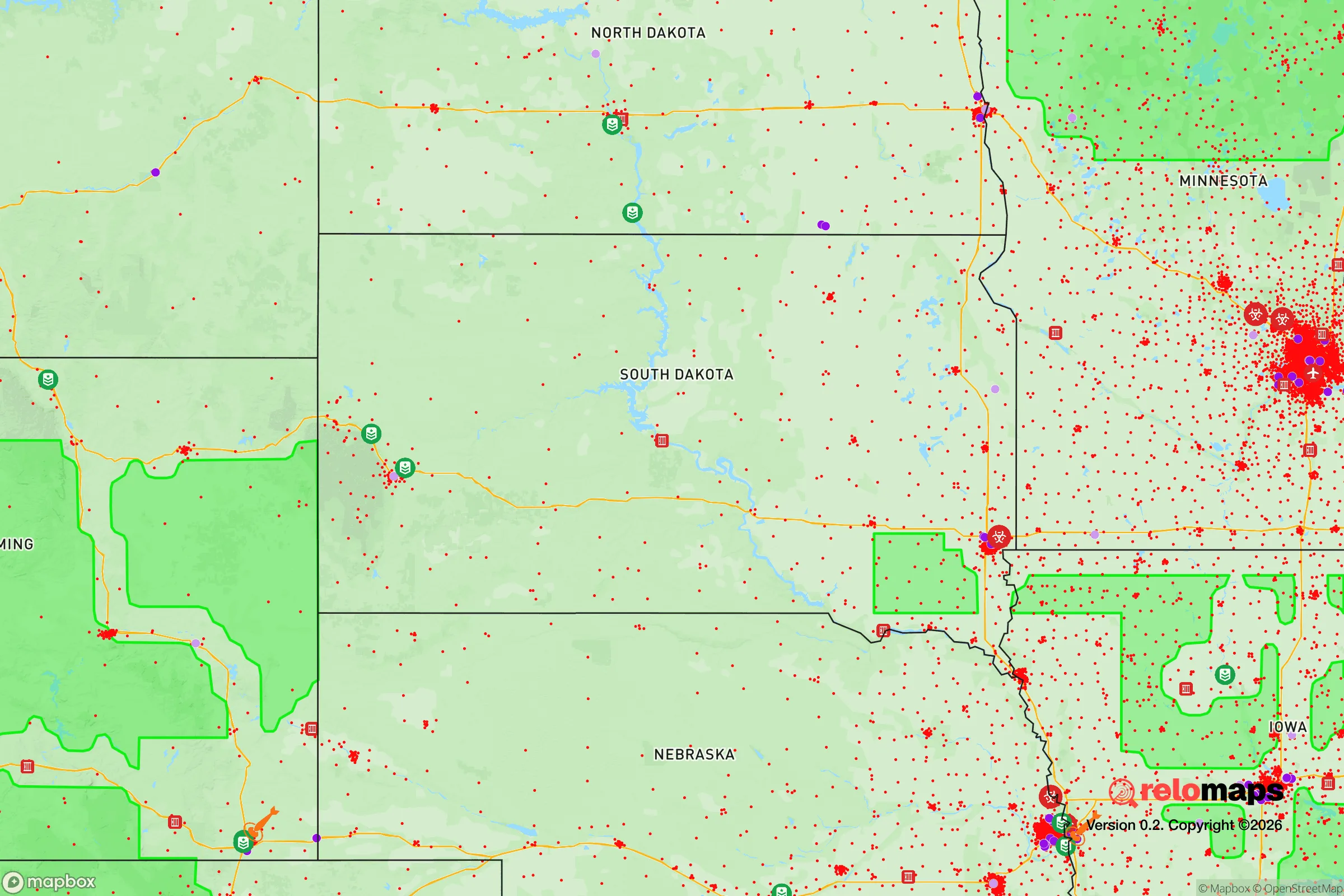


Important Note: For informational purposes only. This does not mean nothing bad ever happens in the green zones. Please use common sense. This is based on public data and modeled with AI. We tried to take a conservative approach but mistakes happen. We update this regularly as new information becomes available.
Solar Generator Recommendations
Backup power matters more here than in safer locations. We've picked three solar generators across budgets and capacity tiers — start with the budget unit if you only need a few essentials, or step up if you want to run a fridge and HVAC for days at a time.

Jackery Portable Power Station Explorer 300
Budget OptionPower on the Go: Weighing only 11 lbs, it's convenient to set up and store with book-sized foldable solar panels

BLUETTI Portable Power Station AC180
Designed for both indoor and outdoor scenarios, AC180 is highly capable as it has a robost capacity and continuous output power.

EF ECOFLOW DELTA Pro Ultra Power Station
Upgraded PickEcoFlow DELTA Pro Ultra is a whole-home energy system designed to grow with your family. Integrated with the Smart Home Panel 2, it scales to meet your evolving energy needs — keeping your home powered, intelligent, and secure through every stage of life.
We earn a commission, at no additional cost to you.
Strategic Assessment Analysis
Brookings, South Dakota, offers a surprisingly robust strategic position for those prioritizing resilience and long-term stability, blending the economic anchor of a major university with the low-key profile of a small city far from the nation's most volatile corridors. Its location along the I-29 corridor provides solid logistical access without the choke-point risks of a major metro hub, and its distance from coastal targets, major military installations, and high-density population centers gives it a meaningful buffer against the most likely fallout scenarios. For a conservative-minded relocator looking at the big picture—civic unrest, supply chain disruptions, or larger-scale disasters—Brookings presents a defensible, resource-viable option that doesn't require going completely off-grid.
Geographic position and natural advantages for long-term stability
Brookings sits in the eastern part of South Dakota, roughly 50 miles north of Sioux Falls and about 200 miles southwest of Minneapolis. That distance from Minneapolis—a major metropolitan area with a population over 3.6 million—is a key advantage. In a scenario involving civil unrest or mass casualty events, being far enough from a major city to avoid the immediate chaos, yet close enough to access its resources if needed, is a balancing act. Brookings nails it. The surrounding terrain is flat to gently rolling agricultural land, which offers excellent visibility and limited natural cover for any approaching threat—a double-edged sword, but one that favors defenders who know the ground. The Big Sioux River runs through town, providing a surface water source, and the area's aquifer is generally reliable. The climate is classic Upper Midwest: cold winters with significant snowfall, hot summers. That winter cold is a natural deterrent to many types of transient populations and can be a survival challenge, but it also means fewer months of peak vulnerability to wildfire or drought compared to western states.
Risks, exposures, and proximity to fallout-relevant landmarks
The primary risk profile for Brookings is not from direct attack but from secondary effects. There are no major military bases, nuclear power plants, or high-value government targets within a 100-mile radius. The nearest significant military installation is Ellsworth Air Force Base near Rapid City, over 300 miles west—well outside any plausible ground-zero fallout zone. The closest nuclear plant is the Prairie Island facility near Red Wing, Minnesota, roughly 200 miles east. That distance is enough to avoid lethal fallout in most scenarios, though prevailing westerly winds could carry lighter contamination in a worst-case event. More immediate risks are natural: severe thunderstorms, tornadoes (eastern South Dakota sits in Tornado Alley's northern fringe), and blizzards that can shut down roads for days. The I-29 corridor itself is a vulnerability—it's a primary north-south route that could become a funnel for displaced populations during a crisis. However, Brookings' position as a college town (home to South Dakota State University) means it has a built-in population of young, healthy adults and a local government accustomed to managing large groups. The downside: a university town also has a transient, often left-leaning student body that could be a source of ideological friction during unrest. For a conservative relocator, the key is to establish roots in the surrounding rural areas or the town's more established neighborhoods, not near campus housing.
Practical resilience for a relocator: food, water, energy, and defensibility
Brookings' practical resilience is strong, especially for someone willing to put in the work. The surrounding region is some of the most productive agricultural land in the country—corn, soybeans, and livestock operations dominate. Local food sourcing is realistic: farmers' markets, CSAs, and direct relationships with producers are common. The town itself has multiple grocery stores, but the real advantage is the ability to buy bulk grains, meat, and produce directly from farms within a 20-mile radius. Water is less of a concern than in the West. The Big Sioux River is a reliable surface source, and the glacial aquifer system beneath eastern South Dakota provides decent well water. Most rural properties have their own wells, and the city's municipal supply is drawn from wells and treated. Energy is a mixed bag. The grid is part of the Midcontinent Independent System Operator (MISO) region, which has seen strain during extreme weather (the 2021 winter storm blackouts hit the region hard). However, South Dakota has a growing wind energy sector, and solar is viable for most of the year. A backup generator or off-grid solar setup is a smart investment here. Defensibility is moderate. The flat terrain means you can see threats coming from a long way off, but it also means you have limited natural cover. A rural property with a good perimeter, a well, and a root cellar or basement shelter is the ideal setup. The local culture is heavily pro-gun, with a strong hunting tradition and minimal restrictions on firearm ownership—a practical advantage for self-defense and food procurement. The county sheriff's office and local police are generally competent and community-oriented, but in a prolonged crisis, you cannot rely on them for personal security.
The overall strategic picture for Brookings is that of a solid, middle-tier relocation option for someone who wants to be prepared without living in a bunker. It's not the most remote or hardened location in the country, but it offers a realistic balance of access, resources, and distance from the most dangerous fallout zones. The biggest drawbacks are the harsh winters (which require serious preparation for heating, vehicle maintenance, and food storage) and the presence of a university population that could become a source of instability during a breakdown of social order. For a conservative individual or family who values community, self-reliance, and a low-key lifestyle, Brookings provides a defensible base with good long-term viability. The key is to buy land outside the city limits, establish a reliable water and power setup, and build relationships with the local farming community before any crisis hits. If you do that, you'll be in a far better position than 90% of the country.

* Values derived from national, state, county, city and local statistics and may differ in a specific area. Last updated: 2026-04-29T18:36:03.000Z
Narrative content on this page is AI-generated and may contain mistakes. Verify any details that matter before acting on them.
ReloMaps may earn a commission from affiliate links at no extra cost to you.

