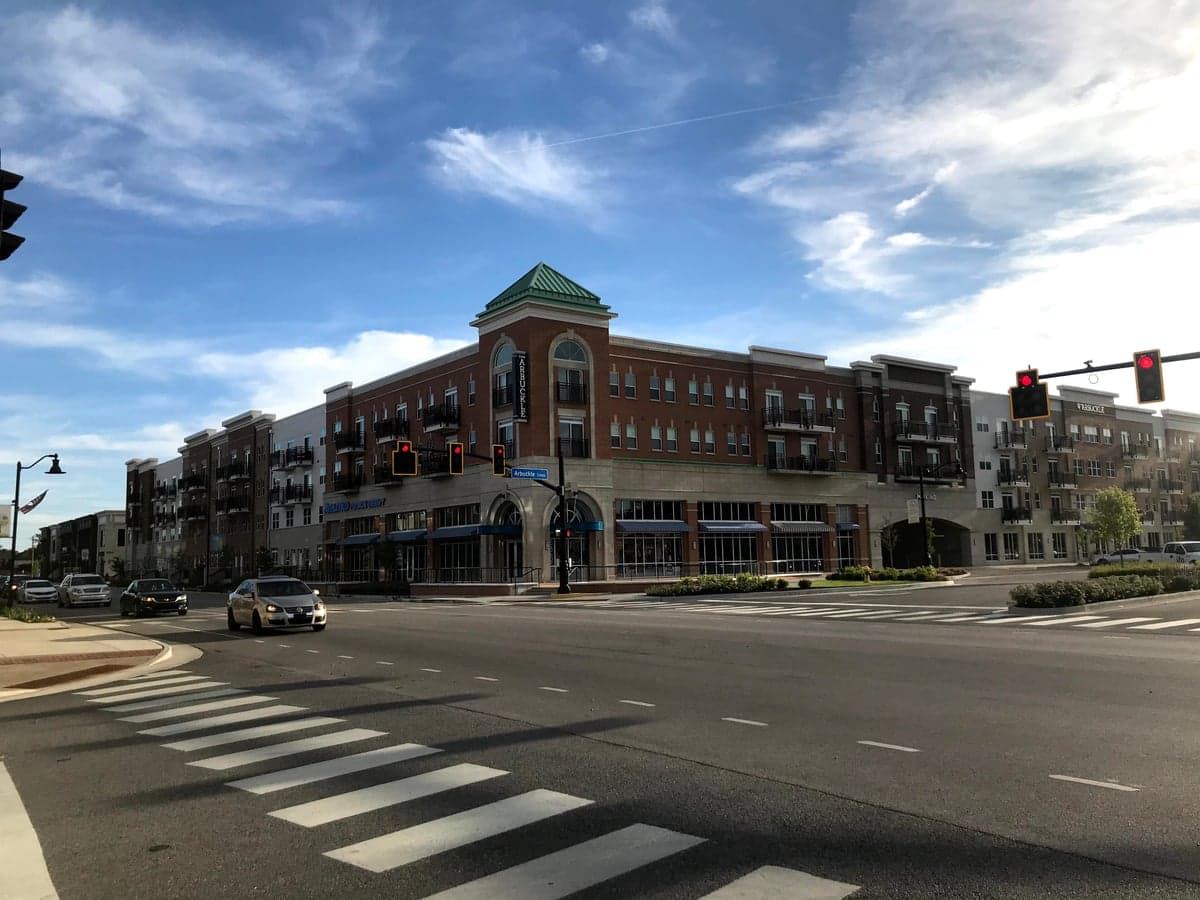
Photo: Wikipedia
Personal Sovereignty in Brownsburg, IN
Viable for self-reliance. Generally workable, though some barriers may limit total independence.
What does Personal Sovereignty tell us?
Personal Sovereignty measures your capacity for self-reliance and independence with minimal government friction. Higher scores mean fewer barriers between you and the way you want to live... but it assumes you have the space you need and good neighbors.
What does this tell us?
Personal Sovereignty measures your capacity for self-reliance and independence with minimal government friction. Higher scores mean fewer barriers between you and the way you want to live... but it assumes you have the space you need and good neighbors.
State Policy
Energy independence: Importer (35% of energy produced in-state)
Personal Liberty
Homesteading

Personal Liberty Analysis
Brownsburg, Indiana, offers a notably high degree of personal sovereignty, particularly when viewed through a survivalist or prepper lens. The town sits in a state that has aggressively pushed back against federal overreach in recent years, creating an environment where individual autonomy is the default rather than the exception. For those concerned with preserving the ability to live life on their own terms—whether that means homeschooling, carrying a firearm, or building a self-sufficient homestead—Brownsburg provides a legal and cultural foundation that is far more robust than what you’ll find in most of the Northeast or West Coast. The key question isn’t whether you can be free here, but how much of that freedom you’re willing to actively exercise.
Tax burden and regulatory posture: How Indiana’s fiscal and legal climate supports autonomy
Indiana’s tax structure is designed to leave more money in your pocket, which directly translates to greater personal freedom. The state levies a flat income tax of 3.15% as of 2025, with ongoing legislative pressure to reduce it further. Property taxes in Hendricks County, where Brownsburg sits, are among the most favorable in the state, with an effective rate typically around 0.85% to 1.0% of assessed value—well below the national average. There is no inheritance tax, no estate tax, and no state-level tax on Social Security benefits. From a regulatory standpoint, Indiana is a “right-to-work” state, meaning you cannot be forced to join a union or pay dues as a condition of employment. The state also operates under a “permit-less” or “constitutional carry” framework for firearms (effective July 2022), which we’ll cover in detail below. For the prepper-minded, the regulatory environment is permissive: there are no state-level building codes in unincorporated areas, and even within Brownsburg’s town limits, zoning is generally lenient toward accessory structures, workshops, and gardens. The state’s “Right to Farm” law provides strong protections for agricultural activities, even when suburban development encroaches. This isn’t a place where the government nickel-and-dimes you for every permit or imposes costly environmental mandates on basic property improvements.
Self-defense and gun law specifics: Constitutional carry, stand your ground, and castle doctrine
Indiana is one of the strongest Second Amendment states in the nation, and Brownsburg residents benefit directly from that posture. Since July 2022, Indiana has been a constitutional carry state, meaning any law-abiding adult 18 or older can carry a handgun openly or concealed without a permit. This is a significant shift from the previous licensing system and removes a potential point of government interference. The state also has a “stand your ground” law (Indiana Code 35-41-3-2), which eliminates any duty to retreat before using deadly force if you are in a place you have a legal right to be. The castle doctrine is equally strong: your home, vehicle, and occupied structure are considered places where you have no duty to retreat and are presumed to have a reasonable fear of death or great bodily harm if an intruder forcibly enters. For those concerned about government overreach, it’s worth noting that Indiana has passed “Second Amendment Sanctuary” resolutions in many counties, including Hendricks County, signaling local resistance to any future federal firearms restrictions. Ammunition is widely available, and there are no state-level magazine capacity bans, no “assault weapon” bans, and no waiting periods for firearm purchases from licensed dealers. Brownsburg itself has several gun shops and indoor ranges within a 15-minute drive, and the nearby city of Indianapolis hosts major gun shows regularly. For the survivalist, this legal framework means you can maintain a well-stocked armory without bureaucratic hurdles, and you can defend your property and family without fear of prosecution for exercising your rights.
Self-reliance and homesteading viability: Lot sizes, zoning, and off-grid feasibility
Brownsburg offers a mixed bag for those seeking full self-reliance, but the potential is there if you choose your property wisely. Within the town limits, standard residential lots range from 0.25 to 0.5 acres in newer subdivisions, which is enough for a substantial vegetable garden, a few fruit trees, and a small chicken coop (hens only, no roosters, per town ordinance). However, if you want serious homesteading acreage—think goats, a large orchard, or a woodlot for firewood—you’ll need to look at the unincorporated areas of Hendricks County just outside Brownsburg, where lot sizes of 1 to 10 acres are common and affordable relative to national averages. Zoning in the county is far more permissive: you can keep livestock, build a workshop or barn, and even set up a small-scale commercial operation (like selling eggs or produce) without the red tape you’d face in more restrictive states. Off-grid feasibility is moderate. Indiana’s climate is four-season, so solar panels are viable but require battery storage for winter months when sunlight is limited. The state has no net metering mandate that forces utilities to buy back your excess power at retail rates, but many rural electric cooperatives offer reasonable buyback programs. Rainwater collection is legal and unregulated for outdoor use, though you’ll want a filtration system for potable water. Wells are common on larger parcels, and septic systems are straightforward to permit. The biggest limitation for full off-grid living is the lack of strong state-level protections for “right to dry” (clotheslines) or for building without permits in unincorporated areas—but in practice, county officials are generally hands-off as long as you’re not creating a public nuisance. For the prepper, the sweet spot is a 3-5 acre parcel in the county, within a 10-minute drive of Brownsburg’s amenities, where you can have a garden, a few animals, and a backup power system without drawing unwanted attention.
Personal liberties: Parental rights, medical autonomy, speech, and property protections
Indiana has become a battleground for personal liberties in recent years, and the outcomes have generally favored individual sovereignty. Parental rights are strongly protected: Indiana law (IC 20-33-2) gives parents the explicit right to direct the education and upbringing of their children, including the right to homeschool without state interference. Homeschooling is considered a non-accredited private school, meaning you are not required to register with the state, submit curriculum, or have your children tested—though you must provide instruction in the “usual branches” of education. This is one of the most homeschool-friendly environments in the country. Medical autonomy is a mixed picture. Indiana has no state-level vaccine mandate for adults, and COVID-era mandates have been largely rolled back. However, the state does require certain vaccines for school attendance (with religious and medical exemptions available). The bigger concern for the sovereignty-minded is the state’s stance on emergency powers: during the pandemic, the governor exercised broad authority, but the legislature has since passed laws (e.g., SB 5 in 2021) that limit a governor’s ability to declare extended emergencies without legislative approval. Free speech is robust, with no state-level “hate speech” laws that criminalize expression, and Indiana is a “right-to-work” state, meaning you cannot be forced to fund political speech through union dues. Property rights are well-protected under Indiana’s “takings” laws, which require just compensation for any government seizure, and the state has a strong “private property rights” act that limits eminent domain for economic development. For the survivalist, the key takeaway is that Indiana’s legal culture respects the individual’s right to make decisions about their family, their body, and their land—with far less government intrusion than in states like California, New York, or Illinois.
Overall, Brownsburg sits in a state that ranks among the top 10 in the nation for personal freedom according to indices like the Cato Institute’s “Freedom in the 50 States.” Compared to the regulatory nightmare of the coastal states, Indiana offers a breath of fresh air—literally and figuratively. The tax burden is low, the gun laws are permissive, the homeschooling environment is unregulated, and the property rights are strong. The main trade-off is that you’re still in a suburbanizing area within commuting distance of Indianapolis, so you won’t have the complete isolation of rural Montana or Idaho. But for the prepper who wants a strategic balance—access to urban resources, a supportive legal framework, and the ability to build a self-sufficient lifestyle—Brownsburg is a solid choice. The government here is not your enemy, but it’s also not your caretaker. That’s exactly how it should be.

* Values derived from national, state, county, city and local statistics and may differ in a specific area. Last updated: 2026-04-22T10:35:35.000Z
Narrative content on this page is AI-generated and may contain mistakes. Verify any details that matter before acting on them.
ReloMaps may earn a commission from affiliate links at no extra cost to you.

