
Photo by Kaleb East on Unsplash
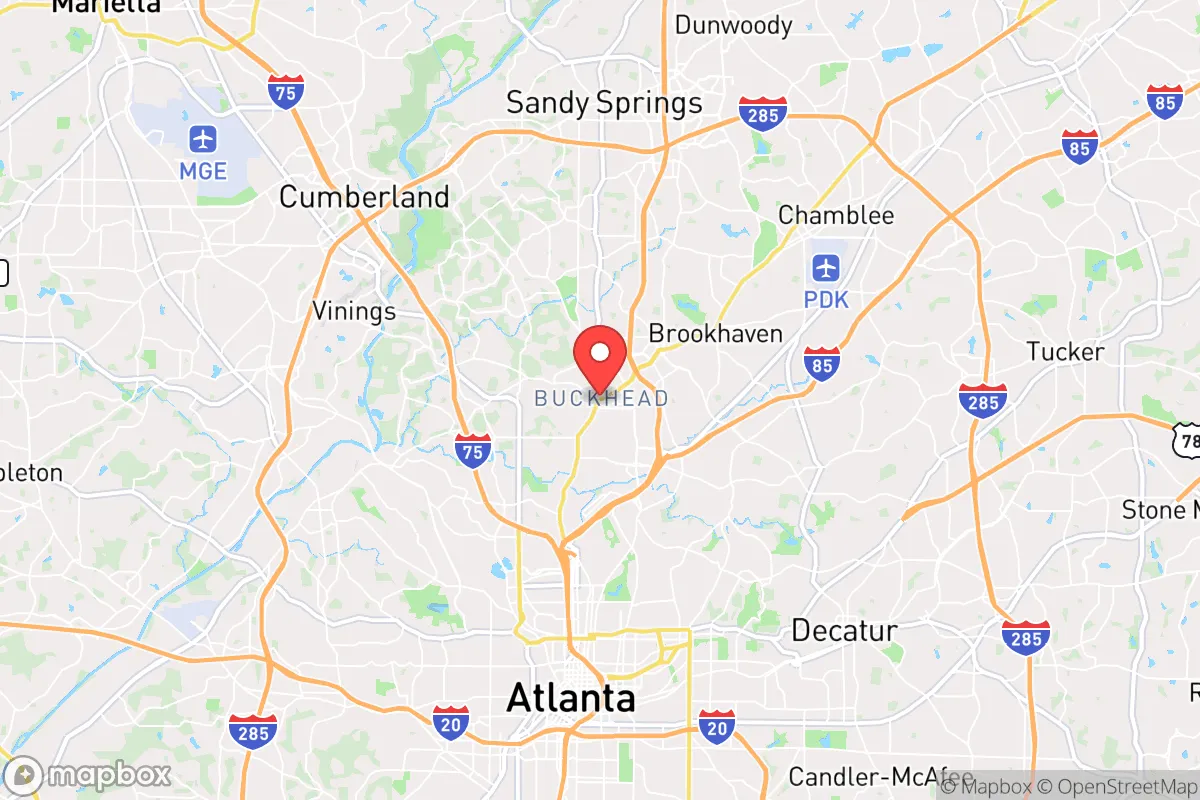
Quality of Life in Buckhead, GA
Above-average quality of iife. The area offers a reasonable cost of living, decent mobility, and a mix of neighborhood amenities.
What does Quality of Life tell us?
Quality of Life blends cost of living, nearby amenities, socioeconomic signals, and neighborhood character. City-level scores represent the whole municipality; individual neighborhoods can differ.
What does this tell us?
Quality of Life blends cost of living, nearby amenities, socioeconomic signals, and neighborhood character. City-level scores represent the whole municipality; individual neighborhoods can differ.
Cost of Living
57% above national average
The Real Cost of Living in Buckhead, GA for 2026
| Tier | Individual | Family (4) |
|---|---|---|
| Survival | $19k | $35k |
| Comfortable | $86k | $126k |
| Luxury | $166k+ | $258k+ |
| Elite (Top 5%) | $196k+ | $303k+ |
111%
The Area Signal
A metric tracking the socioeconomic signals of the area.
Hobbies
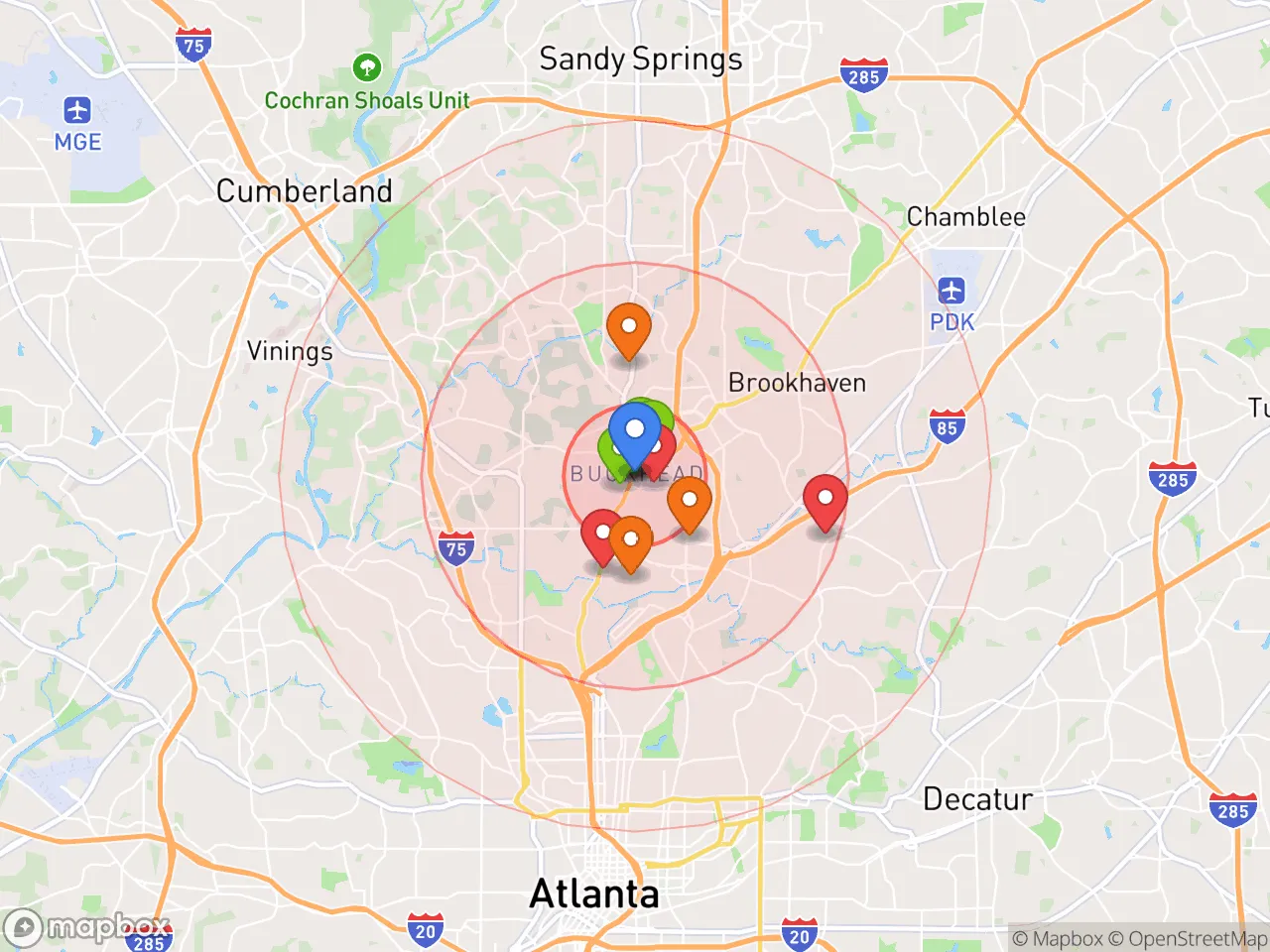
Explore the areaGroceries
6 within 10 miles
Gas
20 within 10 miles
Hospital
20 within 20 miles
Airport
ATL — Hartsfield–Jackson Atlanta International
Post Office
USPS — Buckhead, GA
Critical Amenities
Quality-of-Life Analysis
Buckhead, Georgia, is Atlanta’s most affluent and prestigious neighborhood, drawing high-earning professionals, corporate executives, and families who prioritize luxury living, top-tier schools, and urban convenience. With a cost-of-living index of 157 (57% above the U.S. average), Buckhead commands a premium that reflects its concentration of Fortune 500 headquarters, upscale shopping at Lenox Square and Phipps Plaza, and a dense tree canopy of historic estates. The area’s median household income exceeds $120,000, and its population skews toward dual-income couples and empty-nesters who value walkable streets, private security patrols, and proximity to Midtown and Downtown Atlanta.
Cost of living, housing prices, and how Buckhead compares to nearby neighborhoods
Buckhead’s cost of living is the highest in metro Atlanta, driven almost entirely by housing. The median home value sits at $441,400, roughly double the Atlanta metro median of $220,000 and more than triple the national figure. Rents are more moderate: the median monthly rent of $1,306 is only about 10% above the metro average, reflecting a mix of older apartment stock and newer luxury towers. Compared to neighboring Midtown (median home value $380,000) or Brookhaven ($350,000), Buckhead’s housing premium is steep but justified by larger lot sizes, lower crime rates within the Buckhead Village district, and access to the Buckhead MARTA station. Property taxes in Fulton County average 1.2% of assessed value, adding roughly $5,300 annually on a median-priced home. For renters, the trade-off is clear: pay a premium for Buckhead’s walkability and safety, or save 15-20% by moving to Sandy Springs or Chamblee.
What daily life is like: amenities, schools, and the commute reality
Daily life in Buckhead revolves around its blend of urban polish and suburban comfort. The neighborhood is anchored by the Buckhead Village dining and retail district, where residents walk to restaurants like The Capital Grille or St. Cecilia, and to high-end boutiques along Peachtree Road. Public schools are a major draw: E. Rivers Elementary and North Atlanta High School both score 8/10 on GreatSchools, and private options like Pace Academy and The Westminster Schools are within a 10-minute drive. The average commute time of 28.3 minutes is slightly above the national average (26.4 minutes) but significantly better than suburban exurbs like Alpharetta (35+ minutes). Most commuters drive, with GA-400 and I-85 providing direct routes to Midtown (12 minutes) and Hartsfield-Jackson Airport (25 minutes off-peak). The MARTA Gold Line’s Buckhead station offers a 15-minute train ride to the airport and 10 minutes to downtown, though ridership remains low among professionals. Parks like Chastain Park (268 acres) offer golf, tennis, and a concert amphitheater, while the PATH400 trail connects to the BeltLine for cyclists and runners.
Buckhead is best suited for high-income professionals, corporate transferees, and families who can absorb the housing premium in exchange for elite schools, low crime rates (violent crime is 40% below Atlanta’s citywide average), and a walkable urban core. Empty-nesters downsizing from larger suburban homes also thrive here, as do young professionals working in finance, law, or tech at companies like Porsche Cars North America or Intercontinental Exchange. The neighborhood is less ideal for budget-conscious renters, first-time homebuyers, or those seeking a quiet, car-dependent suburban lifestyle—those groups will find better value in nearby Brookhaven, Chamblee, or Smyrna. For anyone who prioritizes prestige, convenience, and a 28-minute commute to the region’s top jobs, Buckhead delivers a quality of life that few Atlanta neighborhoods can match.

Crime in Buckhead, GA
Generally safer than 57% of comparable U.S. locations.
Violent CrimeViolent Crime Analysis
Property CrimeProperty Crime Analysis
Crime Analysis
Buckhead, Georgia, presents a mixed safety picture for prospective residents. While the neighborhood's violent crime rate of 253 incidents per 100,000 residents is lower than the national average, its property crime rate of 1,189.7 per 100,000 is significantly elevated, reflecting challenges common in affluent urban districts. The overall safety experience is heavily influenced by the progressive criminal justice policies of Fulton County, which includes Atlanta and Buckhead, where district attorneys and judges have adopted lenient approaches that critics argue prioritize offender rehabilitation over public safety and victim accountability.
Crime in context
Buckhead's violent crime rate of 253 per 100,000 is roughly 28% below the U.S. national average of about 380 per 100,000, placing it in a safer tier than many comparable metro Atlanta neighborhoods. However, the property crime rate of 1,189.7 per 100,000 is approximately 20% above the national average of 1,954 per 100,000, driven largely by car break-ins, package thefts, and residential burglaries targeting high-value homes. These figures must be weighed against the broader Fulton County environment, where progressive prosecutorial policies—including reduced bail requirements, diversion programs for repeat offenders, and a reluctance to pursue harsh sentences—have been linked to a rise in recidivism and a perception that criminals face minimal consequences. This ideological approach, while well-intentioned, directly contributes to a higher number of offenders cycling back onto the streets, undermining deterrence and victim justice.
What residents experience
Daily life in Buckhead involves a heightened awareness of property crime, with residents frequently reporting smashed car windows in parking lots of upscale shopping centers like Lenox Square and Phipps Plaza, as well as porch piracy in gated communities. Violent crime, while less common, does occur, including armed robberies near MARTA transit stations and occasional home invasions in affluent subdivisions. The progressive justice system in Fulton County exacerbates these concerns: offenders arrested for property crimes are often released on signature bonds or diverted to treatment programs, leading to a cycle where the same individuals commit multiple offenses before facing meaningful consequences. For families, this means that even in a neighborhood with relatively low violent crime rates, the risk of becoming a property crime victim is tangible, and the likelihood of seeing a perpetrator held accountable is diminished by systemic leniency.
Neighborhood-level variation is notable within Buckhead. Areas closer to the commercial core along Peachtree Road and around the Buckhead Village district experience higher property crime rates due to foot traffic and transient populations. In contrast, quieter residential enclaves like Tuxedo Park and the area around Chastain Park report fewer incidents, though they remain vulnerable to organized burglary rings. Gated communities and buildings with 24-hour security provide a buffer, but the overarching influence of Fulton County's progressive policies means that even these safer pockets are not immune to the broader trend of reduced criminal accountability. Prospective residents should factor in both the specific block-level data and the county's judicial philosophy when assessing safety.
* Values derived from national, state, county, city and local statistics and may differ in a specific area. Last updated: 2026-10-10T16:26:42.000Z
Narrative content on this page is AI-generated and may contain mistakes. Verify any details that matter before acting on them.
ReloMaps may earn a commission from affiliate links at no extra cost to you.

