Photo: Wikipedia
Political ClimatePolitical Climate in Buffalo, WY
District shown is the primary district for this city’s centroid. Cities may span multiple districts.
Inherited from parent state — no local data available.
Local Political AnalysisPolitical Analysis of Buffalo, WY
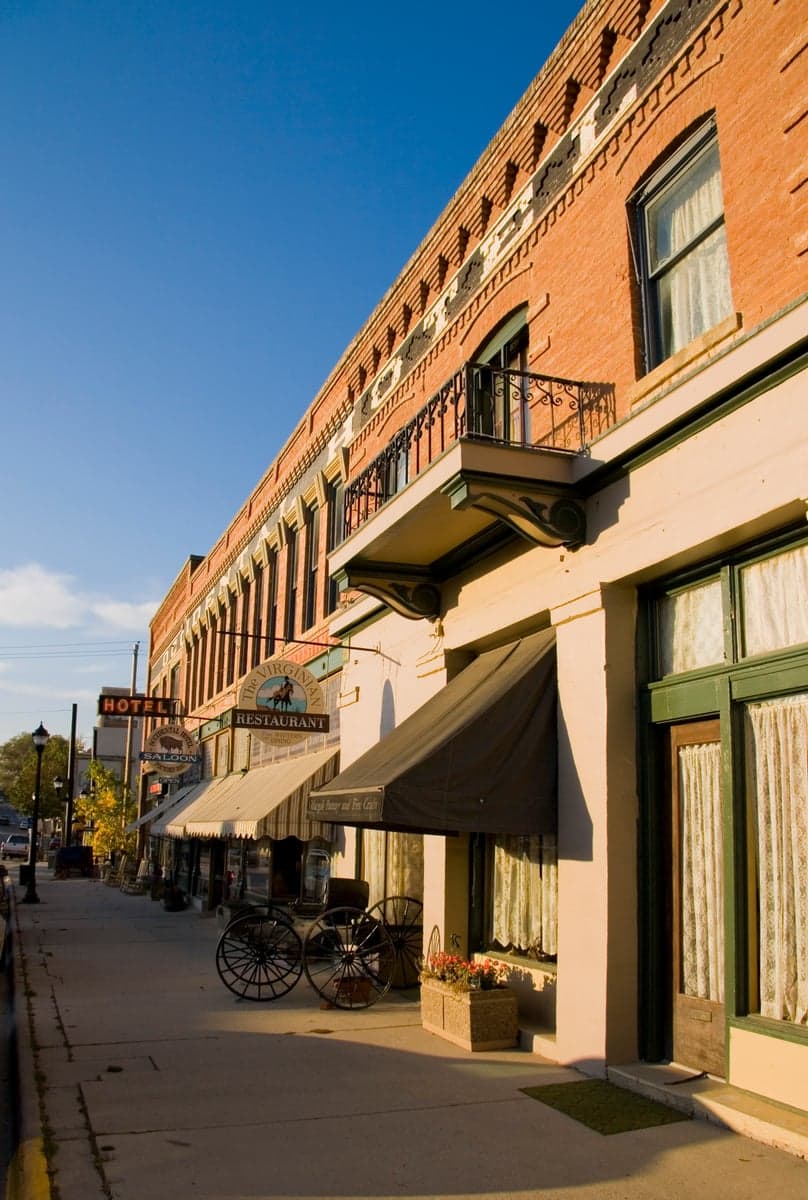
Buffalo, Wyoming, sits smack in the middle of some of the most reliably conservative territory in the nation, and it’s been that way for as long as anyone around here can remember. With a Cook Partisan Voting Index of R+23, this area doesn’t just lean red—it’s deep, dark crimson. That means in presidential elections, Republicans routinely win by margins that would make a swing state blush. The political trajectory here hasn’t shifted much over the decades, and that’s exactly how most folks like it. You won’t find the kind of back-and-forth political drama you see in places like Laramie or even Sheridan, which has started to feel a little more purple in recent years. Buffalo stays steady, and that stability is a big part of its appeal for people who value personal freedom and limited government.
How it compares
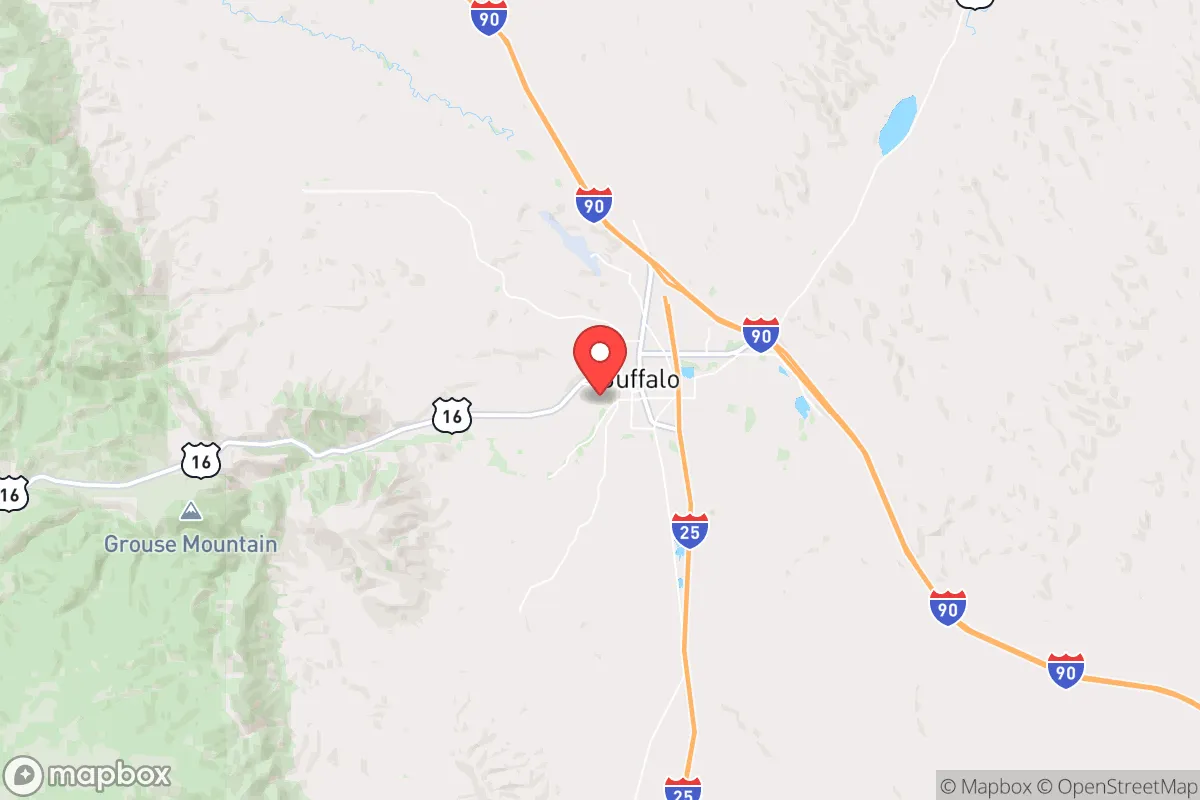
If you drive thirty miles north to Sheridan, you’ll notice a different vibe creeping in. Sheridan’s seen an influx of out-of-state money and retirees from places like California and Colorado, and with them comes a slow drift toward progressive policies—higher taxes, more regulations, and a general attitude that government knows best. Buffalo, by contrast, has largely resisted that trend. The surrounding Johnson County is even more conservative than the state average, and you can feel it in the local zoning laws, the school board meetings, and the way people talk about property rights. Head south toward Casper, and you’ll find a more mixed bag—Casper’s got some industry and a bit more political diversity, but it’s still solidly red. Buffalo, though, is the kind of place where the county commission still pushes back against federal land grabs and state mandates that feel like overreach. It’s a stark contrast to towns like Jackson Hole, which might as well be a different country politically.
What this means for residents
For the people who live here, the political climate translates directly into everyday life. You’re not going to see the kind of government overreach that’s become common in blue states—no heavy-handed lockdowns, no aggressive gun control measures, and no school curricula that push ideology over basics. The local government tends to take a hands-off approach, trusting residents to make their own choices. That’s a big deal for families and small business owners who just want to be left alone to live their lives. Property taxes stay reasonable, and there’s a strong cultural expectation that the county sheriff won’t enforce federal rules that don’t make sense for the community. If you’re worried about progressive ideology creeping into your kids’ school or your local ordinances, Buffalo is one of the safest bets in Wyoming. But it’s not complacent—longtime residents keep a close eye on any hint of change, because once that door cracks open, it’s hard to shut.
One thing that sets Buffalo apart is its deep-rooted sense of self-reliance. This isn’t a place that looks to the state capital or Washington for answers. The local culture prizes independence, and that shows up in everything from the annual rodeo to the way neighbors handle a tough winter. There’s a quiet but firm resistance to anything that smacks of government overreach, whether it’s federal land management policies or state-level mandates on business operations. That said, the community isn’t hostile—it’s just watchful. If you’re moving here from a place where government involvement is the norm, you’ll notice the difference immediately. The long-term outlook is stable, but only if residents stay engaged and keep pushing back against the slow creep of progressive ideas that have already taken hold in other parts of the state. Buffalo is a stronghold, but strongholds need defending.

State Political ClimatePolitical Climate in Wyoming
State Political AnalysisPolitical Environment in the State
Wyoming is one of the most reliably conservative states in the nation, with a Republican Party registration advantage that has only grown over the last two decades. The state has voted for the GOP presidential candidate by margins of 30 to 45 points in every election since 2000, and the legislature is supermajority Republican. However, the political climate is not monolithic — there is a meaningful divide between the energy-driven, libertarian-leaning towns and the more establishment-conservative ranch country, and recent in-migration from blue states is beginning to stir the pot.
Urban vs. rural divide
The political map of Wyoming is shaped by a few key population centers and vast, sparsely populated counties. Cheyenne, the state capital and largest city, is the most moderate area — Laramie County still votes Republican, but by narrower margins (around +15 to +20 points) due to a mix of state government workers, military families from F.E. Warren Air Force Base, and a growing service sector. Casper (Natrona County) is reliably red but has a pragmatic, energy-industry flavor — voters there care deeply about mineral rights and federal land access. The real conservative strongholds are the small towns and rural counties: Sublette County (Pinedale), Campbell County (Gillette), and Sweetwater County (Rock Springs) routinely vote 75-80% Republican. Jackson Hole (Teton County) is the glaring exception — it’s the only county that consistently votes Democratic, driven by wealthy second-home owners, ski resort workers, and a tourism economy that attracts a transient, left-leaning workforce. Teton County’s politics are an outlier, but its outsized wealth gives it influence in state-level debates over land use and property taxes.
Policy environment
Wyoming’s policy environment is among the most hands-off in the country, which is a major draw for conservative relocators. There is no state income tax, and the sales tax is a low 4% (local options can push it to 6%). Property taxes are among the lowest in the nation, with no tax on retirement income. The regulatory posture is aggressively pro-energy and pro-mining — the state has fought federal efforts to restrict coal, oil, and natural gas development, and it maintains a "presumption of open" policy for public lands. Education policy is locally controlled, with no state-level curriculum mandates on controversial topics like critical race theory or gender ideology — though the legislature has passed bills prohibiting instruction on sexual orientation and gender identity in K-3 (the "Don’t Say Gay" equivalent, SF 133 in 2023). Election laws are solid: voter ID is required, same-day registration is not allowed, and the state uses paper ballots with post-election audits. There is no mail-in voting unless you have an excuse. Wyoming also has a robust "Second Amendment Preservation Act" (2010) that nullifies federal gun laws the state deems unconstitutional — a model for the broader nullification movement.
Trajectory & freedom
Wyoming is arguably becoming more free in several key areas, but there are warning signs. On the positive side, the 2022 legislature passed a near-total abortion ban (the "Life is a Human Right Act"), with exceptions only for rape, incest, and life of the mother — a clear expansion of what conservatives consider "freedom for the unborn." In 2023, Governor Mark Gordon signed a law prohibiting the enforcement of federal gun laws that infringe on the Second Amendment (HB 119), and the state has a constitutional carry law (no permit needed to carry concealed). Parental rights were strengthened in 2024 with a bill requiring schools to notify parents of any curriculum involving sexuality or gender identity. However, the state’s heavy reliance on federal mineral royalties and land management means it is not as independent as its rhetoric suggests — roughly half of the state’s land is federally owned, and any shift in federal energy policy directly impacts the budget. The biggest threat to freedom in Wyoming is the influx of wealthy out-of-state buyers driving up property values in places like Sheridan and Laramie, which could eventually push for higher property taxes or land-use restrictions.
Civil unrest & political movements
Wyoming has a low baseline of civil unrest compared to coastal states, but there are flashpoints. The most visible is the ongoing tension over federal land management — the "Sagebrush Rebellion" is alive and well here. In 2014, the occupation of the Malheur National Wildlife Refuge in neighboring Oregon had strong sympathy in Wyoming, and local militia groups like the Wyoming Liberty Group and the Oath Keepers have a presence, particularly in Fremont County (Riverton) and Park County (Cody). In 2020, there were small Black Lives Matter protests in Cheyenne and Laramie, but they were met with counter-protests and did not escalate. Immigration politics are largely a non-issue because the state has a tiny foreign-born population (under 4%), but there is strong support for border security and opposition to sanctuary policies — the legislature passed a bill in 2021 requiring all law enforcement to cooperate with ICE. Election integrity is a live issue: after the 2020 election, the state conducted a hand-count audit of a sample of precincts and found no discrepancies, but the legislature still tightened voter ID laws and banned ballot drop boxes in 2022. The most visible political movement is the "Freedom Caucus" in the state legislature, which has pushed for further tax cuts, school choice, and nullification of federal mandates — they are currently at odds with the more establishment GOP leadership over budget priorities.
Projection
Over the next 5-10 years, Wyoming will likely remain deeply conservative, but the character of that conservatism is shifting. The biggest demographic change is the influx of remote workers and retirees from California, Colorado, and the Pacific Northwest — they are moving to Laramie, Sheridan, and Buffalo for the low taxes and open space, but they often bring different cultural expectations. So far, these newcomers tend to be libertarian-leaning rather than progressive, so the net effect is a reinforcement of the state’s anti-tax, anti-regulation posture. However, they are also more likely to support public land conservation and oppose new energy development, which could create friction with the traditional extractive industries. The state’s budget is a looming issue: as coal revenues decline, there will be pressure to diversify the economy or raise taxes — the 2024 legislative session saw a serious debate about a sales tax increase on services, which failed but will return. The Freedom Caucus is likely to grow in influence, pushing for a flat income tax (currently zero) to be locked in the constitution, and for school vouchers. Expect continued fights over federal land control, with Wyoming joining lawsuits against the Bureau of Land Management’s conservation rule. The wildcard is Teton County — if its population continues to grow and its influence spreads, it could become a progressive beachhead, but for now it remains an island.
For a new resident, the bottom line is this: Wyoming offers a high degree of personal freedom, low taxes, and a political culture that respects individual rights and local control. You will not find the culture wars of the coasts here — most people just want to be left alone. But you should be aware that the state’s economy is tied to federal land and energy policy, so national political shifts can hit home quickly. If you value gun rights, parental control in education, and a government that stays out of your business, Wyoming is one of the best bets in the country. Just don’t expect it to stay exactly the same — the newcomers are changing the vibe, even if they aren’t changing the vote totals yet.
* Values derived from national, state, county, city and local statistics and may differ in a specific area. Last updated: 2026-10-10T16:26:45.000Z
Narrative content on this page is AI-generated and may contain mistakes. Verify any details that matter before acting on them.
ReloMaps may earn a commission from affiliate links at no extra cost to you.

