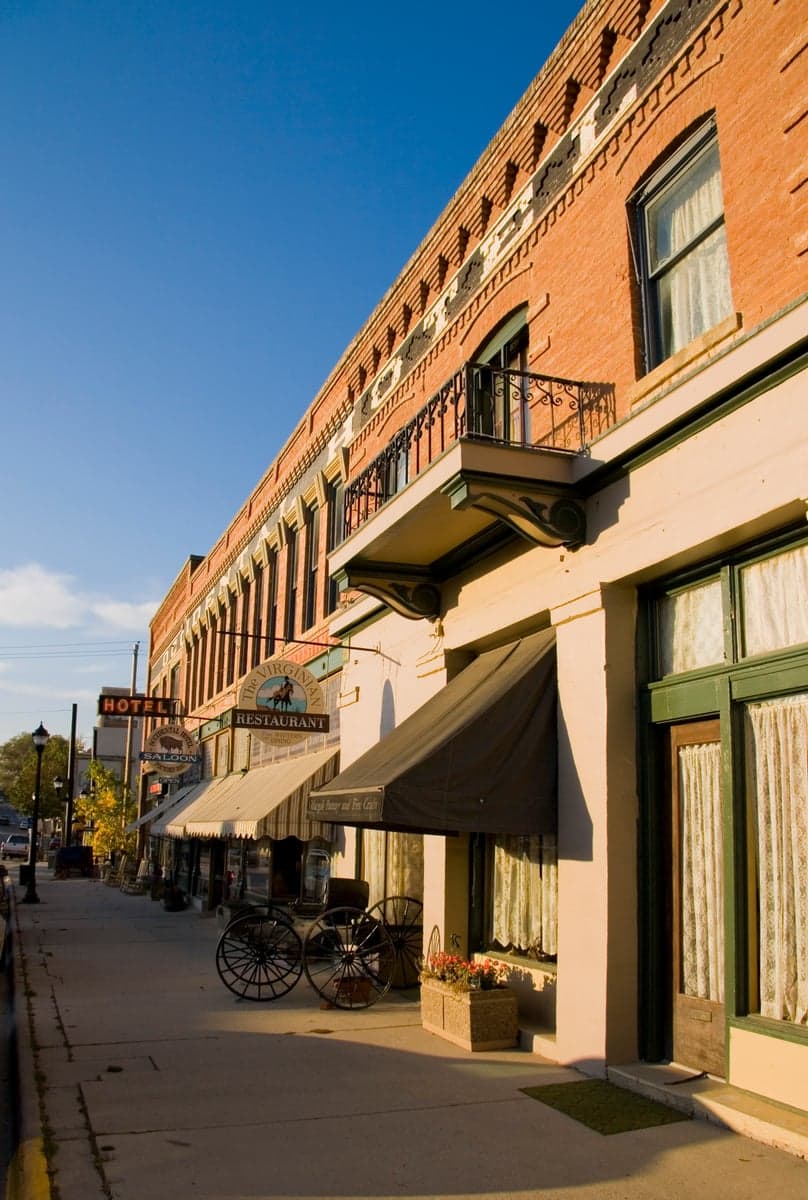
Photo: Wikipedia
Strategic Assessment of Buffalo, WY
Strong survivability profile. Good buffer from population centers, with manageable environmental and tactical risks.
What does the Strategic Assessment tell us?
Our Strategic Assessment grades tactical survivability of an area. Major population centers, military targets, fallout zones, natural disasters, and border exposure all drive risk — lower exposure means a more defensible position in a crisis.
This is heavily inspired by Joel Skousen's Strategic Relocation book. Highly recommended you checkout the book ($)What does this tell us?
Our Strategic Assessment grades tactical survivability of an area. Major population centers, military targets, fallout zones, natural disasters, and border exposure all drive risk — lower exposure means a more defensible position in a crisis.
This is heavily inspired by Joel Skousen's Strategic Relocation book. Highly recommended you checkout the book ($)Strategic Pillars

Key Distances
Regional Safe Places
Below is our recommended "safe zones" in Wyoming and the surrounding area based on our strategic heuristics. For most people, it's unrealistic to live in a “safe zone” full-time due to work, family or other personal reasons. They tend to be more rural. However, many of these areas are perfect for second homes and retreat properties that double as a vacation home or even a short-term rental.
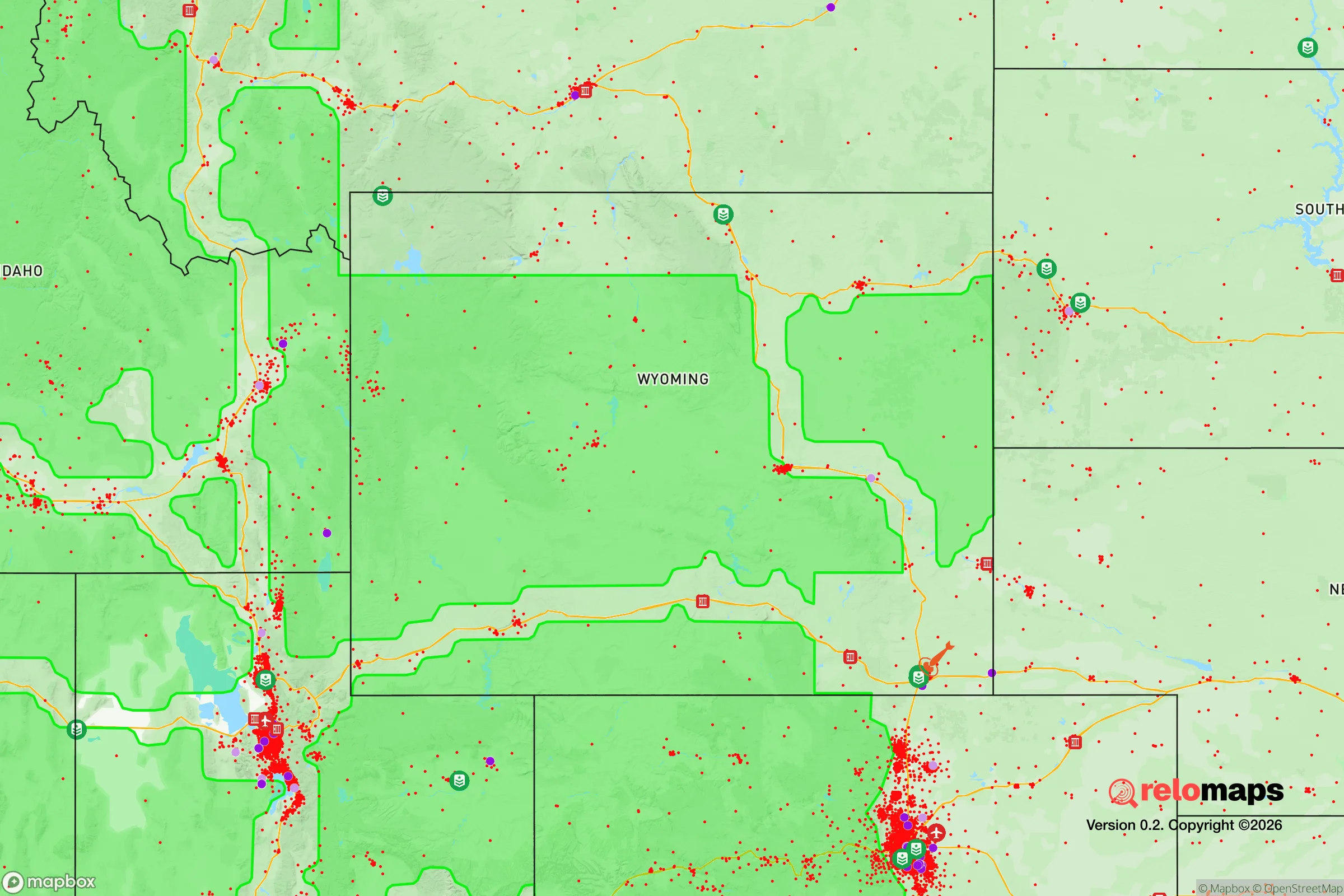
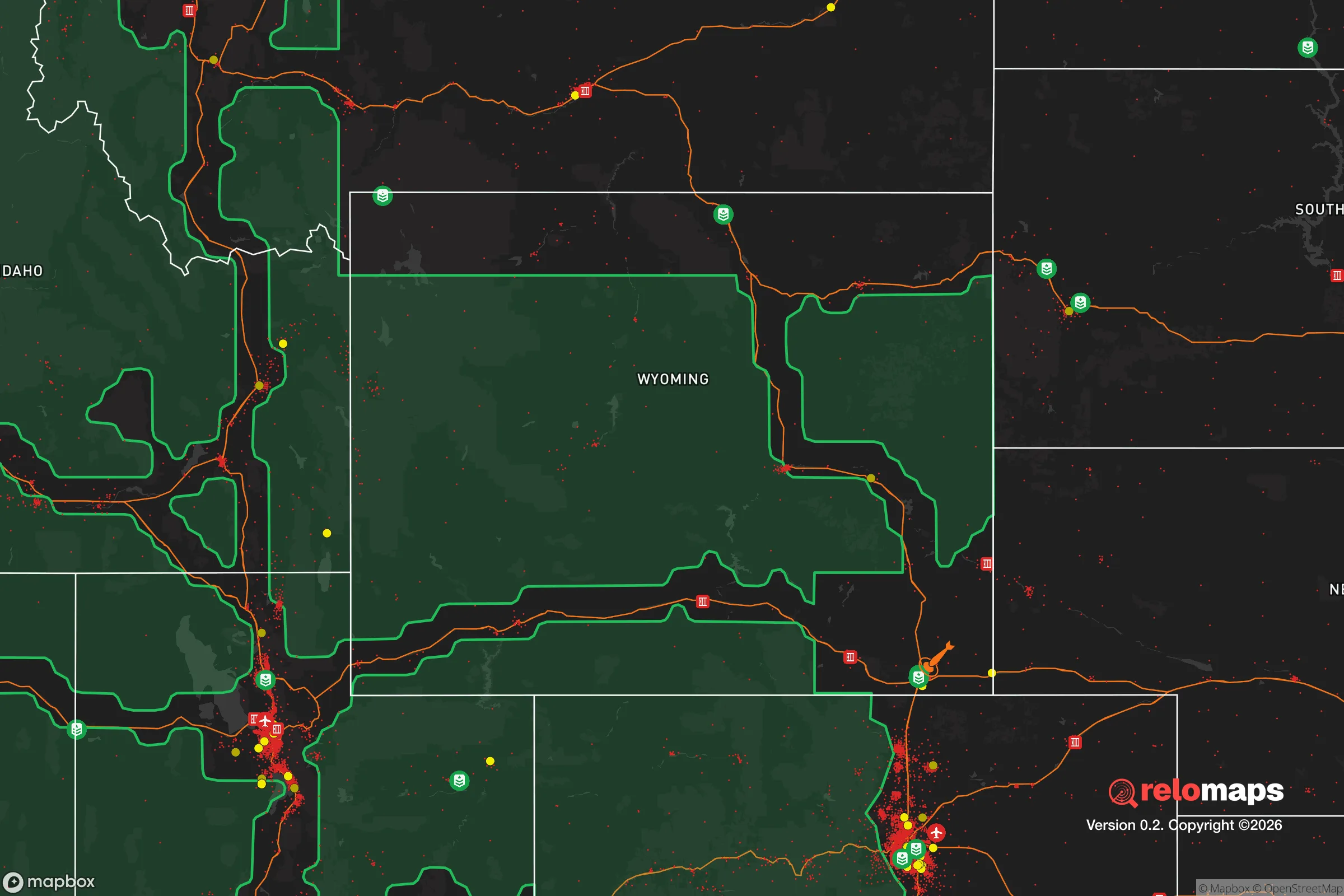


Important Note: For informational purposes only. This does not mean nothing bad ever happens in the green zones. Please use common sense. This is based on public data and modeled with AI. We tried to take a conservative approach but mistakes happen. We update this regularly as new information becomes available.
Solar Generator Recommendations
Backup power matters more here than in safer locations. We've picked three solar generators across budgets and capacity tiers — start with the budget unit if you only need a few essentials, or step up if you want to run a fridge and HVAC for days at a time.

Jackery Portable Power Station Explorer 300
Budget OptionPower on the Go: Weighing only 11 lbs, it's convenient to set up and store with book-sized foldable solar panels

BLUETTI Portable Power Station AC180
Designed for both indoor and outdoor scenarios, AC180 is highly capable as it has a robost capacity and continuous output power.

EF ECOFLOW DELTA Pro Ultra Power Station
Upgraded PickEcoFlow DELTA Pro Ultra is a whole-home energy system designed to grow with your family. Integrated with the Smart Home Panel 2, it scales to meet your evolving energy needs — keeping your home powered, intelligent, and secure through every stage of life.
We earn a commission, at no additional cost to you.
Strategic Assessment Analysis
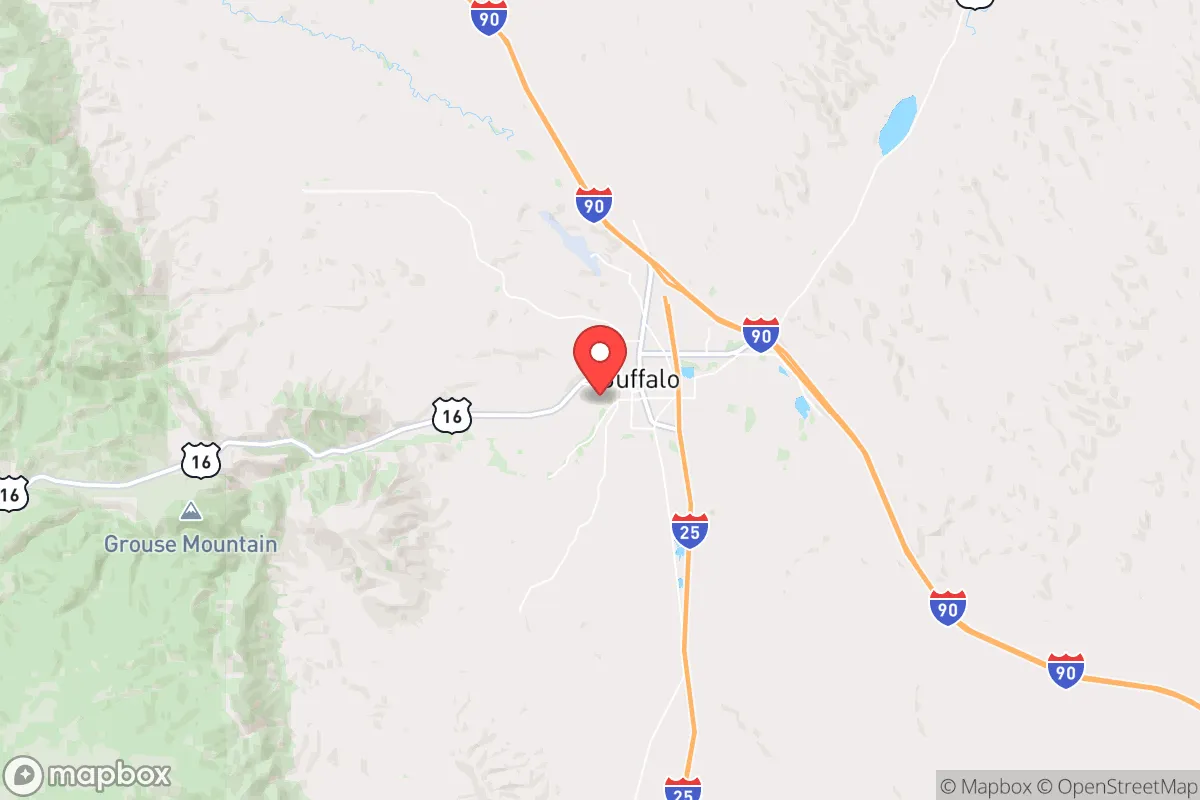
Buffalo, Wyoming, offers a strategic resilience profile that is hard to beat in the lower 48, combining geographic isolation with robust local infrastructure and a deeply self-reliant community ethos. Located at the eastern base of the Bighorn Mountains, this town of roughly 4,600 people sits far from any major population center—over 150 miles from the nearest metro (Billings, MT) and more than 200 miles from Cheyenne—which inherently reduces exposure to cascading failures from urban collapse, mass casualty events, or fallout from a major disaster. The area’s low population density, strong agricultural base, and access to mountain water sources make it a credible long-term haven for those prioritizing preparedness and independence.
Geographic position and natural advantages for long-term survival
Buffalo’s location is a prepper’s dream in terms of natural buffers. The town sits in the Powder River Basin, flanked by the Bighorn Mountains to the west and the high plains to the east, creating a natural funnel that limits easy access from most directions. The Bighorns provide a massive, defensible high-ground retreat zone with ample timber, game, and water—the Cloud Peak Wilderness alone offers over 189,000 acres of rugged terrain. The area’s elevation (around 4,600 feet) means a cooler, drier climate that reduces disease vectors and spoilage risks compared to the South. Crucially, Buffalo is situated along the I-90/I-25 corridor, which is a double-edged sword: it provides a lifeline for resupply and evacuation, but it’s not a major interstate hub, so traffic and refugee flows would be manageable. The surrounding Johnson County is sparsely populated (roughly 8,500 people county-wide), meaning you’re not competing with hordes for resources. The local water table is robust, fed by snowmelt from the Bighorns, and the area has a history of self-sufficient ranching and farming that predates modern supply chains.
Risks, exposures, and proximity to fallout-relevant landmarks
No location is risk-free, and Buffalo has specific vulnerabilities that a strategic relocator must weigh. The most obvious is its proximity to the Yellowstone Caldera—roughly 200 miles west. While a super-eruption is unlikely in any given year, the ashfall zone from even a moderate event could blanket the area, disrupting agriculture and water supplies for weeks. More immediate: the area sits near the Powder River Basin’s coal and methane fields, which are industrial targets in a grid-down scenario. The town itself is within 50 miles of the I-90 rail line, a potential chokepoint for civil unrest or supply chain sabotage. On the plus side, there are no nuclear power plants within 300 miles (the nearest is Fort Calhoun in Nebraska, over 400 miles away), and no major military bases or strategic weapons depots nearby that would draw a first strike. The biggest fallout risk is from a dirty bomb or EMP attack on a regional hub like Billings or Casper—but Buffalo’s distance and the Bighorns’ shielding effect would reduce direct exposure. The local hospital (Johnson County Healthcare Center) is small but functional, with a helipad for medevac, but trauma capacity is limited—major injuries would require a 2-hour drive to Billings.
Practical resilience for a relocator: food, water, energy, and defensibility
For a serious prepper, Buffalo checks most boxes. Water is the strongest asset: the Clear Creek and Piney Creek watersheds provide year-round surface water, and the local aquifer is deep and reliable. Most homes in the county have well access, and the town’s municipal supply is gravity-fed from mountain reservoirs, meaning it would function without power for days. Food is solid: Johnson County is cattle country, with dozens of ranches within 20 miles. Local farmers’ markets and co-ops (like the Buffalo Farmers Market) operate seasonally, and the area has a strong hunting culture—elk, deer, and antelope are abundant in the Bighorns. For long-term storage, the dry climate (average humidity around 50%) is ideal for root cellars and freeze-dried stores. Energy is a mixed bag: the grid is served by Powder River Energy Corporation, which relies on coal and natural gas from the basin—vulnerable to disruption. However, solar potential is excellent (over 260 sunny days per year), and wind is constant on the plains. Many locals already have backup propane or diesel generators. Defensibility is where Buffalo shines: the town is compact, with only a few main roads in and out (I-90, US-16, and WY-196), all of which can be monitored or blocked with minimal effort. The surrounding terrain—open plains to the east, steep canyons to the west—makes it hard for large groups to approach undetected. The local sheriff’s office is well-funded and community-oriented, and the county has a strong tradition of armed self-defense (Wyoming is a constitutional carry state). The biggest practical gap is medical: there’s no Level 1 trauma center within 200 miles, and the nearest major hospital (Billings) would be overwhelmed in a crisis. Stockpiling antibiotics, trauma kits, and training in field medicine is non-negotiable.
The overall strategic picture for Buffalo is one of high reward with manageable risk. It’s not a bug-out location for the faint of heart—winters are harsh (average January lows near 10°F), and the isolation can feel extreme for those used to urban amenities. But for a relocator with a conservative, self-reliant mindset who wants to be far from the chaos of coastal cities, nuclear targets, and mass migration routes, Buffalo offers a rare combination of natural resources, defensible geography, and a community that still values independence and mutual aid. The key is to arrive prepared—bring your own skills, supplies, and a willingness to integrate into a place where neighbors still know your name and the county fair is the social event of the year. If the worst happens, you’ll be in one of the best positions in the country to ride it out. If it doesn’t, you’ll be living in one of the most beautiful, quiet corners of the American West. Either way, it’s a strategic win.

* Values derived from national, state, county, city and local statistics and may differ in a specific area. Last updated: 2026-10-10T16:26:45.000Z
Narrative content on this page is AI-generated and may contain mistakes. Verify any details that matter before acting on them.
ReloMaps may earn a commission from affiliate links at no extra cost to you.

