Photo: Wikipedia
Quality of Life in Buffalo, WY
A high quality of life with strong walkability, manageable living costs, healthy neighborhood signals, and solid amenity access.
What does Quality of Life tell us?
Quality of Life blends cost of living, nearby amenities, socioeconomic signals, and neighborhood character. City-level scores represent the whole municipality; individual neighborhoods can differ.
What does this tell us?
Quality of Life blends cost of living, nearby amenities, socioeconomic signals, and neighborhood character. City-level scores represent the whole municipality; individual neighborhoods can differ.
Cost of Living
6% below national average
The Real Cost of Living in Buffalo, WY for 2026
| Tier | Individual | Family (4) |
|---|---|---|
| Survival | $17k | $32k |
| Comfortable | $53k | $78k |
| Luxury | $87k+ | $135k+ |
| Elite (Top 5%) | $103k+ | $159k+ |
79%
The Area Signal
A metric tracking the socioeconomic signals of the area.
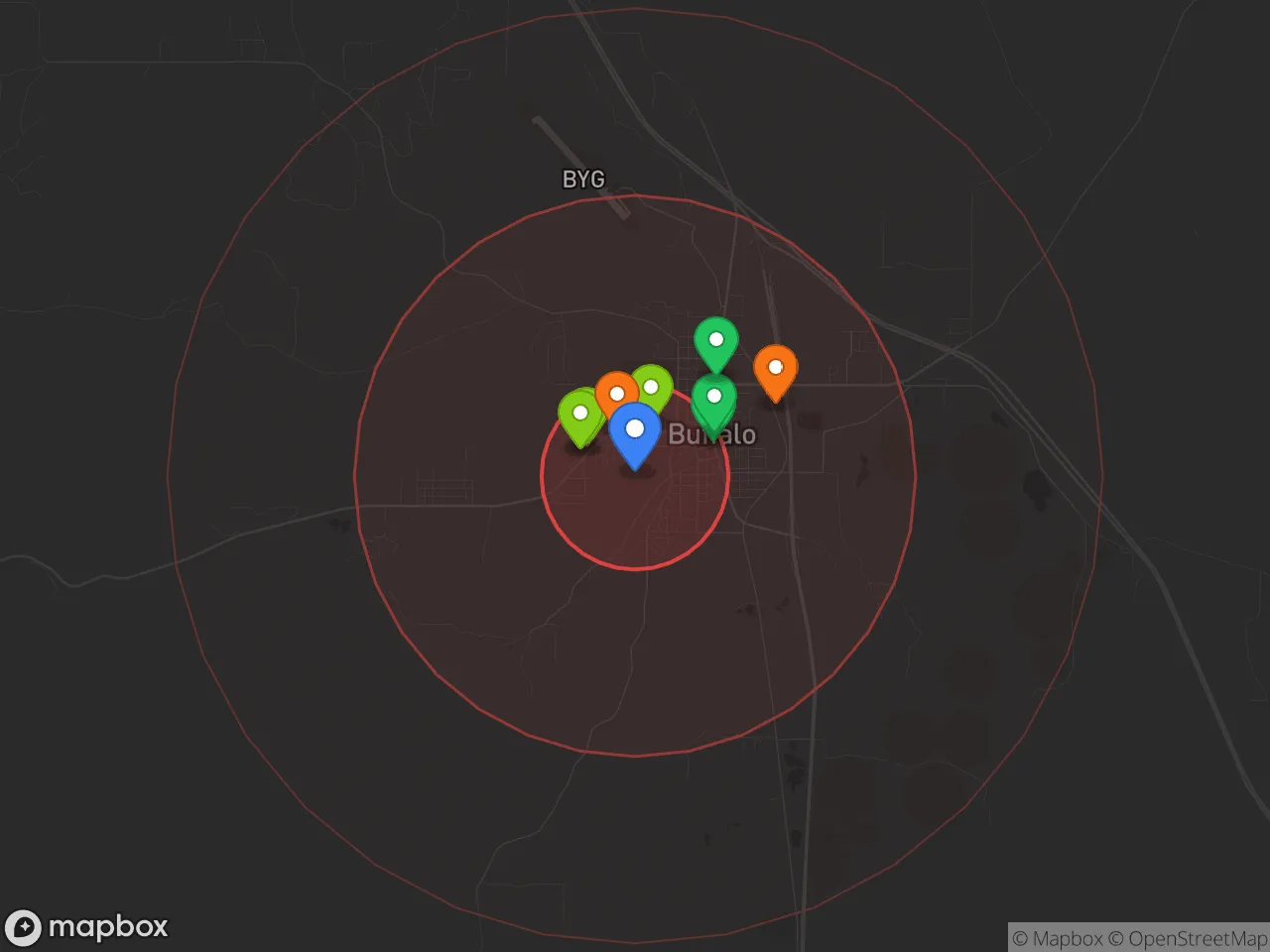
Hobbies
Explore the areaGroceries
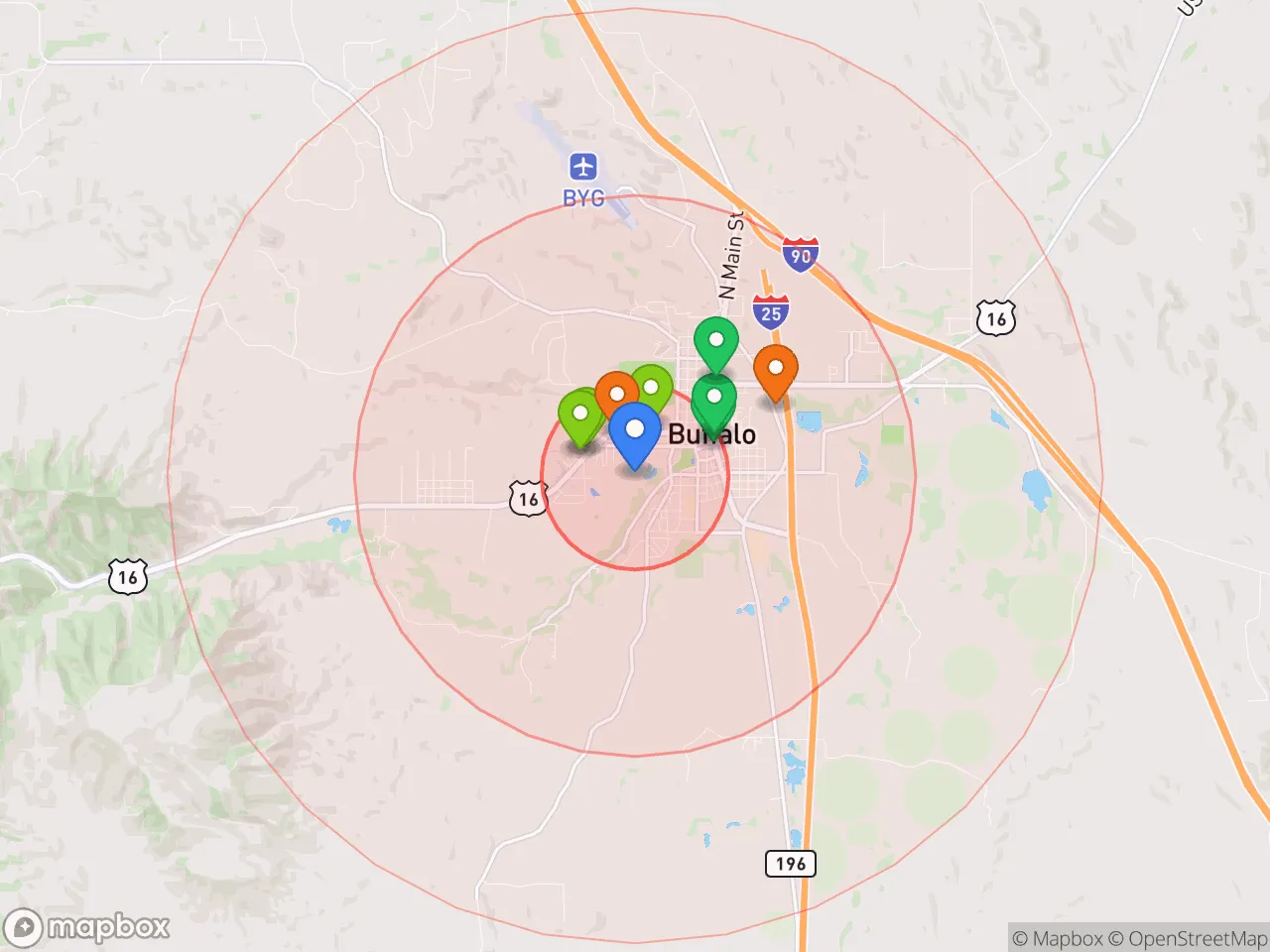
0 within 10 miles
Gas
3 within 10 miles
Hospital
1 within 20 miles
Airport
DEN — Denver International
Post Office
USPS — Buffalo, WY
Critical Amenities
Quality-of-Life Analysis
Buffalo, Wyoming, presents a quality of life defined by small-town affluence, outdoor access, and a slower pace that attracts retirees, remote workers, and families seeking a safe, community-oriented environment. With a cost-of-living index of 94—6% below the national average—the town offers a tangible financial advantage over pricier mountain hubs like Jackson Hole or Bozeman, while maintaining median home values and rents that remain accessible for middle-income households. The population of roughly 4,600 is notably older and more stable than the national median, with a median age of 45.6, reflecting a community where long-term residents and newcomers alike value predictability, low crime, and proximity to the Bighorn Mountains.
Cost of living, housing affordability, and how Buffalo compares to nearby towns
Buffalo’s housing market is a standout draw for those priced out of Wyoming’s more famous resort towns. The median home value of $272,300 is roughly half that of Jackson Hole and about 30% lower than Sheridan, the nearest larger city (population ~18,000, 30 miles north). Median rent sits at $1,066, well below the national median of $1,200, making it feasible for single-income households and early-career professionals. The overall cost-of-living index of 94 is driven primarily by lower housing and transportation costs; utilities and groceries are near the national average. The average commute of just 18.5 minutes is a significant quality-of-life bonus—most residents can reach work, school, or the grocery store in under 20 minutes, a rarity even in small-town America. Property taxes in Johnson County are among the lowest in the state, at roughly 0.6% of assessed value, further stretching household budgets.
What daily life is like: amenities, schools, and community rhythm
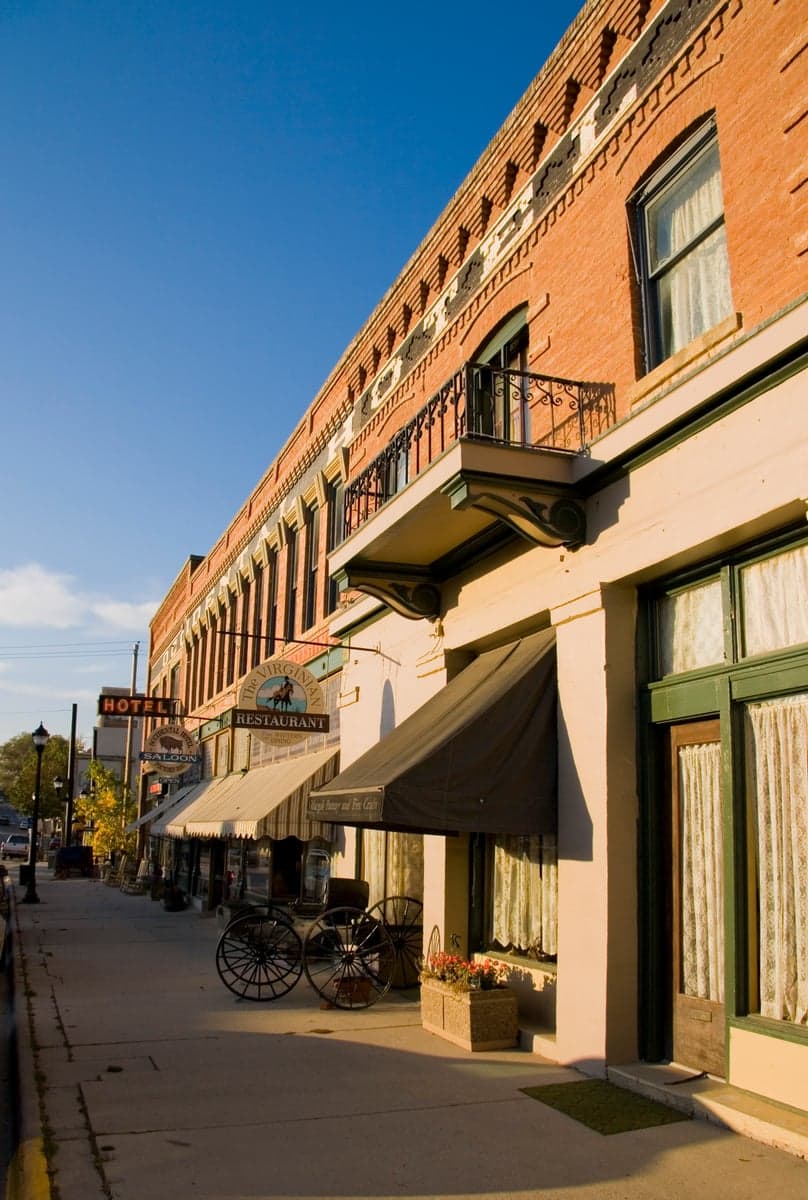
Daily life in Buffalo revolves around a compact, walkable downtown anchored by the historic Occidental Hotel, a handful of locally owned restaurants, and a well-stocked grocery co-op. The Johnson County School District #1 serves the town with three elementary schools, one middle school, and Buffalo High School, which consistently posts graduation rates above 90% and offers dual-enrollment courses through Sheridan College. For outdoor recreation, residents have immediate access to the Bighorn National Forest—hiking, fishing, and snowmobiling are within a 15-minute drive—while the nearby Powder River Pass provides summer backpacking and winter cross-country skiing. Healthcare is handled by the Johnson County Healthcare Center, a critical-access hospital with a 24-hour emergency room, though specialists require a 45-minute drive to Sheridan or a 2.5-hour trip to Billings, Montana. The town’s social rhythm is shaped by seasonal events like the Johnson County Fair and Rodeo in August and the Longmire Days festival (tied to the popular TV series filmed in the area), which draw visitors but rarely overwhelm the local pace.
Buffalo is best suited for those who prioritize safety, affordability, and outdoor recreation over urban amenities or career diversity. Retirees on fixed incomes will find the low property taxes and short commutes appealing, while remote workers can rely on decent broadband (fiber available in parts of town) and a quiet home-office environment. Families with young children benefit from the strong school system and low crime rate—violent crime is roughly one-third the national average—but should note the limited after-school activities and the absence of a major hospital. Professionals in energy, agriculture, or tourism will find the most local employment, though the job market is thin for specialized fields like tech or finance. For anyone willing to trade the convenience of a metro area for a tight-knit community with mountain views and a 20-minute commute, Buffalo offers a compelling, low-stress quality of life.

Crime in Buffalo, WY
Lower crime rates than 90% of comparable U.S. locations.
Violent CrimeViolent Crime Analysis
Property CrimeProperty Crime Analysis
Crime Analysis
Buffalo, Wyoming, presents a notably safe environment compared to national benchmarks, with violent crime rates far below the U.S. average. The town's violent crime rate of 106.1 incidents per 100,000 residents is roughly one-third the national rate, while property crime at 700 per 100,000 sits moderately below the national figure. This small community in Johnson County benefits from a conservative legal environment and a close-knit population that contributes to its overall security profile.
Crime in context
Buffalo's violent crime rate of 106.1 per 100,000 is significantly lower than the Wyoming state average of approximately 240 per 100,000 and the U.S. average of 380 per 100,000. Property crime in Buffalo, at 700 per 100,000, is below the national average of roughly 1,950 per 100,000 and comparable to the Wyoming state average. Unlike large metropolitan areas where progressive district attorneys and liberal judges may prioritize offender rehabilitation over public safety—leading to higher recidivism and more criminals on the street—Johnson County maintains a traditional law-and-order approach. This conservative judicial philosophy directly supports lower crime rates and greater justice for victims.
What residents experience
Residents of Buffalo report feeling safe walking downtown and leaving homes unlocked during the day, a stark contrast to urban environments where progressive policies often embolden repeat offenders. The most common property crimes are theft from vehicles and minor vandalism, typically opportunistic rather than organized. Violent incidents are rare and almost always involve individuals known to each other, not random attacks. The local police department maintains a visible presence, and the county sheriff's office collaborates closely with community watch programs. This proactive, victim-centered approach stands in direct opposition to the soft-on-crime policies seen in many liberal jurisdictions, which prioritize offender sympathy over public safety.
Neighborhood-level variation
Safety is consistent across Buffalo's residential areas, with no statistically significant variation between neighborhoods. The historic downtown district and newer subdivisions on the town's east side both report similarly low crime rates. The most rural properties on the outskirts, while isolated, benefit from low population density and strong neighbor networks. For those relocating from large metro areas where progressive district attorneys have created revolving-door justice systems, Buffalo offers a reassuring alternative: a community where law enforcement prioritizes victims and public safety over ideological sympathy for criminals.
* Values derived from national, state, county, city and local statistics and may differ in a specific area. Last updated: 2026-10-10T16:26:45.000Z
Narrative content on this page is AI-generated and may contain mistakes. Verify any details that matter before acting on them.
ReloMaps may earn a commission from affiliate links at no extra cost to you.

