Photo: Wikipedia
Strategic Assessment of Burton, MI
Meaningful friction. Expect exposure to either population pressure, blast zones, or natural disaster risk. Consider buying a retreat property.
What does the Strategic Assessment tell us?
Our Strategic Assessment grades tactical survivability of an area. Major population centers, military targets, fallout zones, natural disasters, and border exposure all drive risk — lower exposure means a more defensible position in a crisis.
This is heavily inspired by Joel Skousen's Strategic Relocation book. Highly recommended you checkout the book ($)What does this tell us?
Our Strategic Assessment grades tactical survivability of an area. Major population centers, military targets, fallout zones, natural disasters, and border exposure all drive risk — lower exposure means a more defensible position in a crisis.
This is heavily inspired by Joel Skousen's Strategic Relocation book. Highly recommended you checkout the book ($)Strategic Pillars

Key Distances
Regional Safe Places
Below is our recommended "safe zones" in Michigan and the surrounding area based on our strategic heuristics. For most people, it's unrealistic to live in a “safe zone” full-time due to work, family or other personal reasons. They tend to be more rural. However, many of these areas are perfect for second homes and retreat properties that double as a vacation home or even a short-term rental.


Important Note: For informational purposes only. This does not mean nothing bad ever happens in the green zones. Please use common sense. This is based on public data and modeled with AI. We tried to take a conservative approach but mistakes happen. We update this regularly as new information becomes available.
Solar Generator Recommendations
Backup power matters more here than in safer locations. We've picked three solar generators across budgets and capacity tiers — start with the budget unit if you only need a few essentials, or step up if you want to run a fridge and HVAC for days at a time.

Jackery Portable Power Station Explorer 300
Budget OptionPower on the Go: Weighing only 11 lbs, it's convenient to set up and store with book-sized foldable solar panels

BLUETTI Portable Power Station AC180
Designed for both indoor and outdoor scenarios, AC180 is highly capable as it has a robost capacity and continuous output power.

EF ECOFLOW DELTA Pro Ultra Power Station
Upgraded PickEcoFlow DELTA Pro Ultra is a whole-home energy system designed to grow with your family. Integrated with the Smart Home Panel 2, it scales to meet your evolving energy needs — keeping your home powered, intelligent, and secure through every stage of life.
We earn a commission, at no additional cost to you.
Strategic Assessment Analysis
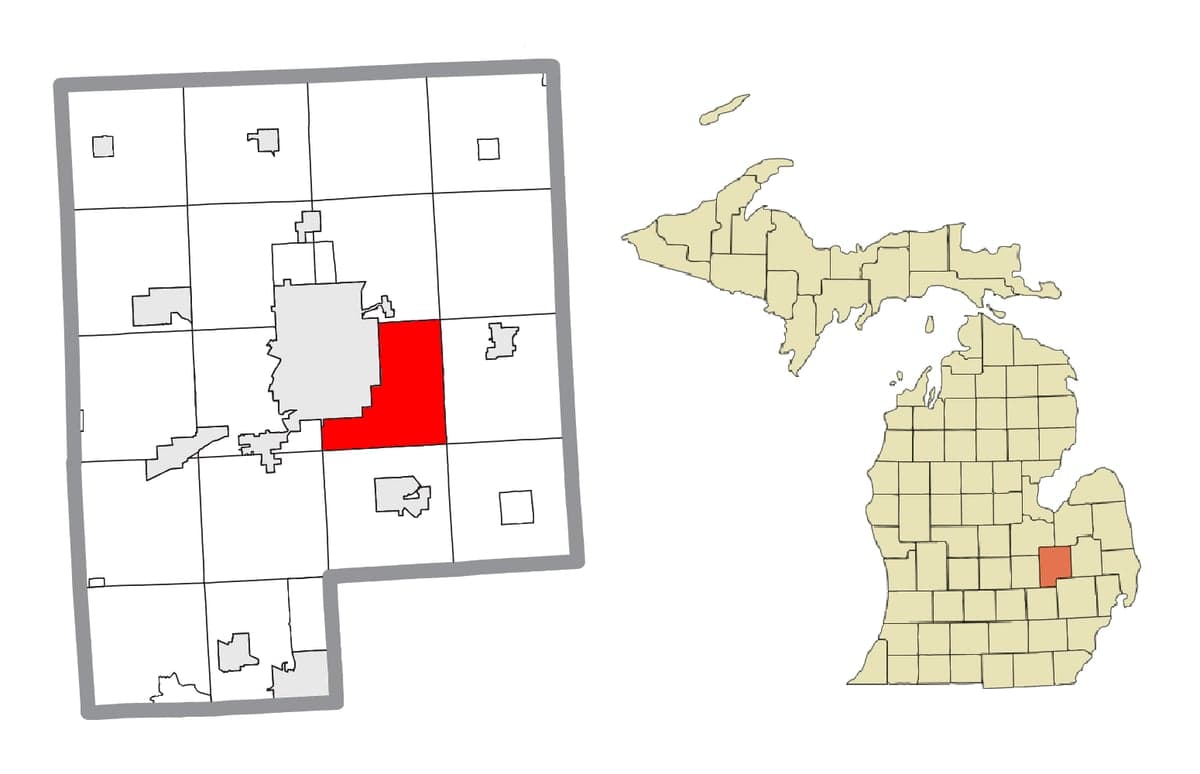
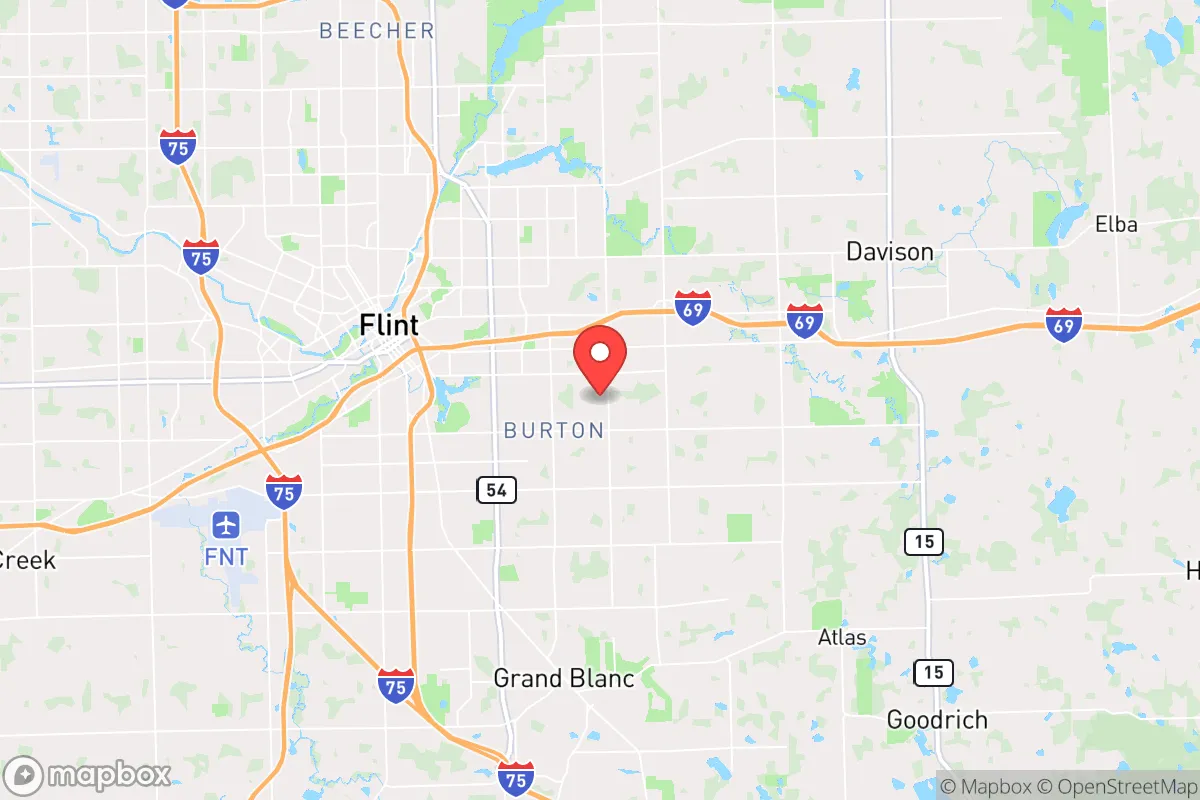
Burton, Michigan, offers a surprisingly resilient position for those prioritizing strategic relocation in an uncertain future, balancing proximity to essential resources with a buffer from the most acute risks of major urban centers. Located in Genesee County, roughly 60 miles northwest of Detroit and 30 miles east of Lansing, Burton sits within a region that has experienced significant economic restructuring since the decline of the auto industry, leaving behind a landscape of lower population density, affordable housing, and a more self-reliant local culture. For the survivalist-minded relocator, this area presents a mixed but workable picture: it is close enough to leverage the infrastructure of Flint and the I-75/I-69 corridors, yet far enough from the immediate blast zones and civil unrest epicenters of Detroit or Ann Arbor to offer a meaningful head start in a crisis. The key is understanding that Burton’s resilience is not inherent but earned through deliberate preparation and awareness of its specific vulnerabilities.
Geographic position and natural advantages for long-term security
Burton’s geographic position is its strongest asset for a prepper or survivalist. The city sits on the southern edge of the Flint River watershed, with access to abundant freshwater sources—a critical factor when municipal systems fail. The nearby Holloway Reservoir and the Shiawassee River provide reliable surface water for filtration and storage, while the region’s glacial till aquifers offer decent well potential for those on rural parcels. The terrain is gently rolling, with mixed hardwood forests and agricultural land that supports deer, turkey, and small game, making subsistence hunting viable. The climate is classic Midwest: cold winters that can be harsh but also serve as a natural barrier to movement and a test of preparedness, with summers warm enough for gardening. Crucially, Burton is not in a major floodplain and avoids the tornado alley risks of western Michigan, though severe thunderstorms and occasional ice storms are routine. The area’s low seismic risk and absence of wildfire danger mean fewer natural-disaster-driven evacuations, allowing a relocator to focus on human-caused threats.
Risks, exposures, and proximity to fallout-relevant landmarks
The most significant risk for Burton is its proximity to Flint, just 6 miles north, and the broader Detroit metropolitan area. Flint’s water crisis and ongoing infrastructure decay serve as a case study in how quickly a city can become uninhabitable due to governance failure—a scenario that could repeat with civil unrest or a mass casualty event. Detroit’s population density and history of civil disturbances mean that any major societal breakdown would likely see waves of refugees moving north along I-75, directly through Burton. The city is also within 50 miles of the Enrico Fermi Nuclear Generating Station in Monroe County, a potential fallout source in a catastrophic event, though prevailing winds generally carry contamination eastward. More immediate are the industrial hazards along the I-75 corridor: chemical plants, rail lines carrying hazardous materials, and the aging pipelines crossing the Flint River. For the survivalist, the key takeaway is that Burton is not a remote retreat but a suburban buffer zone—you are close enough to be affected by urban collapse but far enough to have a fighting chance if you have a plan for early movement or hardening. The presence of Bishop International Airport in Flint is a double-edged sword: it provides supply access in normal times but becomes a target for looting or military staging in a crisis.
Practical resilience for a relocator: food, water, energy, and defensibility
For a single individual or family looking to establish a resilient homestead, Burton offers a workable but not ideal baseline. The housing stock is predominantly post-war single-family homes on quarter-acre lots, with many properties featuring basements that can be reinforced for storm shelters or safe rooms. Property taxes in Genesee County are moderate compared to Oakland County to the east, and home prices remain among the lowest in Michigan for a city of this size—a clear advantage for freeing up capital for preps. Food resilience is achievable: the surrounding farmland produces corn, soybeans, and livestock, and local farmers’ markets operate in Burton and nearby Davison. However, the growing season is short (roughly 140 days), so serious food storage and greenhouse investment are necessary for year-round self-sufficiency. Water is the stronger suit, with multiple surface sources and a municipal system that, while aging, is less compromised than Flint’s. A well-installed on a rural parcel within the city limits (some exist) is a major asset. Energy resilience is a mixed bag: the grid is served by DTE Energy, which has a history of outages during storms, but solar potential is moderate due to cloud cover, and natural gas is widely available for backup heating. Defensibility is the weakest point. Burton’s suburban layout—grid streets, many cul-de-sacs, and proximity to major roads—makes it hard to secure a perimeter. A relocator should prioritize a property on a dead-end road with natural barriers (tree lines, creeks) and invest in a good fence, reinforced doors, and a neighborhood watch network. The local police force is small but professional; in a breakdown, you will rely on yourself and trusted neighbors.
The overall strategic picture for Burton is that of a viable but conditional relocation destination for the conservative-minded prepper. It is not a bug-out location in the wilderness sense, but it offers a realistic middle ground: affordable entry, decent water access, and a community that, while not uniformly prepared, has a blue-collar self-reliance that can be leveraged. The biggest threat is not natural disaster but human-driven instability from the nearby urban cores, meaning your plan must include a rapid evacuation route north toward the Upper Peninsula or a hardened-in-place strategy with strong community ties. If you are willing to invest in water filtration, a backup power system, and a solid security setup, Burton can serve as a base for weathering the next decade’s uncertainties. But do not mistake its affordability for safety—this is a place where preparation is not optional, it is the price of admission.

* Values derived from national, state, county, city and local statistics and may differ in a specific area. Last updated: 2026-04-30T06:41:07.000Z
Narrative content on this page is AI-generated and may contain mistakes. Verify any details that matter before acting on them.
ReloMaps may earn a commission from affiliate links at no extra cost to you.

