Photo: Wikipedia
Political ClimatePolitical Climate in Burton, MI
District shown is the primary district for this city’s centroid. Cities may span multiple districts.
Local Political AnalysisPolitical Analysis of Burton, MI
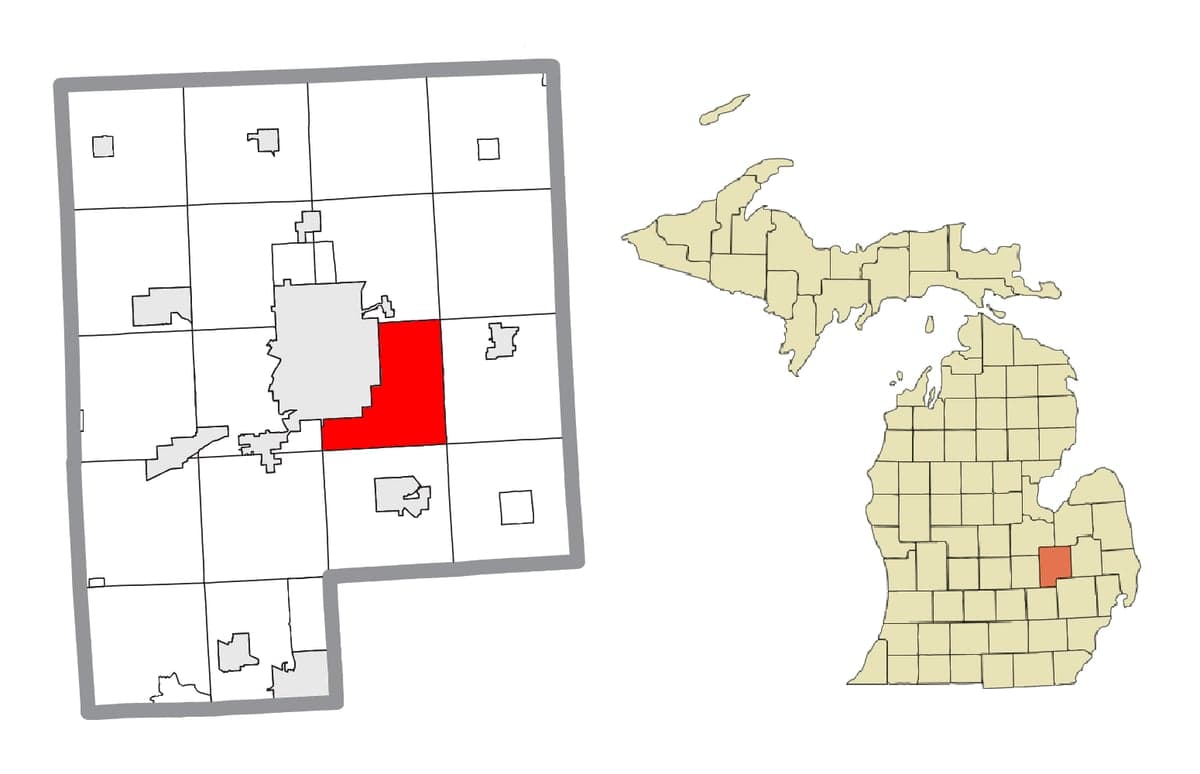
Burton, Michigan, has long been a solidly conservative community, and that hasn't changed much despite some national trends. The Cook PVI rating of R+1 tells you the district leans Republican, but it's not a lock—it's a place where the old-school, blue-collar values still hold strong, even if you see a few more yard signs for the other side than you used to. Back in the day, this was a straight-ticket Republican town, and while the margins have tightened, the core belief in limited government and personal responsibility is still the default setting for most folks you'll meet at the local diner or the hardware store. The real shift isn't in the voting booth as much as it is in the cultural pressure coming from Flint and the bigger cities nearby, which feels like a slow creep of ideas that don't really fit here.
How it compares
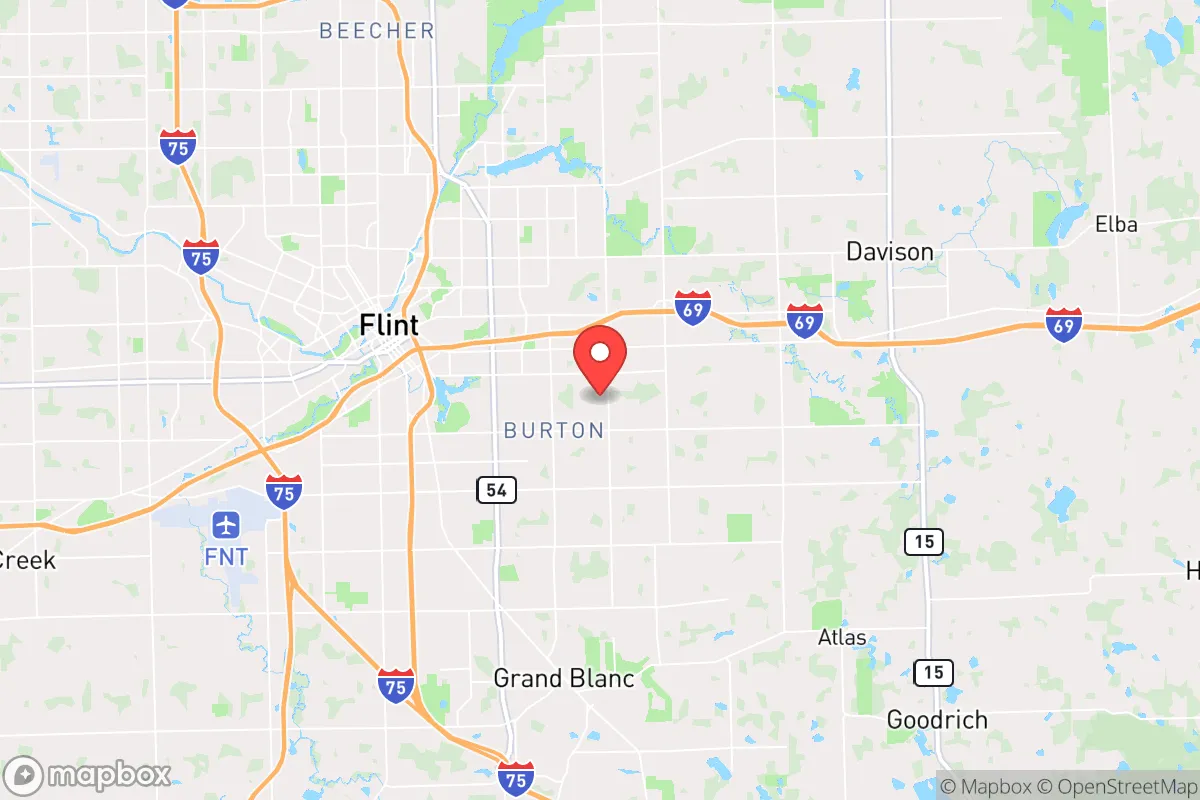
If you drive ten minutes north into Flint, you're in a completely different world—politically and culturally. Flint is deep blue, with all the baggage that comes with it: higher taxes, more government programs, and a lot of top-down decision-making that doesn't always respect local needs. Burton, by contrast, has always prided itself on being a place where you can still own a gun without a hassle, where the local government doesn't get in your business about what you do on your own property, and where the school board isn't pushing radical curriculum changes. Compare it to Grand Blanc, which is more of a purple suburb with a mix of professionals and transplants, and you'll see Burton holds its conservative line better. The surrounding Genesee County townships—like Davison and Atlas—are even more reliably red, but Burton is the buffer zone, the place where the rural conservative ethic meets the urban liberal push. That tension is real, and it's why you see more local elections fought over things like zoning laws and property rights than you do in the more homogeneous areas.
What this means for residents
For the people who live here, the political climate means you can generally count on local government to stay out of your hair. The city council and county commission have historically been cautious about new taxes and regulations, which keeps the cost of living reasonable and preserves that sense of independence. But there's a growing concern—and I hear it from neighbors all the time—about the state-level overreach coming out of Lansing. Things like stricter environmental rules on small businesses, mandates on local zoning, and the push for more "equity" initiatives in schools feel like they're being imposed from above, not reflecting what Burton families actually want. The biggest red flag is the slow erosion of Second Amendment protections; while Burton itself is still gun-friendly, the state legislature's recent moves on red flag laws and permitless carry restrictions have people worried that it's only a matter of time before local rights get trampled. If you value being left alone to live your life without a bureaucrat telling you how to heat your home or what to teach your kids, Burton is still a good bet—but you have to stay engaged, because the progressive tide is lapping at the edges.
Culturally, Burton is a place where the American Legion hall is still packed on Friday nights, where the high school football game is the big event, and where people wave at each other on the street. You won't find a lot of the performative activism or the constant political signage you see in the college towns. The big distinction is that Burton residents tend to vote with their feet—if the local government gets too heavy-handed, they just move a few miles out to a township where the rules are looser. That's the real check on power here: the threat of people leaving. For now, the conservative character holds, but it's a fight to keep it that way, and anyone moving in should know that the political battles here are less about national headlines and more about the quiet, everyday fights over your right to do what you want on your own land.

State Political ClimatePolitical Climate in Michigan
State Political AnalysisPolitical Environment in the State
Michigan has shifted from a reliably purple battleground to a state with a clear Democratic lean at the statewide level, but the picture is far more complicated than a simple partisan label. Over the past 20 years, the state has moved from being a classic swing state that went for Trump in 2016 to one where Democrats now control the governorship, both chambers of the legislature, and the state Supreme Court. The 2022 midterms cemented this shift, with Governor Gretchen Whitmer winning re-election and Democrats flipping both the state House and Senate for the first time in nearly four decades. However, this blue wave is driven almost entirely by the massive population centers of Southeast Michigan, while vast swaths of the state remain deeply conservative, creating a stark and growing political divide that any new resident needs to understand.
Urban vs. rural divide
The political map of Michigan is a tale of two states. The Democratic stronghold is anchored by Wayne County (Detroit), Oakland County, and Washtenaw County (Ann Arbor). These three counties alone delivered over 70% of the Democratic vote in 2022. Kent County (Grand Rapids), once a Republican bastion, has flipped to become a competitive swing county, with the city of Grand Rapids itself now reliably blue. In contrast, the rest of the Lower Peninsula and the entire Upper Peninsula are overwhelmingly Republican. Counties like Ottawa County (Holland), Livingston County (Howell), and Macomb County (north of Detroit) are now the front lines of the political war. Macomb County, a classic Reagan Democrat stronghold, voted for Trump twice and is a key indicator of working-class white voters abandoning the Democratic Party. The rural-urban split is so severe that a resident of Marquette in the Upper Peninsula lives in a political world completely different from someone in Ferndale or Royal Oak in metro Detroit.
Policy environment
The policy environment has shifted dramatically since Democrats took full control in 2023. The most consequential change was the repeal of Michigan's "right-to-work" law, which had been in place since 2012. This makes Michigan the first state in decades to repeal such a law, a major win for organized labor and a clear signal that the state is moving away from worker freedom. On taxes, the state has a flat income tax rate of 4.25%, but a 2023 law automatically triggered a temporary reduction to 4.05% due to surplus revenue—a rare bright spot for fiscal conservatives. However, the state's corporate tax structure remains complex, with a 6% corporate income tax plus a modified gross receipts tax. Education policy is a flashpoint: the state has eliminated the "Read by Grade Three" law that held back struggling readers, and has expanded LGBTQ+ nondiscrimination protections in schools. Election laws have been significantly loosened: Proposal 2 in 2022 enshrined nine days of early voting, automatic voter registration, and no-excuse absentee voting into the state constitution. For those concerned about election integrity, this represents a major expansion of mail-in voting without the voter ID requirements many other states have.
Trajectory & freedom
The trajectory over the past three years is clearly toward less personal freedom in several key areas. On gun rights, Michigan passed a "red flag" law (extreme risk protection order) in 2023, allowing courts to temporarily seize firearms from individuals deemed a threat to themselves or others, without a criminal conviction. The same package also mandated universal background checks for all firearm sales and required safe storage of firearms. For Second Amendment advocates, this is a significant erosion of rights. On medical freedom, the state has maintained strict COVID-era vaccine mandates for healthcare workers, and there is no religious or philosophical exemption for school vaccine requirements. Parental rights have been a battleground: the state has expanded the definition of "sex" in the Elliott-Larsen Civil Rights Act to include sexual orientation and gender identity, which critics argue could be used to override parental authority in school settings regarding gender identity discussions. Property rights remain relatively strong, with no statewide rent control and a relatively straightforward property tax system (the "Headlee Amendment" caps annual assessment increases at the rate of inflation or 5%, whichever is less). However, the state's regulatory environment for new housing construction is increasingly burdensome, with new energy codes and environmental review requirements adding costs.
Civil unrest & political movements
Michigan has been a national hotspot for political activism and civil unrest. The 2020 "Wolverine Watchmen" kidnapping plot against Governor Whitmer exposed a dangerous fringe of anti-government extremism, but it also galvanized the conservative grassroots. The "Operation Gridlock" protests at the state capitol in 2020, where armed protesters entered the building, remain a defining image. Since then, the political landscape has seen the rise of the "Michigan Conservative Coalition" and local "Moms for Liberty" chapters, particularly in Macomb County and Ottawa County. On the left, the "Michigan Democratic Party" has been energized by the "Squad"-aligned "Rashida Tlaib" faction in Detroit. Immigration politics are less visible than in border states, but the city of Ann Arbor has declared itself a "sanctuary city," and the state has expanded driver's licenses to undocumented immigrants. Election integrity remains a raw nerve: the 2020 election saw widespread allegations of irregularities in Detroit's absentee ballot counting process, leading to ongoing distrust among conservatives. The 2024 election cycle saw a massive increase in partisan poll watchers and legal challenges, with the state's new early voting system being tested for the first time in a presidential election.
Projection
Looking ahead five to ten years, the demographic trends favor continued Democratic control at the state level. The population of Southeast Michigan is growing, while rural counties are stagnating or shrinking. The in-migration of younger, college-educated workers to Grand Rapids and Ann Arbor will continue to shift those areas leftward. However, the conservative base is not going away—it's consolidating in the exurbs and rural areas. The key battleground will be the "blue wall" counties of Macomb, Kent, and Ottawa. If Republicans can hold Macomb and flip Kent back, they can win statewide again. But the structural advantages for Democrats—control of redistricting, a friendly state Supreme Court, and a well-funded party machine—are formidable. Expect more progressive policies on climate (the state has a 100% clean energy mandate by 2040), labor (further expansion of collective bargaining rights), and social issues (codification of abortion rights, which are already protected by the state constitution). For a conservative moving in, the state will likely become more expensive, more regulated, and more culturally aligned with the coastal blue states over the next decade.
For a new resident, the bottom line is this: Michigan offers a beautiful natural environment and a relatively low cost of living, but you are moving into a state where the political winds are blowing strongly leftward. If you live in Traverse City or Holland, you'll find like-minded conservative communities, but you'll be governed by a state legislature and governor who are actively pursuing an agenda that prioritizes union power, gun control, and expansive voting laws. Your best strategy is to get involved locally—school boards, city councils, and county commissions are where the real battles over your daily freedoms are fought. The state's trajectory is not irreversible, but it will require sustained conservative engagement at every level of government to turn the ship around.
* Values derived from national, state, county, city and local statistics and may differ in a specific area. Last updated: 2026-04-30T06:41:07.000Z
Narrative content on this page is AI-generated and may contain mistakes. Verify any details that matter before acting on them.
ReloMaps may earn a commission from affiliate links at no extra cost to you.

