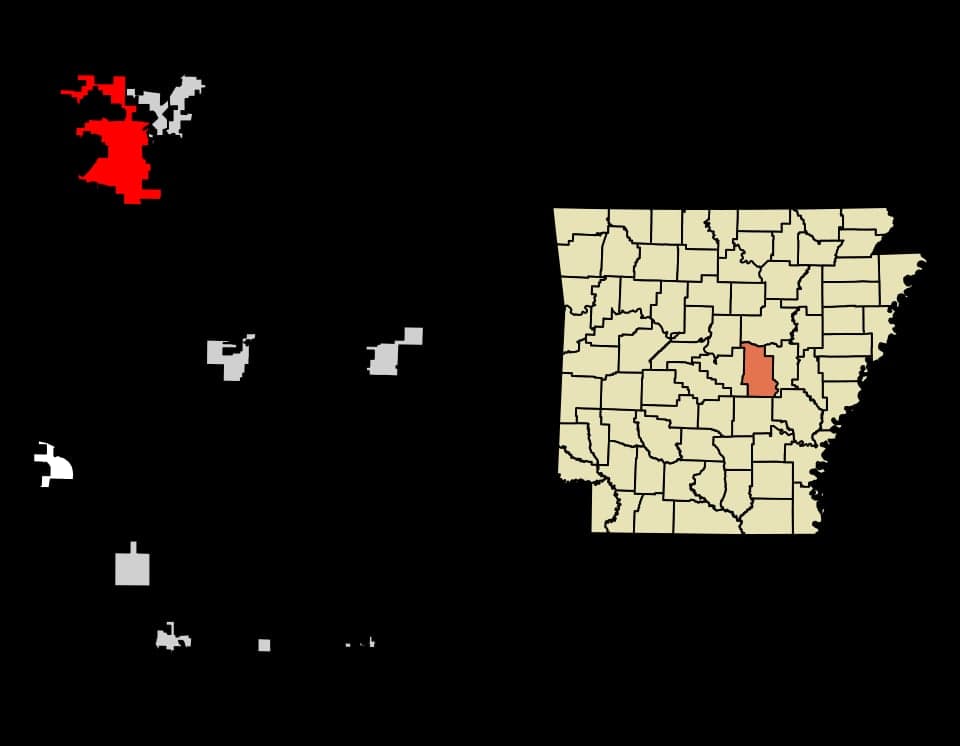
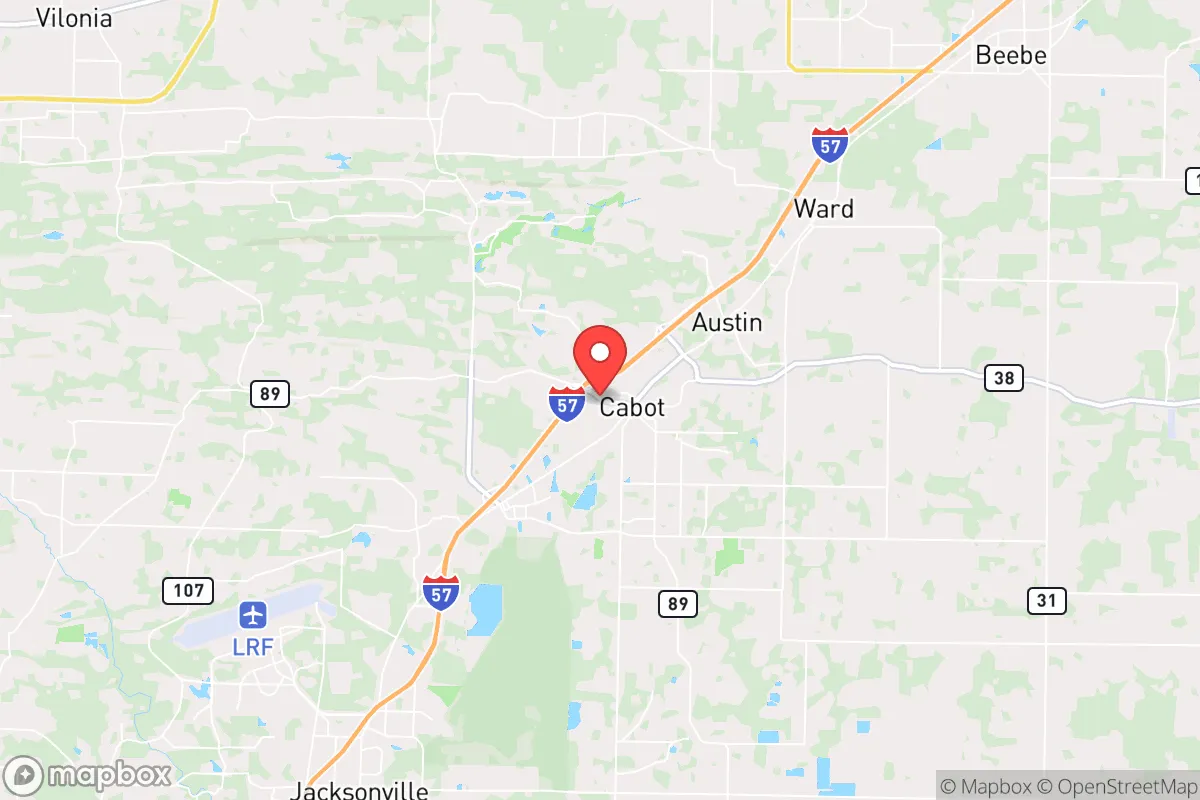
Photo: Wikipedia
Personal Sovereignty in Cabot, AR
Viable for self-reliance. Generally workable, though some barriers may limit total independence.
What does Personal Sovereignty tell us?
Personal Sovereignty measures your capacity for self-reliance and independence with minimal government friction. Higher scores mean fewer barriers between you and the way you want to live... but it assumes you have the space you need and good neighbors.
What does this tell us?
Personal Sovereignty measures your capacity for self-reliance and independence with minimal government friction. Higher scores mean fewer barriers between you and the way you want to live... but it assumes you have the space you need and good neighbors.
State Policy
Energy independence: Importer (35% of energy produced in-state)
Personal Liberty
Homesteading

Personal Liberty Analysis
Cabot, Arkansas, offers a notably high degree of personal sovereignty compared to many parts of the country, particularly for those who prioritize minimal government interference in daily life. The city and surrounding Lonoke County operate within a state framework that consistently ranks among the most liberty-oriented in the nation, with low taxes, permissive gun laws, and a cultural expectation of self-reliance. For the survivalist or prepper mindset, Cabot represents a practical middle ground—close enough to a major metro (Little Rock, 30 minutes south) to access resources, but far enough removed to avoid the regulatory creep and cultural drift that erode autonomy in larger cities. The key question is whether the local governance and community norms actually back up the state-level promises, and the answer is largely yes, with some caveats around suburban growth pressures.
Tax burden and regulatory posture: what keeps more money in your pocket
Arkansas is a right-to-work state with no state-level income tax on capital gains and a flat individual income tax rate of 4.4% as of 2025, with further reductions scheduled. Cabot’s total sales tax rate is 9.5% (state + county + city), which is moderate for the region, but property taxes are low—Lonoke County’s millage rate averages around 45 mills, meaning a $250,000 home carries roughly $1,125 annually in property tax. This is a fraction of what you’d pay in states like Illinois or California. More importantly, the regulatory environment is thin: no state-level building codes in unincorporated areas, minimal zoning enforcement in the county, and no state income tax on retirement or Social Security benefits. For a prepper, this means you can invest in land, structures, and supplies without the government taking a large cut or dictating how you build. The state’s business climate is similarly hands-off, with no corporate income tax on pass-through entities and a low 1% franchise tax. The trade-off is that services are lean—roads, schools, and emergency response are functional but not lavish, which aligns with a self-reliant mindset that doesn’t expect the state to solve problems.
Self-defense and gun law specifics: what the Second Amendment looks like on the ground
Arkansas is a constitutional carry state, meaning no permit is required to carry a concealed or open firearm for anyone 21 or older who can legally possess a gun. Cabot’s local government does not impose additional restrictions beyond state law, and the city has a strong pro-Second Amendment culture—you’ll see firearms openly carried in hardware stores and restaurants without raising eyebrows. The state also has a “stand your ground” law with no duty to retreat, and Castle Doctrine protections extend to vehicles and occupied structures. For the survivalist, this is critical: you can defend your home, family, and property without legal second-guessing. Additionally, Arkansas has preemption laws that prevent cities like Cabot from enacting their own gun bans or magazine limits, so local politics can’t erode your rights. The only practical limitation is that private sales between individuals are legal, but federal background checks apply at licensed dealers. If you’re building a stockpile, there are no state-level restrictions on ammunition purchases or magazine capacity. This is one of the most firearm-friendly environments in the South, comparable to Texas or Oklahoma but with less urban pressure to restrict.
Self-reliance and homesteading viability: lot sizes, zoning, and off-grid feasibility
Cabot’s zoning is relatively permissive for a suburb of its size (population ~27,000), but the real opportunity lies in the surrounding unincorporated areas of Lonoke County. Minimum lot sizes in the county can be as small as 1 acre in some subdivisions, but many parcels outside city limits are 5 to 40 acres with no zoning at all—you can build a house, barn, and workshop without permits beyond basic septic and electrical inspections. Off-grid living is feasible: Arkansas has no state law prohibiting rainwater collection, and solar panels are common, though net metering rules are less generous than in some states (utilities pay avoided cost, not retail rate). Well water is standard in rural areas, and septic systems are regulated but not prohibitively expensive. The county does not enforce building codes on agricultural structures, so you can erect a pole barn or greenhouse without red tape. The main constraint is that Cabot itself is growing, and the city has started enforcing stricter subdivision regulations for new developments—so if you want true autonomy, buy land in the county, not within city limits. For a prepper, this means you can have a garden, raise chickens or goats (allowed in county, restricted in some city neighborhoods), and store supplies without HOA interference, provided you avoid the few subdivisions with covenants.
Personal liberties: parental rights, medical autonomy, speech, and property
Arkansas has been a battleground for parental rights, and the state legislature has passed laws requiring schools to notify parents of curriculum changes and prohibiting certain medical procedures for minors without parental consent. Cabot’s school district (Cabot Public Schools, ~12,000 students) is generally conservative, with school board elections reflecting community values around parental involvement. Medical autonomy is mixed: Arkansas has no state-level vaccine mandate for adults, and COVID-era restrictions were minimal compared to coastal states, but the state does require certain childhood vaccines for school attendance (with medical and religious exemptions available). On speech, there are no local ordinances restricting political expression, and the city has not enacted any “hate speech” or social media regulations—you can fly any flag, post any sign, and speak your mind without fear of government retaliation. Property rights are strong: Arkansas is a “measure of damages” state for eminent domain, meaning you can recover litigation costs if the government tries to take your land, and there is no statewide rent control or landlord licensing scheme. The biggest threat to personal liberty here is not the state or local government, but the potential for federal overreach—but Cabot’s local officials are generally hostile to federal mandates, as seen in their resistance to EPA water rules and ATF regulatory changes.
Overall, Cabot offers a level of personal sovereignty that is rare in the modern United States, especially for a town within commuting distance of a state capital. The tax burden is low, the gun laws are among the best in the nation, and the regulatory environment allows for genuine self-reliance—whether that means homesteading, homeschooling, or simply living without government intrusion. The main risks are suburbanization: as Cabot grows, there is pressure to adopt more restrictive zoning and HOA-style governance, but the county remains a refuge. Compared to places like Austin, Texas, or Denver, Colorado, where local governments actively erode personal freedoms, Cabot feels like a holdout. For the survivalist or prepper who wants to be left alone to prepare, raise a family, and defend their home, this is one of the better options in the South—just buy your land outside city limits and stay engaged with local politics to keep it that way.

* Values derived from national, state, county, city and local statistics and may differ in a specific area. Last updated: 2026-05-03T20:21:49.000Z
Narrative content on this page is AI-generated and may contain mistakes. Verify any details that matter before acting on them.
ReloMaps may earn a commission from affiliate links at no extra cost to you.

