Photo: Wikipedia
Personal Sovereignty in Stanislaus County
Moderate friction. Expect trade-offs in some aspect of personal liberty and independence.
What does Personal Sovereignty tell us?
Personal Sovereignty measures your capacity for self-reliance and independence with minimal government friction. Higher scores mean fewer barriers between you and the way you want to live... but it assumes you have the space you need and good neighbors.
What does this tell us?
Personal Sovereignty measures your capacity for self-reliance and independence with minimal government friction. Higher scores mean fewer barriers between you and the way you want to live... but it assumes you have the space you need and good neighbors.
State Policy
Energy independence: Importer (33% of energy produced in-state)
Personal Liberty
Homesteading

Personal Liberty Analysis
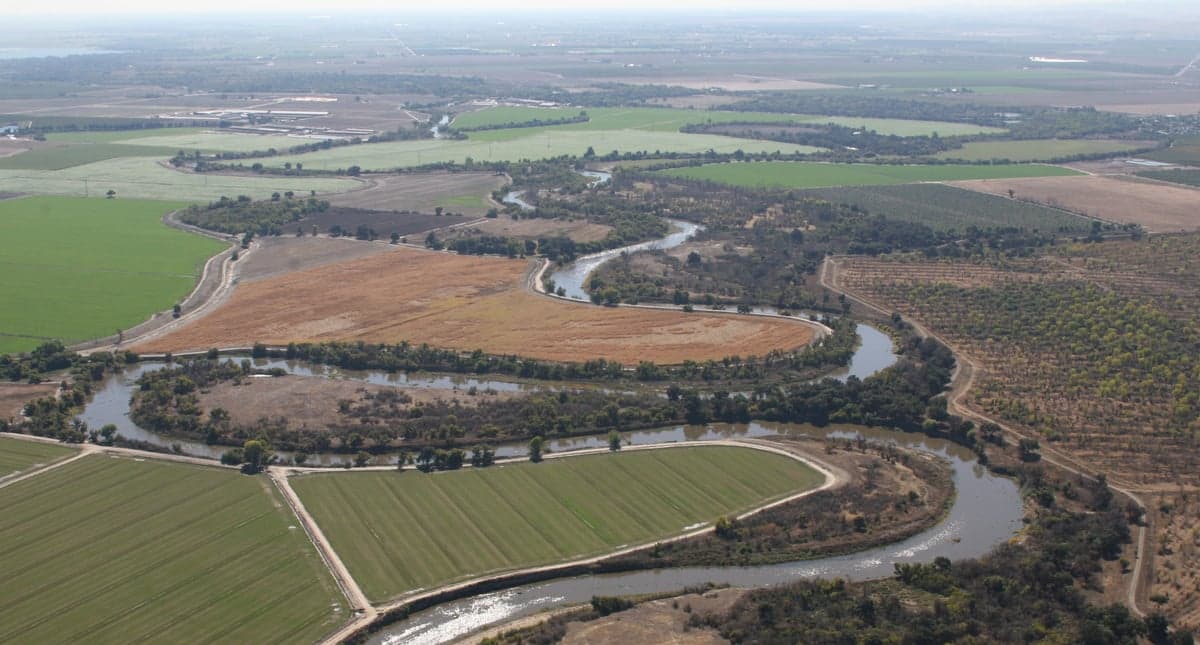
Stanislaus County offers a mixed but improving landscape for personal sovereignty compared to California’s coastal strongholds, with the Central Valley’s agricultural roots and rural pockets providing more breathing room than the state’s regulatory-heavy metros. While you’re still under Sacramento’s thumb on many fronts, the day-to-day autonomy here—especially in towns like Oakdale, Patterson, and Waterford—feels noticeably freer than in the Bay Area or Los Angeles. For a conservative-leaning individual or family weighing relocation, the key question isn’t whether California is a liberty paradise (it isn’t), but whether Stanislaus County’s specific mix of tax burden, gun culture, homesteading potential, and local enforcement attitudes gives you enough runway to live on your own terms. The answer is cautiously optimistic, provided you pick your neighborhood wisely and accept that some battles with the state are unavoidable.
Tax burden and regulatory posture in Stanislaus County vs. California’s coastal zones
California’s statewide tax burden remains heavy—top income tax rate of 13.3%, sales tax often exceeding 8.5%, and property taxes capped by Prop 13 but still significant on new purchases. Stanislaus County doesn’t escape this, but the local regulatory posture is notably more lenient than in coastal counties. The county’s Board of Supervisors has pushed back on some state housing mandates and environmental overreach, and cities like Ceres and Riverbank have maintained more permissive zoning for small-scale agriculture and home-based businesses than you’d find in, say, Marin or Santa Clara. Property taxes here average around 0.77% of assessed value, slightly below the state median, and the overall cost of living is roughly 20% lower than the California average. However, the state’s regulatory creep still hits hard—new septic system rules, strict water use limits, and California Environmental Quality Act (CEQA) hurdles can snarl even modest construction projects. If you’re coming from a low-tax state like Texas or Nevada, the sticker shock is real; but within California, Stanislaus County is a relative haven for those who want fewer layers of bureaucracy between them and their property.
Self-defense and gun law specifics in Stanislaus County’s rural and urban zones
California’s gun laws are among the strictest in the nation—universal background checks, a 10-day waiting period, an assault weapons ban, and a roster of approved handguns that limits new purchases. Stanislaus County, however, is a concealed carry friendly island relative to the state’s coastal counties. The Stanislaus County Sheriff’s Office, under Sheriff Jeff Dirkse, has historically issued CCW permits on a “shall-issue” basis in practice, even before the 2024 Bruen-inspired reforms forced the state to loosen its “good cause” requirement. Wait times can still be 6-12 months, but approval rates are high for law-abiding applicants. In contrast, Modesto’s city limits see more aggressive enforcement of state gun laws—local police are more likely to run serial numbers during traffic stops—while Oakdale and Patterson are known for a more hands-off culture where responsible gun owners face less hassle. Magazine capacity limits (10 rounds) and the state’s red flag law remain in effect countywide, so you can’t escape those. But for daily carry and home defense, Stanislaus County offers a pragmatic sheriff’s office that respects the Second Amendment far more than counterparts in San Francisco or Los Angeles.
Self-reliance and homesteading viability: lot sizes, zoning, and off-grid feasibility
For preppers and homesteaders, Stanislaus County’s rural fringe is where the real sovereignty lives. Waterford and Hughson offer agricultural-residential zoning that allows for small-scale livestock, gardens, and even limited commercial farming on lots as small as one acre. The county’s general plan permits accessory dwelling units (ADUs) and barns with minimal red tape compared to coastal counties, and off-grid solar is feasible—PG&E is the dominant utility, but net metering policies and state solar mandates actually make it easier to disconnect partially. The catch is water: the county sits atop the Tuolumne River groundwater basin, but well drilling permits are getting harder to obtain due to the Sustainable Groundwater Management Act (SGMA). In unincorporated areas near Newman, some parcels still allow rainwater catchment and composting toilets without county interference, but you’ll want to verify zoning with the planning department before buying. Lot sizes in the county’s agricultural preserve zones can range from 5 to 160 acres, giving serious homesteaders room to operate. The biggest threat to off-grid living is California’s building code—any permanent structure must meet Title 24 energy standards, and tiny homes on wheels are often treated as RVs, limiting their legality as primary residences. Still, for those willing to work within the system, Stanislaus County’s rural pockets offer a viable middle ground between total autonomy and California’s regulatory reality.
Personal liberties: parental rights, medical autonomy, speech, and property
Parental rights in Stanislaus County are a mixed bag. The county’s school boards, particularly in Oakdale and Riverbank, have pushed back on state curriculum mandates regarding gender identity and critical race theory, with some districts adopting parental notification policies that align with conservative values. However, California’s state law (AB 1955) now prohibits schools from requiring staff to disclose a child’s gender identity to parents, so local resistance is limited. On medical autonomy, the county has a strong network of private-practice physicians who are more willing to work with patients on alternative treatments than in HMO-dominated coastal areas, but vaccine mandates for school attendance remain state law. Free speech is generally respected in public forums, though Modesto’s city council has occasionally restricted public comment periods. Property rights are the brightest spot: the county’s right-to-farm ordinance protects agricultural operations from nuisance lawsuits, and zoning variances are more readily granted than in urban counties. The biggest property concern is the state’s rent control laws (AB 1482), which apply to multi-unit rentals but not single-family homes, so owning your land outright remains the best hedge against government overreach.
Overall, Stanislaus County ranks as a moderate-to-strong choice for personal sovereignty within California, but it’s not a libertarian paradise. You’ll still pay high state taxes, navigate California’s gun restrictions, and deal with water regulations that limit full off-grid independence. Compared to the Bay Area or Los Angeles, the county offers a 30-40% improvement in day-to-day autonomy—lower regulatory friction, a sheriff who respects the Second Amendment, and rural zoning that supports self-reliance. Compared to states like Idaho or Montana, it’s a compromise: you get California’s economy and climate but with more bureaucratic overhead. For the strategic relocator who values family, freedom, and preparedness, Stanislaus County’s Oakdale, Waterford, and Patterson are the best bets for carving out a sovereign life within the Golden State’s constraints.

* Values derived from national, state, county, city and local statistics and may differ in a specific area. Last updated: 2026-05-30T05:04:31.000Z
Narrative content on this page is AI-generated and may contain mistakes. Verify any details that matter before acting on them.
ReloMaps may earn a commission from affiliate links at no extra cost to you.

