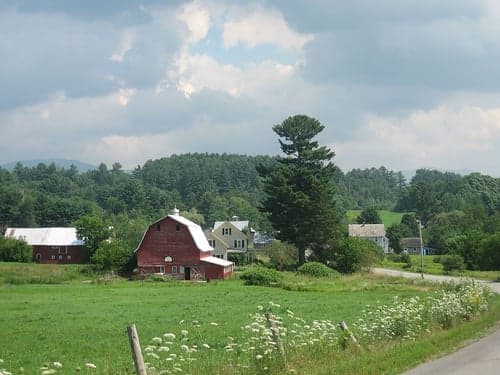
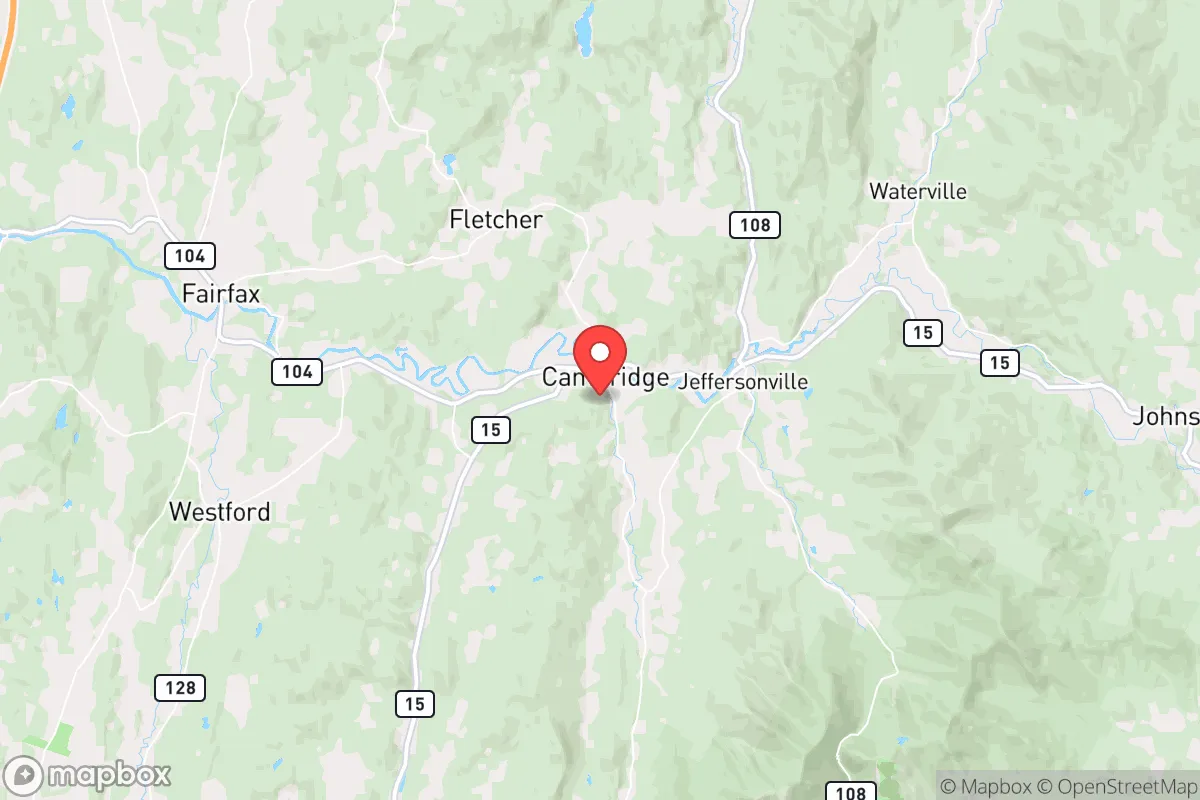
Photo: Wikipedia
Quality of Life in Cambridge, VT
A high quality of life with strong walkability, manageable living costs, healthy neighborhood signals, and solid amenity access.
What does Quality of Life tell us?
Quality of Life blends cost of living, nearby amenities, socioeconomic signals, and neighborhood character. City-level scores represent the whole municipality; individual neighborhoods can differ.
What does this tell us?
Quality of Life blends cost of living, nearby amenities, socioeconomic signals, and neighborhood character. City-level scores represent the whole municipality; individual neighborhoods can differ.
Cost of Living
10% below national average
The Real Cost of Living in Cambridge, VT for 2026
| Tier | Individual | Family (4) |
|---|---|---|
| Survival | $17k | $33k |
| Comfortable | $47k | $69k |
| Luxury | $84k+ | $131k+ |
| Elite (Top 5%) | $99k+ | $154k+ |
73%
The Area Signal
A metric tracking the socioeconomic signals of the area.
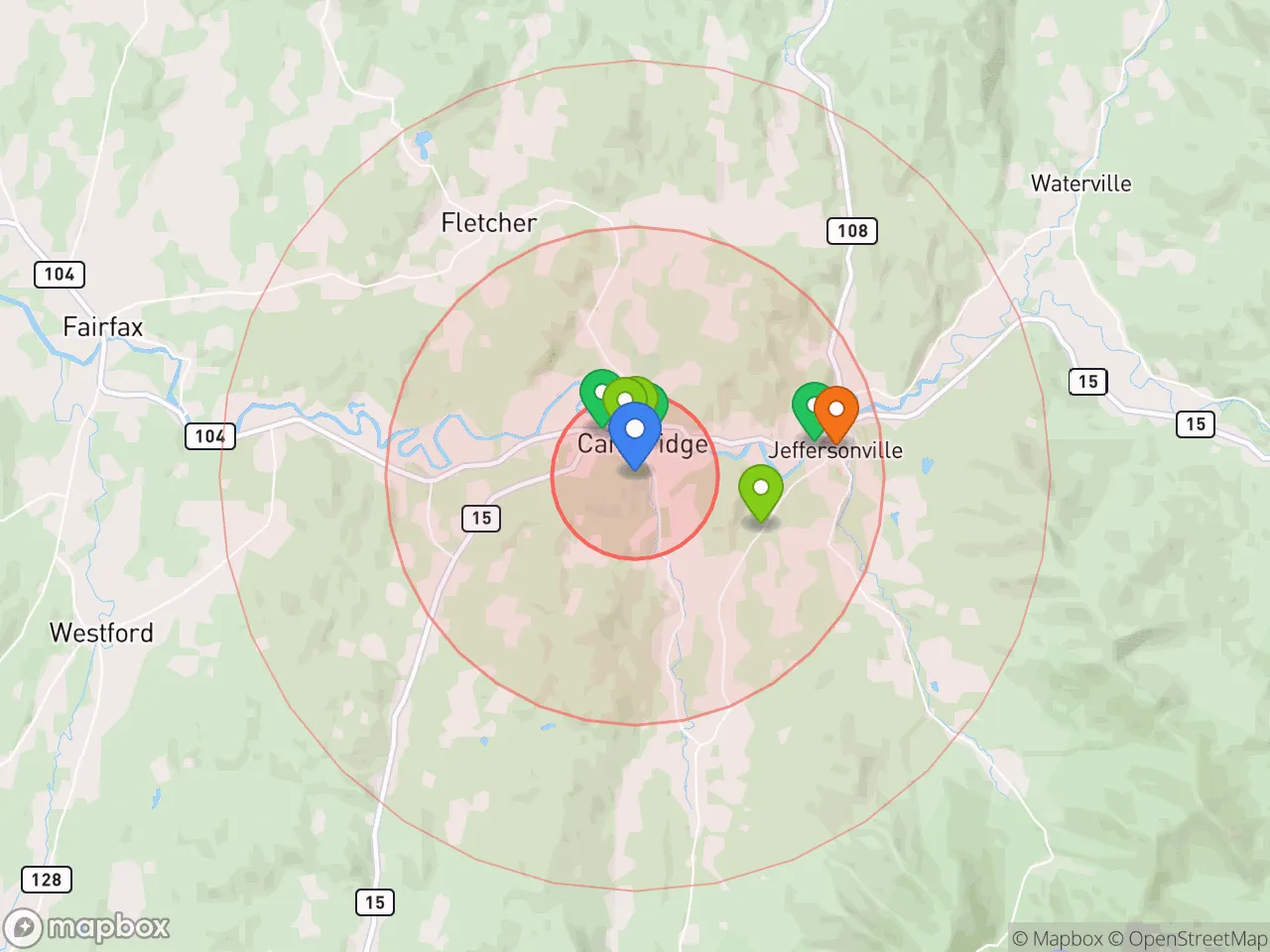
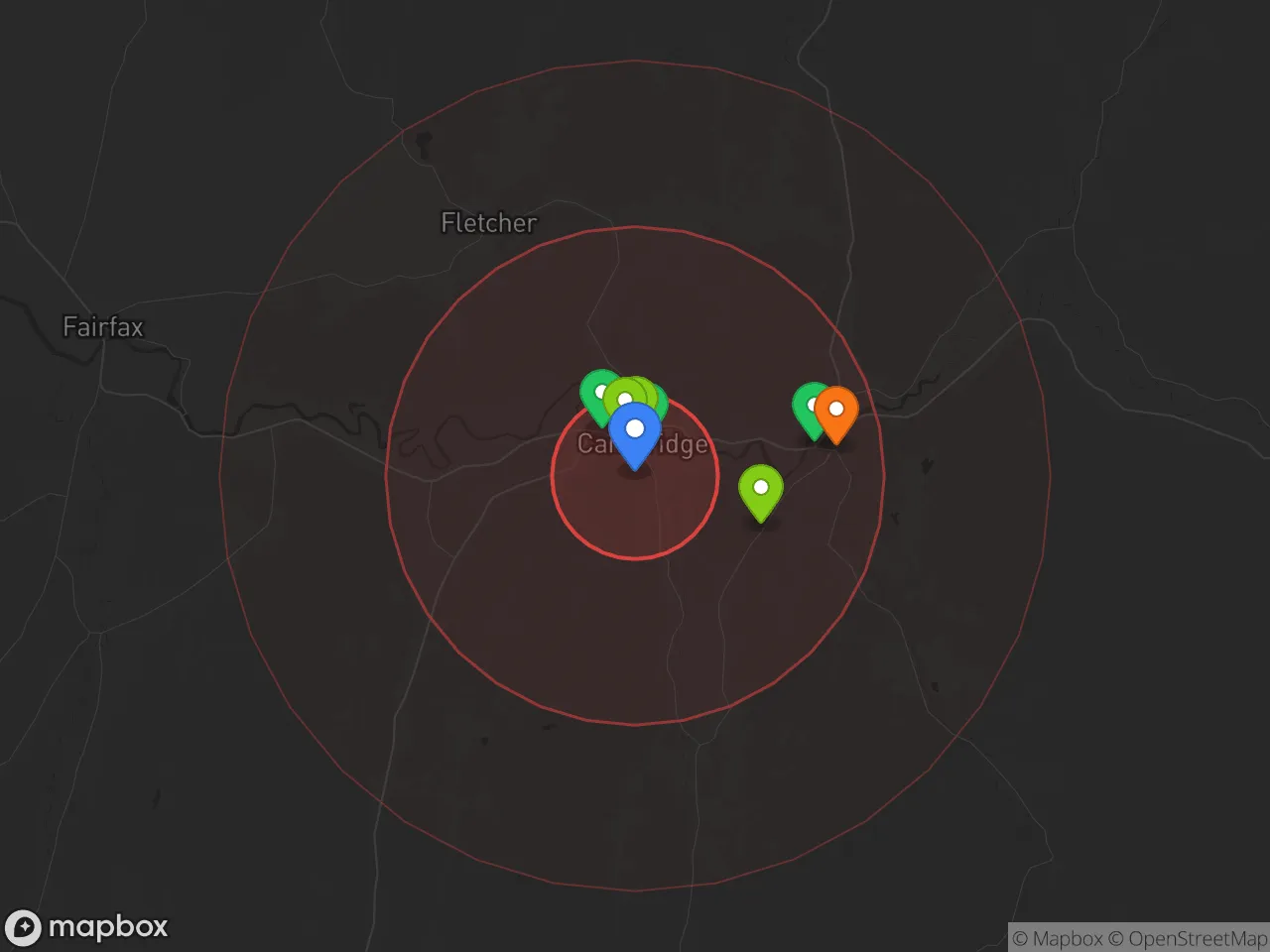
Hobbies
Explore the areaGroceries
0 within 10 miles
Gas
6 within 10 miles
Hospital
3 within 20 miles
Airport
PDX — Portland International Jetport
Post Office
USPS — Cambridge, VT
Critical Amenities
Quality-of-Life Analysis
Cambridge, Vermont, offers a quality of life defined by quiet rural affluence, strong community ties, and a cost of living that undercuts much of the broader Burlington metro area. With a cost-of-living index of 90 (10% below the U.S. average), the village attracts a mix of remote professionals, second-home owners, and families seeking space and safety without the premium prices of Stowe or Burlington. The population skews older and more educated than the state average, and the area’s character is shaped by working farms, forested ridgelines, and a deliberate pace of life that prioritizes privacy over convenience.
How housing costs and affordability compare to nearby towns
Cambridge’s housing market is notably more affordable than its high-profile neighbors, yet still reflects the region’s desirability. The median home value sits at $241,100, roughly $100,000 less than the median in Stowe and about $60,000 below the Burlington metro average. Median rent is $1,090, which is manageable for a two-income household but still above the state median of $950. The trade-off for this relative affordability is inventory: homes in Cambridge sell quickly, often within 30 days, and the market leans toward older single-family homes on acreage rather than new subdivisions. Property taxes in Lamoille County average about 1.8% of assessed value, slightly above the national norm but typical for Vermont. For renters, options are limited to a handful of apartment buildings and duplexes in the village center, with most rentals concentrated near the intersection of VT-108 and VT-15.
What daily life is like for families and remote workers
Daily life in Cambridge revolves around a small but functional village core. The Cambridge Village Market serves as the de facto town center, offering groceries, deli sandwiches, and a pharmacy. For more extensive shopping, residents drive 15 minutes south to Jeffersonville or 30 minutes to Williston’s retail corridor. The Lamoille South Supervisory Union operates Cambridge Elementary School (grades K-5), which enrolls about 200 students and maintains a 12:1 student-teacher ratio. Middle and high school students attend Lamoille Union Middle/High School in Hyde Park, a 20-minute drive. Internet access is a strong point: Consolidated Communications offers fiber-optic service to most of the village, with speeds up to 1 Gbps, making remote work viable. Outdoor amenities define recreation: the Lamoille River runs through town for fishing and kayaking, and the Cambridge Rail Trail connects to Jeffersonville for walking and cycling. Winter brings cross-country skiing at nearby Smugglers’ Notch and downhill skiing at Stowe Mountain Resort, both within a 25-minute drive. Dining options are limited to a handful of casual spots—the Cambridge Village Market’s deli, the 158 Main restaurant in Jeffersonville, and seasonal farm stands—so most residents cook at home or plan meals around trips to Burlington.
Cambridge is best suited for those who value space, quiet, and access to nature over urban amenities and nightlife. Remote workers and families with school-age children will find the most to appreciate, given the strong elementary school, reliable high-speed internet, and safe streets. Retirees and second-home buyers also fit well, drawn by the lower cost of living compared to Stowe and the proximity to year-round outdoor recreation. Those who need walkable shopping, frequent dining variety, or a robust social scene will likely find Cambridge too quiet. The village rewards self-sufficiency—a car is essential, and most errands require a 15- to 30-minute drive—but for the right household, the trade-off yields a high quality of life at a price that remains attainable in an increasingly expensive region.

Crime in Cambridge, VT
Generally safer than 71% of comparable U.S. locations.
Violent CrimeViolent Crime Analysis
Property CrimeProperty Crime Analysis
Crime Analysis
Cambridge, Vermont, presents a crime profile that warrants close attention from potential residents, particularly given its location within the Burlington-South Burlington metropolitan area. The town's violent crime rate stands at 213.8 incidents per 100,000 residents, while property crime reaches 1,415.9 per 100,000, figures that place it above many rural Vermont communities and demand a clear-eyed assessment of local safety conditions.
Crime in context
When compared to national benchmarks, Cambridge's violent crime rate of 213.8 per 100,000 is roughly 60% higher than the U.S. average of approximately 133 per 100,000, and significantly exceeds Vermont's statewide violent crime rate of about 170 per 100,000. Property crime in Cambridge, at 1,415.9 per 100,000, also runs well above the national average of roughly 1,100 per 100,000 and is nearly double Vermont's statewide property crime rate of approximately 750 per 100,000. These elevated numbers are consistent with patterns seen in small towns adjacent to larger metro areas, where crime pressures from the urban core can spill over into surrounding communities. The Burlington metro area, including Cambridge, has experienced these trends in part due to progressive prosecutorial policies in Chittenden and surrounding counties, where district attorneys and judges have increasingly adopted diversion programs and reduced pretrial detention. While intended to reduce incarceration, these policies have in practice resulted in more offenders remaining on the street, contributing to repeat offenses and a diminished deterrent effect that directly impacts public safety.
What residents experience
For those living in Cambridge, the practical impact of these crime rates means taking standard precautions is essential. Property crime—particularly theft from vehicles, burglary of seasonal homes, and package theft—is the most common concern, with the 1,415.9 rate translating to roughly 14 incidents per 1,000 residents annually. Violent crime, while less frequent, is not negligible: the 213.8 rate equates to about 2 violent incidents per 1,000 residents per year, including aggravated assault and, less commonly, robbery. Residents report that unlocked cars and outbuildings are frequent targets, and the town's rural character means police response times can be longer than in denser areas. The presence of a progressive justice system in the region means that even when arrests are made, offenders often face minimal consequences, with many released on citation or given short sentences that do little to prevent reoffending. This creates a cycle where property crime persists, and victims feel the system offers them little recourse.
Neighborhood-level variation in Cambridge is limited but notable. The village center around Route 15 and the area near the Lamoille River see slightly higher property crime due to easier access and more transient traffic. Outlying residential roads and farm properties, while quieter, face higher risks of burglary due to isolation. The town's proximity to the Stowe resort corridor also means seasonal crime spikes during tourist seasons. Overall, Cambridge requires a higher level of vigilance than many Vermont towns, with the understanding that the local and regional justice system's progressive orientation does not prioritize victim protection or public safety over offender rehabilitation.
* Values derived from national, state, county, city and local statistics and may differ in a specific area. Last updated: 2026-04-30T13:05:00.000Z
Narrative content on this page is AI-generated and may contain mistakes. Verify any details that matter before acting on them.
ReloMaps may earn a commission from affiliate links at no extra cost to you.

