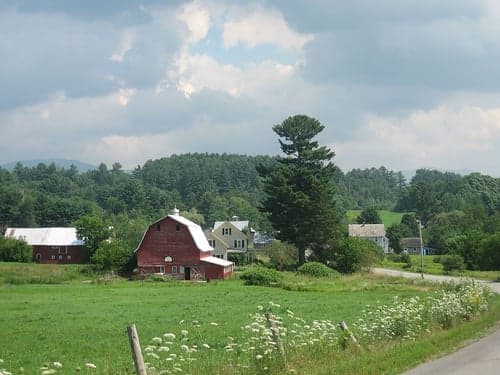
Photo: Wikipedia
Political ClimatePolitical Climate in Cambridge, VT
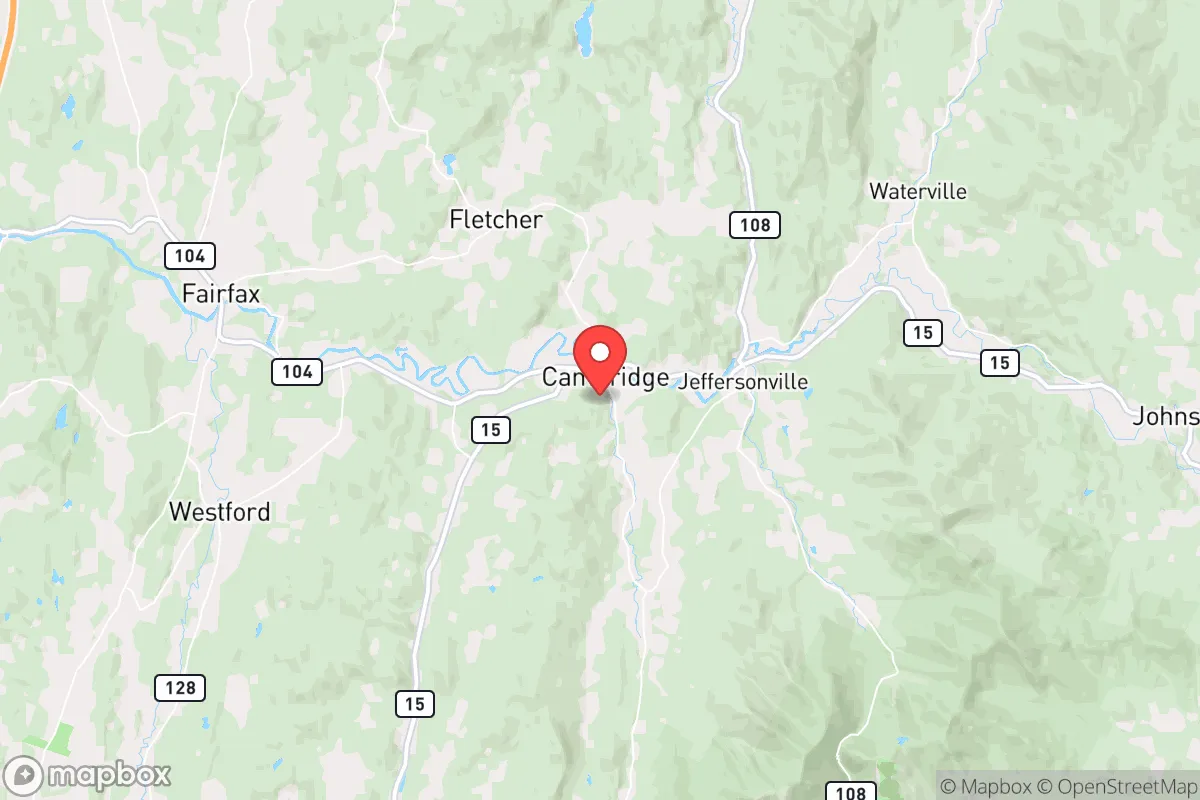
District shown is the primary district for this city’s centroid. Cities may span multiple districts.
Inherited from parent state — no local data available.
Local Political AnalysisPolitical Analysis of Cambridge, VT
Cambridge, Vermont, leans heavily Democratic, with a Cook PVI of D+17, meaning it votes about 17 points more Democratic than the national average. That’s a pretty stark number, and it’s not just a recent trend—it’s been building for a while. If you’re looking at the political landscape here, you’re seeing a place that’s shifted noticeably left over the last decade, especially compared to the more moderate or even conservative pockets you’ll find in towns like Jeffersonville or Waterville just a few miles away. The local government and school boards have increasingly embraced progressive policies, which can feel like a departure from the more independent, live-and-let-live vibe that used to define this area.
How it compares
Drive ten minutes north to Swanton or east to Hyde Park, and you’ll hit towns that still lean Republican or are at least purple. Cambridge, though, is a different animal. It’s part of Lamoille County, which overall is a bit more balanced, but Cambridge itself is the outlier—think Burlington-lite without the lake. The D+17 rating puts it in the same league as places like Montpelier or parts of Chittenden County. That means local elections often go uncontested by Republicans, and the town’s representation in the state legislature is solidly Democratic. If you’re used to the more conservative voices you hear in nearby Enosburg or Fairfield, Cambridge can feel like a different world politically.
What this means for residents
For folks who value personal freedoms and limited government, the shift here is concerning. You’re seeing more local ordinances that touch on everything from land use to energy mandates, and the school curriculum has moved toward progressive frameworks that some parents find intrusive. The town has also been a stronghold for gun safety measures, which rubs a lot of long-time residents the wrong way—especially those who grew up hunting or target shooting. Property taxes have climbed to fund expanded social programs and school initiatives, and there’s a growing sense that the local government is more interested in social engineering than in keeping the roads plowed and the water clean. It’s not that everyone here is unhappy, but if you lean conservative, you might feel like your voice is getting drowned out by newcomers and activists who see Cambridge as a blank canvas for their ideals.
One thing that stands out culturally is the tension between the old farming community and the newer wave of remote workers and second-home owners. The town has a strong artsy, eco-conscious streak—farmers markets, co-ops, and climate action groups are everywhere. That’s fine on its own, but it often comes with a push for more regulations and higher spending. If you’re someone who just wants to be left alone to run your business or raise your family without a lot of red tape, Cambridge might feel like it’s moving in the wrong direction. The long-term trajectory seems to be more of the same: more progressive policies, higher taxes, and a shrinking space for traditional values. It’s still a beautiful place to live, but the political climate is something to keep an eye on if you value your freedoms.

State Political ClimatePolitical Climate in Vermont
State Political AnalysisPolitical Environment in the State
Vermont has long been painted as a deep-blue bastion, and on a presidential level, that’s true — it hasn’t voted Republican since 1988, and in 2024, Kamala Harris carried the state by roughly 35 points. But that top-line number hides a much more complicated picture. The state’s political climate is defined by a stark urban-rural split, a libertarian streak that runs through its independent-minded towns, and a growing tension between progressive transplants and native Vermonters who value personal freedom above all else. Over the last 10-20 years, the state has drifted leftward on social issues and taxation, but a counter-movement is quietly building in the more rural, working-class corners of the state.
Urban vs. rural divide
The political map of Vermont is essentially a tale of two corridors. The liberal stronghold is Chittenden County, anchored by Burlington, the state’s largest city and home to the University of Vermont. Burlington and its suburbs — South Burlington, Winooski, and Essex Junction — drive the state’s progressive agenda, consistently voting 75-80% Democratic. These areas are dense with government workers, academics, and out-of-state transplants who brought their coastal politics with them. In contrast, the rest of the state is far more conservative or, at minimum, fiercely independent. Rutland, the state’s third-largest city, has flipped from blue to purple to red over the past decade; in 2024, Rutland County voted for Trump by a slim margin. Newport and the Northeast Kingdom — including St. Johnsbury and Lyndonville — are reliably Republican, with some precincts hitting 65-70% for Trump. Even Montpelier, the state capital, is a mixed bag: the city itself is liberal, but the surrounding Washington County towns lean conservative. The divide isn’t just about party registration; it’s about worldview. Urban Vermonters prioritize climate action and social programs; rural Vermonters prioritize low taxes, gun rights, and local control.
Policy environment
Vermont’s policy environment is a mixed bag for a conservative-leaning newcomer. On the plus side, the state has no sales tax, which is a genuine advantage for everyday purchases. But the trade-off is steep: property taxes are among the highest in the nation, driven largely by school funding. The state income tax is progressive, topping out at 8.75% for high earners — a burden that hits small business owners and professionals hard. The regulatory posture is heavy. Vermont has some of the strictest environmental regulations in the country, which can make building a home or starting a business a bureaucratic slog. Education policy is a flashpoint: the state’s Act 46 forced school district consolidations, stripping local control from small towns. More recently, Act 76 (2023) created a universal child care system funded by a new payroll tax — a clear expansion of government reach into family life. Healthcare is dominated by the state-run Vermont Health Connect exchange, and there’s a persistent push for a single-payer system, though it’s stalled for now. Election laws are permissive: same-day voter registration, no voter ID requirement, and universal mail-in ballots for all elections. For a conservative audience, these policies raise red flags about government overreach and erosion of local autonomy.
Trajectory & freedom
On the freedom front, Vermont is a study in contradictions. The state has a strong libertarian tradition — it was the first to legalize civil unions (2000) and same-sex marriage (2009) through the legislature, not the courts. But that same live-and-let-live ethos is under assault. Gun rights have been steadily eroded since 2018, when Act 94 passed, banning magazines over 10 rounds, raising the purchase age to 21, and instituting a red flag law. In 2023, the legislature passed a ban on carrying firearms in hospitals and schools, and a 2024 bill (S.4) further restricted concealed carry in public buildings. For a state with a deep hunting and sporting culture, this feels like a betrayal. Parental rights took a hit with Act 1 (2023), which removed the requirement for schools to notify parents if a child changes their gender identity or pronouns — a move that has sparked outrage in rural districts. Medical autonomy is a bright spot: Vermont was an early adopter of assisted suicide (Act 39, 2013) and has no vaccine mandates for adults, though school vaccine requirements remain strict. Property rights are increasingly constrained by Act 250, the state’s landmark land-use law, which gives neighbors and activists broad standing to block development. The trajectory is clear: the state is becoming less free in the areas that matter most to conservatives — guns, parental authority, and property control.
Civil unrest & political movements
Vermont is not known for violent unrest, but the political temperature has risen. In 2020, Burlington saw weeks of protests following George Floyd’s death, with some turning destructive — windows smashed, statues toppled. The city’s police department was defunded and then partially restored after a spike in shootings. Organized left-wing activism is centered in Burlington and Brattleboro, where groups like the Vermont Progressive Party and 350Vermont push for climate action and social justice. On the right, the Vermont Republican Party is small but vocal, with a strong grassroots presence in the Northeast Kingdom and Rutland. The John Brown Gun Club, a left-leaning armed group, has a visible presence in Montpelier, while the Vermont Federation of Sportsmen’s Clubs fights gun control. Immigration politics are relatively quiet — Vermont is not a border state, and its sanctuary policies are limited to a few towns like Burlington, which declared itself a “sanctuary city” in 2017. Election integrity has been a minor issue; the state’s universal mail-in voting system drew criticism from conservatives in 2020, but no major fraud was found. The most visible flashpoint for a new resident would be the constant tension at school board meetings over curriculum and parental rights, especially in towns like Milton and Georgia, where parents have organized against Act 1.
Projection
Over the next 5-10 years, Vermont is likely to continue its leftward drift on social and environmental policy, driven by in-migration from more liberal states. The population is aging and shrinking — Vermont lost residents in the 2020 census — and the newcomers tend to be younger, wealthier, and more progressive. This will likely lead to higher taxes, more regulation, and further erosion of gun rights. However, there are countervailing forces. The rural-urban divide is widening, and there’s a growing “secession” movement in the Northeast Kingdom, where some towns have floated the idea of joining New Hampshire. The Vermont Republican Party is weak, but the independent streak of many voters means that a libertarian-leaning candidate could win in a statewide race if the Democrats overreach. A new resident moving in now should expect to find a state where the government is increasingly active in daily life — from what you can build on your land to how your kids are taught — but where the natural beauty and small-town character still make it a compelling place to live, if you’re willing to fight for your freedoms.
Bottom line for a new resident: Vermont offers stunning landscapes, a low-crime environment, and a genuine sense of community, but it comes with a price tag — both financial and personal. If you value low taxes, gun rights, and local control, you’ll need to settle in a rural town like Derby or Fair Haven and get involved in local politics. The state is not hostile to conservatives, but it’s not friendly either. You’ll be swimming against the current in Montpelier, but you’ll find plenty of neighbors who feel the same way. Just know that the tide is rising, and it’s going to take active effort to keep your freedoms intact.
* Values derived from national, state, county, city and local statistics and may differ in a specific area. Last updated: 2026-04-30T13:05:00.000Z
Narrative content on this page is AI-generated and may contain mistakes. Verify any details that matter before acting on them.
ReloMaps may earn a commission from affiliate links at no extra cost to you.

