Photo: Wikipedia
Demographics of Camden, DE
Affluence Level in Camden, DE
A middle-class area roughly in line with national averages across income, home values, education, and employment.
People of Camden, DE
The people of Camden, Delaware today form a compact, racially balanced community of just over 4,000 residents, characterized by a near-even split between White (48.1%) and Black (38.2%) populations, with a growing Hispanic minority (7.5%) and small but established East/Southeast Asian (1.9%) and Indian-subcontinent (0.8%) communities. The foreign-born share sits at 4.6%, below the national average, and the college-educated rate of 33.8% aligns with statewide norms. Distinctive markers include a strong sense of local identity rooted in centuries of agricultural and industrial work, a modest but stable population density, and a demographic profile that is more racially integrated than many neighboring Kent County towns.
How the city was settled and grew
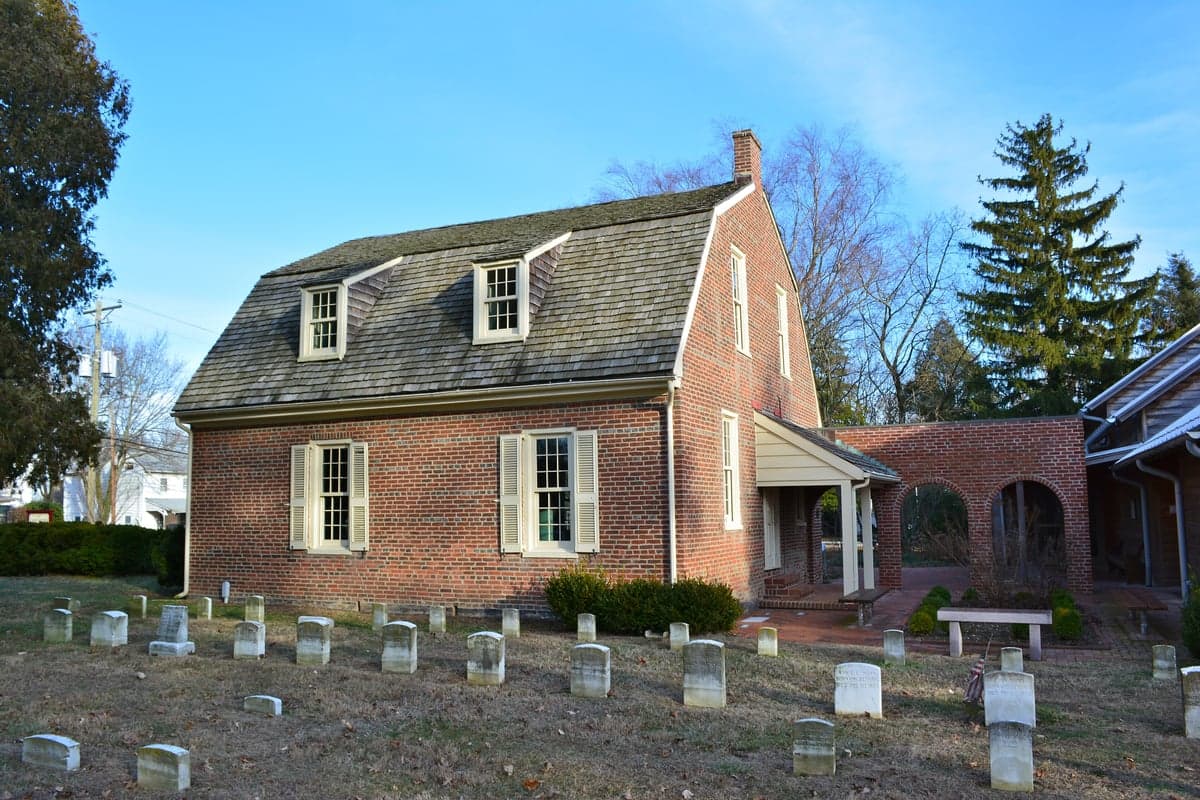
Camden was originally settled in the 1770s as a farming and milling community along the St. Jones River, with the first European inhabitants being English and Scots-Irish farmers who received land grants from the Penn family. The town was formally laid out in 1783 and quickly became a regional hub for grain processing and trade, drawing a steady stream of Anglo-American settlers who built the earliest homes along what is now Main Street and the surrounding Historic Camden District. By the mid-19th century, a small number of free Black families had established themselves on the outskirts, particularly in the area now known as South Camden, working as laborers and domestic servants on surrounding farms. The arrival of the railroad in the 1850s spurred modest growth, attracting German and Irish immigrants who settled in the Railroad Avenue corridor, where many found work in the new canneries and lumber yards. The population remained overwhelmingly White and native-born through the early 1900s, with the 1910 census recording fewer than 500 residents.
Modern era (post-1965)
The post-1965 period brought the most significant demographic transformation to Camden, driven by the expansion of Dover Air Force Base and the broader suburbanization of Kent County. The 1970s and 1980s saw an influx of Black families moving from the rural South and from inner-city Wilmington, drawn by affordable housing and employment at the base and at the nearby General Foods (later Kraft) plant. These families concentrated in the Camden Woods and Village of Camden subdivisions, which were developed as moderately priced single-family-home neighborhoods. The Hispanic population began to grow in the 1990s, primarily Mexican and Central American immigrants arriving for agricultural and construction work, settling in the West Camden area around Route 13. The East/Southeast Asian community, largely Filipino and Vietnamese families connected to the military and healthcare sectors, established a small but visible presence in North Camden near the base. The Indian-subcontinent population remains tiny (0.8%) and is almost entirely composed of professionals working at Dover Air Force Base or Bayhealth Medical Center, with no distinct ethnic enclave. By 2020, Camden had become one of the most racially balanced small towns in Delaware, with the White share falling from over 80% in 1970 to 48.1% today, while the Black share rose to 38.2%.
The future
Camden's population is likely to continue its gradual diversification, though at a slower pace than in the 1990s and 2000s. The Hispanic share (7.5%) is projected to rise modestly as second-generation families remain in the area and new arrivals are drawn to the growing logistics and warehousing sector along the Route 13 corridor. The East/Southeast Asian community is expected to plateau or grow only slightly, as Dover Air Force Base's active-duty population stabilizes. The Black population, already the largest minority group, is likely to remain steady or increase incrementally through domestic in-migration from the Mid-Atlantic region. The White population, while still the largest single group, will continue its slow relative decline. The city is not tribalizing into distinct ethnic enclaves; rather, neighborhoods like Camden Woods and Village of Camden are becoming more integrated, with no single group dominating any one subdivision. The foreign-born share (4.6%) is unlikely to rise dramatically, as Camden lacks the large immigrant-employing industries seen in Wilmington or Georgetown.
For someone moving to Camden now, the city offers a stable, middle-class community where racial diversity is a lived reality rather than a talking point. The population is neither homogenizing nor fragmenting; it is slowly becoming more Hispanic and slightly more Asian, while maintaining its Black-White core. New residents will find a place where demographic change has been gradual and largely peaceful, and where the biggest population story is not rapid growth but steady, moderate diversification within a small-town framework.

* Values derived from national, state, county, city and local statistics and may differ in a specific area. Last updated: 2026-04-30T03:13:12.000Z
Narrative content on this page is AI-generated and may contain mistakes. Verify any details that matter before acting on them.
ReloMaps may earn a commission from affiliate links at no extra cost to you.

