
Photo: Wikipedia
Political ClimatePolitical Climate in Camden, DE
District shown is the primary district for this city’s centroid. Cities may span multiple districts.
Inherited from parent state — no local data available.
Local Political AnalysisPolitical Analysis of Camden, DE
Camden, Delaware, has a Cook PVI of D+8, meaning it leans significantly more Democratic than the nation as a whole, and that shift has been pretty noticeable over the last decade. If you’d asked me ten years ago, this was a quiet, conservative-leaning small town where folks mostly kept to themselves and didn’t want the government poking its nose into their business. Now, you can feel the political winds changing—more progressive policies are creeping in, and it’s starting to feel like the kind of place where personal freedoms are getting squeezed, not protected.
How it compares
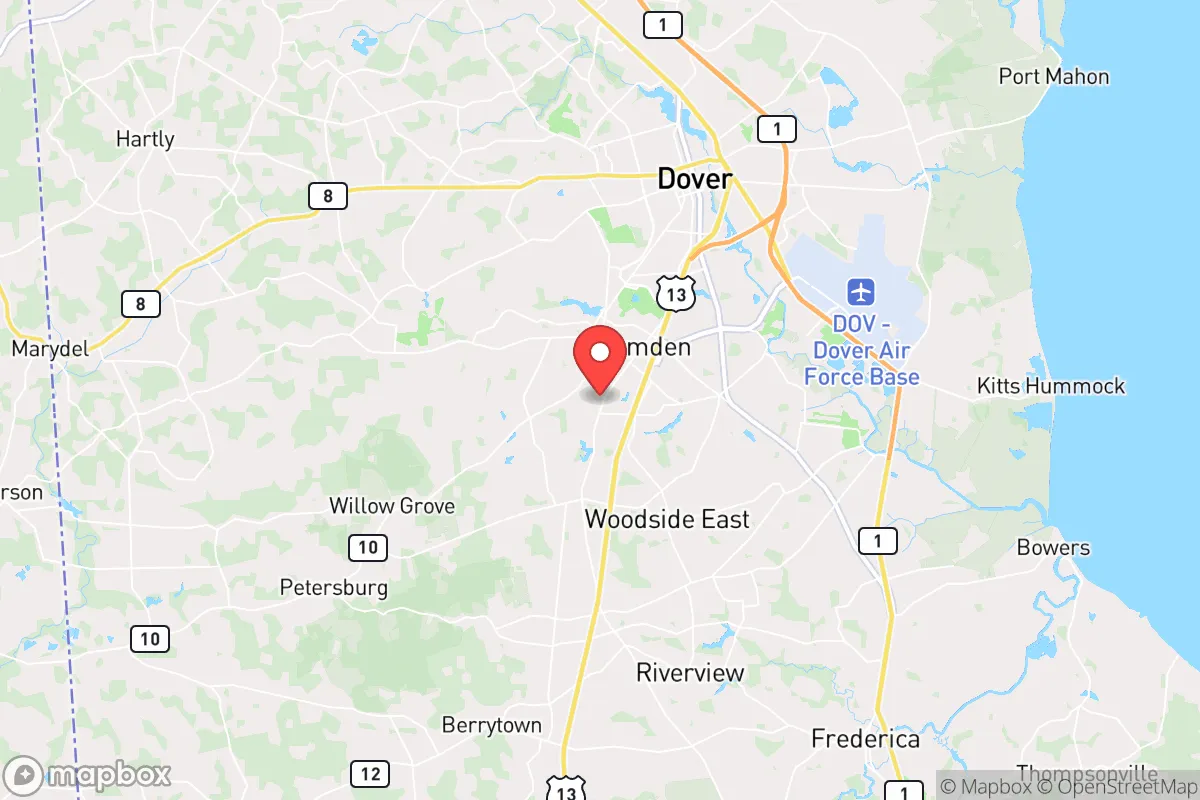
Camden’s D+8 rating puts it in a different political universe from the surrounding Kent County towns. Head just a few miles north to Dover, and you’ll find a similar Democratic lean, but it’s more pronounced there with a lot of state government influence. Drive south or west to places like Felton or Harrington, and you’ll hit much redder territory—those areas still vote solidly Republican and tend to push back on the kind of progressive agenda you see in Camden. Even Wyoming, right next door, has a more mixed political vibe. The contrast is stark: Camden is becoming a little blue island in a county that’s still fairly purple, and that’s a red flag for anyone who values limited government and local control.
What this means for residents
For folks living here, the D+8 lean translates into real-world consequences that can feel like government overreach. You’re seeing more zoning regulations that make it harder to do what you want with your own property, and there’s been a push for higher taxes to fund programs that a lot of us didn’t ask for. The local school board and town council have started leaning into progressive ideas—like diversity initiatives and environmental mandates—that can feel like they’re more about checking boxes than serving the community. If you’re a conservative, you might find yourself on the losing end of votes on things like Second Amendment protections or school choice. It’s not a full-blown liberal takeover yet, but the trajectory is concerning, and it’s making some long-time residents think about moving to more freedom-friendly spots like Milford or Bridgeville.
Cultural and policy distinctions
One thing that stands out about Camden’s political climate is how the culture has shifted along with the voting patterns. There used to be a strong sense of neighborly independence—people solved their own problems without running to the government. Now, you’ll hear more talk about “community standards” and “equity” at town meetings, which often translates into more rules and less personal liberty. The local police department has faced pressure to adopt “reform” policies that can tie officers’ hands, and there’s been a quiet but steady push for more public spending on things like bike lanes and public art that feel out of step with a small town’s priorities. If you value your right to live without a lot of bureaucratic interference, Camden’s political direction is something to keep a close eye on—it’s not the same place it was twenty years ago, and the next few years could seal the deal.

State Political ClimatePolitical Climate in Delaware
State Political AnalysisPolitical Environment in the State
Delaware has long been a blue state in presidential elections, but its political climate is far more nuanced than a simple partisan label suggests. The state leans Democratic overall, driven by the densely populated, suburban northern counties of New Castle and the city of Wilmington, while the southern counties of Kent and Sussex are reliably Republican. Over the past 20 years, the state has shifted leftward on social and cultural issues, but a strong conservative undercurrent persists in its rural and coastal communities, making it a place of sharp political contrasts.
Urban vs. rural divide
The political map of Delaware is a tale of two regions. New Castle County, home to over half the state’s population, is the Democratic stronghold. Wilmington, Newark, and the suburban corridor along I-95 vote overwhelmingly blue, powered by a mix of government workers, university faculty at the University of Delaware, and a growing professional class. In contrast, Sussex County in the south is deeply red, with towns like Georgetown, Millsboro, and Seaford voting Republican by wide margins. Kent County, anchored by Dover, is a true swing area—Dover itself leans Democratic, but the surrounding farmland and small towns like Harrington and Smyrna tilt conservative. The divide is not just partisan but cultural: northern Delaware feels connected to the Philadelphia metro, while southern Delaware shares more in common with the Eastern Shore of Maryland and Virginia.
Policy environment
Delaware’s policy environment is a mixed bag for conservatives. On the plus side, the state has no sales tax and relatively low property taxes compared to neighboring states like Maryland and Pennsylvania. However, income taxes are steep, with a top marginal rate of 6.6% kicking in at just $60,000 of taxable income. The regulatory climate is business-friendly in some sectors—especially for incorporation and financial services—but increasingly burdensome for small businesses and gun owners. Education policy is dominated by the teachers’ union, and school choice is limited compared to states like Florida or Arizona. Healthcare is heavily regulated, with a state-run exchange and Medicaid expansion. Election laws are moderately restrictive: Delaware has no-excuse absentee voting and same-day registration, but voter ID is required. The state’s gun laws are among the strictest in the nation, including a ban on "assault weapons" and high-capacity magazines passed in 2022, plus a permit-to-purchase requirement for handguns.
Trajectory & freedom
Delaware is becoming less free by any objective measure, especially for conservatives. The 2022 gun control package (House Bill 450) was a major blow to Second Amendment rights, requiring a permit, fingerprinting, and a training course just to buy a handgun. In 2023, the state passed a near-total abortion ban on late-term procedures and codified abortion access into law, removing any parental notification requirements for minors. Parental rights in education have eroded: the state’s Department of Education has pushed "equity" policies that critics say prioritize race-based outcomes over merit, and there is no statewide parental bill of rights. Medical freedom took a hit with the state’s aggressive COVID-19 mandates, including vaccine requirements for state employees and school staff that were among the last in the region to be lifted. Property rights are relatively strong, but zoning in New Castle County is increasingly restrictive, driving up housing costs. The overall trajectory is one of expanding government control over personal decisions, from healthcare to education to self-defense.
Civil unrest & political movements
Delaware has seen its share of political flashpoints. In 2020, Wilmington experienced several nights of rioting and looting following the George Floyd protests, with businesses damaged and a heavy police response. The state’s sanctuary policies are a point of contention: while Delaware is not a formal sanctuary state, several localities, including Wilmington and Newark, have adopted "welcoming city" ordinances that limit cooperation with federal immigration enforcement. Election integrity has been a hot-button issue, with conservative groups raising concerns about the state’s use of drop boxes and mail-in voting during the pandemic. The 2022 gubernatorial race saw a surprisingly strong challenge from Republican Julianne Murray, who won Sussex County by 20 points and came within 10 points statewide, signaling a potential shift. On the right, the Delaware Republican Party has been energized by grassroots groups like the Delaware Patriot Coalition, which focuses on school board races and local elections. On the left, progressive activists have pushed for rent control, defunding the police, and a Green New Deal-style energy agenda, though these have been moderated by the state’s business-friendly Democratic establishment.
Projection
Over the next 5-10 years, Delaware is likely to continue its leftward drift, but at a slower pace than states like New Jersey or Connecticut. In-migration from the Northeast—especially from New York and New Jersey—is bringing more Democratic voters to Sussex County’s beach towns, slowly eroding the GOP’s southern base. However, the state’s high cost of living and tax burden are beginning to push some conservatives out, particularly retirees moving to Florida or Texas. The political future hinges on Kent County: if it continues to trend blue, Delaware will become a solidly Democratic state like its neighbors. If the GOP can hold the south and flip Kent, it could become a competitive purple state again. For now, the state’s Democratic supermajority in the legislature is unlikely to be broken, meaning more progressive policies on guns, taxes, and education are probable. A new resident moving in today should expect a state that is increasingly aligned with the coastal liberal consensus, with fewer protections for individual liberty than they would find in a state like Texas or Florida.
Bottom line for a new resident: Delaware offers a low-tax environment on the surface, but the cost is high in terms of personal freedom. If you value gun rights, school choice, and limited government, you will find yourself swimming against a strong current. The state’s rural southern counties provide a conservative haven, but they are losing ground demographically. For a conservative family or individual, Delaware is a place to live if you have to be in the Northeast corridor, but it is not a destination for those seeking a freer, more self-governing way of life.
* Values derived from national, state, county, city and local statistics and may differ in a specific area. Last updated: 2026-04-30T03:13:12.000Z
Narrative content on this page is AI-generated and may contain mistakes. Verify any details that matter before acting on them.
ReloMaps may earn a commission from affiliate links at no extra cost to you.

