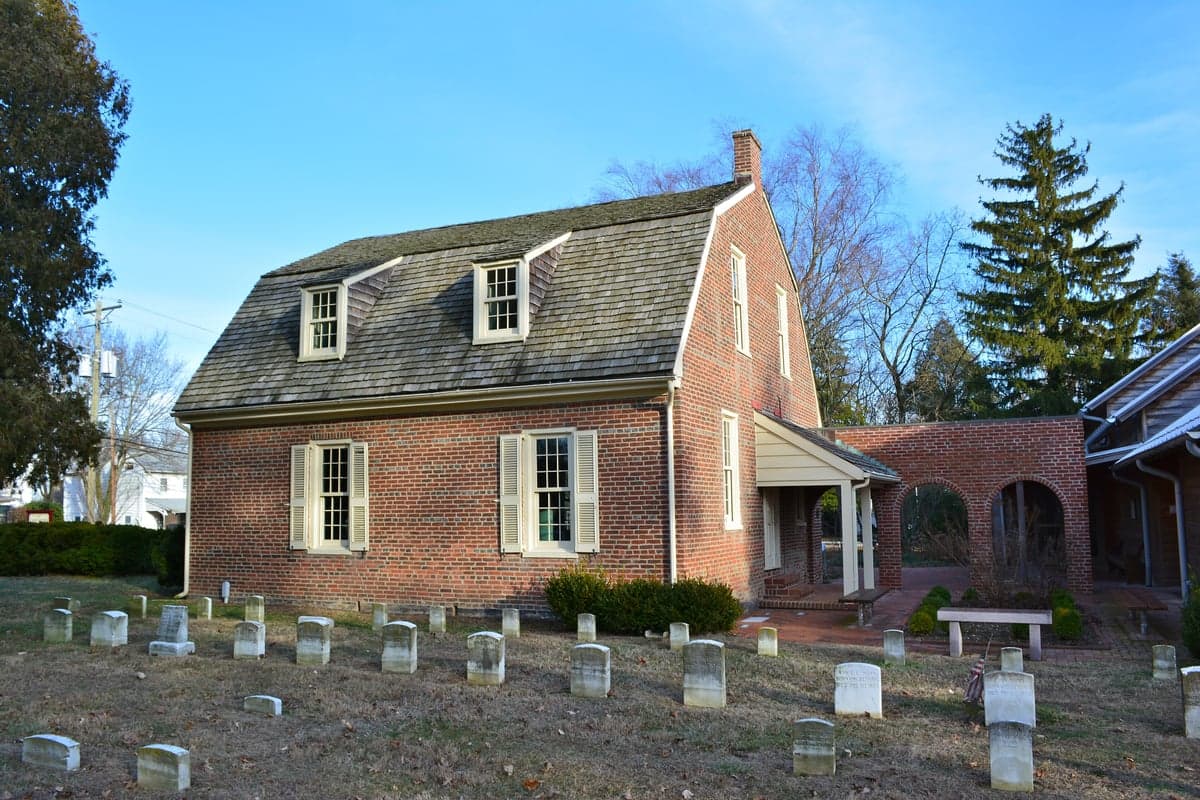
Photo: Wikipedia
Personal Sovereignty in Camden, DE
Viable for self-reliance. Generally workable, though some barriers may limit total independence.
What does Personal Sovereignty tell us?
Personal Sovereignty measures your capacity for self-reliance and independence with minimal government friction. Higher scores mean fewer barriers between you and the way you want to live... but it assumes you have the space you need and good neighbors.
What does this tell us?
Personal Sovereignty measures your capacity for self-reliance and independence with minimal government friction. Higher scores mean fewer barriers between you and the way you want to live... but it assumes you have the space you need and good neighbors.
State Policy
Energy independence: Importer (2% of energy produced in-state)
Personal Liberty
Homesteading

Personal Liberty Analysis
Camden, Delaware offers a mixed bag for those prioritizing personal sovereignty, with the town’s small-town character and low population density providing a foundation for autonomy, but state-level policies in Dover creating significant headwinds. While you won’t face the aggressive overreach of a major metro area, Delaware’s centralized governance and tax structure mean your freedom to live as you see fit is constantly negotiated with a state that leans progressive on key issues. For a survivalist or prepper, Camden is a place where you can carve out a degree of self-reliance, but only if you’re willing to navigate a regulatory environment that isn’t always friendly to the independent-minded.
Tax burden and regulatory posture: how Delaware’s policies affect your wallet and freedom
Delaware’s tax posture is a double-edged sword for personal sovereignty. On the plus side, the state has no sales tax, which gives you more control over your spending and reduces the government’s cut of every transaction. Property taxes in Kent County, where Camden sits, are relatively low—around 0.55% of assessed value—meaning you keep more equity in your land and home. However, the state income tax is progressive, topping out at 6.6% for high earners, which can feel like a penalty for those who work hard to build wealth. The real sting comes from Delaware’s aggressive business and franchise taxes, which can complicate any side hustle or small-scale enterprise you might run from your property. The regulatory environment is moderate but leans toward bureaucratic complexity, especially for anything involving construction, land use, or home-based businesses. You won’t face the red tape of New York or California, but you’ll still need permits for most improvements, and the state’s environmental regulations can limit what you do on your own land. For the prepper, this means you can own property and keep taxes manageable, but scaling up any self-sufficient operation—like a workshop or small farm—will require navigating local zoning and state oversight.
Self-defense and gun law specifics: what you can and cannot do in Camden
Delaware’s gun laws have shifted significantly in recent years, and Camden residents must contend with state-level restrictions that erode the right to keep and bear arms. The state now requires a permit to purchase a handgun, a background check for all firearm sales (including private transfers), and a waiting period for long guns. Magazine capacity is capped at 17 rounds for handguns and 15 for long guns, which directly impacts your ability to stockpile for defensive purposes. Open carry is legal with a permit, but concealed carry requires a permit that involves a training course and a background check—a process that can feel like government permission to exercise a natural right. Stand-your-ground laws are not explicitly codified in Delaware, and the state has a duty-to-retreat requirement in public spaces, which complicates self-defense scenarios. For the survivalist, this means you can own firearms, but the state has created a bureaucratic layer that slows access and limits capacity. Camden itself is a quiet town with low violent crime, so you’re unlikely to face immediate threats, but the legal framework makes it harder to prepare for worst-case scenarios. If you’re coming from a more gun-friendly state like Texas or Arizona, you’ll find Delaware’s laws restrictive and frustrating.
Self-reliance and homesteading viability: lot sizes, zoning, and off-grid feasibility
Camden’s rural character offers real potential for self-reliance, but it’s not the wide-open frontier. Most residential lots in the town proper are half-acre to one-acre, which gives you room for a substantial garden, a small chicken coop, or a workshop, but not for large-scale livestock or farming. Zoning is generally permissive for accessory structures like sheds and greenhouses, but you’ll need permits for anything permanent, and the town has rules about setbacks and property lines that limit how much you can build. Off-grid living is legally challenging: Delaware requires connection to the electrical grid for new construction, and while solar panels are allowed, net metering policies are state-controlled and can be less favorable than in other states. Rainwater collection is permitted but regulated, and composting toilets are not standard for residential use. The biggest hurdle is water—most properties rely on wells, which are fine, but septic systems are required and subject to health department oversight. For the prepper, Camden is viable for a suburban homesteading lifestyle: you can grow food, raise small animals, and install backup power, but you’ll be doing it within a regulatory framework that expects you to stay connected to the system. True off-grid independence is not realistic here without constant battles with local code enforcement.
Personal liberties: parental rights, medical autonomy, speech, and property
Delaware’s stance on personal liberties is a concern for the conservative-minded. Parental rights are under pressure: the state has mandatory vaccination requirements for school attendance (with limited exemptions), and recent legislation has expanded the role of schools in student health decisions, including reproductive health services, without mandatory parental consent. Medical autonomy is similarly constrained—Delaware has a state-run health insurance exchange and mandates coverage for certain procedures, and the COVID era saw mask and vaccine mandates that were enforced more aggressively than in many neighboring states. Free speech is protected under the First Amendment, but Delaware has hate crime laws that can be used to prosecute speech deemed threatening or harassing, which creates a chilling effect for those who hold unpopular opinions. Property rights are relatively strong—eminent domain is rare, and zoning is predictable—but the state’s environmental regulations can restrict how you use your land, especially near wetlands or waterways. For the survivalist, this means you can speak your mind and own your property, but the state has tools to intervene in your family and medical decisions. The overall environment is one of managed freedom: you have autonomy as long as you don’t challenge the progressive consensus on health, education, or public safety.
In the broader context of personal sovereignty, Camden sits in a middle tier—better than the heavily regulated Northeast corridor but worse than the free-wheeling states of the South and West. You can own land, keep firearms (with hassle), and live a relatively quiet life, but you’ll be doing so under a state government that views individual autonomy as something to be managed rather than protected. For the prepper or survivalist, Camden offers a decent base of operations if you’re willing to work within the system and keep your head down. But if you’re looking for a place where you can truly opt out of government overreach—where you can homeschool without interference, build a bunker without permits, or carry a firearm without permission—you’ll find better options in states like Idaho, Montana, or even parts of the Deep South. Camden is a compromise: a place where you can build a life of self-reliance, but only within the boundaries the state allows.

* Values derived from national, state, county, city and local statistics and may differ in a specific area. Last updated: 2026-04-30T03:13:12.000Z
Narrative content on this page is AI-generated and may contain mistakes. Verify any details that matter before acting on them.
ReloMaps may earn a commission from affiliate links at no extra cost to you.

