 Popular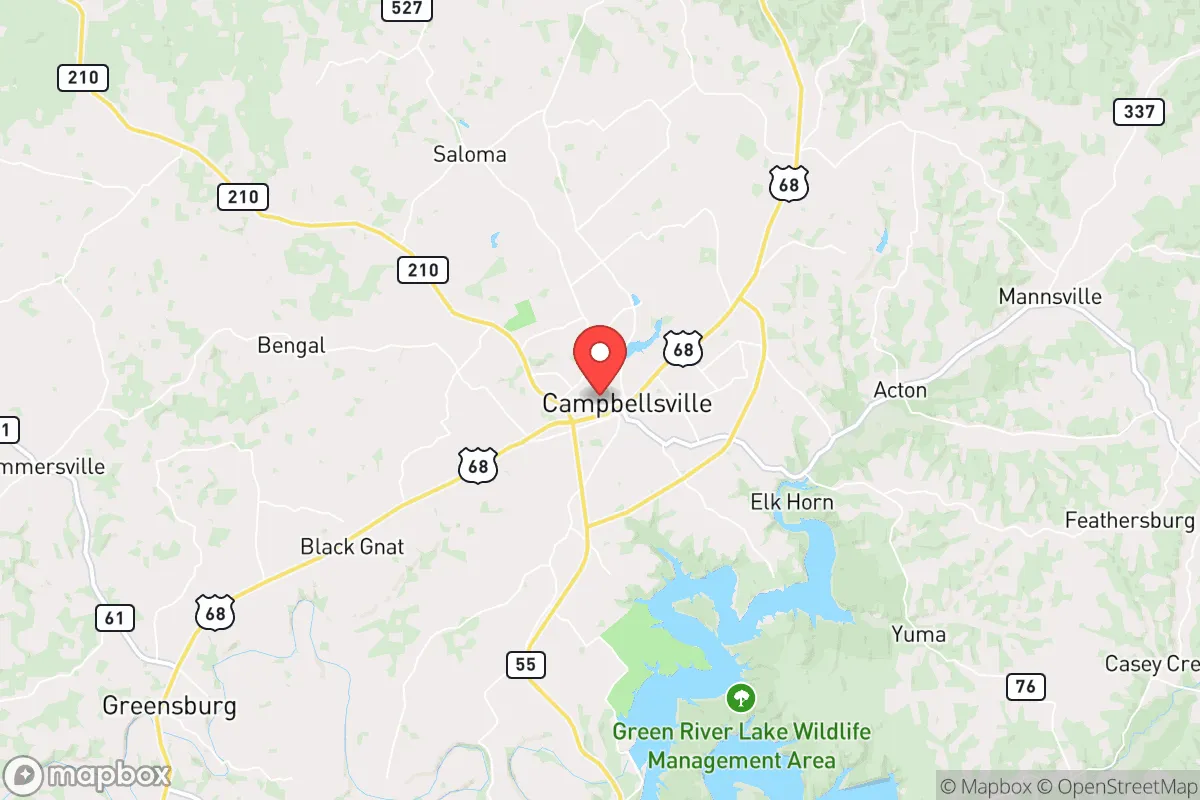
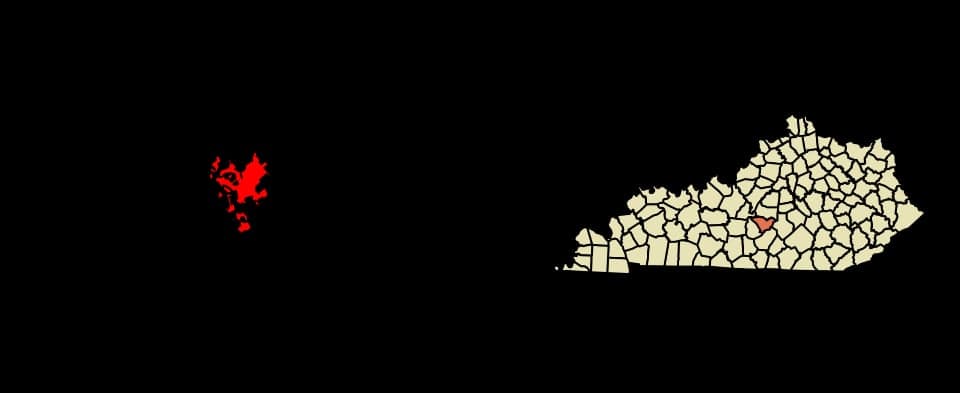
Photo: Wikipedia
Strategic Assessment of Campbellsville, KY
Workable tactical position. Some exposure to population density or targets, but generally defensible in a crisis.
What does the Strategic Assessment tell us?
Our Strategic Assessment grades tactical survivability of an area. Major population centers, military targets, fallout zones, natural disasters, and border exposure all drive risk — lower exposure means a more defensible position in a crisis.
This is heavily inspired by Joel Skousen's Strategic Relocation book. Highly recommended you checkout the book ($)What does this tell us?
Our Strategic Assessment grades tactical survivability of an area. Major population centers, military targets, fallout zones, natural disasters, and border exposure all drive risk — lower exposure means a more defensible position in a crisis.
This is heavily inspired by Joel Skousen's Strategic Relocation book. Highly recommended you checkout the book ($)Strategic Pillars

Key Distances
Regional Safe Places
Below is our recommended "safe zones" in Kentucky and the surrounding area based on our strategic heuristics. For most people, it's unrealistic to live in a “safe zone” full-time due to work, family or other personal reasons. They tend to be more rural. However, many of these areas are perfect for second homes and retreat properties that double as a vacation home or even a short-term rental.
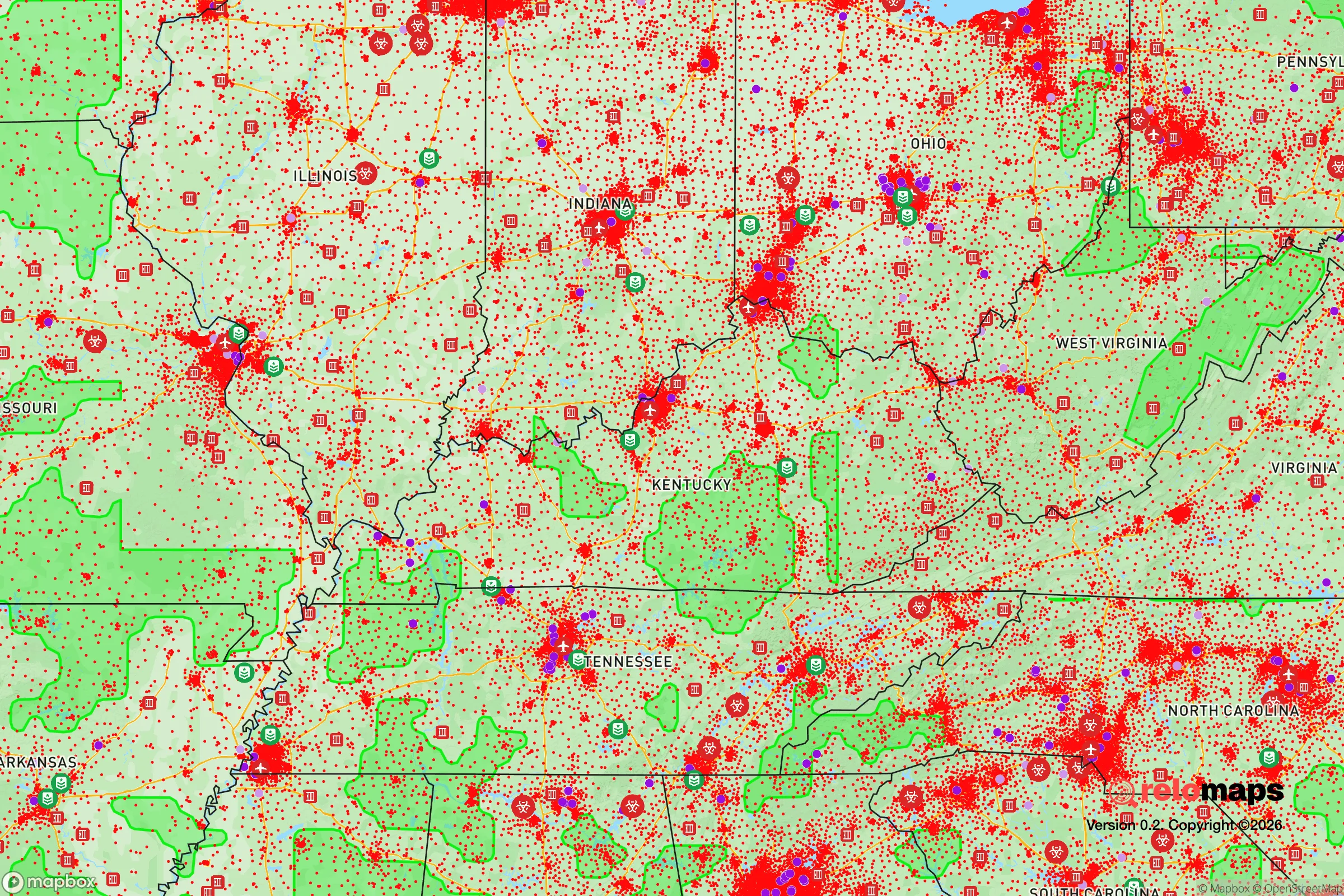
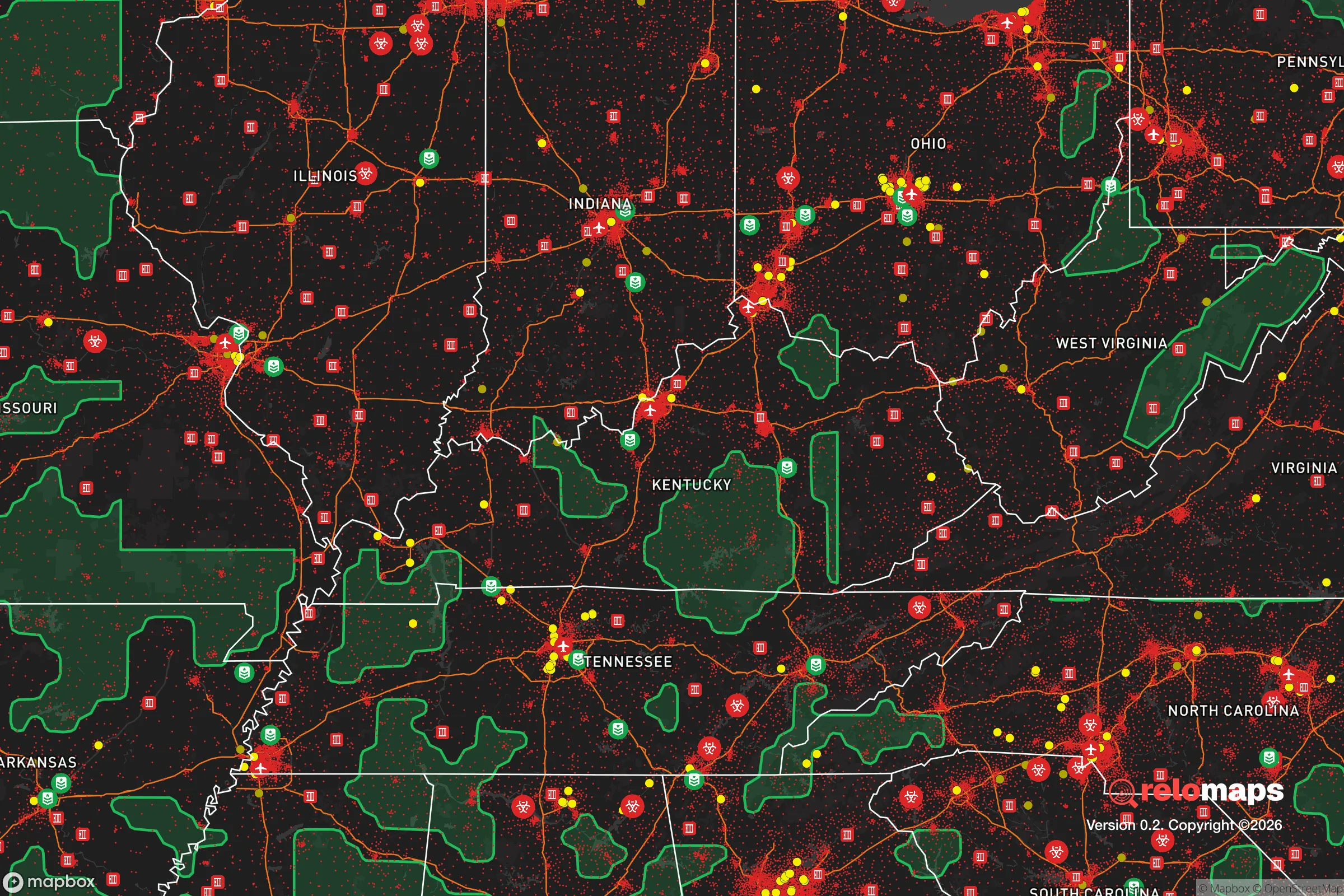


Important Note: For informational purposes only. This does not mean nothing bad ever happens in the green zones. Please use common sense. This is based on public data and modeled with AI. We tried to take a conservative approach but mistakes happen. We update this regularly as new information becomes available.
Solar Generator Recommendations
Backup power matters more here than in safer locations. We've picked three solar generators across budgets and capacity tiers — start with the budget unit if you only need a few essentials, or step up if you want to run a fridge and HVAC for days at a time.

Jackery Portable Power Station Explorer 300
Budget OptionPower on the Go: Weighing only 11 lbs, it's convenient to set up and store with book-sized foldable solar panels

BLUETTI Portable Power Station AC180
Designed for both indoor and outdoor scenarios, AC180 is highly capable as it has a robost capacity and continuous output power.

EF ECOFLOW DELTA Pro Ultra Power Station
Upgraded PickEcoFlow DELTA Pro Ultra is a whole-home energy system designed to grow with your family. Integrated with the Smart Home Panel 2, it scales to meet your evolving energy needs — keeping your home powered, intelligent, and secure through every stage of life.
We earn a commission, at no additional cost to you.
Strategic Assessment Analysis
Campbellsville, Kentucky, offers a compelling strategic profile for those prioritizing resilience and self-sufficiency, largely due to its position in the interior of the state—far from coastal threats, major metropolitan chokepoints, and the most likely targets of large-scale disruption. The area’s economic base, anchored by manufacturing, healthcare, and education, provides a degree of stability that many rural towns lack, while its location along the Cumberland Parkway gives reasonable access to regional resources without the liabilities of being inside a major city. For a relocator with a prepper mindset, Campbellsville presents a workable balance: it is not a hardened bunker, but it is far enough off the beaten path to avoid the worst of any cascading collapse scenario, while still being close enough to supply lines and medical infrastructure to sustain a long-term plan.
Geographic position and natural advantages for long-term security
Campbellsville sits in Taylor County, roughly 80 miles southeast of Louisville and 90 miles southwest of Lexington, placing it squarely in the Kentucky interior—a zone that avoids the direct fallout corridors of major interstate hubs, military installations, and nuclear power plants. The area is hilly but not mountainous, with ample hardwood forests, numerous creeks, and the Green River running nearby, providing natural water sources and cover. The local topography offers decent defensibility: the rolling hills and winding backroads make large-scale movement through the region slow and predictable, which is a tactical advantage in any unrest scenario. The climate is temperate, with four distinct seasons, and the growing season is long enough for serious gardening and small-scale agriculture. Unlike the flat, open farmland of western Kentucky, Taylor County’s terrain gives you options for concealment and retreat without being so rugged that it becomes impractical for daily life.
Risks, exposures, and proximity to fallout-relevant landmarks
The primary strategic concern for Campbellsville is its proximity to the Blue Grass Army Depot in Richmond, about 60 miles northeast, which stores chemical weapons and conventional munitions. While the depot has robust security, any major incident—whether accidental or targeted—could create a contamination plume that would affect downwind areas, including parts of central Kentucky. Campbellsville is also within 100 miles of the Fort Knox gold depository and the Louisville metropolitan area, both of which are high-value targets in any large-scale conflict or economic collapse scenario. The city itself is not a primary target, but it sits along the Cumberland Parkway, a major east-west corridor that could become a refugee route during a crisis. The local population is around 12,000, with Taylor County at roughly 26,000, which means the area has limited capacity to absorb a sudden influx of displaced people without straining resources. Flooding is a moderate risk in low-lying areas near the Green River, but the city’s core is on higher ground. Tornado risk is present but not extreme compared to the Plains states.
Practical resilience for a relocator: food, water, energy, and defensibility
For a relocator serious about self-sufficiency, Campbellsville offers several practical advantages. The local water table is generally accessible via shallow wells, and the Green River watershed provides a reliable surface water source, though treatment would be necessary. The area has a strong agricultural base—Taylor County is home to numerous small farms, livestock operations, and the Kentucky-Tennessee border region’s tobacco and hay production—meaning local food sources are available if you build relationships early. The city’s power grid is served by Taylor County Rural Electric Cooperative and Kentucky Utilities, both of which have decent reliability but are vulnerable to ice storms and summer thunderstorms. Solar potential is moderate; the region gets about 4.5 peak sun hours per day, enough for a supplemental system but not for full off-grid living without significant battery storage. Defensibility is good for a rural town: the surrounding countryside offers numerous properties with long sightlines, limited road access, and natural barriers like creeks and ridges. The local law enforcement presence is small but professional, and the community is generally tight-knit and suspicious of outsiders, which is a double-edged sword—it means less crime but also less tolerance for newcomers who don’t integrate. Gun culture is strong, with multiple local gun shops and ranges, and Kentucky’s constitutional carry law means you can arm yourself without bureaucratic hurdles. Medical facilities are limited to Taylor Regional Hospital, a small but capable facility; for serious trauma or specialized care, you’re looking at a 90-minute drive to Louisville or Lexington, which is a significant vulnerability in a mass casualty event.
The overall strategic picture for Campbellsville is one of moderate resilience with clear trade-offs. It is not a remote survivalist redoubt—it is a working-class Kentucky town with a functional economy and a population that is largely self-reliant by necessity, not ideology. The risks from the Blue Grass Army Depot and the proximity to Louisville’s potential chaos are real but manageable if you have a plan for monitoring wind patterns and avoiding major highways during a crisis. The area’s agricultural base, defensible terrain, and low population density make it a viable option for someone who wants to be prepared without going completely off-grid. The biggest weakness is the limited medical infrastructure and the lack of a truly isolated location—Campbellsville is close enough to the interstate system that it will feel the ripple effects of any regional disruption. For a conservative-leaning relocator who values community, self-reliance, and a slower pace of life, Campbellsville is a solid B+ choice: not perfect, but far better than most suburban or exurban alternatives, and with enough raw materials to build a long-term strategy around. Just don’t expect to disappear entirely—this is Kentucky, not Montana, and your neighbors will know your business before you finish unpacking.

* Values derived from national, state, county, city and local statistics and may differ in a specific area. Last updated: 2026-04-21T09:48:39.000Z
Narrative content on this page is AI-generated and may contain mistakes. Verify any details that matter before acting on them.
ReloMaps may earn a commission from affiliate links at no extra cost to you.

