 Popular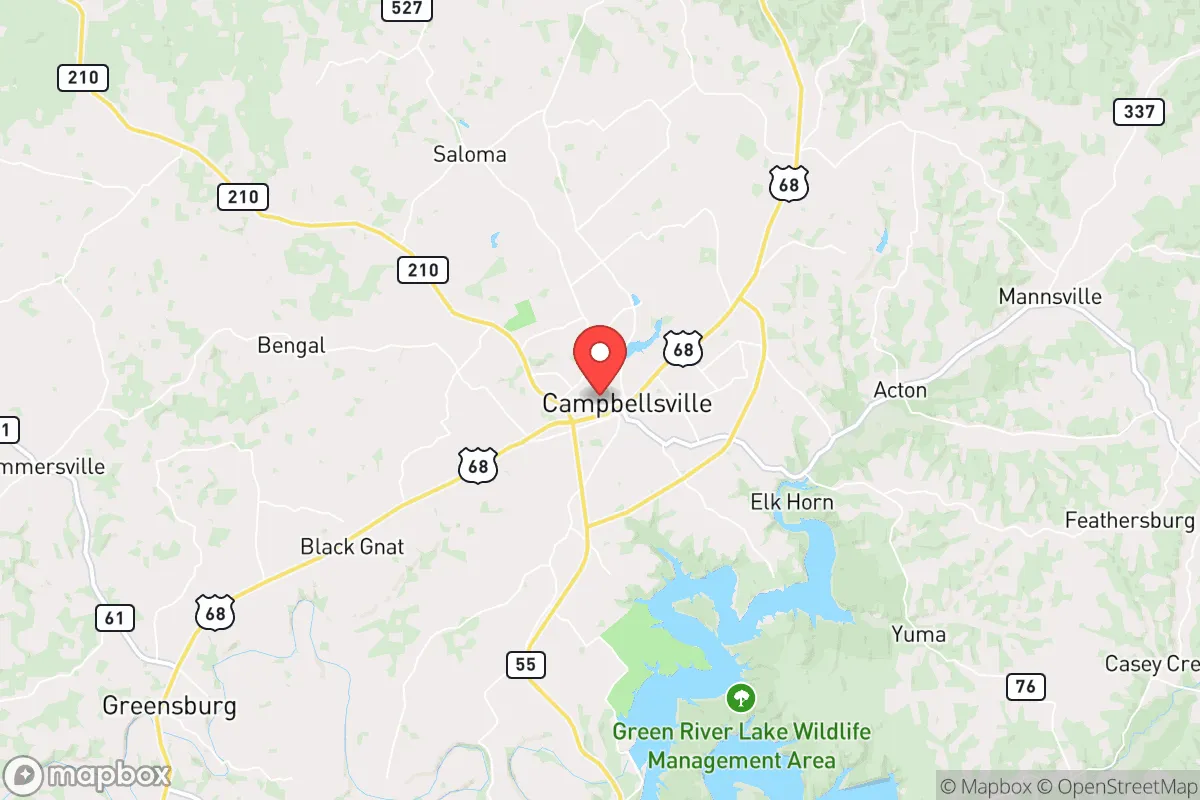
Photo: Wikipedia
Political ClimatePolitical Climate in Campbellsville, KY
District shown is the primary district for this city’s centroid. Cities may span multiple districts.
Local Political AnalysisPolitical Analysis of Campbellsville, KY
Campbellsville is about as reliably conservative as it gets in Kentucky, and that’s not changing anytime soon. The area’s Cook PVI of R+23 tells you the story straight up—this is deep red territory, and it’s been that way for as long as anyone around here can remember. You won’t find much hand-wringing over national politics at the local diner; folks here vote their values, and those values lean heavily toward limited government, personal responsibility, and keeping Washington out of their business. If you’re looking for a place where the political temperature stays steady and predictable, Campbellsville delivers.
How it compares
Drive an hour north to Louisville, and you’re in a completely different world—Jefferson County went for Biden in 2020, and the city council there has been pushing progressive policies on housing and policing that would never fly here. Head east to Lexington, and it’s a similar story, with a more liberal university crowd influencing local elections. Even nearby Bowling Green, which leans right, isn’t as solidly conservative as Campbellsville; Warren County sits around R+18, a few points softer. The contrast is sharpest with smaller towns like Greensburg or Columbia, which share the same rural, conservative outlook but don’t have the same economic pull. Campbellsville sits right in the middle of a region where Republican candidates routinely win by 30 points or more, and that’s not an accident—it’s a reflection of a community that values tradition and isn’t interested in the cultural experiments you see in bigger cities.
What this means for residents
For the people who live here, the political climate means less government meddling in day-to-day life. You won’t see mask mandates or business shutdowns being debated at city council meetings like you did in some parts of the state during 2020—Campbellsville’s leaders took a hands-off approach, and most residents appreciated it. Property taxes stay low, zoning is minimal, and there’s no serious push for the kind of progressive land-use policies that drive up housing costs in blue areas. The local school board focuses on basics like reading and math, not social experiments, and the county sheriff’s office isn’t defunded or demoralized. That said, there’s a growing concern among longtime residents about outside influence creeping in—newcomers from more liberal states buying up land and bringing different ideas about how things should run. So far, the local culture has held firm, but it’s something to keep an eye on.
One thing that sets Campbellsville apart is its strong sense of personal liberty, especially around things like gun rights and religious expression. You can carry openly without anyone batting an eye, and churches are still the social backbone of the community. There’s no talk of removing historical monuments or renaming streets—that kind of stuff stays in the coastal headlines. The biggest political fights here are usually over local school funding or road improvements, not the culture war battles that dominate national news. If you’re someone who values a community where your vote actually reflects your beliefs and the government stays out of your way, Campbellsville is a solid bet. Just don’t expect it to swing left anytime soon—this town knows what it stands for, and it’s not budging.

State Political ClimatePolitical Climate in Kentucky
State Political AnalysisPolitical Environment in the State
Kentucky is a deeply red state with a strong conservative majority, but it’s not a monolith — it’s a place where the old-school, coal-country Republicanism of the east meets the more libertarian-leaning, horse-country conservatism of the Bluegrass region. Over the last 20 years, the state has shifted from a competitive purple state (it voted for Bill Clinton in 1992 and 1996) to a solidly Republican stronghold, with Donald Trump winning it by 26 points in 2020 and 30 points in 2024. The dominant coalition is a mix of rural, churchgoing, and working-class voters who have soured on national Democratic policies, especially on energy, guns, and cultural issues. But the real story is the growing divide between the fast-growing, more moderate suburbs around Louisville and Lexington and the rest of the state, which is getting redder by the cycle.
Urban vs. rural divide
The political map of Kentucky is a textbook case of the urban-rural split. The two major metros — Louisville (Jefferson County) and Lexington (Fayette County) — are the only reliably blue areas in the state. Louisville, home to the University of Louisville and a more diverse economy, has voted Democratic in every presidential election since 2000, though its margins have shrunk. Lexington, anchored by the University of Kentucky, is a bit more moderate but still leans left, especially in the urban core. Meanwhile, the rest of the state is overwhelmingly red. The eastern coal counties like Pike, Perry, and Harlan are some of the most Republican in the nation, often voting 80%+ for Trump. The western part of the state, including Paducah and Owensboro, is also deeply conservative, though with a more pragmatic, business-oriented flavor. The suburbs are where the action is: Oldham County (northeast of Louisville) is a wealthy, deeply red enclave, while Boone County (part of the Cincinnati metro) is a fast-growing, reliably conservative area that’s become a magnet for families fleeing Ohio’s tax and regulatory climate. The rural-urban divide is so stark that in 2024, Jefferson County went for Biden by 15 points, while the rest of the state went for Trump by 35.
Policy environment
Kentucky’s policy environment is a mixed bag for conservatives. On the plus side, the state has a flat income tax that’s been cut from 5% to 4% in recent years, with a path to elimination by 2029. There’s no state property tax, and sales tax is a low 6%. The regulatory climate is generally business-friendly, especially for manufacturing and logistics — the state has become a hub for auto parts and bourbon production. On education, Kentucky has a robust school choice movement: the state passed a charter school law in 2017 (though implementation has been slow) and has a thriving homeschooling community, with no state registration required. However, the state’s Medicaid expansion under the Affordable Care Act remains in place, which some conservatives view as a government overreach. Election laws are solid: Kentucky has voter ID requirements, no same-day registration, and a closed primary system. The state also passed a constitutional carry law in 2019, allowing permitless carry of concealed firearms. On the downside, the state’s alcohol laws are still archaic in many counties — you can’t buy a drink on Sunday in some rural areas — and the medical marijuana program, signed into law in 2023, is still not operational, which frustrates libertarian-leaning residents.
Trajectory & freedom
Kentucky is clearly trending toward more freedom in most areas, but it’s a slow, uneven process. The biggest win for liberty in recent years was the constitutional carry law (HB 128, 2019), which removed the government’s permission slip to carry a firearm. The state also passed a parental rights bill in 2022 (SB 150) that banned transgender procedures for minors and required schools to notify parents of any changes to a child’s health or well-being — a major victory for family autonomy. On the economic front, the right-to-work law (2017) and the prevailing wage repeal (2017) have reduced union power and lowered construction costs. However, there are concerning trends. The state’s COVID-era emergency powers were used aggressively by Governor Andy Beshear (a Democrat) to shut down churches and businesses, and while the legislature has since curbed those powers (SB 1, 2021), the memory of that overreach lingers. The medical marijuana program is moving at a glacial pace, and the state still has a cigarette tax that’s among the highest in the South. On property rights, Kentucky has a homestead exemption for seniors, but no statewide property tax cap, so local governments can still raise rates. Overall, the trajectory is positive for conservatives, but the pace is frustratingly slow compared to states like Tennessee or Texas.
Civil unrest & political movements
Kentucky has seen its share of political flashpoints, but they’ve been more localized than in other states. The Breonna Taylor protests in Louisville in 2020 were the most visible — they lasted for months, resulted in property damage, and led to the passage of “Breonna’s Law” banning no-knock warrants. That was a progressive victory, but it also galvanized conservative backlash, with many rural Kentuckians viewing the protests as lawless. The “Justice for J6” rallies in Frankfort in 2021 and 2022 drew small but vocal crowds of election integrity activists. The state has also seen a growing nullification movement around federal gun laws: in 2021, several counties passed Second Amendment Sanctuary resolutions, vowing not to enforce any federal gun bans. Immigration is a minor issue here — Kentucky has a small foreign-born population (about 4%), but there’s been tension in Louisville’s Shelby Park neighborhood, where a growing refugee community has clashed with longtime residents over housing and school resources. The election integrity debate has been quieter than in some states, but the legislature did pass a voter ID law in 2020 and a ban on ballot harvesting in 2021. Overall, the political climate is stable, but the urban-rural cultural divide is real and visible — you’ll see Trump flags in the country and BLM signs in the city.
Projection
Over the next 5-10 years, Kentucky will likely get redder in the rural areas and bluer in the suburbs, but the net effect will be a continued conservative majority. The key demographic trend is in-migration from the Midwest — people from Illinois, Ohio, and Indiana are moving to northern Kentucky (especially Boone County) for lower taxes and more freedom. These newcomers tend to be conservative, but they’re also more libertarian on social issues like marijuana and alcohol. The Louisville suburbs are growing faster than the city itself, and they’re trending right — Oldham County is now one of the most Republican counties in the state. The eastern coal counties will continue to lose population, but they’ll remain deeply red. The biggest wildcard is the Democratic Party’s future — if it continues to move left on cultural issues, it will become even more irrelevant in Kentucky outside of Louisville and Lexington. A new resident moving in now should expect a state that is reliably conservative on most issues, with a government that is slowly shrinking but still has room for improvement. The flat tax elimination by 2029 is a realistic goal, and the school choice movement will likely expand. The main risk is that the state’s Medicaid expansion and pension obligations could lead to future tax hikes if not managed carefully.
For a conservative single person or parent looking to relocate, Kentucky offers a solid foundation of freedom — low taxes, strong gun rights, parental control in education, and a culture that values faith and family. The trade-off is that you’ll have to live with some lingering blue-state policies (Medicaid expansion, slow marijuana rollout) and a state government that moves at a deliberate, sometimes frustrating pace. But if you want a place where your vote actually counts, where your kids can go to school without being indoctrinated, and where you can defend your home without asking permission, Kentucky is a strong bet. Just avoid Louisville if you want to escape the progressive vibe — stick to the suburbs or the small towns, and you’ll find your people.
* Values derived from national, state, county, city and local statistics and may differ in a specific area. Last updated: 2026-04-21T09:48:39.000Z
Narrative content on this page is AI-generated and may contain mistakes. Verify any details that matter before acting on them.
ReloMaps may earn a commission from affiliate links at no extra cost to you.

