
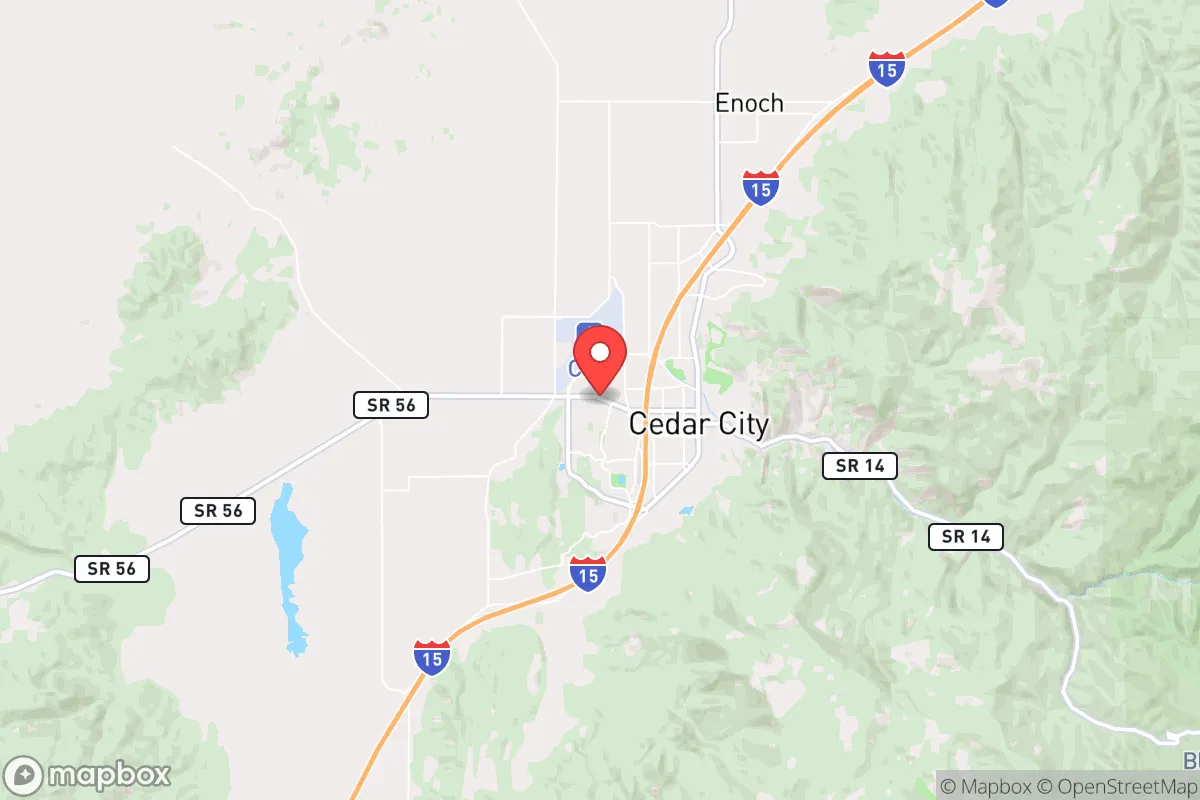
Photo: Wikipedia
Quality of Life in Cedar City, UT
A high quality of life with strong walkability, manageable living costs, healthy neighborhood signals, and solid amenity access.
What does Quality of Life tell us?
Quality of Life blends cost of living, nearby amenities, socioeconomic signals, and neighborhood character. City-level scores represent the whole municipality; individual neighborhoods can differ.
What does this tell us?
Quality of Life blends cost of living, nearby amenities, socioeconomic signals, and neighborhood character. City-level scores represent the whole municipality; individual neighborhoods can differ.
Cost of Living
1% above national average
The Real Cost of Living in Cedar City, UT for 2026
| Tier | Individual | Family (4) |
|---|---|---|
| Survival | $16k | $30k |
| Comfortable | $68k | $99k |
| Luxury | $115k+ | $179k+ |
| Elite (Top 5%) | $136k+ | $212k+ |
64%
The Area Signal
A metric tracking the socioeconomic signals of the area.
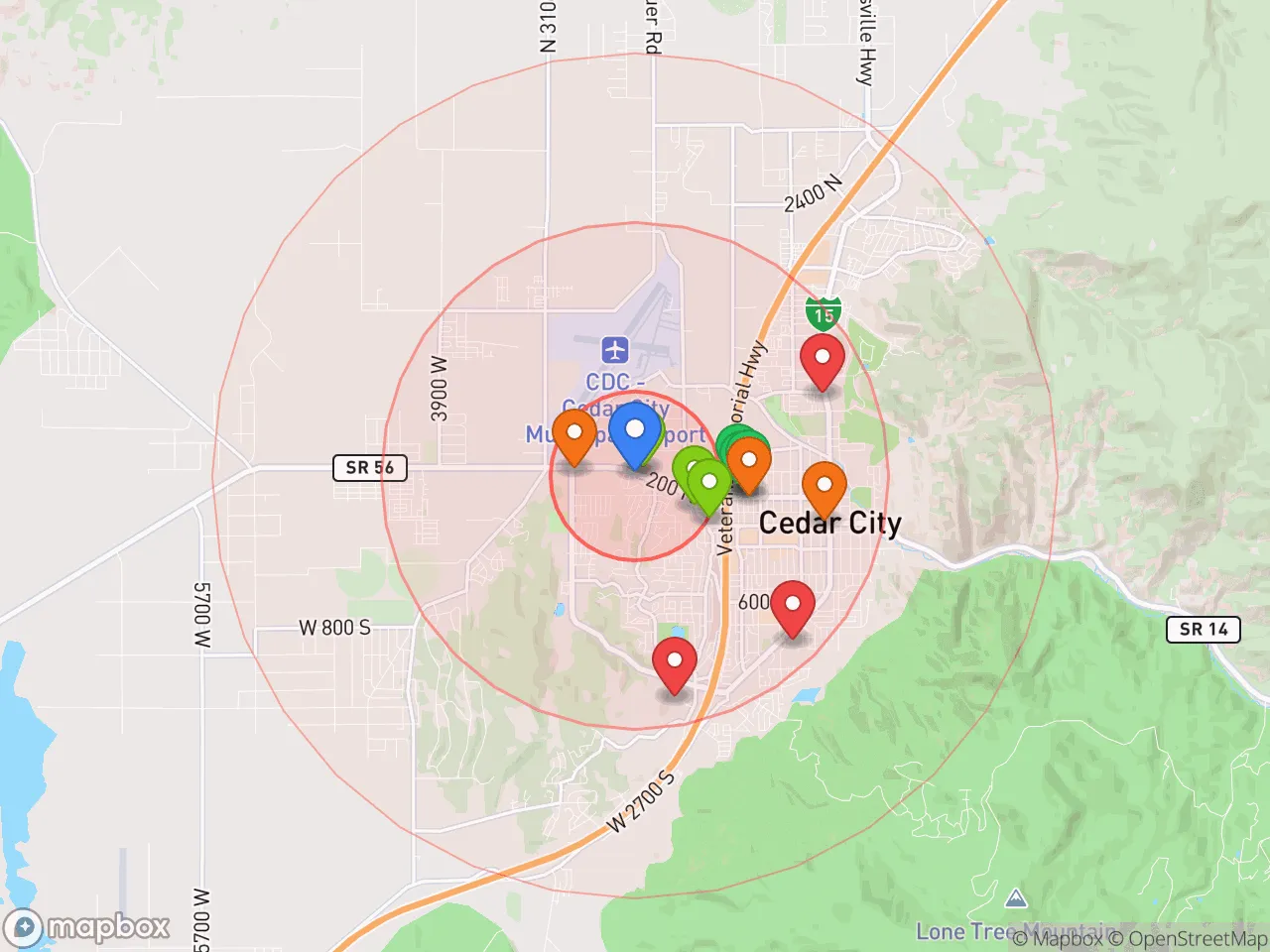
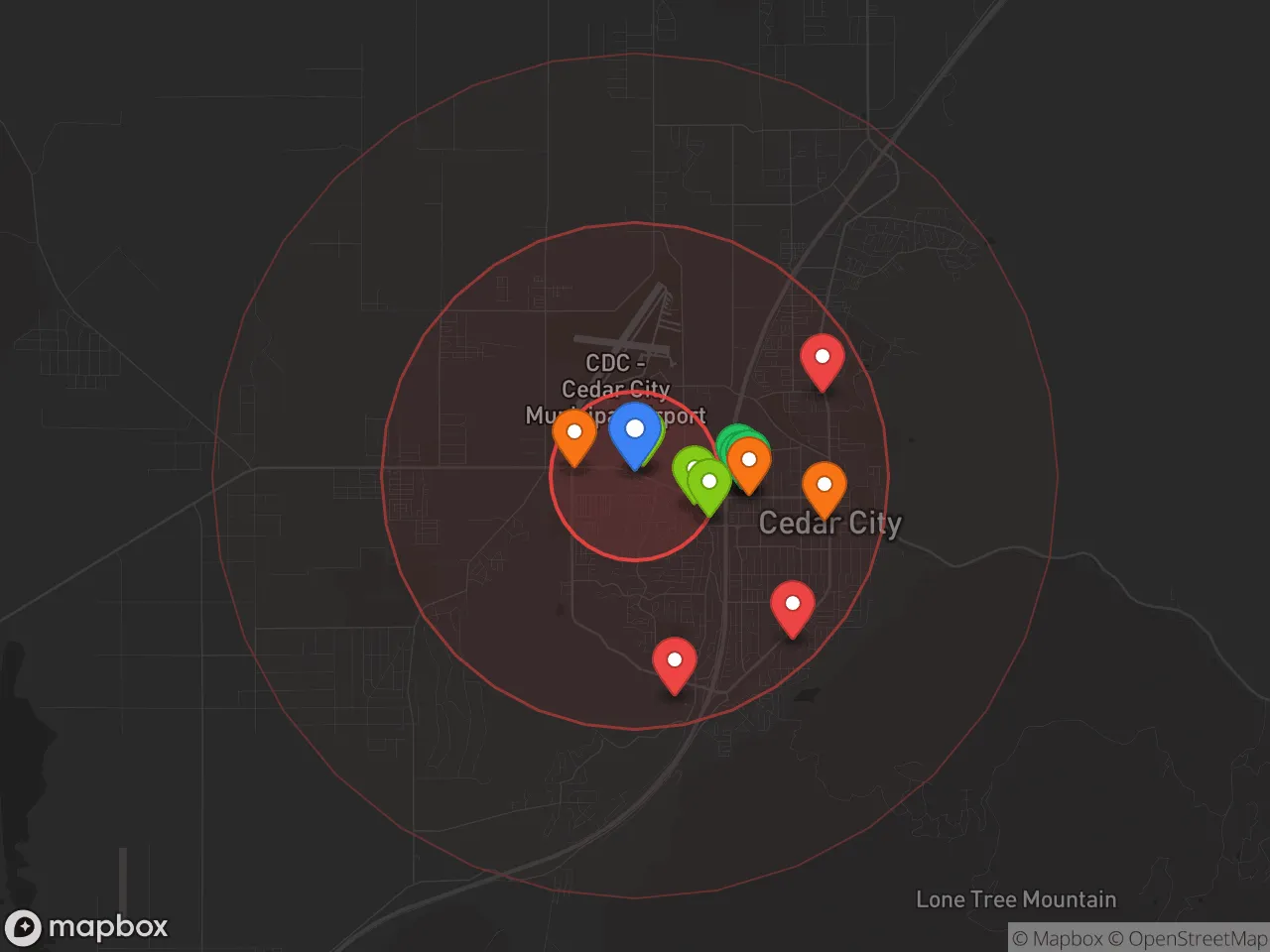
Hobbies
Explore the areaGroceries
2 within 10 miles
Gas
20 within 10 miles
Hospital
1 within 20 miles
Airport
LAS — North Las Vegas
Post Office
USPS — Cedar City, UT
Critical Amenities
Quality-of-Life Analysis
Cedar City, Utah, presents a quality of life defined by a blend of small-town affordability and access to world-class outdoor recreation, attracting a population that is notably more family-oriented and cost-conscious than the state's booming Wasatch Front corridor. With a cost of living index of 101—essentially on par with the national average—the city offers a financial foothold that is increasingly rare in the Intermountain West. The median home value of $348,000 and median rent of $1,008 are roughly half of what one would find in Salt Lake City or Park City, drawing a demographic mix of young families, Southern Utah University students, and remote workers seeking a lower-stress, higher-value lifestyle.
How housing costs and affordability compare to St. George and Provo
Cedar City’s housing market is a key differentiator from its rapidly growing neighbors. While St. George (about 50 miles south) has seen median home prices soar past $550,000, Cedar City’s $348,000 median remains attainable for households earning the local median income. Renters also benefit: the median rent of $1,008 is roughly 30% lower than in St. George and nearly 40% lower than in Provo. This affordability is not driven by a weak economy—the city’s unemployment rate has historically tracked below the national average—but by a slower pace of speculative development and a larger inventory of older, smaller homes. The trade-off is a limited luxury housing market; most available homes are three-bedroom ranches or townhomes built before 2000. For buyers and renters willing to accept an older stock, Cedar City offers a path to homeownership that has largely vanished from Utah’s more popular destinations.
What daily life is like for families: schools, amenities, and commute
Daily life in Cedar City revolves around a compact, car-optional core where the average commute is just over 13 minutes—one of the shortest in the state. The Iron County School District operates 14 schools, with Cedar High School and Canyon View High School both posting graduation rates above 90%. Southern Utah University (SUU) anchors the cultural calendar, providing theater productions, Division I athletics, and a steady influx of young adults that keeps the downtown corridor active. For outdoor amenities, the city sits at the mouth of Cedar Canyon, offering immediate access to hiking, mountain biking, and rock climbing in the Dixie National Forest. The Brian Head Ski Resort, 30 minutes away, provides winter recreation without the crowds of Park City. Grocery and retail options are sufficient for daily needs, though residents typically drive to St. George for major shopping or specialized healthcare. The overall rhythm is slower and quieter than the Wasatch Front, with a strong emphasis on community events like the Utah Shakespeare Festival and the Cedar City Livestock & Heritage Festival.
Cedar City is best suited for families, outdoor enthusiasts, and cost-conscious professionals who prioritize a short commute and low housing costs over urban nightlife or high-end retail. Retirees on fixed incomes also find the affordability attractive, as do SUU faculty and staff who can walk or bike to campus. The city’s conservative, family-oriented culture and dry, four-season climate appeal to those seeking a predictable, low-crime environment. However, residents seeking a vibrant food scene, diverse employment beyond education and healthcare, or proximity to a major airport may find Cedar City limiting. For the right person—someone who values financial breathing room and immediate access to public lands—Cedar City delivers a quality of life that feels both grounded and expansive.

Crime in Cedar City, UT
Lower crime rates than 90% of comparable U.S. locations.
Violent CrimeViolent Crime Analysis
Property CrimeProperty Crime Analysis
Crime Analysis
Cedar City, Utah, presents a notably safe environment compared to national averages, with violent and property crime rates significantly below U.S. benchmarks. The city's violent crime rate of 120.4 incidents per 100,000 residents is roughly one-third the national average, while its property crime rate of 514.6 per 100,000 is about half the national figure. This favorable safety profile is consistent with broader Utah trends, though Cedar City's rates are slightly higher than the state's overall averages, reflecting its role as a regional hub for Iron County.
Crime in context
When compared to the state of Utah, Cedar City's violent crime rate of 120.4 per 100,000 is moderately above the state average of approximately 100 per 100,000, but still well within a low-crime range. Property crime in Cedar City (514.6 per 100,000) also exceeds the Utah average of roughly 400 per 100,000, yet remains far below the national property crime rate of over 1,900 per 100,000. The city benefits from a conservative legal and political environment—Iron County and Cedar City are not part of a large, liberal-leaning metro area with progressive prosecutors. This context is important: jurisdictions with progressive district attorneys and lenient sentencing policies often experience higher recidivism and emboldened criminal activity. Cedar City, by contrast, operates under a traditional law-and-order framework, which contributes to its relatively low crime figures and a justice system that prioritizes public safety and victim rights.
What residents experience
For daily life, Cedar City residents report feeling safe walking downtown and in residential neighborhoods, even after dark. The most common property crimes are theft from vehicles and minor burglaries, often concentrated near the Southern Utah University campus and commercial corridors like Main Street. Violent crime is rare and typically involves domestic incidents or isolated disputes rather than random attacks. The Cedar City Police Department maintains a visible presence, and community policing initiatives are active. Residents should still practice standard precautions—locking cars and homes, securing valuables—but the overall risk of victimization is low. The city's status as a regional center for retail, healthcare, and education does attract transient populations, but without the systemic issues seen in larger, more progressive urban areas.
Neighborhood-level variation in Cedar City is modest. The area around the university sees slightly higher property crime, particularly bicycle and package theft. Newer subdivisions on the city's east side and the more rural outskirts report the lowest crime rates. The historic downtown core is well-patrolled and generally safe. Overall, Cedar City offers a secure living environment, reinforced by its conservative governance and community-oriented policing, making it a strong choice for families and retirees seeking a low-crime community in southern Utah.
* Values derived from national, state, county, city and local statistics and may differ in a specific area. Last updated: 2026-04-21T13:04:19.000Z
Narrative content on this page is AI-generated and may contain mistakes. Verify any details that matter before acting on them.
ReloMaps may earn a commission from affiliate links at no extra cost to you.

