Strategic Assessment of Celebration, FL
Workable tactical position. Some exposure to population density or targets, but generally defensible in a crisis.
What does the Strategic Assessment tell us?
Our Strategic Assessment grades tactical survivability of an area. Major population centers, military targets, fallout zones, natural disasters, and border exposure all drive risk — lower exposure means a more defensible position in a crisis.
This is heavily inspired by Joel Skousen's Strategic Relocation book. Highly recommended you checkout the book ($)What does this tell us?
Our Strategic Assessment grades tactical survivability of an area. Major population centers, military targets, fallout zones, natural disasters, and border exposure all drive risk — lower exposure means a more defensible position in a crisis.
This is heavily inspired by Joel Skousen's Strategic Relocation book. Highly recommended you checkout the book ($)Strategic Pillars

Key Distances
Regional Safe Places
Below is our recommended "safe zones" in Florida and the surrounding area based on our strategic heuristics. For most people, it's unrealistic to live in a “safe zone” full-time due to work, family or other personal reasons. They tend to be more rural. However, many of these areas are perfect for second homes and retreat properties that double as a vacation home or even a short-term rental.

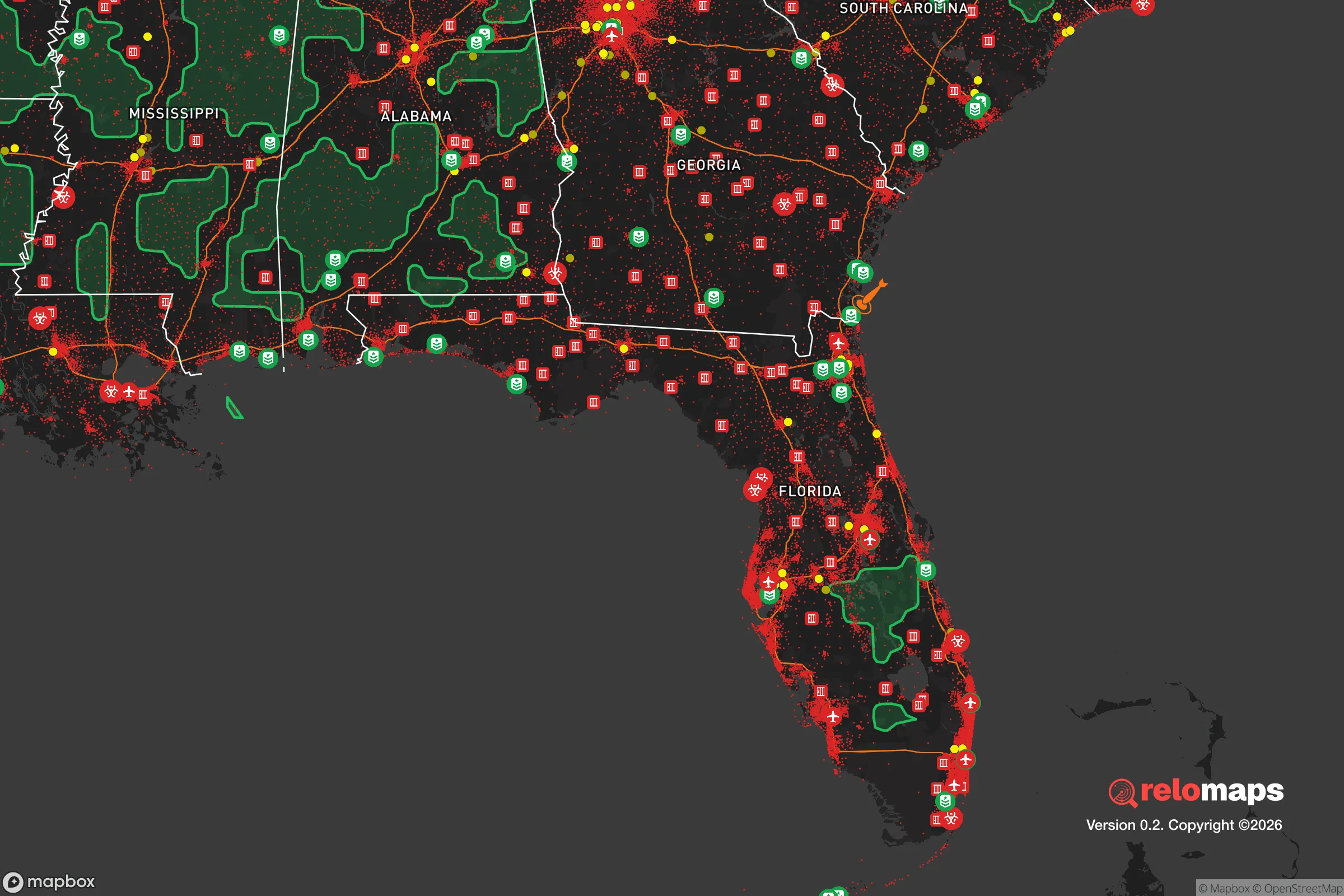


Important Note: For informational purposes only. This does not mean nothing bad ever happens in the green zones. Please use common sense. This is based on public data and modeled with AI. We tried to take a conservative approach but mistakes happen. We update this regularly as new information becomes available.
Solar Generator Recommendations
Backup power matters more here than in safer locations. We've picked three solar generators across budgets and capacity tiers — start with the budget unit if you only need a few essentials, or step up if you want to run a fridge and HVAC for days at a time.

Jackery Portable Power Station Explorer 300
Budget OptionPower on the Go: Weighing only 11 lbs, it's convenient to set up and store with book-sized foldable solar panels

BLUETTI Portable Power Station AC180
Designed for both indoor and outdoor scenarios, AC180 is highly capable as it has a robost capacity and continuous output power.

EF ECOFLOW DELTA Pro Ultra Power Station
Upgraded PickEcoFlow DELTA Pro Ultra is a whole-home energy system designed to grow with your family. Integrated with the Smart Home Panel 2, it scales to meet your evolving energy needs — keeping your home powered, intelligent, and secure through every stage of life.
We earn a commission, at no additional cost to you.
Strategic Assessment Analysis
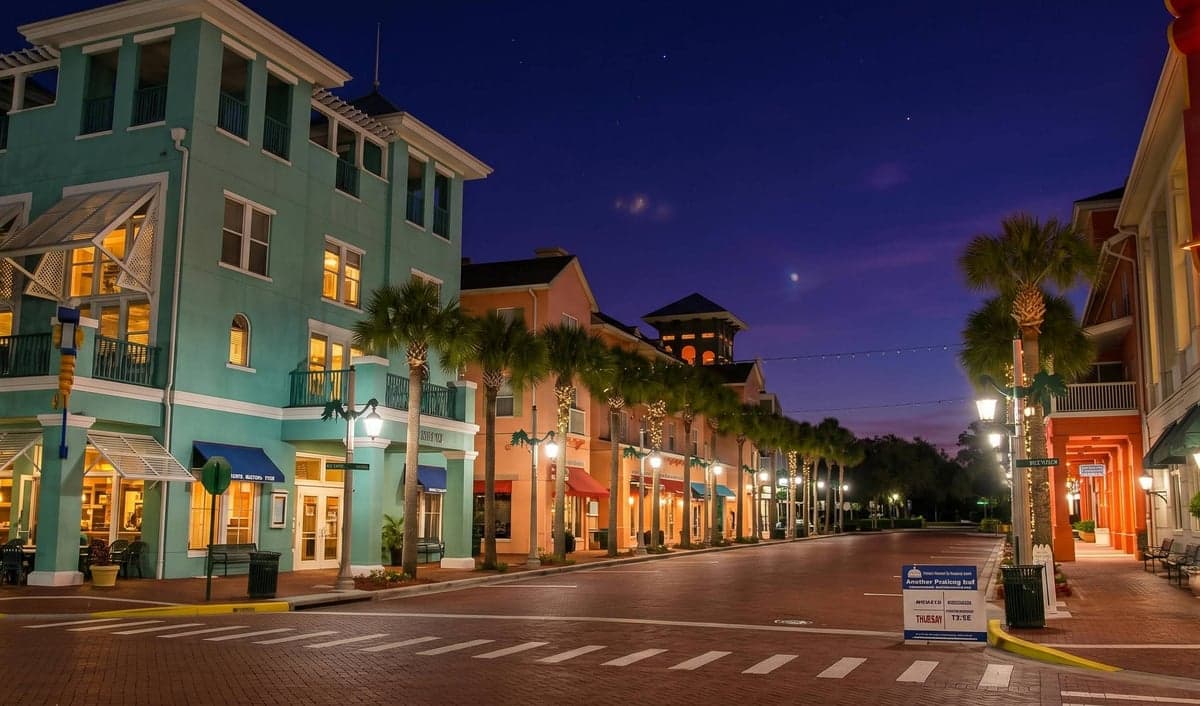
Celebration, Florida, presents a complex strategic picture for the conservative prepper. On one hand, its master-planned design offers a controlled, defensible layout with strong community cohesion. On the other, its location in the heart of Central Florida places it within the immediate fallout zone of Orlando's metropolitan vulnerabilities—a major negative for those prioritizing long-term survival and autonomy. The town's resilience is a double-edged sword: excellent for short-term civic stability, but potentially a liability in a prolonged crisis due to its dependence on external infrastructure and proximity to high-density population centers.
Geographic position and natural advantages for a strategic relocation
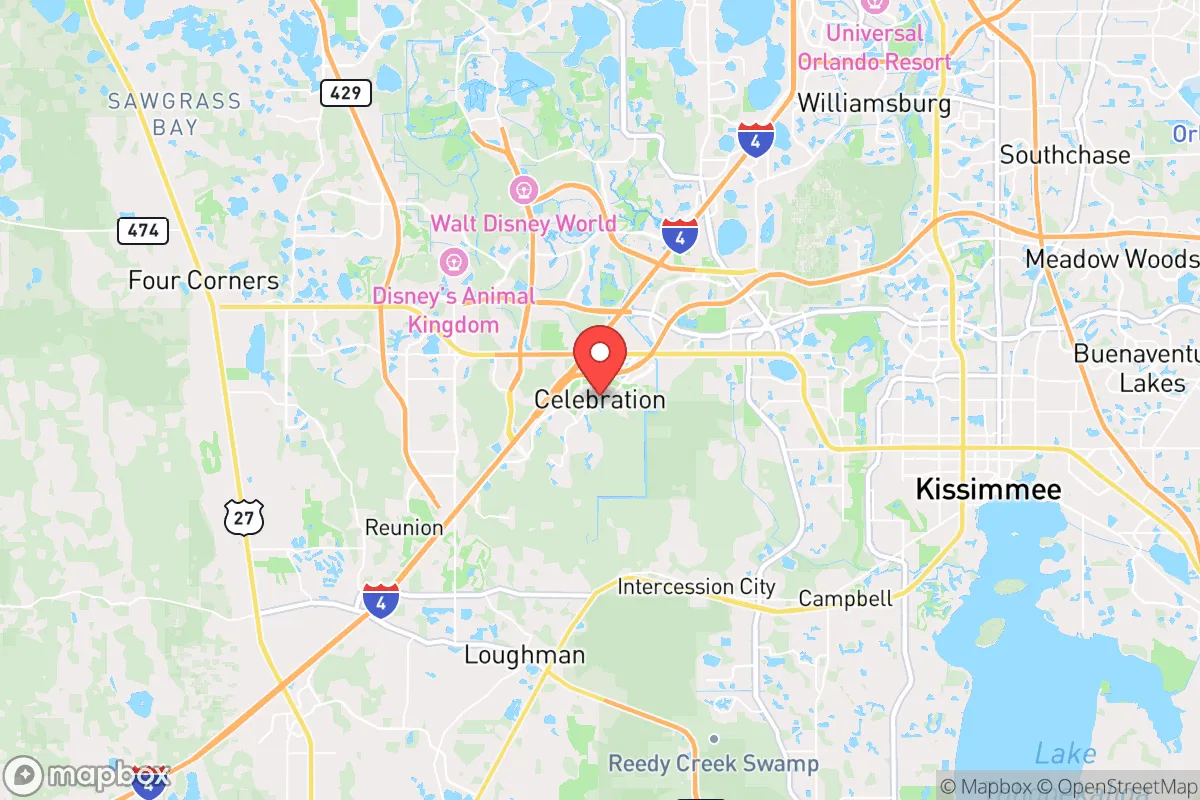
Celebration sits in Osceola County, roughly 20 miles southwest of downtown Orlando. Its geographic position offers a mix of benefits and drawbacks from a prepper standpoint. The area is inland, which eliminates storm surge risk from hurricanes—a significant advantage over coastal Florida towns. The terrain is flat, with sandy soils that drain quickly, reducing flood risk in most areas. The region's natural water table is high, meaning private wells can be viable if permitted, though most homes here are on municipal water. The climate allows for year-round gardening, with a growing season that stretches 10-11 months. However, the subtropical humidity and frequent afternoon thunderstorms create challenges for long-term food storage and infrastructure maintenance. The town's location near major highways—I-4 and the Florida Turnpike—provides evacuation routes but also makes it a natural chokepoint for refugee flow during a crisis. The proximity to the Kissimmee Chain of Lakes offers a freshwater resource, but these waters are heavily developed and would be contested in a collapse scenario.
Risks, exposures, and proximity to fallout-relevant landmarks
The most significant strategic liability for Celebration is its proximity to Orlando's critical infrastructure and population density. Within a 30-mile radius lie Orlando International Airport (MCO), a major transportation hub that would be a primary target during a national security event, and the Orlando Naval Training Center (now a mixed-use development), which retains historical military significance. The area is also within 40 miles of the Cape Canaveral Space Force Station and the Kennedy Space Center, both high-value targets in a conflict scenario. Celebration itself is surrounded by tourist infrastructure—Disney World, Universal Studios, and dozens of hotels—which would become massive humanitarian crisis zones during a mass casualty event or civil unrest. The town's population of roughly 10,000 swells daily with tourists and commuters, creating a transient population that complicates community trust and resource tracking. Osceola County has seen rapid growth, with the county population exceeding 400,000 in 2024, up from 270,000 in 2010. This density means that any grid-down scenario would see immediate competition for resources. The area's power grid is tied to the Florida peninsula's fragile system, which has a history of outages during hurricanes and heatwaves. Celebration's HOA-governed status means strict rules on visible prepping—no backyard chickens, no large water storage tanks, no obvious defensive modifications—which limits practical preparedness for those who want to stay under the radar.
Practical resilience for a relocator: food, water, energy, and defensibility
For the relocator serious about self-sufficiency, Celebration presents significant hurdles. Water security is the primary concern: the town is entirely dependent on municipal water from the Toho Water Authority, which draws from the Floridan Aquifer. In a prolonged grid-down event, water treatment and pumping would cease within hours. Rainwater collection is possible but limited by HOA restrictions and the need for large cisterns. The average annual rainfall is about 50 inches, so catchment is viable if you can hide the system. Food production is constrained by lot sizes—most homes sit on quarter-acre lots or less, with strict landscaping covenants. Community gardens exist but are not designed for survival-level output. The local soil is sandy and nutrient-poor, requiring significant amendment for serious gardening. Energy independence is difficult due to HOA restrictions on visible solar panels and generators. Many homes have natural gas connections, which could be used for cooking and heating if the grid stays up, but gas lines are vulnerable to disruption. Defensibility is the town's strongest suit: the master-planned layout features limited entry points, wide streets that can be barricaded, and a dense tree canopy that provides cover. The community's design encourages neighborly interaction, which can be leveraged for mutual aid networks. However, the town's desirability means it would be a prime target for looters and refugees during a crisis. The nearest rural retreat areas—like the cattle ranches of Osceola County or the scrublands of Polk County—are 30-45 minutes away, making Celebration a poor base for bug-out scenarios. For those committed to staying, building a deep pantry, investing in a concealed water filtration system (like a Berkey or Sawyer), and establishing a trusted neighbor network are essential. The local gun culture is moderate; Osceola County is shall-issue for concealed carry, and there are several ranges within 20 minutes, but the town itself is not a firearms-friendly environment.
The overall strategic picture for Celebration is one of calculated risk. It offers a high quality of life in stable times, with excellent schools, low crime, and a strong sense of community—all valuable for raising a family. But for the prepper who prioritizes long-term survival, autonomy, and the ability to weather a societal collapse, the negatives outweigh the positives. The town's dependence on fragile infrastructure, its proximity to high-value targets and dense population centers, and its restrictive HOA governance make it a poor choice for those seeking true resilience. A better option for the conservative relocator would be a more rural property in the Florida Panhandle or the inland counties north of Tampa, where land is cheaper, regulations are looser, and the population density is lower. If Celebration is your only option due to work or family, focus on building a deep network of trusted neighbors, invest in concealed preparedness systems, and have a solid bug-out plan for the first 72 hours of any major event. The town will hold together for a week or two in a crisis—after that, the surrounding chaos will likely overwhelm its defenses.

* Values derived from national, state, county, city and local statistics and may differ in a specific area. Last updated: 2026-05-13T16:26:24.000Z
Narrative content on this page is AI-generated and may contain mistakes. Verify any details that matter before acting on them.
ReloMaps may earn a commission from affiliate links at no extra cost to you.

