Political ClimatePolitical Climate in Celebration, FL
District shown is the primary district for this city’s centroid. Cities may span multiple districts.
Local Political AnalysisPolitical Analysis of Celebration, FL
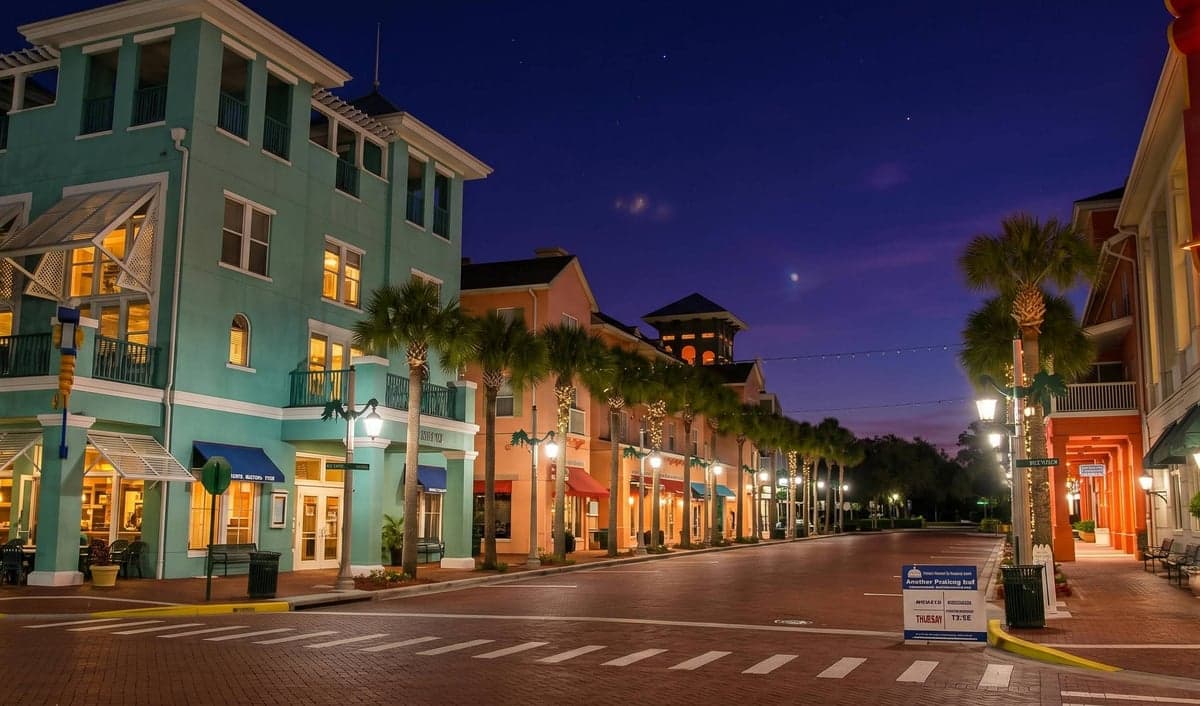
Look, I’ve lived in Central Florida my whole life, and I’ve watched Celebration change. It’s a Disney-planned town, so it was always going to be a bit of a bubble, but politically it’s shifted noticeably left in the last decade. The Cook PVI for Celebration is now D+4, which means it leans Democratic by about 4 points. That’s a stark contrast to the rest of Florida, which sits at R+5—a solid Republican lean. Ten years ago, this place felt more purple, but the influx of out-of-state transplants, especially from the Northeast and California, has really tilted the scales. You can feel it in local elections and even just chatting with neighbors at the farmers market.
How it compares
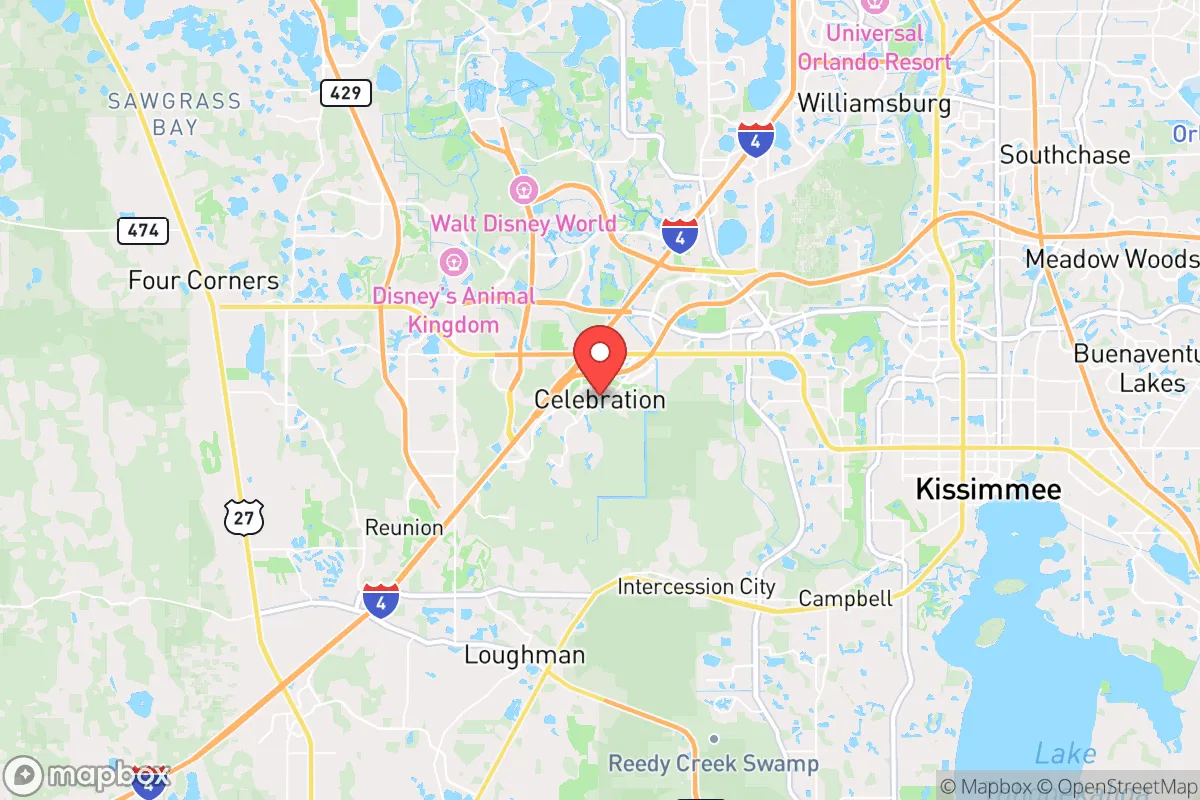
To put it bluntly, Celebration is an island of blue in a sea of red. Drive 15 minutes west to Kissimmee or 20 minutes north to St. Cloud, and you’re in much more conservative territory. Those areas vote reliably Republican, and you see it in everything from school board decisions to local zoning laws. The contrast is sharp. In Celebration, you’ll see more “In This House We Believe” signs and discussions about sustainability initiatives. In St. Cloud, it’s “Don’t Tread on Me” flags and a focus on keeping taxes low. The state as a whole, Florida, is a conservative powerhouse—it went for Trump by 3 points in 2024, and the legislature has been busy passing laws on parental rights in education and limiting local government overreach. Celebration, however, often feels like it’s fighting that current, pushing for more progressive policies on things like density and public transit that many of us see as government overreach into how we live our daily lives.
What this means for residents
For a conservative-leaning resident, living in Celebration can feel like you’re constantly on the back foot. The local HOA is notoriously strict—some would say overbearing—but that’s a double-edged sword. On one hand, it keeps the place pristine. On the other, it’s a perfect example of the kind of top-down control that makes you wary of bigger government. The shift towards progressive ideology here is concerning because it often comes with more regulations, higher fees, and a “we know best” attitude from local boards. You’ll see it in debates over adding more bike lanes (which nobody uses) or pushing for “affordable housing” mandates that drive up costs for everyone else. It’s a reminder that even in a red state, you can’t escape the creeping influence of progressive governance if you live in the wrong zip code.
Honestly, the cultural and policy distinctions are getting sharper every year. Celebration has a lot of nice amenities—the walkable downtown, the lakes—but the political vibe is increasingly at odds with the values that made Florida a great place to live in the first place: low taxes, personal freedom, and a government that stays out of your business. If you’re thinking of moving here, just know you’ll be living in a D+4 town in an R+5 state. You’ll have to drive to Kissimmee or St. Cloud to find a like-minded community, and you’ll need to keep an eye on local elections to make sure the pendulum doesn’t swing too far. It’s still a beautiful place to live, but the political climate is something you’ll have to navigate carefully.

State Political ClimatePolitical Climate in Florida
State Political AnalysisPolitical Environment in the State
Florida is a solidly Republican state with a Cook PVI of R+5, but don't let that single number fool you—it's a battleground in miniature, a place where a massive influx of new residents from blue states has been clashing with a deeply rooted conservative culture for the better part of two decades. Over the last 10-20 years, the state has lurched from a classic swing state (think hanging chads in 2000) to a reliably red powerhouse, driven by a coalition of Cuban-American exiles in Miami-Dade, conservative retirees in the Villages and along the Gulf Coast, and a growing population of fed-up transplants from New York and California. The dominant coalition is a mix of traditional fiscal conservatives, social conservatives, and a newer breed of "freedom-first" voters who care more about parental rights and vaccine mandates than tax rates.
Urban vs. rural divide
The political map of Florida is a study in contrasts. The major metros—Miami, Fort Lauderdale, Orlando, and Tampa—are the blue anchors, but even they are shifting. Miami-Dade County, once a Democratic stronghold, has been trending right for years, driven by the Cuban and Venezuelan exile communities who view the Democratic Party's leftward drift on socialism and immigration with deep suspicion. In 2020, Donald Trump actually improved his margin in Miami-Dade compared to 2016, a stunning reversal for a county that went for Hillary Clinton by 30 points. Meanwhile, the rural Panhandle—places like Panama City, Pensacola, and the sprawling farmland around Tallahassee—is deep red, often voting 70-80% Republican. The I-4 corridor, which runs from Tampa through Lakeland to Orlando, is the classic swing region, but even there, the suburbs are reddening. Lakeland and Polk County are now reliably Republican, while the city of Orlando itself remains a blue island in a sea of red. The real story is the exurbs: places like Ocala and The Villages are growing fast and voting overwhelmingly Republican, pulling the state's center of gravity further right.
Policy environment
Florida's policy environment is a conservative's dream, at least on paper. There is no state income tax, which is a huge draw for high-earners and retirees. The regulatory posture is business-friendly, with a right-to-work law and a tort reform system that has made it harder to sue companies. On education, Governor Ron DeSantis has been a national leader in the parental rights movement, signing the Parental Rights in Education Act (HB 1557), which prohibits classroom instruction on sexual orientation and gender identity in grades K-3, and the Stop WOKE Act, which restricts how race and gender can be taught in schools and workplaces. The state has also expanded school choice dramatically, with the Family Empowerment Scholarship program allowing nearly any family to use tax dollars for private school or homeschooling. On healthcare, Florida did not expand Medicaid under the Affordable Care Act, and the state has been a leader in opposing vaccine mandates and lockdowns. Election laws were tightened after 2020, with stricter voter ID requirements, limits on drop boxes, and a ban on mass mail-in ballot applications. For a conservative, this is a state that has been actively pushing back against the progressive agenda.
Trajectory & freedom
Is Florida becoming more or less free? The answer is complicated, but for the conservative-leaning reader, the trajectory has been overwhelmingly positive. The state has been a national leader in expanding personal liberty in several key areas. Gun rights are robust: Florida is a "shall issue" state for concealed carry, and in 2023, DeSantis signed a permitless carry law (HB 543), allowing law-abiding adults to carry a concealed firearm without a permit. Parental rights have been strengthened through the aforementioned HB 1557 and the expansion of school choice. Medical autonomy was a flashpoint during COVID, as Florida was one of the first states to ban vaccine passports and mask mandates in schools, and it passed a law prohibiting employers from mandating vaccines without broad exemptions. On the other hand, there are areas of concern. The state has a history of heavy-handed government in certain areas, such as the strict homeowner association (HOA) regulations and the powerful Department of Environmental Protection, which can slow down development. Property taxes are not low—they are about average nationally—and insurance costs have skyrocketed due to hurricane risk and litigation. But on the whole, the trend is toward more freedom, not less.
Civil unrest & political movements
Florida has seen its share of political flashpoints, but they are often more organized and less chaotic than in other states. The Moms for Liberty movement, which started in Florida, has been a powerful force in school board elections, pushing back against critical race theory and LGBTQ+ curriculum. On the left, groups like Dream Defenders have organized protests against police brutality and racial injustice, particularly in the wake of the Trayvon Martin and George Floyd cases. Immigration politics are a constant undercurrent, especially in South Florida, where the debate over sanctuary cities has been fierce. The state passed a law (SB 1718) in 2023 that requires businesses with more than 25 employees to use E-Verify and makes it a felony to transport undocumented immigrants into the state. This has been a major rallying point for conservatives. Election integrity remains a hot topic, with the state's new election police force (the Office of Election Crimes and Security) actively investigating voter fraud, which has been praised by the right and criticized by the left as voter suppression. A new resident would notice the strong presence of conservative activism at the local level, from county commission meetings to school board hearings, where debates over books and curriculum are common.
Projection
Over the next 5-10 years, Florida is likely to become even more Republican, but with a twist. The massive in-migration from blue states—roughly 1,000 people move to Florida every day—is not a monolith. Many of these new residents are fleeing high taxes and crime in places like New York, Illinois, and California, and they are bringing their conservative or libertarian-leaning politics with them. However, a significant minority are also bringing progressive attitudes on social issues, which could create friction in the suburbs. The demographic shift is also key: the Cuban-American community, while still reliably Republican, is aging, and younger Cuban-Americans are more moderate. Meanwhile, the Puerto Rican population in Central Florida, particularly in Orlando and Kissimmee, leans Democratic. The wild card is the growing population of conservative retirees in the Naples, Sarasota, and Fort Myers areas, who are deeply engaged in local politics. Expect the state to continue passing laws that prioritize parental rights, school choice, and tax cuts, but also expect a growing battle over property insurance and housing affordability, which could become a major political issue. A new resident moving in now should expect to find a state that is firmly red, but with a vibrant and vocal blue minority that keeps things interesting.
For a new resident, the bottom line is this: Florida offers a policy environment that is broadly aligned with conservative values—low taxes, strong gun rights, parental control over education, and a business-friendly regulatory climate. You will find a state that has been actively pushing back against federal overreach and progressive social engineering. However, you should also be prepared for a high cost of living in desirable coastal areas, a volatile insurance market, and a political landscape that is still evolving as new residents pour in. If you value personal freedom and want to live in a place where your vote actually counts toward a conservative majority, Florida is one of the best bets in the country right now.
* Values derived from national, state, county, city and local statistics and may differ in a specific area. Last updated: 2026-05-13T16:26:24.000Z
Narrative content on this page is AI-generated and may contain mistakes. Verify any details that matter before acting on them.
ReloMaps may earn a commission from affiliate links at no extra cost to you.

