Photo: Wikipedia
Demographics of Celina, TX
Affluence Level in Celina, TX
An upper-middle-class area. Household wealth, education levels, and homeownership run ahead of national benchmarks.
People of Celina, TX
The people of Celina, Texas today number 27,141, forming a rapidly growing outer-ring suburb where a white-plurality majority (53.3%) coexists with substantial Hispanic (16.0%), Black (11.1%), East/Southeast Asian (7.2%), and Indian-subcontinent (4.8%) communities. The city’s character is defined by new construction, young families, and a high college-educated rate of 54.3%, giving it an upwardly mobile, family-oriented identity distinct from older Collin County towns. With a foreign-born share of just 7.8%—below the national average—Celina remains a predominantly native-born, English-dominant city even as its diversity has expanded rapidly since 2010.
How the city was settled and grew
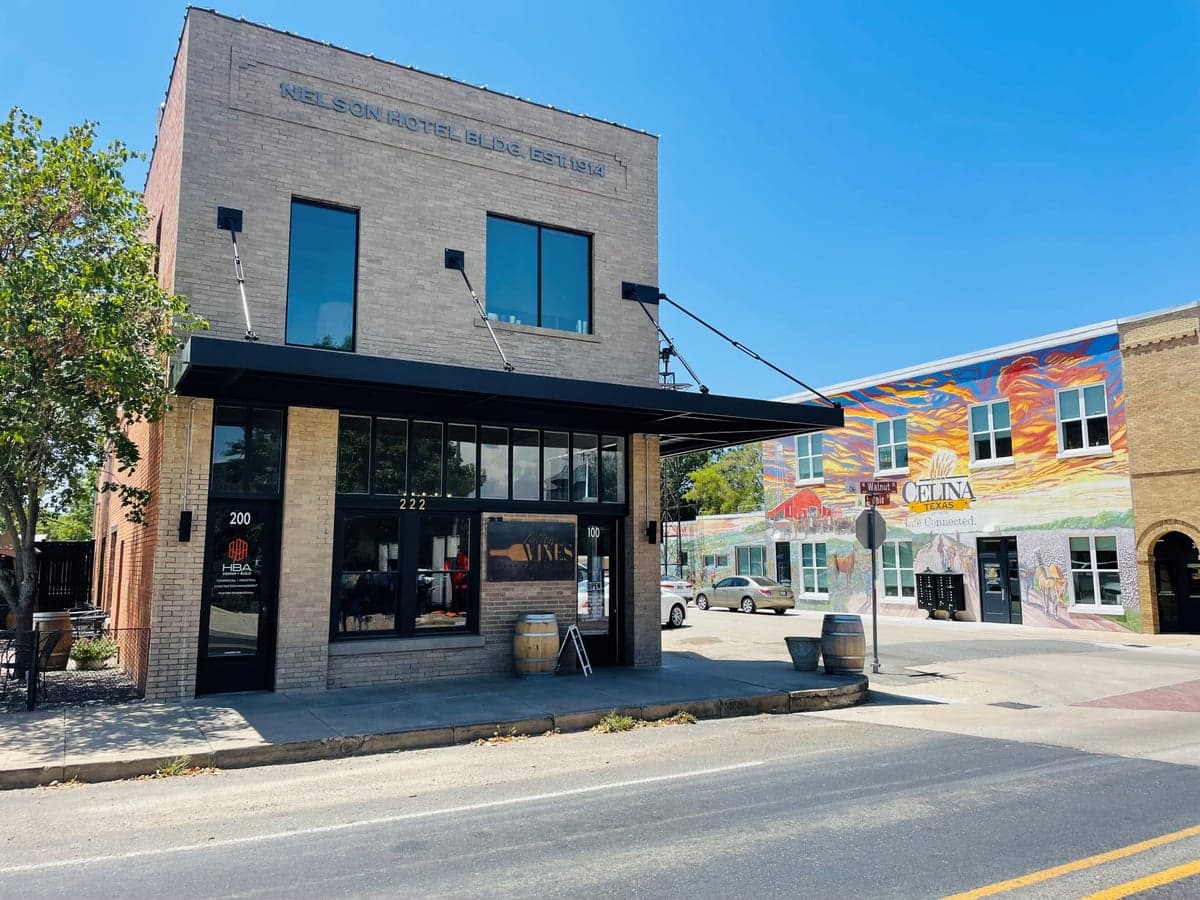
Celina was founded in 1874 as a farming and railroad stop along the Missouri-Kansas-Texas line, drawing Anglo-American settlers from the U.S. South and Midwest who established cotton and grain operations. The original townsite, now the Historic Downtown Celina district, was platted around the rail depot and filled with merchants, blacksmiths, and farmers of mostly German and Scots-Irish descent. By 1900, a small Black community had formed in the South Celina area near the railroad tracks, working as sharecroppers and domestic laborers on surrounding farms. The population remained under 1,000 through the 1960s, with little in-migration beyond natural increase and the occasional farm family from neighboring counties. No significant immigrant wave arrived during this period; Celina was a quiet, homogeneous agricultural hamlet.
Modern era (post-1965)
The post-1965 shift in U.S. immigration law had minimal immediate effect on Celina, as the city remained a tiny farm town until the 1990s. The real transformation began after 2000, when Dallas-Fort Worth’s suburban expansion reached Collin County’s northern tier. Master-planned communities such as Lakes of Prosper (partially in Celina’s ETJ) and Light Farms (a 1,200-acre development opened in 2014) drew white and Asian professional families from Plano, Frisco, and McKinney seeking larger lots and newer schools. The Mustang Lakes neighborhood, built around a golf course, attracted a mix of white and East/Southeast Asian buyers, while Cottonwood Creek and Villages of Celina became popular with Hispanic and Black families moving from Dallas and southern Collin County for affordable new homes. The Indian-subcontinent community, though small (4.8%), concentrated in the Preston Ridge area near the new Celina High School, drawn by the school district’s reputation and proximity to tech jobs in Frisco. Between 2010 and 2020, Celina’s population surged from 6,028 to 16,739, with the Hispanic share rising from 8% to 16% and the Black share from 3% to 11%, reflecting both domestic relocation and secondary migration from established immigrant hubs.
The future
Celina’s population is projected to exceed 50,000 by 2035, driven by continued master-planned development and annexation of surrounding ranchland. The city is not homogenizing but rather tribalizing into distinct enclaves: Light Farms and Mustang Lakes will likely remain majority-white with significant East/Southeast Asian minorities, while South Celina and Villages of Celina are trending toward majority-Hispanic and Black populations. The Indian-subcontinent community, though small, is growing steadily through chain migration from Frisco and Plano, and will likely concentrate in newer developments near the future Celina Parkway extension. The foreign-born share is expected to rise to 12-15% by 2035, but Celina will remain a predominantly native-born city compared to Plano or Carrollton. The key demographic tension will be between long-time Anglo residents in historic neighborhoods and the diverse, highly educated newcomers in master-planned communities, with school enrollment and city council representation as flashpoints.
For someone moving in now, Celina is becoming a stratified but family-stable suburb where neighborhood choice largely determines social environment. The city offers strong schools and new infrastructure, but lacks the ethnic enclave institutions—ethnic grocery stores, places of worship, community centers—found in older suburbs. New residents should expect a car-dependent, home-centered lifestyle where community forms around school events and homeowners’ associations rather than historic downtown or ethnic organizations.

* Values derived from national, state, county, city and local statistics and may differ in a specific area. Last updated: 2026-10-10T16:27:08.000Z
Narrative content on this page is AI-generated and may contain mistakes. Verify any details that matter before acting on them.
ReloMaps may earn a commission from affiliate links at no extra cost to you.

