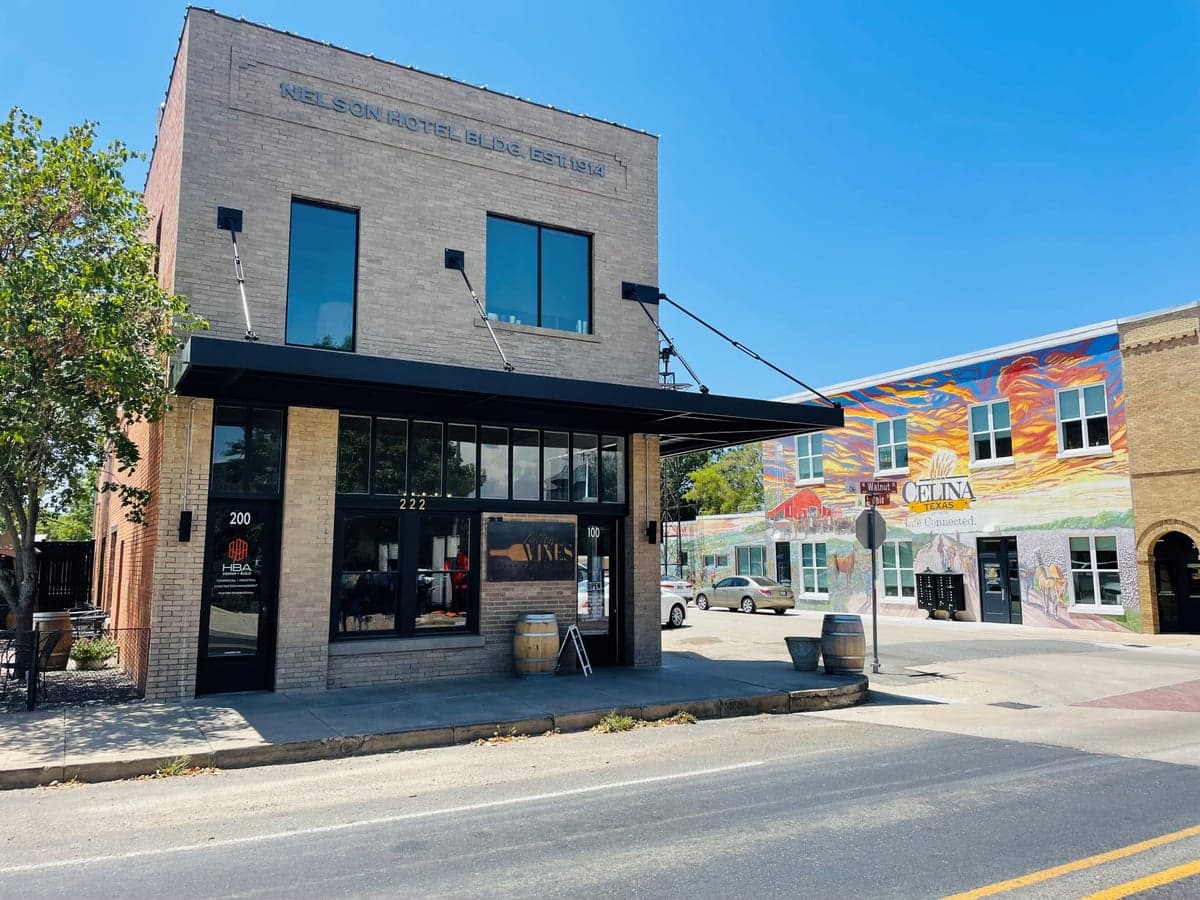
Photo: Wikipedia
Strategic Assessment of Celina, TX
Meaningful friction. Expect exposure to either population pressure, blast zones, or natural disaster risk. Consider buying a retreat property.
What does the Strategic Assessment tell us?
Our Strategic Assessment grades tactical survivability of an area. Major population centers, military targets, fallout zones, natural disasters, and border exposure all drive risk — lower exposure means a more defensible position in a crisis.
This is heavily inspired by Joel Skousen's Strategic Relocation book. Highly recommended you checkout the book ($)What does this tell us?
Our Strategic Assessment grades tactical survivability of an area. Major population centers, military targets, fallout zones, natural disasters, and border exposure all drive risk — lower exposure means a more defensible position in a crisis.
This is heavily inspired by Joel Skousen's Strategic Relocation book. Highly recommended you checkout the book ($)Strategic Pillars

Key Distances
Regional Safe Places
Below is our recommended "safe zones" in Texas and the surrounding area based on our strategic heuristics. For most people, it's unrealistic to live in a “safe zone” full-time due to work, family or other personal reasons. They tend to be more rural. However, many of these areas are perfect for second homes and retreat properties that double as a vacation home or even a short-term rental.

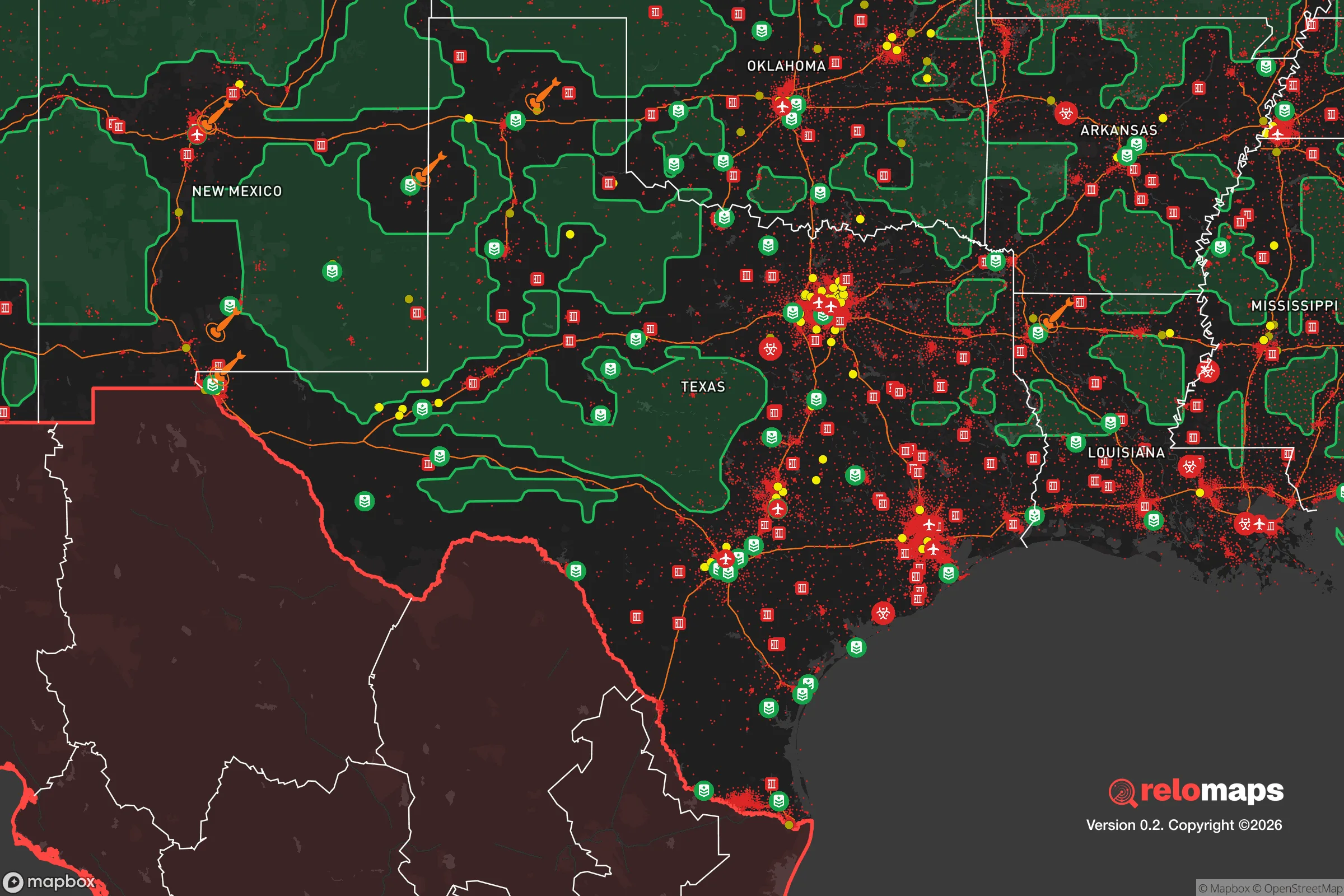


Important Note: For informational purposes only. This does not mean nothing bad ever happens in the green zones. Please use common sense. This is based on public data and modeled with AI. We tried to take a conservative approach but mistakes happen. We update this regularly as new information becomes available.
Solar Generator Recommendations
Backup power matters more here than in safer locations. We've picked three solar generators across budgets and capacity tiers — start with the budget unit if you only need a few essentials, or step up if you want to run a fridge and HVAC for days at a time.

Jackery Portable Power Station Explorer 300
Budget OptionPower on the Go: Weighing only 11 lbs, it's convenient to set up and store with book-sized foldable solar panels

BLUETTI Portable Power Station AC180
Designed for both indoor and outdoor scenarios, AC180 is highly capable as it has a robost capacity and continuous output power.

EF ECOFLOW DELTA Pro Ultra Power Station
Upgraded PickEcoFlow DELTA Pro Ultra is a whole-home energy system designed to grow with your family. Integrated with the Smart Home Panel 2, it scales to meet your evolving energy needs — keeping your home powered, intelligent, and secure through every stage of life.
We earn a commission, at no additional cost to you.
Strategic Assessment Analysis
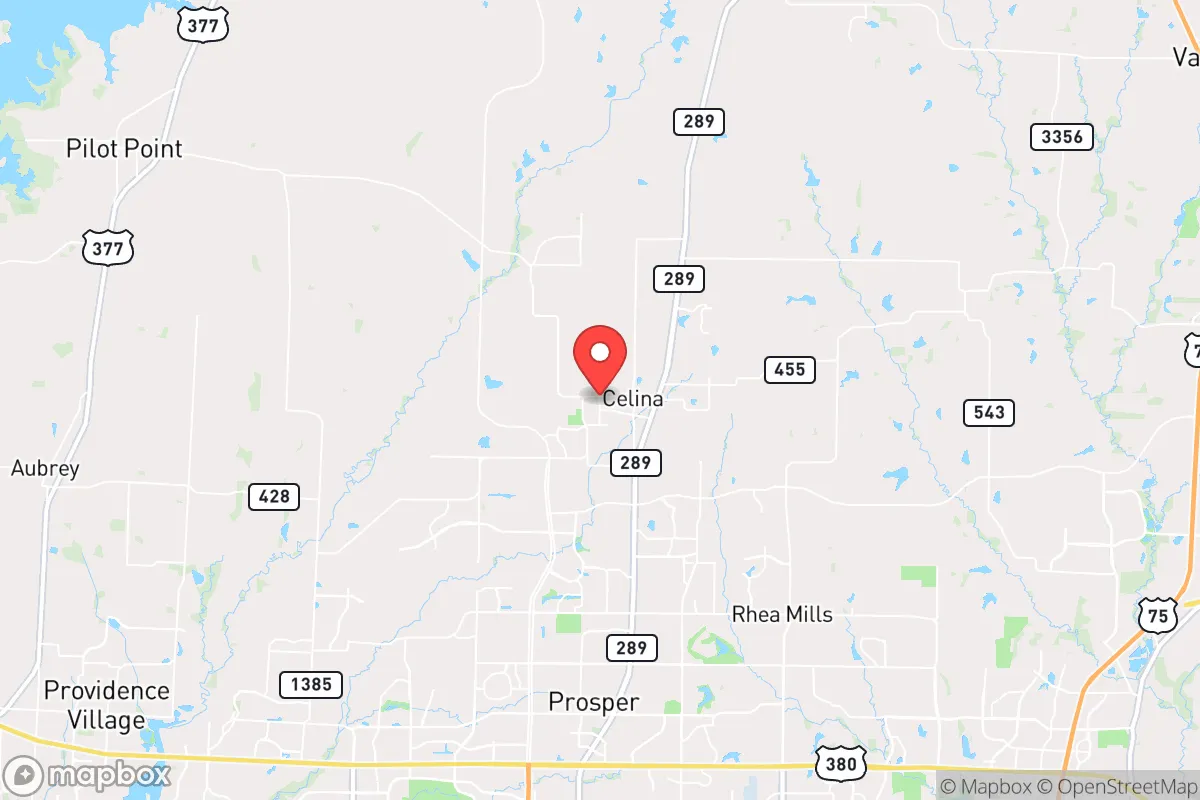
Celina, Texas, sits in a sweet spot that few fast-growing suburbs can claim: it’s close enough to the economic engine of the Dallas-Fort Worth metroplex to offer job access and supply-chain security, yet far enough from the urban core to provide genuine strategic depth. Located roughly 45 miles north of downtown Dallas and 35 miles from Fort Worth, this Collin County town benefits from being outside the immediate blast radius of any major metro-area target, while still having the infrastructure to support a self-sufficient lifestyle. The area’s explosive growth—from under 7,000 residents in 2010 to over 40,000 by 2025—has brought modern amenities, but the surrounding farmland and low-density development mean you’re not boxed in by concrete. For a relocator thinking in terms of long-term resilience, Celina offers a rare combination: proximity to resources without the choke points that plague denser suburbs like Frisco or McKinney.
Geographic position and natural advantages for long-term security
Celina’s geography is its strongest card. The town sits on the Blackland Prairie, a region of deep, fertile soils that historically supported agriculture—meaning local food production isn’t a fantasy. The Elm Fork of the Trinity River runs about 10 miles east, and Lake Lewisville (the region’s primary reservoir) is roughly 20 miles southeast, providing a reliable surface water source. Unlike areas dependent on the Ogallala Aquifer, Collin County’s groundwater is more accessible via shallow wells, though you’ll want to test for mineral content. The terrain is gently rolling, with no major floodplains within the town limits, reducing the risk of catastrophic flooding. Elevation averages around 650 feet, so you’re not in a tornado alley bullseye—though North Texas still sees its share of severe weather. The lack of dense tree cover means good line of sight for property defense, and the open landscape makes it harder for any organized threat to move undetected. For a prepper, the key takeaway is that Celina isn’t a natural disaster magnet; it’s a place where you can dig in without fighting the environment.
Risks, exposures, and proximity to fallout-relevant landmarks
No location is perfect, and Celina has its share of strategic vulnerabilities. The most immediate concern is its proximity to the Dallas-Fort Worth metroplex, a population center of over 8 million that would be a primary target in any major conflict or terrorist event. A ground-level nuclear detonation at DFW Airport (35 miles south) would put Celina outside the lethal blast radius but well within the fallout plume zone, depending on wind direction. The same applies to a strike on the Federal Reserve Bank of Dallas or the numerous defense contractors in the region, like Lockheed Martin in Fort Worth. On a more day-to-day level, the town’s rapid growth has strained local infrastructure—roads like US-380 and FM-428 are already congested, and a mass evacuation scenario would turn them into parking lots. The nearby Collin County Regional Airport (15 miles east) is a potential staging ground for military or FEMA operations, which could be either a resource or a liability depending on the situation. Power grid reliability is another concern: Texas’s ERCOT grid has proven fragile, and Celina is on the same system that failed during Winter Storm Uri in 2021. Natural gas pipelines and a major electrical substation near the town center are potential single points of failure. For the strategic relocator, these risks are manageable with proper planning—but they’re real, and ignoring them would be foolish.
Practical resilience for a relocator: food, water, energy, and defensibility
Celina’s practical resilience comes down to four pillars: food, water, energy, and defensibility. On food, the surrounding agricultural land is a genuine asset. You can find small farms selling produce, eggs, and meat within a 10-mile radius, and the Collin County Farmers Market in nearby McKinney is a reliable source for bulk purchases. For long-term storage, the dry climate (average humidity around 65%) is better than the Gulf Coast but still requires proper sealing to prevent spoilage. Water is the bigger challenge. Municipal water comes from the North Texas Municipal Water District, which draws from Lake Lavon and the Sabine River—both vulnerable to drought and contamination. A private well is the gold standard here, and many properties in the outskirts already have them. Drilling a new well runs $10,000–$20,000, but it’s the single best investment you can make for water security. Rainwater catchment is viable, given the area averages 38 inches of rain per year, but you’ll need significant storage to get through dry spells. Energy resilience is improving. Solar adoption is growing, and net metering policies with CoServ (the local electric cooperative) are favorable. A solar array with battery backup—say, a 10kW system with a Tesla Powerwall or similar—can keep a household running through grid outages. Natural gas generators are also common, and propane delivery is reliable. Defensibility is where Celina shines. The town’s layout is mostly low-density residential with large lots, meaning you can create standoff distance. Many homes back onto open fields or undeveloped land, giving you multiple escape routes. The local police department is well-funded (Collin County is one of the wealthiest in Texas), but response times in the outskirts can be 15–20 minutes. A good security system, reinforced doors, and a neighborhood watch network are practical, not paranoid. For the prepper, Celina offers the rare ability to build a self-sufficient homestead without being completely isolated from civilization.
The overall strategic picture for Celina is one of calculated opportunity. It’s not a remote bunker location—you’re still within an hour of a major metro area, which brings both risks and rewards. The risks are real: proximity to potential targets, grid fragility, and evacuation bottlenecks. But the rewards are equally tangible: fertile land, accessible water, a growing community of like-minded individuals, and a local government that’s generally pro-property rights and low-regulation. For a conservative-leaning relocator who wants to be prepared for civic unrest, economic collapse, or natural disasters, Celina offers a middle path. You’re not hiding in the hills, but you’re not stuck in the kill zone either. The key is to treat it as a base of operations—invest in your own infrastructure, build relationships with neighbors, and keep a low profile. In a world that’s increasingly uncertain, Celina gives you the tools to ride out the storm without having to go completely off the grid. That’s a rare find, and it’s worth serious consideration.

* Values derived from national, state, county, city and local statistics and may differ in a specific area. Last updated: 2026-10-10T16:27:08.000Z
Narrative content on this page is AI-generated and may contain mistakes. Verify any details that matter before acting on them.
ReloMaps may earn a commission from affiliate links at no extra cost to you.

