
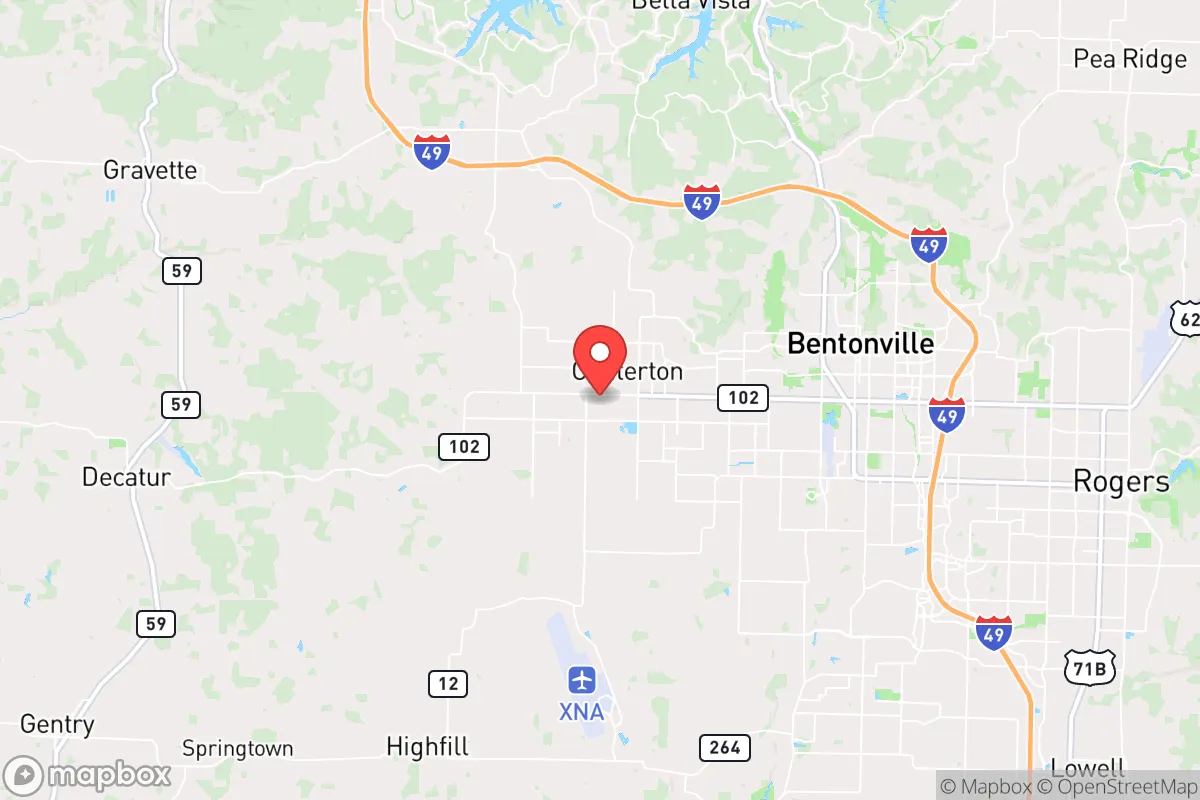
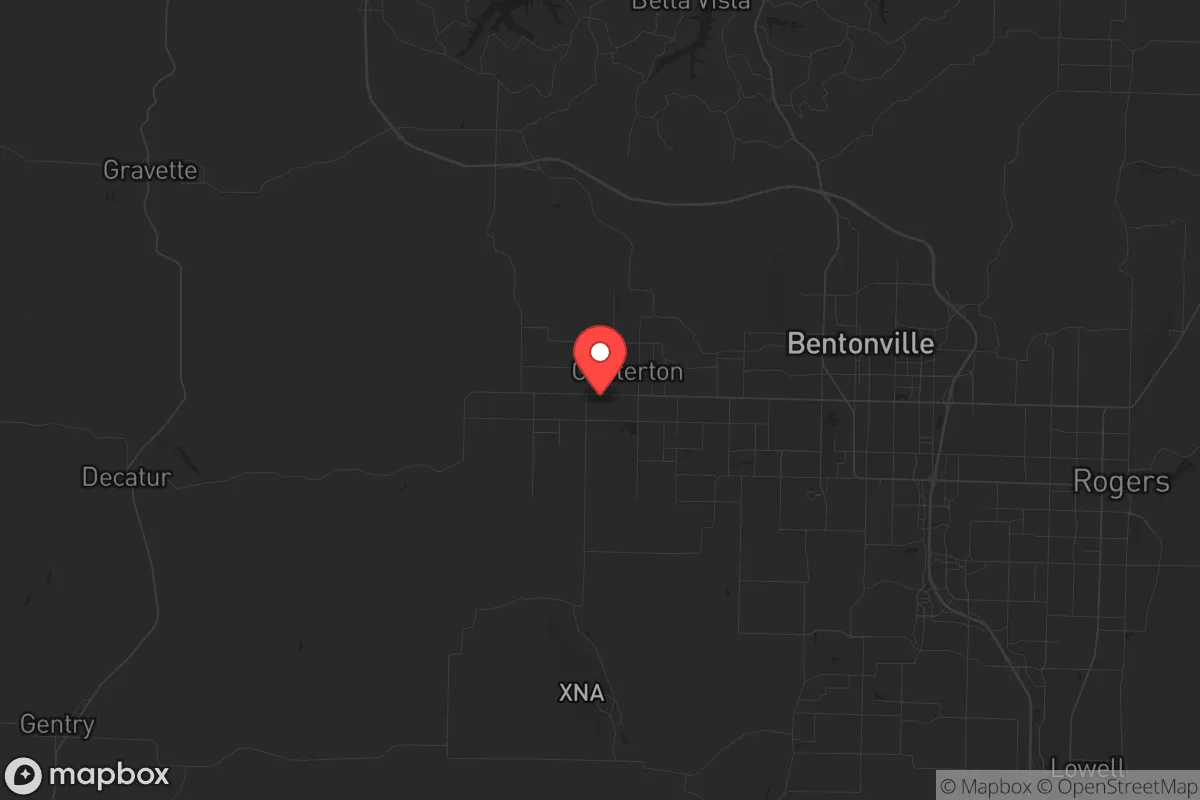
Photo: Wikipedia
Strategic Assessment of Centerton, AR
Workable tactical position. Some exposure to population density or targets, but generally defensible in a crisis.
What does the Strategic Assessment tell us?
Our Strategic Assessment grades tactical survivability of an area. Major population centers, military targets, fallout zones, natural disasters, and border exposure all drive risk — lower exposure means a more defensible position in a crisis.
This is heavily inspired by Joel Skousen's Strategic Relocation book. Highly recommended you checkout the book ($)What does this tell us?
Our Strategic Assessment grades tactical survivability of an area. Major population centers, military targets, fallout zones, natural disasters, and border exposure all drive risk — lower exposure means a more defensible position in a crisis.
This is heavily inspired by Joel Skousen's Strategic Relocation book. Highly recommended you checkout the book ($)Strategic Pillars

Key Distances
Regional Safe Places
Below is our recommended "safe zones" in Arkansas and the surrounding area based on our strategic heuristics. For most people, it's unrealistic to live in a “safe zone” full-time due to work, family or other personal reasons. They tend to be more rural. However, many of these areas are perfect for second homes and retreat properties that double as a vacation home or even a short-term rental.
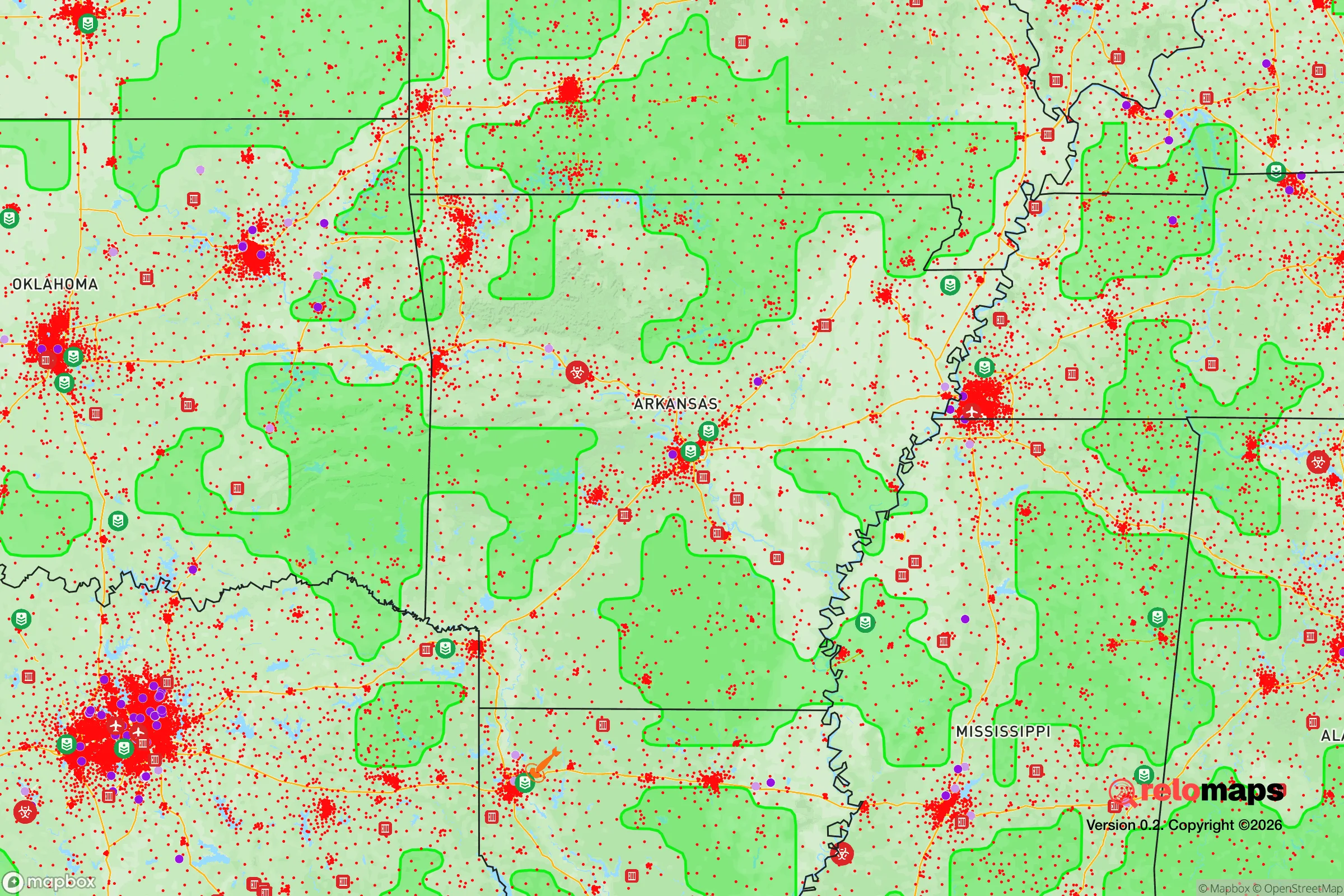
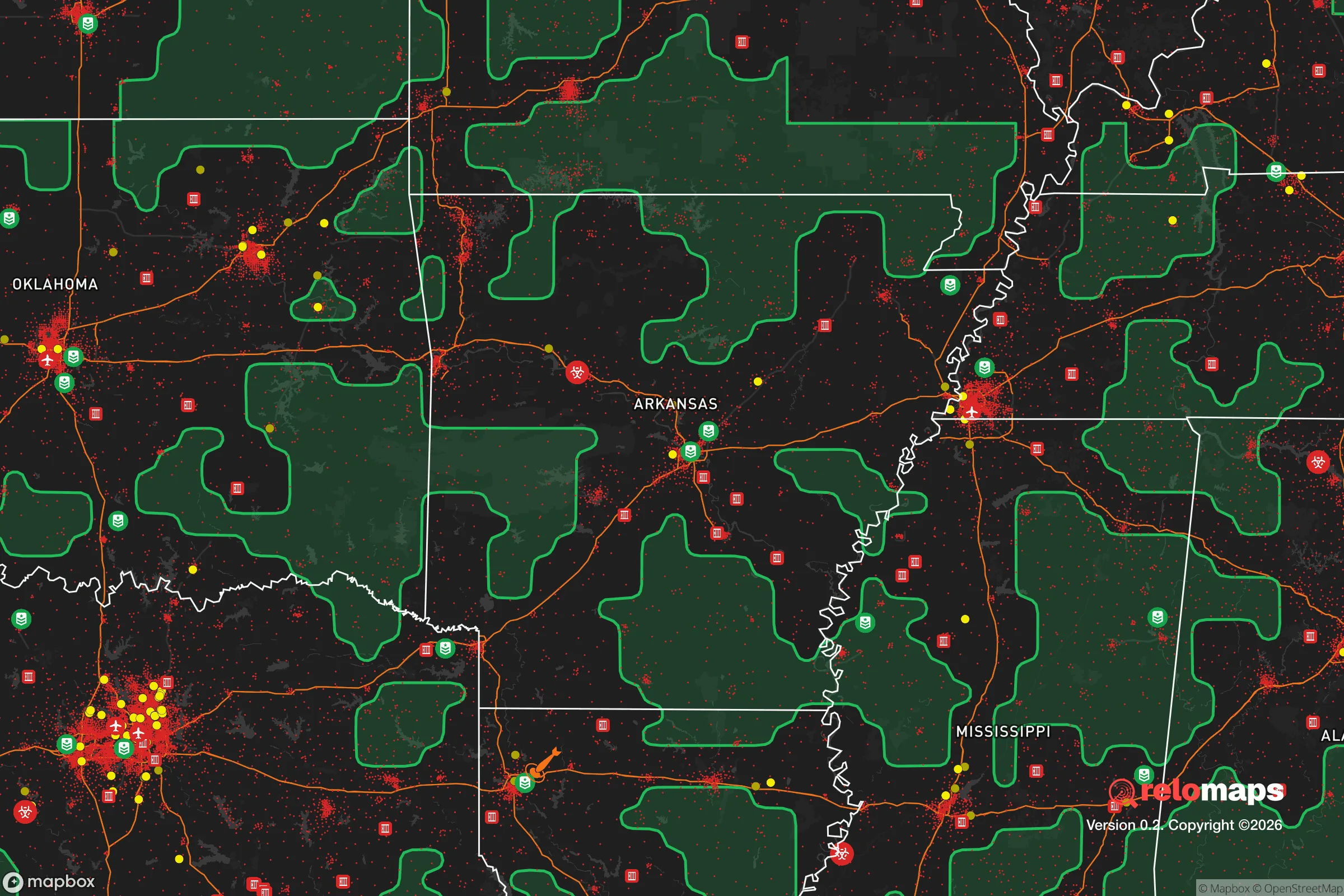


Important Note: For informational purposes only. This does not mean nothing bad ever happens in the green zones. Please use common sense. This is based on public data and modeled with AI. We tried to take a conservative approach but mistakes happen. We update this regularly as new information becomes available.
Solar Generator Recommendations
Backup power matters more here than in safer locations. We've picked three solar generators across budgets and capacity tiers — start with the budget unit if you only need a few essentials, or step up if you want to run a fridge and HVAC for days at a time.

Jackery Portable Power Station Explorer 300
Budget OptionPower on the Go: Weighing only 11 lbs, it's convenient to set up and store with book-sized foldable solar panels

BLUETTI Portable Power Station AC180
Designed for both indoor and outdoor scenarios, AC180 is highly capable as it has a robost capacity and continuous output power.

EF ECOFLOW DELTA Pro Ultra Power Station
Upgraded PickEcoFlow DELTA Pro Ultra is a whole-home energy system designed to grow with your family. Integrated with the Smart Home Panel 2, it scales to meet your evolving energy needs — keeping your home powered, intelligent, and secure through every stage of life.
We earn a commission, at no additional cost to you.
Strategic Assessment Analysis
Centerton, Arkansas, sits in a position that offers genuine strategic depth for those prioritizing resilience, but it requires clear-eyed assessment. Located in Benton County, part of the fast-growing Northwest Arkansas corridor, the town benefits from being just far enough from the region's major population centers—Fayetteville, Springdale, and Rogers—to avoid the worst of a potential urban collapse, yet close enough to access their resources. The area's topography, water availability, and relatively low population density create a baseline of survivability that many suburban or exurban locations lack, but the region's rapid growth and proximity to critical infrastructure also introduce specific vulnerabilities that a prepper or survivalist must weigh carefully.
Geographic position and natural advantages for long-term survival
Centerton's location in the Ozark foothills provides a natural defensive buffer that flatland areas simply cannot match. The terrain is rolling to hilly, with numerous hollows, ridges, and forested patches that offer concealment and natural chokepoints. This topography makes large-scale mechanized movement difficult and gives a prepared individual or small group significant tactical advantages. The area sits within the Arkansas River watershed, with Beaver Lake—a major U.S. Army Corps of Engineers reservoir—lying roughly 15 miles to the east. This lake holds over 1.8 million acre-feet of water and serves as the primary drinking water source for much of Northwest Arkansas, including Centerton. In a prolonged grid-down scenario, access to this water source, combined with the region's high annual rainfall (averaging around 45 inches per year), means water scarcity is unlikely to be the primary threat. The surrounding forests are predominantly oak-hickory, providing ample firewood, building materials, and mast for wildlife. The growing season runs roughly 200 days, allowing for serious food production if you have the land and knowledge. For a relocator, the key takeaway is that Centerton sits on the edge of a resource-rich, defensible region, not in the middle of a flat, exposed plain.
Risks, exposures, and proximity to fallout-relevant landmarks
No strategic assessment is honest without confronting the downsides. Centerton's greatest vulnerability is its proximity to the Northwest Arkansas National Airport (XNA) in Highfill, roughly 10 miles to the southwest. XNA is a growing regional hub with increasing cargo and passenger traffic, making it a potential target for both conventional and asymmetric threats. Additionally, the region hosts several large-scale poultry processing plants (Tyson Foods has major operations in nearby Springdale and Rogers) and a significant logistics corridor along Interstate 49. These are not primary nuclear targets, but they are nodes that could become focal points for civil unrest, supply chain disruption, or secondary attacks. The Walmart headquarters in Bentonville, about 8 miles north, is a high-profile corporate asset that could draw unwanted attention in a crisis. More broadly, the entire Northwest Arkansas corridor is experiencing explosive population growth—Benton County's population has increased by over 30% since 2010. This means that in a collapse scenario, Centerton could face pressure from urban refugees fleeing Fayetteville, Springdale, and Rogers. The town's current population of roughly 20,000 could swell rapidly, straining local resources and creating security challenges. The area is also in a moderate seismic zone—the New Madrid Seismic Zone is about 200 miles east, but a major quake there could disrupt supply chains and cause secondary effects. Tornado risk is real, though not extreme; the area averages about 5-10 tornadoes per year in the broader region. Flooding is minimal due to the topography, but low-lying areas near creeks can be problematic.
Practical resilience for a relocator: food, water, energy, and defensibility
For someone serious about self-sufficiency, Centerton offers a mixed but workable picture. Water is the strongest asset: the city's water supply comes from Beaver Lake via the Beaver Water District, and many rural properties have access to private wells. The water table in the Ozarks is generally good, and hand-dug wells or driven points are feasible in many areas. For off-grid energy, the region's solar potential is moderate—about 4.5 peak sun hours per day—but the frequent cloud cover and tree canopy can reduce output. Wind is not reliable at low elevations. A better bet is a combination of solar with a backup generator (propane or diesel) and a good supply of firewood. The local building codes are relatively lax, allowing for earth-sheltered homes, root cellars, and other resilient construction. Defensibility depends heavily on your specific property. A home on a ridge with a single access road is far more defensible than one in a valley or near a major road. The area's gun culture is strong—Arkansas is a shall-issue state for concealed carry, and there is a robust network of gun shops, ranges, and private landowners who are armed. This is a double-edged sword: it means a prepared individual can operate freely, but it also means potential adversaries are likely armed. For food production, the soil in the Ozarks is thin and rocky in many places, requiring raised beds or significant amendment. However, the long growing season and ample rainfall make it possible to produce a substantial portion of your own calories if you put in the work. Local farmers' markets and a growing network of homesteaders provide opportunities for barter and community support. The biggest practical challenge for a relocator is land cost: Benton County is one of the most expensive rural areas in Arkansas, with raw land prices often exceeding $10,000 per acre. This is a barrier to entry but also filters out less serious people.
The overall strategic picture for Centerton is one of guarded optimism for the prepared relocator. It is not a remote survivalist redoubt—it is a growing exurban town with real exposure to the vulnerabilities of the Northwest Arkansas corridor. But for someone who understands that true resilience is built on community, resources, and terrain, not isolation, Centerton offers a viable base. The water is abundant, the terrain is defensible, the local culture is armed and self-reliant, and the proximity to Beaver Lake and the Ozark National Forest provides a deep buffer zone. The risks are real: population pressure, proximity to corporate and transportation targets, and the ever-present possibility of civil unrest spilling out from the nearby cities. But compared to the vast majority of the American heartland, Centerton sits in a sweet spot—close enough to civilization to access its resources, far enough to avoid its worst failures. For a conservative-minded individual or family looking to plant roots in a place that can weather the coming storms, it deserves serious consideration. Just don't expect it to stay quiet forever.

* Values derived from national, state, county, city and local statistics and may differ in a specific area. Last updated: 2026-04-30T02:24:39.000Z
Narrative content on this page is AI-generated and may contain mistakes. Verify any details that matter before acting on them.
ReloMaps may earn a commission from affiliate links at no extra cost to you.

